Wonder

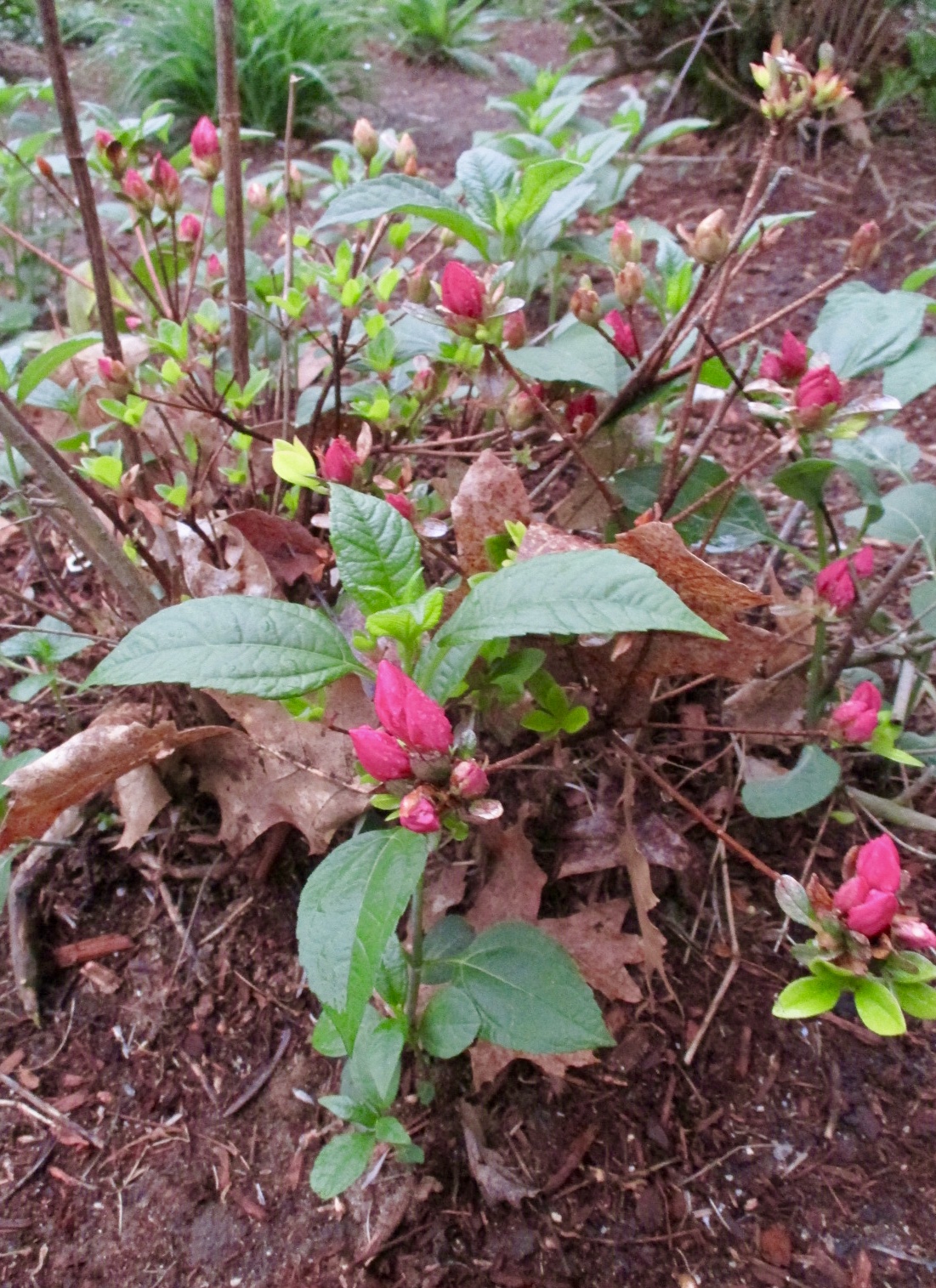
The other day, I was on my way out to the car for work when I noticed that the azalea bush at the bottom of my front steps had little pink buds on it.

Let me backtrack for a moment. When I say “azalea bush,” I am exaggerating just a bit. When I first moved here in 2004, there was an azalea bush there. Over the years, it was overtaken by some unexplained rot/mold/disease, and each spring, it appeared to be closer and closer to the doom of nonexistence. One year, when the condo association landscapers came to prune the bushes, I asked them if there was anything they could do to save it. The manager surveyed the sad little bush, shook his head, and told me that he would cut off the dead parts, but the bush would probably need to be removed. He worked away at it for a bit and when he was done, there was little left. “I don’t think that’ll help, but we’ll see,” he told me.

And for the past several years, my struggling azalea bush has been little more than a bundle of sawed off stumps with some dried twigs sticking up. Every now and then, a leaf appears, but nothing more.

So imagine my surprise when I walked out the door on a beautiful spring morning, and the beginnings of an azalea bush were growing from one side of the bundle of old rotten bush-parts. Tiny shoots flaunted bright pink buds that caught my eye. It wasn’t just one twig with a bud or two. It was a forest of shoots, each with multiple leaves and buds.

That afternoon when I returned from work, I gave the little bush some TLC. I carefully removed all of the rotten pieces, one by one. I pulled them out and created a pile of refuse next to my walkway. Now, there is more room for the shoots to grow and flourish.

I had almost given up hope on this little bush, but somehow I knew the life would return and the azalea would see spring again. And I was right—there was just enough life left in the roots connected to those old, dry twigs to send up shoots that will someday be a whole new bush.

“Always be on the lookout for the presence of wonder.”     – E. B. White

Tough Lessons from the Road

A few months back—probably in the fall when the weather was good and the roads were clear—there was a discussion among some of my Facebook friends about motorcycles and pushing the limits of speed. These people were jovially comparing their top speeds, as if hitting 120 was a great accomplishment.

Recently, my 16 year old has been talking about getting a motorcycle, and I am not thrilled at the prospect. While I hope he will ride responsibly if he ever does get one, there is always that temptation to just test how it might feel to go a bit faster than one should. Meanwhile, I have always lived with the paranoid and constant fear that when a motorcyclist speeds past me on the highway, I will encounter the rider up ahead, splayed out in the road after a momentary misstep.

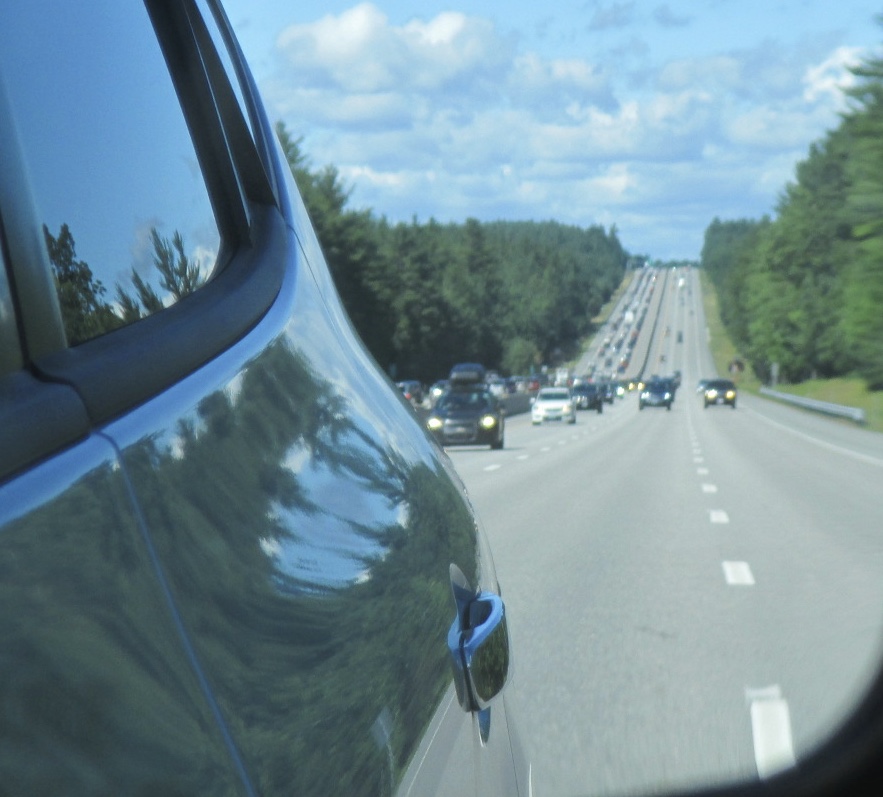
The other day, we were on our way back from a college visit, because really, shouldn’t we just continue to look at colleges since I am now four years into the process: one kid, then the next, and now the youngest? We had just merged from one highway to the next, and I was finding my place among the several lanes. A motorcycle with a young rider suddenly flew past us at an alarming speed, weaving in and out of the cars as he flew. He was living out the rush of a lifetime. A state trooper pursued him, sirens blaring, but he continued his reckless journey unabated.

As we crested the top of the hill, we had an almost two-mile view into a slight valley and up another hill. The motorcycle was a small dot moving along the road up ahead—easy to spot as it traveled faster than the cars around it. The trooper had backed off, knowing that continued pursuit would increase the possibility of the danger.

We traveled another couple miles and… Chaos. We spotted the motorcycle in a crumpled heap. W let out a fearful, “Oh!” and I gasped, the tears springing almost immediately. This was just too much. This sight—the scene of bike, the rider, and the chaos that comes before  emergency personnel arrive—is one of those scenes that I will never unsee. It is one that will quietly creep alongside me and rear its ugly head each and every time a motorcycle recklessly passes me. My once paranoid fear is now realized, confirmed, and etched in my brain forever.

And while I would not wish this sight on anyone, this lesson is one that only the road can teach—either by example or by experience. This lesson is best learned by example. I believe the message came screaming through to my son without my need to speak a word. This young rider had gathered enough speed to send himself headlong into whatever it is that comes next.

Each and every day, we walk the thin line between this world and the next. Depending on our choices, some days, that line seems much thinner and more vague than others—both as fine as the silk of a caterpillar hanging from a tree, and clearly visible to the naked eye. Without warning, we can slip from one side to the other.

One of the toughest lessons to learn is that each and every day is one of those days.

Default Settings

Recently, I stumbled across two separate articles that referenced navigating life on Default Settings. This idea of moving through life on “default” definitely gave me some things to think about. After all, it makes complete sense. We respond to things without thinking, and we never bother to reflect on how we might handle a situation, what we might do differently. Instead, we respond first. Think later. This idea made me stop to ponder: How often do I navigate my life on a default setting, and how does this affect my life?

I believe we all have a tendency to be reactive rather than proactive. Life gets busy, and conscious decision-making in every situation gets pushed to the back burner. I react to what is coming at me rather than purposefully living out my life. I do not take the time to think and respond intentionally, but I act on the emotion of the moment and the patterns that have been established in the past. I make up elaborate excuses to keep doing things the way I have always done them, so I don’t have to disrupt my “zone of ultimate comfort.”

But beyond that “zone” could be amazing possibilities, and my defaults might just be holding me back….

So… over the next few weeks, I am going to examine my “default settings.” I am going to begin to think about how these settings, and my knee-jerk reactions, may be holding me back. I am going to think about how I can push myself beyond my “default” to live a more intentional life—a more authentic life. And I’m going to start making choices that will push me beyond comfort into possibility.

What are your default settings, and are your defaults working for you?

The College Experience

Over the weekend, I was walking through the streets of New York City with a woman who had been a stranger up until the walk had begun. We had been thrown together by our daughters, who had gathered for a meeting with a group of their soon to be college classmates.

As this woman and I walked, we talked about the typical things that mothers of teenagers talk about. We started with college and choosing the right school; we talked of letting go and stepping up. We discussed work and children and the challenges and rewards of each different child. Our conversation even wandered to the care of aging parents.

Somewhere in the middle of our conversation, when I mentioned that I, too, had attended the college our daughters would attend, she asked me, point blank, if my college experience had been a good one.

I paused and took a deep breath as I gathered my thoughts. College was an experience. I had been young, as most students are, and struggling to find my way. It was not the best of times for me. “Well,” I started. “It was college. And as we gather life experience, we learn that in any situation, there will be good times and bad times.”

I went on to explain that for the most part, college was a good experience, but there were some tough times and some moments of incredible growth. I was a perfectionist. I took a tough load of courses and I demanded the best work from myself. College—like life, I suppose—is tough, but when you are eighteen, you don’t yet have the life experience to know that this is the case. You have high expectations, and you don’t think it’s possible to be on a campus with so many age-peers and yet, experience loneliness. There are things that all college students should know before they leave home. Here are just a few:

College is not the best four years of your life. I know you’ve probably heard this, but if it were the best four years, why would people keep working and striving? The best part of your life comes much later, when you’ve figured out who you are and what you are about. It takes awhile to get there. Be patient and enjoy the ride.

Don’t be so hard on yourself. Just because you have gotten into your first choice college (or your second or third choice…), and most of the time you might be happy about that, there will be times that are incredibly sad or difficult or challenging. That’s the way life is, and these years prepare you to face the sad/difficult/challenging times later on. The campus environment can’t protect you from the challenges, but it does provide a good support network to find help if you need it.

Give yourself time. You are living away from home for the first time. You will need time to transition to your new life, adjust to your new surroundings, and familiarize yourself with your new schedule—just as you would in any new situation. Don’t make a snap judgment and go home after your first—or fifth—night on campus. If you find you are homesick, make a commitment to try one new thing each day—even if it is just to take a different route to class.

Power through. It’s not always easy to keep going when things happen or when life rears its ugly head and wants to take you down. But as with any situation, you have to keep moving in a forward direction. Eventually, generally sooner than you think, you will find yourself back on course, and you will be happy you kept moving.

Take advantage of all that you have available. College campuses have a wealth of resources available to students. There are professors with a vast array of knowledge. There are classes in many varied disciplines. If you think you want to try out a course in a new subject area, do it. You will also have activities and lectures and events available to you. Choose wisely, but take advantage of what is offered. If something looks good, check it out. Who knows when you may have another chance like this?

Surround yourself with people who energize you. It is a fact that spending time with people you are fond of will help you adjust to the newness of your surroundings. It will make you feel connected, and it will give you a network to fall back on, and you will have a chance to raise others up, as well.

Most importantly, enjoy! While you are studying hard and involving yourself in all that your college campus has to offer, don’t forget to enjoy the moment. Take a minute to toss a Frisbee with a friend, grab a coffee on the way to class, or take a P. E. class so you can fit in some exercise. You will be glad you did!

Solitude

It is dark and quiet and claustrophobic. A dim light glows from my iPad, currently in “night” mode, as the words of my book dance across the pages. There are other lights shining in my periphery, the reading lights of passengers across the aisle, and a row of gold and red “fasten seatbelt” icons starts above my head and runs toward the front of the plane. The constant low roar of the jet’s engines fills the silence that might otherwise be deafening, stuffing the cabin with its noise.

The book I am reading is one I have been poking my way through for a month or more. Poking. I am not a fast reader, but I have allowed this one to stretch out because it fits where I am in my life, and it allows me to both reflect and catch up with my emotions. If I finish it, the journey will be over.

The journey through Kelly Corrigan’s Tell Me More is one that celebrates life and death, and focuses on both happiness and grief. She talks of the love she had for her father (recently deceased) who supported her through the bumpiest of times—the back-sliding, the disappointments, the struggles of growing up. She talks of his life, his death, and how she’s been since. But there are other stories in the book. Losing her close friend, raising her children, parenting mistakes and triumphs. But it is the stories of her father that resonate most deeply with me because I am right there.

At various points through the book, I have cried. And now, sitting in the darkened cabin of an airplane hurtling through the night, I push my way to the end of the book, and I cry once more. The dark masks my tears, but I am not trying to hide. Grief is a part of a life—part of our deep and loving relationships. This writer, she gets it. The grief doesn’t go away. It quietly walks beside us, slipping into our consciousness every now and again when we least expect it.

As I read, as I work, as I parent, as I live… the grief is there. Every day, I relearn how to live with it as my life situations change around me. Here, stuffed inside the cavity of an airplane, the lessons are learned anew. When the plane lands and the passengers tumble out, I will reflect on this moment of solitude among the masses. And I will remember that grief is a shared experience.

What if…?

I am a worst-case scenario kind of girl. You know all those things we spend time worrying about? I can worry with the best of them.

In fact, my worrying started when I was just a tot. We would take a weekend drive in my father’s jeep out into the country and onto back roads that time forgot. They were rutted dirt roads that wound through the woods, over hills, and along streams. To my eyes, they were little more than hiking trails. I would often pipe up from the back seat, “Where are we gonna turn around, Daddy?” My tiny little worried mind couldn’t see how we could ever get back home.

But we always did.

If I let my imagination run wild, it can create situations that even the best imaginations would pass up as impossible. Not for me. Everything is worth worrying about because what if [insert worst-case scenario here] happens?

But what if it doesn’t?

What if I just stopped worrying? What if I recognized that many things are out of my control and worrying only makes me anxious, stressed, and robs me of the ability to enjoy where I am and what I am doing. Right. Now. What if I just stopped, took a breath, and let all the worry go? What if…?

If I were to stop worrying needlessly about things I can’t control, I would be able to enjoy the present moment. I could think more fully about the here and now. I could be present in and part of my own life. I could be a better role model for my children. What if I stopped worrying and was willing to let it go?

What if…?

Do One Thing

On Wednesday, at the height of our most recent snowstorm, I went out for a walk. There is nothing to calm the soul and settle the noise of the world like a walk in a snowstorm. The falling snow muffled the noise in my head and pushed me toward a greater focus, allowing me to think.

I have been working on clearing out my head space, so I can more confidently forge a path toward my goals. It’s a journey, though at times it tends to feel like a journey of a million miles.

The first step is to simplify. I don’t just mean simplifying my environment by sorting through the things I own. I mean working to simplify my approach to the goals I have set for myself—those known goals that I am purposely working toward, and those goals that will evolve and become evident as I move down this path.

I have decided my approach will be to Do One Thing. I will start with the first step. It might be a big step, or it might be a teeny-tiny baby step. But any step will be one step more than the last. After each step, I will re-evaluate. If the first step didn’t turn out the way I’d planned, I will try something else. Regardless of whether I step or misstep, I will Do One Thing more, and I will be moving toward my goal, taking risks, and no doubt, learning more about myself in the process.

Because if there is one thing I have discovered in life, it’s that it’s never too late to become who—and what—you are supposed to be.

Bread

My daughter was recently telling me about an experience she had at school. Her English teacher was talking about his experiences when he was younger. He told the students that there was a time when people started to realize that bread was not good for them, and bread companies almost went out of business.

“Can you imagine if that had happened?” he asked them. “There would be no bread anymore.”

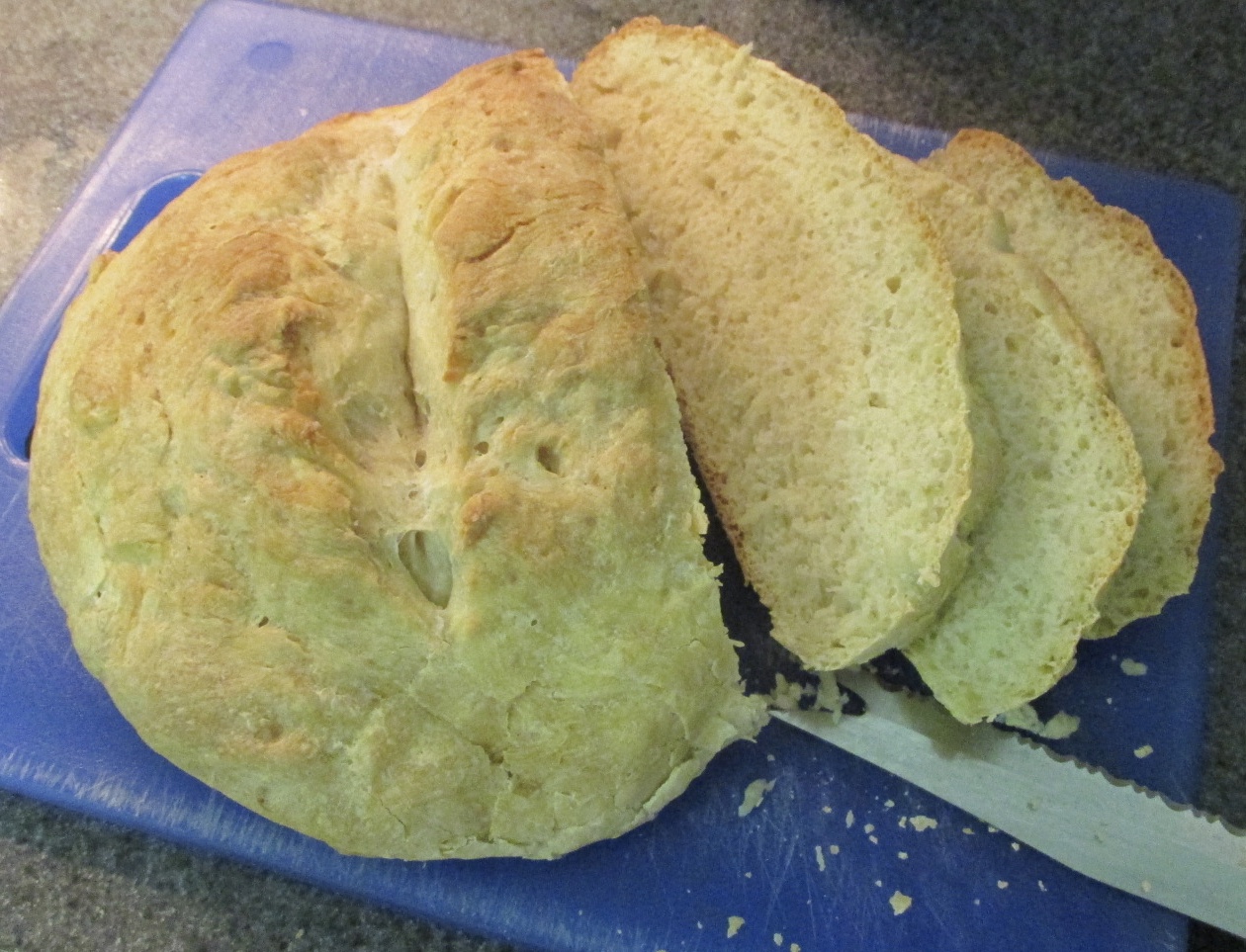
“What do you mean there wouldn’t be any bread?” my daughter responded. “People would just bake their own bread.” Because that’s a simple solution.

But then she realized that her classmates were looking at her as if vines were growing out of her head and traveling down her back. “No one bakes bread,” they told her definitively.

At that point, I imagine she shrugged, puzzled, and went about her business. She turned to a friend and quietly said, “My mom bakes bread all the time….”

That afternoon, as she told me the story, I could only chuckle. “I have to agree with your classmates. No one bakes bread anymore.”

This was one of those moments when my daughter realized that even though she might think our family is completely normal, maybe it’s not. And it was a moment for me to recognize that my kids might be a bit sheltered.

So what if my kids live a sheltered life? If “normal” means we don’t eat home-baked bread, I’d rather not be normal!


Teen Dinner

So there I was yesterday afternoon, minding my own business, sitting in my office proofreading a document. It was 3:30, and I was thinking about how the evening was likely to play out. At home, my youngest was packing for a weekend camping trip with the Scouts. When I left work, I would go directly home and drive him to where the troop would be meeting. However, I had just reread the email, and a worrisome feeling came over me like a shadow.

According to the email, my son was responsible for eating dinner before the troop assembled, a fact which was frequently true before camping trips. However, before I left for work on this particular morning, I had cooked a pound of spaghetti and popped it in the fridge so the assembly of a dinner casserole would be hastened before I sped off to a class. In my mind, I could see the bowl in the fridge, his hands reaching for it, and the majority of it disappearing before I even got home. Once he got to it, that will be the end of the spaghetti.

Anticipating his approaching dinnertime, I texted him, listing the food options he might choose other than the spaghetti. Thankfully, we had some leftover chicken he particularly liked.

If you are looking to evoke a slight panic at the end of the work day, there really is nothing like the realization that your hungry teen might consume your partially prepared dinner!

Positivity Post: Middle Ground

The recent trend in society focuses on rigid dichotomies. On all issues, it seems, we must fall on one side or the other. We are either one thing or the opposite; for some unknown reason, it is no longer okay for our ideas to fall anywhere in the middle.

Just ask anyone who is directing the societal rhetoric these days. We are either right or wrong. We are either winning or losing. We are a success or a failure. As everyone on social media is happy to tell us, we cannot be a partial success or a partial failure—we are one or the other. There is no longer and acceptable in-between and there is no way to be anything other than an extreme. Or is there?

It seems we have forgotten that all the good stuff resides in the middle. If we are wrong—and even if we are right—there are lessons to be learned from our situation. If we win, there are still important things that we should examine in order to continue the trend of winning. And if we lose, there are moments of greatness within our losing that are worth reviewing. These lessons, these moments, these important messages… they lie somewhere in the middle.

When we have two sides that are opposing—Republican and Democrat, to name a hot one—it is vital that we don’t let our differences get in the way of our progress. We must examine the middle ground to see what we have tossed aside in our desperate need to be right—so right that we forget to leave room for something else.

That middle ground—it is incredibly fertile. That’s where there are ideas and inspirations and moments and messages and tidbits and wisdom and experience that we can use as tools to help us navigate our differences, overcome our struggles, and get us closer to the spot where the sun shines and “argument” turns into “discourse.”

So come with me to the Middle Ground. Let’s go together. Let’s have some brilliant discussion and come up with some inspiring ideas. Let’s toss around our creativity, have some snacks, and share some laughs. If we can meet in the middle [and linger there], there is no doubt that our common threads of color and light and inspiration will lead us to solutions. Perhaps by examining the Middle Ground, we might even rediscover how much we like spending time together in conversation, and we can begin to build a bridge between us.