Tissues

fullsizeoutput_2ace

These days, I don’t venture far from home without tissues in my pocket or somewhere on my person. I never know when the tears will start, either just enough to spill out of my eyes, or an entire flood. It might be sparked by a song that I hear playing on the radio or the sound system of the mall; I might see an elderly man in the grocery store who has a similar posture and gait to Dad, or a young father with his child; or I might catch a glimpse of a rainbow in the sky.

So tissues. I have one or two tissues in all of my pockets, travel packs in my purse, full-sized packages in my car. And I have been pretty good about checking pockets before I do the laundry. (It’s a habit I started after one too many crayons slipped through undetected before they melted in the dryer, ruining an entire load of clothing ….)

Sunday night, I washed the down jacket I have been wearing every day, and I threw in a couple of new shirts that J had recently acquired. I checked the pockets of my jacket, but somehow, a tissue slipped just beyond my touch and escaped notice.

When I opened the lid of the washing machine, I was immediately aware of my oversight. Fluffy shreds of tissue clung to the clothing, stuck there by dampness and deep tissue magic—the kind that doesn’t let go.

A faint scent of detergent wafted from the clothes as I painstakingly picked at the pieces of tissue. I sighed. The fragile fibers so effective at wiping away tears were no match for the washing machine. But I’m pretty sure this is not the last time I’ll learn that lesson.

Teachable moments

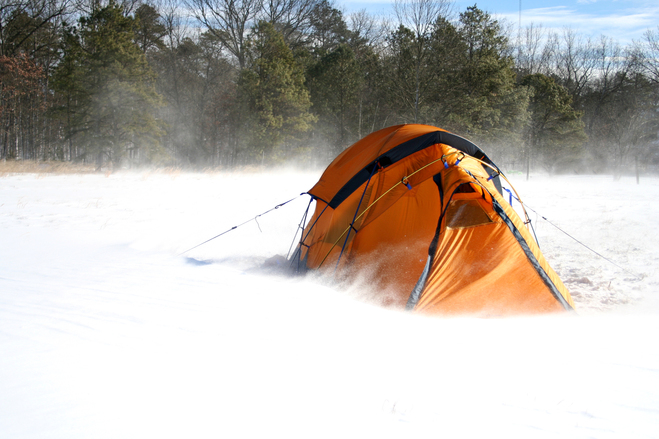
winter-tent-1405339

This weekend’s not-so-fun activity involved a morning trip to the Laundromat. After his last camping trip, W announced that his winter sleeping bag was “developing a personality” and needed to be washed. I don’t know about you, but when a 15 year-old announces that his sleeping bag is “developing a personality,” I sit up and take notice. And since his next camping trip is coming up quickly—next weekend, in fact—it was pretty much this weekend or after the upcoming trip.

But a winter sleeping bag is one of those items that cannot be washed at our home in our normal-sized washing machine. It has to be washed in a large capacity, front-loading machine, hence the trip to the Laundromat. Since we were heading there anyway, I decided to bring the comforter from my bed—another item that I have to launder outside of the house.

Of course, there was the need for tennis balls. I have never used tennis balls in the dryer with my comforter because I typically go to the Laundromat on a very windy day and I dry my comforter at home, outside. However, January is not such a friendly time for drying a heavy comforter outside, wind or no. So a stop at Target was necessary.

We picked up two containers of yellow tennis balls and took them to the checkout, where a gaggle of teenage workers was congregating, socializing. As we stepped up to the checkout, one of the teens broke away from the group to take her place at the register and ring in our three-dollar purchase. She thanked us and went back to her “social” group. As W and I walked by the group to exit the store, one of the teens announced to her friends, “I think I’m going to get a different job.”

Well then. There were so many things I could have said in that moment, but I walked past as if I hadn’t heard.

We were not even out the door before I turned to W. “You know what you don’t do?” I posed.

“Talk about how much you don’t like your job while you’re at your job?” he responded without a split second delay. Ah! He, too, had heard the young woman as we walked by. “I noticed that,” he commented.

“That is so not a good idea,” I told him, though from his quick response, I was certain he knew better. “It’s fine to want a new job. Not so much to announce it while you’re at your current job. And while you are standing around doing nothing….”

“Yeah,” he said. “I get that.” Some things are best left for when you are in the privacy of your own home, and perhaps complaining about your job is one of them. Then again, if you complain in public, I may just use it as a teachable moment.

{image credit: Freeimages.com/Ben C}

Snow Day Hyperbole


fullsizeoutput_29fc

Tuesday was a snow day for us. When I woke up in the morning, the radio mentioned school cancellations, but I was half asleep and didn’t believe it. Through my five a.m. fog, I reached for my iPad, pulled up the local television station website, and scrolled through the cancellations. Sure enough, our town had cancelled school. The town in which I work had also cancelled school, though there was nothing yet from the university.

I stumbled to the kids’ rooms in the dark to turn off their alarms, trying my best not to disturb them more than necessary. I went back to bed, armed with my phone to take the “alert” calls that would inevitably come. Nowadays, it is so easy to tap into the school cancellation list, and with multiple schools and school districts involved, that can be a good thing.

But later that morning, when I finally looked outside, we had about two inches of snow. Two inches. And a snow day? Clearly, this must have been an oversight on someone’s part. A day off means, the kids will have an extra day tacked on to the end of the school year. Sigh.

In a text to my sister, I told her I suspected the world had grown wimpier since we were kids. I remember schlepping through snow up to my thighs (though I will admit, I was a bit shorter then) to get to school. Occasionally, my boot would become lodged in a snow crater when I tried to step, and I would have to reach my arm all the way into my leg-long footprint to retrieve it. Once, a storm closed school for two consecutive days, but that was a memorable spring storm one April when winter was supposed to be over. That storm dumped three feet of snow, and I can still tap into the feeling of wonder and excitement I had walking through the labyrinth of shoveled pathways.

On days when the world seems wimpier than in years past, I tend to become one of those parents, just like my parents before me, and their parents before them. You know the ones I mean…. Back in my day when life was simpler, we trudged through three feet of snow every day to get to school. Maybe it was a two-mile walk to get there. And it was definitely uphill both ways. And maybe it was 10° below zero every day during the winter because back then, it was commonly believed we were entering the next Ice Age.

Or maybe—just maybe—I tell hyperbolic stories because here in northern New England, a snow day for two inches of snow feels ridiculous, and it’s not something responsible adults feel the need to encourage.

And even though my children roll their eyes at my stories, there is no doubt that 20 or 30 years from now, they will be telling their own hyperbolic childhood stories to their own children, their nieces and nephews, their students. Because this…. this is the way we express to the next generation that we think they are getting too soft around the edges and too wimpy in the middle. And this is the way we let them know that maybe, just maybe, things aren’t quite as bad as they like to believe.

Accepting my role

100_2222

I woke up on Saturday to a somewhat quieter house than normal. Only my youngest was home, and I had the brief realization that in another couple years, this—this quiet, this [relative] stillness—would be the norm in my house. When I went downstairs to the kitchen, I found W finishing up breakfast, dressed in khakis and a t-shirt, the beginnings of an outfit chosen for the day’s job interview.

Now, I am good at telling myself I am prepared for this whole growing up thing. After all, I have already been through this with my oldest child. He graduated from high school, left for college, and last week, I dropped him off at school for his second semester. He is doing great, making his way in the world. He is growing up and becoming an amazing adult—and I couldn’t be prouder.

But this?

Perhaps I’m not ready after all. It was one thing when my oldest was making all of these successful steps out into the grown-up world. But my youngest? I never said they could ALL grow up….

It’s times like this that reality hits. These children were only mine for a brief moment in time. That was what I signed on for, though I didn’t necessarily realize it at the time. As their mom, I was responsible for getting them to the point of launch—raising them into independent (or… semi-independent) young people who are capable of venturing into the world, making good decisions, and becoming increasingly self-sufficient and integrated into society.

I have done that, and I will continue to do that. I will support them through their growth, their challenges, their stumbles (and falls), and their u-turns and redirects. I will be here for them in whatever they need as they gain exposure to the world and establish a foothold.

As their mother, I have been here for them when they’ve needed me, and it is my goal to be here as long as I can. They will continue to need me, but my role changes as they change. And I’m beginning to understand that more and more, I am just along for the ride.

I may not be ready, but my kids… they are well on their way, taking on increasing responsibility. I probably wasn’t ready for many of their other milestones either, but that didn’t stop them. So like it or not, I will step back, let them go, and enjoy the ride as I see what the future has in store!

To-do List…

fullsizeoutput_2a1a

My brain is like a sieve. It is capable of trapping some things and holding on to them, but most things slip right out like sand through your fingers.

There are many things I need to do. Appointments need to be made. Thank you notes need to be written. Expressions of sympathy need to be acknowledged. Thoughts need to be conveyed. And these are all things that have to be done now rather than someday down the road. I have to work them in amongst the daily bustle of my already jam-packed life.

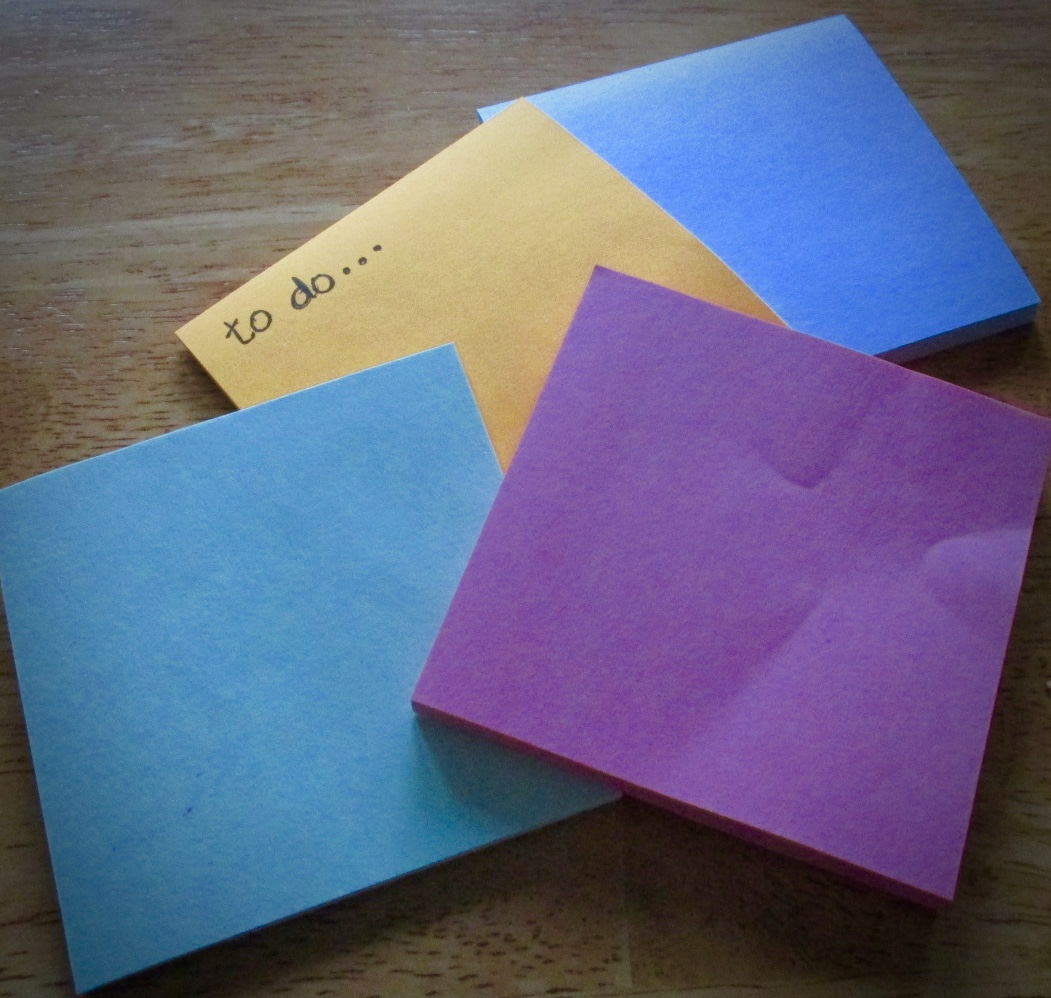
So… I made a to-do list. The other night while I was getting ready for bed, I took a Post-it note and stuck it on my bathroom counter. As I thought of things I needed to do, I wrote them down. I listed the appointments, the people who need thank you notes, all of the extra pieces that need to be addressed. And now, it would seem I’m organized, on top of things, and ready to get things done.

If I could only remember where I left that to-do list….

Grief

fullsizeoutput_2a15

As the year began, it was my goal to blog more than last year, and I started out well. But the roller coaster of life took over. Suddenly, like so many friends and acquaintances my age, I experienced the unexpected loss of my father, and I am now navigating the uneven waters of grief.

These waters are thick and heavy, fighting against me as I press forward, day by day, moving ahead with life. I cling to the things I recognize in a life that will now and forever be different.

My journey through these waters is slow and difficult. The current is unpredictable, and the undertow often grabs me and pulls me under when I least expect it, waiting for me to thrash and fight.

Then, just as suddenly, it lets go, and I float to the surface, able to catch my breath—at least for a moment. But by the end of the day, I am exhausted from battling these waves as they come and go only to come again.

Some days, I feel as though I will never write again, and other days, I feel as if I start writing, I will never stop. Writing for me is a necessity—a place to find sense and peace and light.

Grief is where I’ve been hiding, but in time, I am hoping to blog more this year….

The Process of Learning

fullsizeoutput_2a10

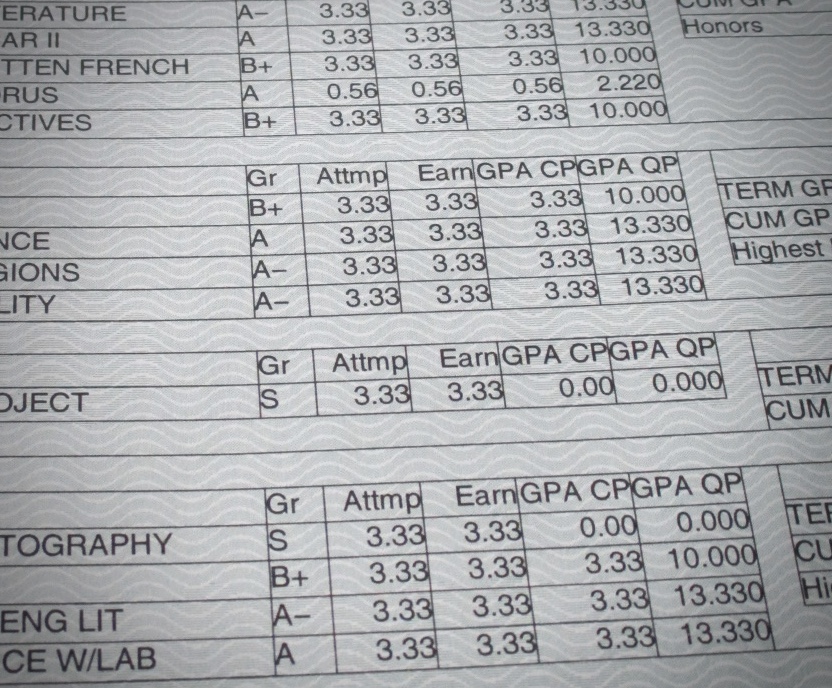
At dinner recently, my children mentioned the struggles some of their friends face with their parents. They recounted stories of friends who are grounded for having unacceptable grades when their parents check their Powerschool account.

Ugh, Powerschool. For those not familiar with academic technologies, Powerschool and other similar online grading tools can be valuable for checking on grades and making sure your child is on task, and also allowing them to adjust their studying and homework as necessary before grades close. But this type of technology can just as easily be abused as a micro-management tool.

When I was a student in high school (as with most parents of teenagers today), my parents saw my grades at the end of each quarter when I received my report card. Between report cards, I had the choice of what I would share with them and what I wouldn’t. If I chose not to share an “oops” grade, I had to be pretty certain that I could bring up my grade in that subject before the end of the marking period; and not sharing a bad test grade would give me extra drive and motivation to do so. Nowadays, parents can see grades along the way. Every day, if they’d like. Every. Single. Grade.

Here’s the thing. Learning is actually about growth, not grades. Learning is a process—one that we hone over time—that is sometimes successful, and sometimes not so much. The process of learning requires constant revision and self-evaluation.

Grades are part of the process of learning, and can help students with the self-assessment and re-evaluation necessary for improvement. Grades are not merely a product of the learning process, as people often think.

I work with college writers on a daily basis, and by the time students come to my office, they are already focused on the grade they will receive and not on the process of improving their writing. Very seldom does a day go by when I don’t say to one student or another, “Writing is a process.” Students want to focus on the product—the final, graded draft—and be done with it. But it is a rare writer (at any level) who can write a quality, finished essay the first time around and not have to go back and revise.

Overall, learning is a lot like writing. As students learn more challenging material [or learn a different subject matter … from a different teacher… in a different textbook or context], they have to put into practice what they know about learning, the subject at hand, and their past experiences, all while they constantly adjust their process to fit the situation. What worked last week for one bit of material might not work as well this week. A poor grade on a test or quiz will alert the self-aware student to what is not working, and will allow that student to re-evaluate and revise what he or she is doing.

Come to think of it, this is a lot like life. We are constantly editing and revising; we are examining our approach and making adjustments—fine-tuning, if you will. If we, as parents, don’t step back and offer our children some space to figure things out and some room to grow and examine their own performance, we are teaching them that learning is about the product, in this case, the grade. This parental approach to academics does a grave disservice to our children. Not only are we hijacking our children’s learning process to get the result we desire, we are teaching them that the grade is more important than fostering the innate intellectual curiosity and creativity that comes when they follow their learning in a direction that is of interest to them.

When children are conditioned to only look at the end result—the grade—the fear of failure can become paralyzing. And more than likely, children in this situation will learn not to take risks, but to take the “safe” path. Learning how to deal with failure, on the other hand—how to bounce back from a low essay grade or a bombed test—is a far more effective life lesson than learning to be afraid of failure. They also begin to realize that failure is an integral part of the process.

My son recently completed his first semester in college. For the first half of the semester, he struggled with one particular class—it was a subject he had never studied, and the professor had a well-earned reputation for being tough. In the end, my son received his lowest grade of the term in that course. However, I believe that grade was the one he was most proud of because he learned more about the process of learning, approaching the academic rigors of college, and self-advocacy from that class than he did from all of his other classes put together.

If I were to give advice to parents, I would say, step back. Give your children some room to fall while they still have you there to guide them and help them navigate the rough waters they encounter. Without a little room to figure things out on their own, not only will children have no motivation to get up when they fall, they will not learn how to get back up—to recover from setbacks and move forward.

Let your children stumble so they can assess and reassess and redirect. Help them to learn the important lessons that lead them toward resilience. Now, more than ever, our society is going to be looking for people who can not only face setbacks with grace, but can help others do so, as well.

Changing views

fullsizeoutput_2a08

Yesterday, I was having coffee with my boyfriend, and we were planning a future day-trip to Boston. Because of my daughter’s art and her interest in art supplies, I suggested to my parents that they give her a gift card to Blick Art, a place where she has never been but I have (and love!). The main point of our trip will be to visit this amazing artists’ supply store, an awesome excursion for both my daughter and myself. And my boyfriend—he’s a trouper for coming along with us!

We looked at dates and other possible activities, and I pulled up the bus schedule. Sometimes, we take the train into the city, and other times, we drive part way and take the T in. However, because it’s winter, we decided this time, we will take the bus. That way, we won’t have to worry about navigating the narrow, snow-clogged streets. Or parking. And we can relax on the journey.

We chatted and planned, and I began to reminisce about the times I traveled into Boston with my sister when I was a teenager. My parents would take us to the “bus station” in our small town (really, it was just a glorified bus stop) early in the morning, so we could catch the first bus. From my hometown, it is a 2½ hour bus ride into Boston. My sister and I—and sometimes a friend or two—would spend the better part of the day in the city, sightseeing, shopping, and grabbing a bite to eat. Then, we would catch the last bus home, arriving close to 11:00 pm.

In those days, there were no cell phones, and no way to keep in touch or check in. It is possible that we made a quick collect call home from a payphone just to say we had made it to the city, but the specific memories are foggy. I just remember I was in high school, and this was a great adventure.

As I reminisced, I thought about putting my own children on a bus for such a day trip. Would I be content to let them go? Were we more “worldly” than the children of today? My children have cell phones and would be able to check in with me on such a trip.

I looked up from the bus schedule and said, “Is the world really that different—,” and my boyfriend opened his mouth to answer. But I continued….

“—or are we?”

He paused and closed his mouth. He looked at me, and didn’t say anything for a moment. “You know,” he said, “I really don’t know. That last part… I don’t know.”

Perhaps we have been jaded by what the world has become. The constant deluge of media focuses on what is wrong with the world. It plays and replays and replays the same stories of violence, death, and destruction with graphic images and videos until we believe that we are doomed. At the same time, we have become accustomed to constant contact, not only with our children, but with our spouses and partners, our families, our friends, and even our acquaintances.

Maybe the world really hasn’t changed as much as we like to think. Maybe… just maybe… we—along with our views and expectations—are the things that have changed the most.

Saved by Strangers

IMG_1369

Many people have stories of strangers who seem to materialize out of thin air just when they most need help. And once the strangers have provided the necessary assistance, they disappeared just as suddenly. In fact, this once happened to me.

My story happened many years ago. I was working in a boarding school, and since I lived in a dormitory, I would often take students on shopping trips or outings. This particular weekend, I had promised a group of students that I would take them to see a movie on Saturday evening.

Initially, Saturday was a clear, cold day. However, by the time evening started came around, it was snowing. Hard. The storm was not supposed to be lengthy—only a brief snow shower—but its poor timing could affect our trip.

The four girls I was taking to the movies were keen to get off campus, and I was much more adventurous in my young adulthood. After much back and forth, we decided to set out on the trek to the cinema, knowing that we could always turn around if the roads were bad.

As I drove, the falling snow obscured my vision and ensured I maintained a crawling pace. The roads were covered in a deepening layer of snow, but I inched along. Few other cars were on the roads, and the only light was that of my own headlights as we continued on our journey.

We were nearing the intersection of the main road (which I knew would be clear) when my slow-moving vehicle hit a patch of ice and for a brief second, the car would not do anything I wanted it to do. I tapped the brakes and turned the wheel, but the car’s momentum took it in a direction I did not want to go. The car swerved off the side of the road and continued into a small ditch where we came to a stop with a jolt.

I took a deep breath. “Everyone okay?” I asked, as I ran through the list of possible ways out of this mess. Back then, there were no cell phones, so calling for help was not an option. No doubt, there would be some walking involved on this very snowing, rather dark night, and I had the sudden realization that sneakers might not have been the best choice of footwear on a snowy night.

I said a silent prayer, and in the rear view mirror, I saw the headlights of a passing car, the first I had seen for several miles. The car slowed and stopped. Several young men got out and approached my vehicle. I rolled down the window and in the rearview mirror, I caught a glimpse of the surprised expressions of the girls in the backseat as they looked at each other.

“You need some help?” one of the young men asked.

“I guess I kinda do,” I replied, as I put the car in reverse. The young men surrounded my vehicle, and I pressed the gas pedal as they pushed it up and out of the ditch. In just a few seconds, the car was freed from the ditch and back on the road. The young men ran back to their car.

“Thank you!!” I hollered after them out my still open window. Their car passed me and disappeared in the still falling snow. I closed the window and continued the slow trek to the main road.

The teenage girls in my car were amazed. “How did you do that?” one of them asked. “No sooner did you go off the road then a whole car full of cute guys arrived to push us out!”

Indeed, one could say we were very lucky that night. But I’d like to think there was a bit more to it than luck. Divine intervention or no, that night showed me the amazing way our lives all work together for the greater good.

The Things that are Missing…

img_1235

At that university where I work, I meet with student writers from all walks and backgrounds. I mainly meet with undergraduate writers, but I also work with students who are professionals in the midst of careers—returning to school for professional development or to get a degree. And then there are the graduate students who range in age from 22 to 92.

Recently, I met with a woman who was an acquaintance of mine in a former iteration of my life—years ago when I was single and worked a different job. She is in a demanding graduate program, she works full time, and she deals with the every day stresses and curve-balls of life that we all deal with.

She was struggling. Her professor had told her that her final essay could end her participation in the program; she was under more pressure than usual, and she was taking it out on herself. Briefly, she let me in on the frustrations she had with the class—the only class in which she had struggled in the program thus far. Now, she felt the need to put exactly the right words on the page, which is never good for the writing process; she was over-editing because she felt under-confident.

I asked her how many classes she had completed in the program. Seven. And then I reminded her that she had seen me two years earlier—when she had first started her program—feeling almost exactly the same way. And I reminded her that she hadn’t seen me since. “What is it about these two classes that stripped you of your confidence?” I asked her.

Her response had nothing to do with school. She mentioned the loss of a loved one several years earlier; the holiday season without that person; the stresses of her work; a birthday celebration that needed to happen in the midst of everything else. And the pressure to finish this one last paper.

Often at this time of the year, we are too able to focus on what’s missing. The longing for what is missing blurs the present and what we have. And sometimes, we don’t even consciously recognize that we are struggling with loss or stress or the need to be everything to everyone.

And so I say this: be gentle with yourself, not just at this time of year, but always. You are not alone. We are all in this together. Chances are, if you are willing to say, “You know what? I am struggling today,” someone will step in to offer support and to lift you up.