Used Up

img_2516

I am sitting at the kitchen table finishing up some summer work when my daughter quietly comes down the stairs and approaches me. I look up at her.

“Promise you won’t get mad,” she says as she holds out her hand. Her fist is closed, hiding whatever it is she has to give me. I study her face, not quite able to tell if she is kidding or serious.

I hold out my hand, and she pauses a split second before she drops the tiniest nub of a light peach pencil in my palm. I gasp, feigning distress. I look at her, wide eyed. “You used up my peach pencil??” I ask.

She nods. “You can get another one,” she informs me. “I needed this one.”

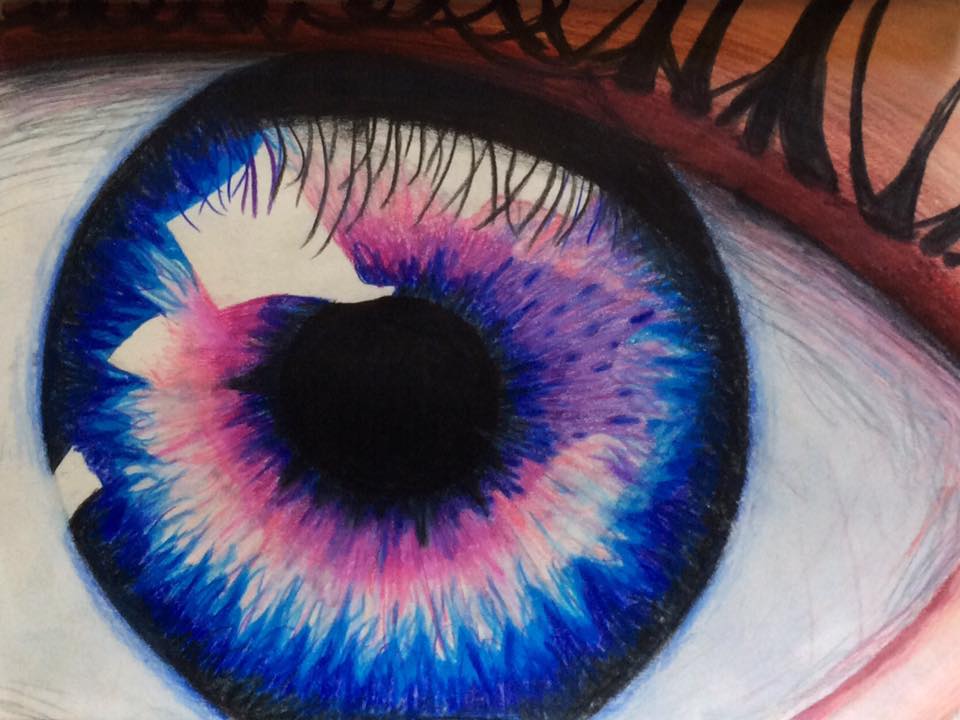
She had borrowed my colored pencils because I had the best ones—a tin of 36 Prismacolor pencils. Colored pencils—good, artist quality pencils—are not cheap. And drawing, painting, creating, this is how she chooses to relax and recharge.

Of course, when she borrowed my pencils, I was well aware of the simple truth about “borrowing” art supplies. It’s not the same as borrowing, say, a musical instrument, because unlike borrowing a guitar, art supplies get used up in the borrowing.

Next time I’m in the art supply store, I will stock up on light peach pencils. Because the truth is, I am more than fine with sacrificing my colored pencils in the name of amazing art.

13606700_1763824720522203_3715000111192858307_n

[Top image is my tiny light peach pencil. Bottom image is artwork courtesy of my talented daughter.]

This Moment

cam26

[I began this post last week, right before my son left for college, but I wasn’t able to finish it. Until today.]

The car is packed and sits waiting for the inevitable morning drive to college for freshman drop off. I stare out the window, watching the silent car sitting in the drive, wondering if I will be able to sleep.

Over the past few days, I have lived in a state of internal panic. My mind is bombarded with all of the wisdom I have neglected to impart to my son, the lessons I didn’t remember to teach, the “teachable moments” that have slipped by as I carelessly thought, Next time, I’ll teach that lesson. As a single mother, the burden of guiding and teaching has fallen solely on me, and I know there are things (many things) I have forgotten.

Yet, this day is one that has been looming on the horizon since the birth of this child. It has been talked about, planned for, worked toward, and encouraged for as long as I can remember. As long as my son can remember. My son, my first-born child.

This is the child who taught me how to be a mother. When he was born, the weight and solidity of his tiny infant body in the transition between womb and world was unexpected to me. In the early days and subsequent weeks—months… years—he taught me to sleep lightly, so I could hear the murmurs and cries when he woke. By sleeping lightly, I could hear the disturbances, the coughing, the bad dreams, and the nonsensical phrases uttered in the depths of sleep.

He taught me to watch carefully to protect him from dangers. He taught me to stay a step or two away, so he could explore on his own with me always ready to catch him—physically or metaphorically—if he fell.

I pushed this child gently, urging him to step away when he held tightly and wouldn’t let me out of his sight in his first days of preschool.

He taught me to be brave in the pediatrician’s office—most notably when the doctor was painstakingly and painfully placing four stitches into his three-year-old lip late one February night.

He taught me that my instincts for him, for all of my children, were as valid as a single teacher’s decree. When his preschool teacher advised me to hold him back so that someday he might be a leader, I chose to keep him with his age-peers. He became a leader on his own schedule.

He taught me to love fiercely because childhood is just a blip on a parent’s radar.

This child is the one who taught me how deeply a parent can love.

I now realize that over the years, this child has been teaching me to let go, a lesson that will continue through his college years and beyond. Now, this child is teaching me one of the toughest lessons of all: to say good-bye. Again and again.

Now, it is my job to step back, get out of his way, and watch him continue to grow, with guidance from afar, as he gains independence and finds his path.

This child…. This young man…. This moment.


Maybe…

DSC_0022

I once read the book The Boy on the Bus by Deborah Schupack. I believe this book was born out of the very familiar and somewhat unsettling concept that children tend to change just a little bit each day, until one day you look at your kid and you think, There is something vaguely unfamiliar about this child. Is this really my child?

The book itself was unsatisfying in its lack of resolution, but the premise of the book is that the boy who gets off the school bus one afternoon is not the same boy who got on the bus that morning. He looks almost like the same boy, but there are things that are just a bit off about the child.

I would like to admit this is a fairly universal experience for parents. Well, it is for me, at any rate. The child who leaves my house in the morning is sometimes very different from the child who comes home that afternoon—whether in mood or demeanor. And every now and then, the child even looks just different enough that I question myself. Is this really my child? Maybe not.

Earlier this summer, when I retrieved a child (my child) from a week at camp, I hesitate to admit that I almost didn’t recognize him. It had only been a week, after all. What kind of mother doesn’t recognize her own son after only a week??

Well, first off, he was wearing a baseball cap. The same red baseball cap that adorned the heads of all of the campers on that day. And my kid doesn’t wear a baseball cap. He hasn’t since he was about six or so. Second, all of the campers were dressed alike. And third, he had gotten a haircut right before he left. His hair was a bit shorter than usual, making him look older than I was used to. Therefore, I would attribute my brief lapse in recognition to the combination of those obscuring traits.

It took me an extra minute or two to find my child that day. But even on a regular day, I can look at one of my children, recognize something unfamiliar, and have the unsettling thought, Maybe this is not the same child….


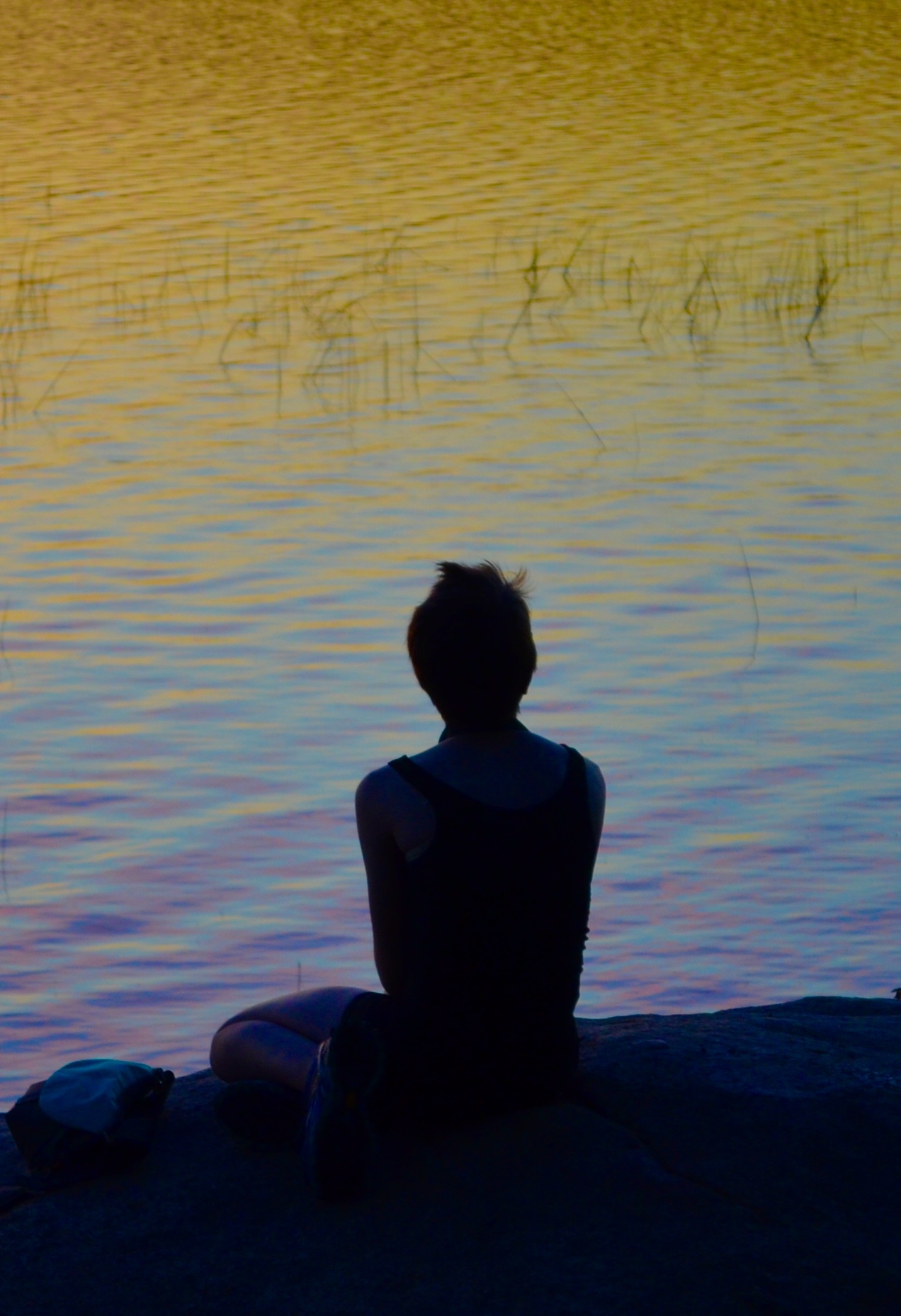
*image is a silhouette of my child at sunset

Mother Image

DSC_0360

I sit in my car listening to NPR, staring out across the lake. A group of water-fowl float in a line in the middle of the lake, lazily drifting across the surface. The story on the news is focused on discussion of the opening ceremonies of the Olympics, the troubles in Rio, and the profound separation of the haves and the have-nots in that city.

It is peaceful and quiet at the camp. The campers left for home earlier in the day, and only the staff remains, finishing up their Friday staff meeting. Every now and then, a burst of deep male crowd voice breaks the silence. First, a cheer—a group of young men voicing the same words loudly and in unison—bursts from the meeting hall up the hill. A little while later, laughter. And still later, applause.

The voices are deep and grown up, and can’t possibly include my youngest child. But then again, they can. He has grown and changed—and continues to do so—on a nearly daily basis over the last year or so. The image that I have of him in my head doesn’t match the reality of who he is and who he is becoming. He is part of this group. He fits in.

Somehow, my mother-image of my children is not keeping up with their growth and their approaching adulthood. My image is mired in memories and the experiences of raising them from their earliest days through the years up to the present. Every moment blends together to create the image that I hold of them—always younger than they truly are unless they are standing right in front of me.

Some people might say my mother-image needs adjusting, but I think it is fine just the way it is. At least for now.

Elusive

IMG_2355

My cat is a fierce hunter-wannabe. She will chase and play with any bug that enters our house—well, most of them anyway. Occasionally, she is even successful in capturing her prey.

Last week, in her most recent fierce hunter move, she escaped onto the deck, chased a squirrel off our second story deck, and came running back into the house. While she totally meant to chase the squirrel (and win), she certainly didn’t mean to come running back into the house.

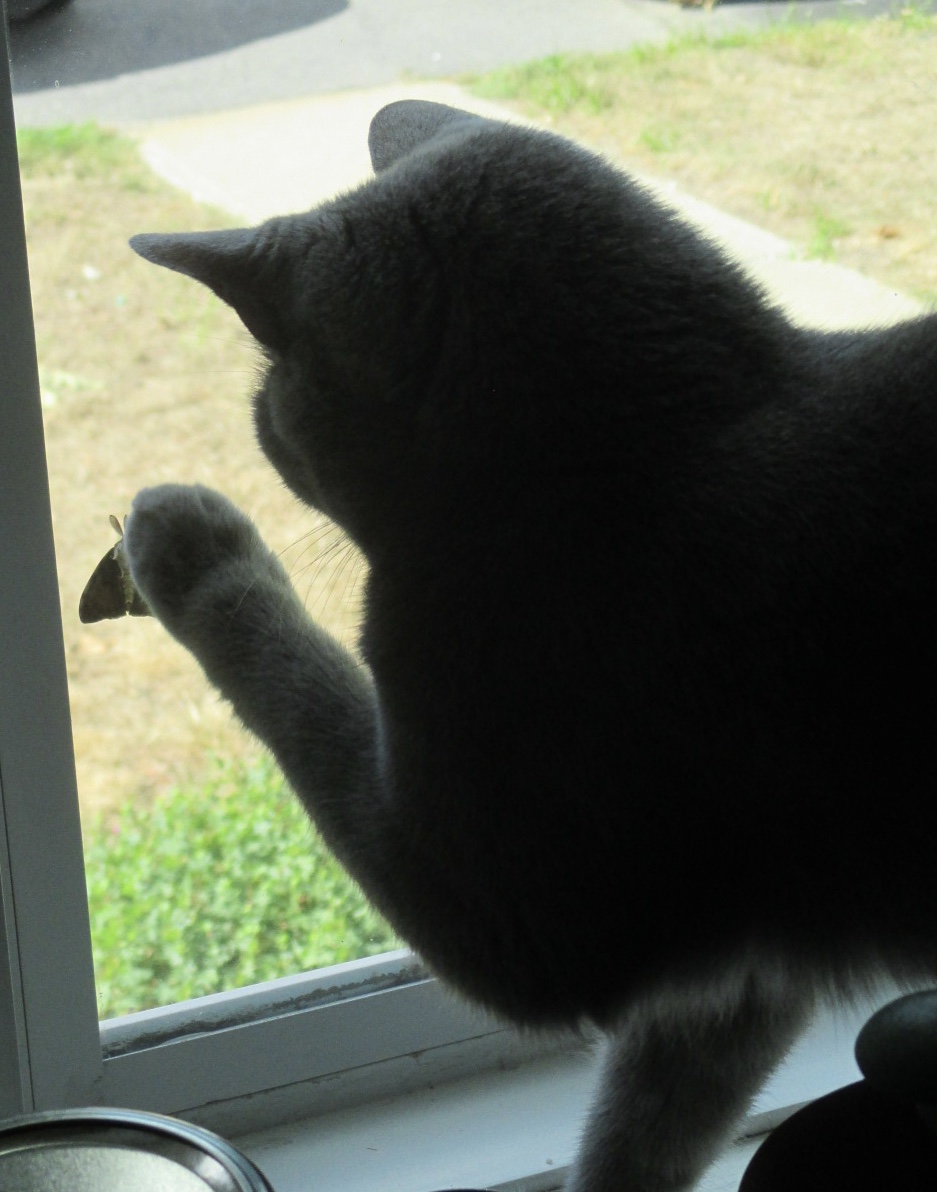
One morning this week, I watched as she tried to capture a moth. Her paw was right there batting it—once, twice, three times—slipping down the smooth glass of the window each time. The moth was still and unmoving, but moth and paw were not connecting. Despite her efforts to get the moth, my little cat was unable to capture it, and she couldn’t understand why.

The moth was sitting just on the other side of the window. But that didn’t stop the cat from the pursuit. She could see the moth. She wanted it. And she was sure she had a pretty good shot at it. She didn’t recognize the window as a barrier to her hunting skills.

I got to thinking about her attempts to hunt through the window, her ability to see what she wanted and go after it. And I considered how her actions compare to some of the actions in my own life. So often, it seems, I can see what I want—either literally or figuratively, but I can’t quite get there. There are unseen barriers, and my goal is elusive.

But one day, when I least expect it, I will open the door, and my cat will accidentally slip outside (she’s sneaky like that), or the moth will fly in. And in that brief moment, the barriers between fierce hunter and prey will melt away, and the cat will have access to what she wants. This same type of fortuitous moment might work out for me, as well. If I keep working, keep striving, keep pursuing my goals, a moment of opportunity may arise, and I, too, will have access to what I want.

Journey

DSC_0914

Recently, I have been feeling as though my life is spent attending to the needs of everyone around me—children, adults, felines, etc. I have lost touch with myself—the very things that make me who I am—and sometimes, I feel as though I am in danger of bursting into a million tiny pieces and floating off in every direction. I imagine my children’s initial shock at the explosion, like a ‘poof’ of something disappearing in a magic show, and then the scramble to gather the pieces. But it will be too late. I will be gone. As this image fills my head, I catch myself wondering whether ‘spontaneous explosion’ is a thing that can happen to humans.

Last evening, in my need to get out of the house for a few minutes of peace, I went on a journey. Okay… I lie. I took out the trash. But for me in my condo association, “taking out the trash” means a quarter mile walk to the dumpster. It’s usually a nice evening stroll, though if the trash is particularly heavy, it can be tedious. Last night, the trash was light.

My daughter had just come in from a walk and said she had seen a turtle laying its eggs by the side of the pond. As I approached the pond, I wondered if I would see the turtle. Because of the summer heat, the pond is covered in a thin, green film of algae, swirled by the breezes that sometimes play across the water’s surface. The pond is so evenly covered that it is reminiscent of the first skin of ice that appears each year when the cold sets in. The algae though, it makes the pond seem neglected, dirty.

Further down the path, I enter a thick grove of trees—the darkest spot on the journey to my destination. I am a week too late for fireflies, I think, though it isn’t quite dark enough outside to tell for sure. Last week and the week before, the fireflies danced under these trees.

On the walk back toward home, birds are flitting near a toppled and rotting tree stump left behind by a severe storm several years back. The smells of forest remind me that there is a drought, and in my mind, I am transported to the year I lived in northern California. There, the scent was similar—dry and dusty—but was tinged with eucalyptus and Manzanita. As I pass the pond once again, a bullfrog sings his mournful song.

The walk was not long, but the noise of the day has been replaced by the soft sound of my sneakers on the pavement and the night noises of nature. The last streaks of light are fading from the sky as I duck under tree branches hanging low above the walkway. I breathe deeply of the air that is beginning to cool down, and my mind is clear. The clarity may only last a moment, but I am ready to go back to work.

I open the door to my house and step inside, feeling just a little less likely to spontaneously explode.

Matches

DSC_0384

One of the skills that I have taught my children—perhaps the only one that will ever come in handy as they already use it fairly often—is the skill of searing the ends of rope, cord, ribbon, nylon, etc. I have taught them how to pass these ends and edges through a flame in order to “seal” them so they won’t fray. This is a skill I learned in an indoor/outdoor sewing class back in my high school days—one of the few useful skills I acquired in the six years spanning grades seven through 12.

The other day, C came into the kitchen with a length of black cord that was fraying. “I need the lighter,” he declared as he walked toward the crock where we keep it.

“Oh…” I hesitated. “We don’t have one that works. Your brother used it, and I meant to replace it.” I had put lighter on my shopping list countless times, but I never seemed to remember to actually buy one. The one we had was clearly empty and wouldn’t stay lit, but I hadn’t thrown it out. Somehow, I figured it would be useful (for what, I have no idea) until a new one appeared.

“So…?” he posed as a question, thinking I would fill in an answer for him. I continued typing on my laptop. “What am I supposed to do? I need to fix this.” He held out the cord for me to see, but I continued to work. By this point in my mothering career, I pretty much have eyes in the back of my head, the side of my head, the top of my head, and the bottom of my chin. I knew what he needed.

“We have matches,” I told him. He began searching the junk drawer in the kitchen, and he seemed to have found some because the next thing I knew, I heard him trying to light one. The first match didn’t stay lit long enough for him to sear all of his cord. The second one didn’t, either. He was on the third when I finally looked up from my work.

“How about if you light a candle?” I suggested. “Then you will have a constant flame, and you can work with that.”

Success! He was able to complete his task of searing the ends of three, maybe four, cords.

The next day, W walked into the kitchen with a length of paracord that he had wound into an impressive skein. “Nice!” I nodded my approval.

“I just need to seal these ends,” he said, holding them up for me to see.

“Um…. We don’t have a lighter that works,” I reported, feeling a strange sense of deja vu. “But we do have matches you can use.”

He dug through the drawer and pulled out the matches. He studied them for a minute. “How do these things work?” he asked, jokingly. As a Boy Scout, he has used matches once or twice.

“Hey, I can help you!” C said, coming to his brother’s rescue. “I’ve mastered this old-fashioned technology!”


Upward

DSC_0897

When you start with a blank page, anything is possible. Blank page, blank sky…

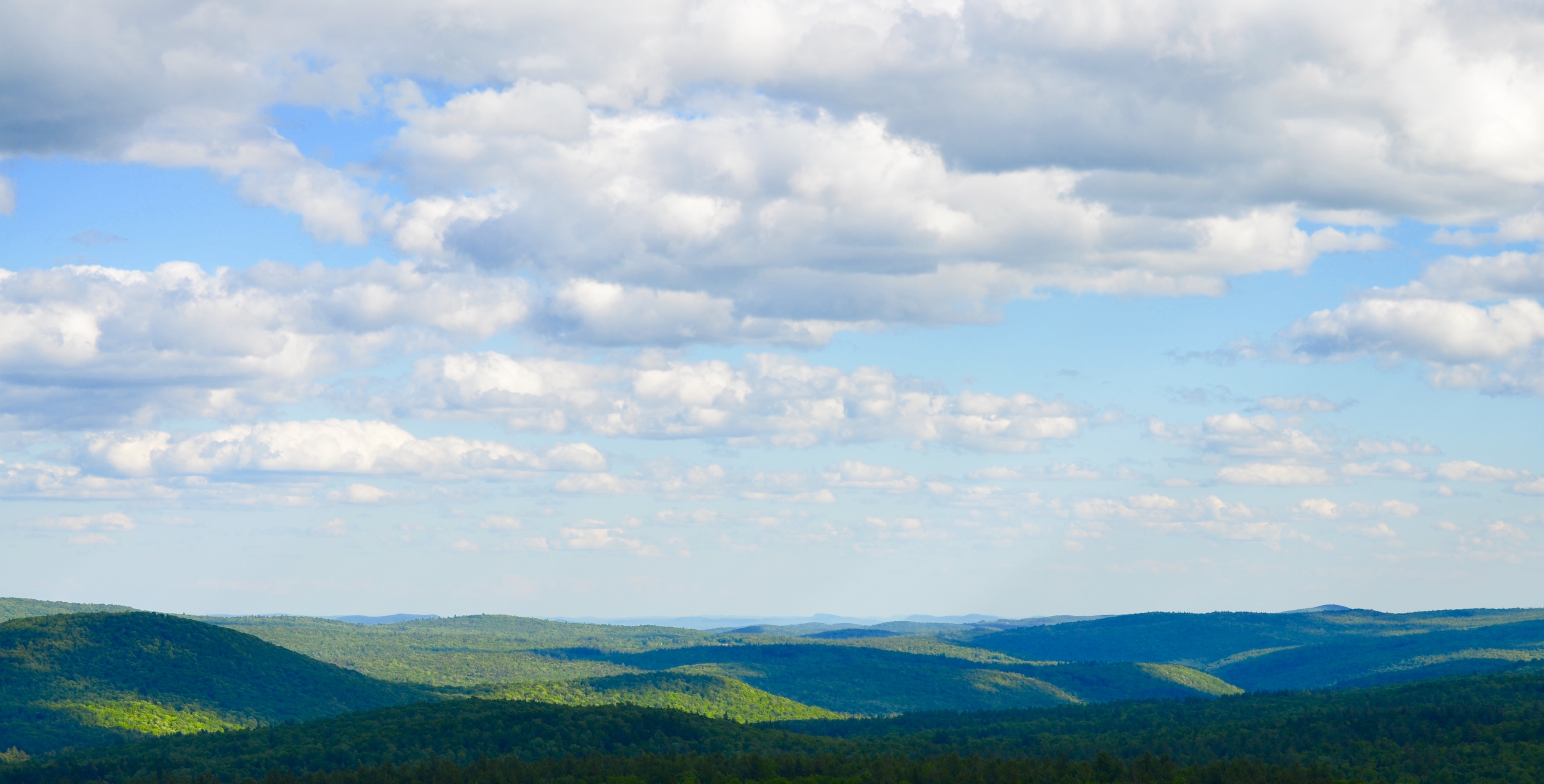
Blank is where I start today, and I move to the daily prompt: clouds. Some days the clouds match my mood; some days not. Some days the clouds can determine my mood; some days not.

Today, there are large, fluffy white clouds spreading across the sky, catching sun and shadows in a wondrous ever-changing pattern of beauty and sunshine and summer and lightness. The past few days, the clouds have been captivating, amazing, breathtaking in their summer glory. Uplifting.

Is it that these clouds only come in the summer time? Or is it that I have only noticed them in the past few days because I have finally slowed down enough to do so? I have slowed down enough to pay attention.

For much of the year, I am closed off and focused inward in an attempt to keep things together and running smoothly. I am maintaining schedules for far too many people. Often in these times, the winter sky is gray and heavy with the possibility of snow and ice and disruption.

In the summer, I can loosen my grip, let go and be free. And looking up is a joy. I can go out into the world and experience the beauty of nature in the clouds that seem to dance from west to east.

Yes, the summer clouds are different. They certainly seem different. By maybe it’s just me.

Good Fence/Bad Fence

As poet Robert Frost writes, “Good fences make good neighbors.” In New England, there is much evidence of good fences in the miles of rock walls that amble over hills and through meadows in their forgotten quest to separate the farms of yesteryear. As I look at these walls, I can see the neighbors, each on his or her side of the wall, walking the line together piling stone on stone after each hard winter.

I, however, would like to argue that good neighbors exist regardless of the state of the fences that separate them.

As the resident of a townhouse, walls are generally all that separate me from my neighbors. Thankfully, my neighbors and I get along. At least I like to think we do….

Take my neighbor with whom I have an adjoining deck. For a long while, we had a lack-of-privacy fence between us. Granted, it was supposed to be a privacy fence, but it failed miserably at that job. In fact, the fence actually rotted and began to fall apart. For two-plus years, there was a large hole—at adult eye level—which allowed us to chat without looking around the fence by leaning on the railing. If I stepped out my door, I would often hear, “Howdy, Neighbor!” and a lengthy conversation would ensue through the hole in the fence.

The new privacy fence, rebuilt earlier this season, has just enough space between the slats to allow for partial view from one deck to the other. There certainly is no true “privacy.” As we often say, it’s good we like each other!

On the other side of our house, our former neighbors had two little girls. While our decks were not joined, we did have a more effective privacy fence separating us. But that didn’t stop the girls. If they heard us on our deck eating dinner, they would lean over the railing and engage us in entertaining conversation. It usually started something like this:

“Are you eating dinner?” one would ask. And when we replied with the affirmative, the conversation would continue. “What are you eating? Are you almost done? I have sand in my shoes from the sandbox. Wanna see it?” On a crazier night, one might announce from just behind the fence, “I’m naked. Is that embarrassing you?”

Perhaps it’s true that good fences make good neighbors. But bad fences make better neighbors. Honestly, who needs fences anyway? I suppose I might need a good fence if I had bad neighbors.

IMG_2258

[Image is a photo of our privacy fence, stealthily snapped out my back door so my neighbors wouldn’t think I was creepily stalking them. Clearly, “privacy” is not the strong point of this fence.]

Blooming

DSC_0903

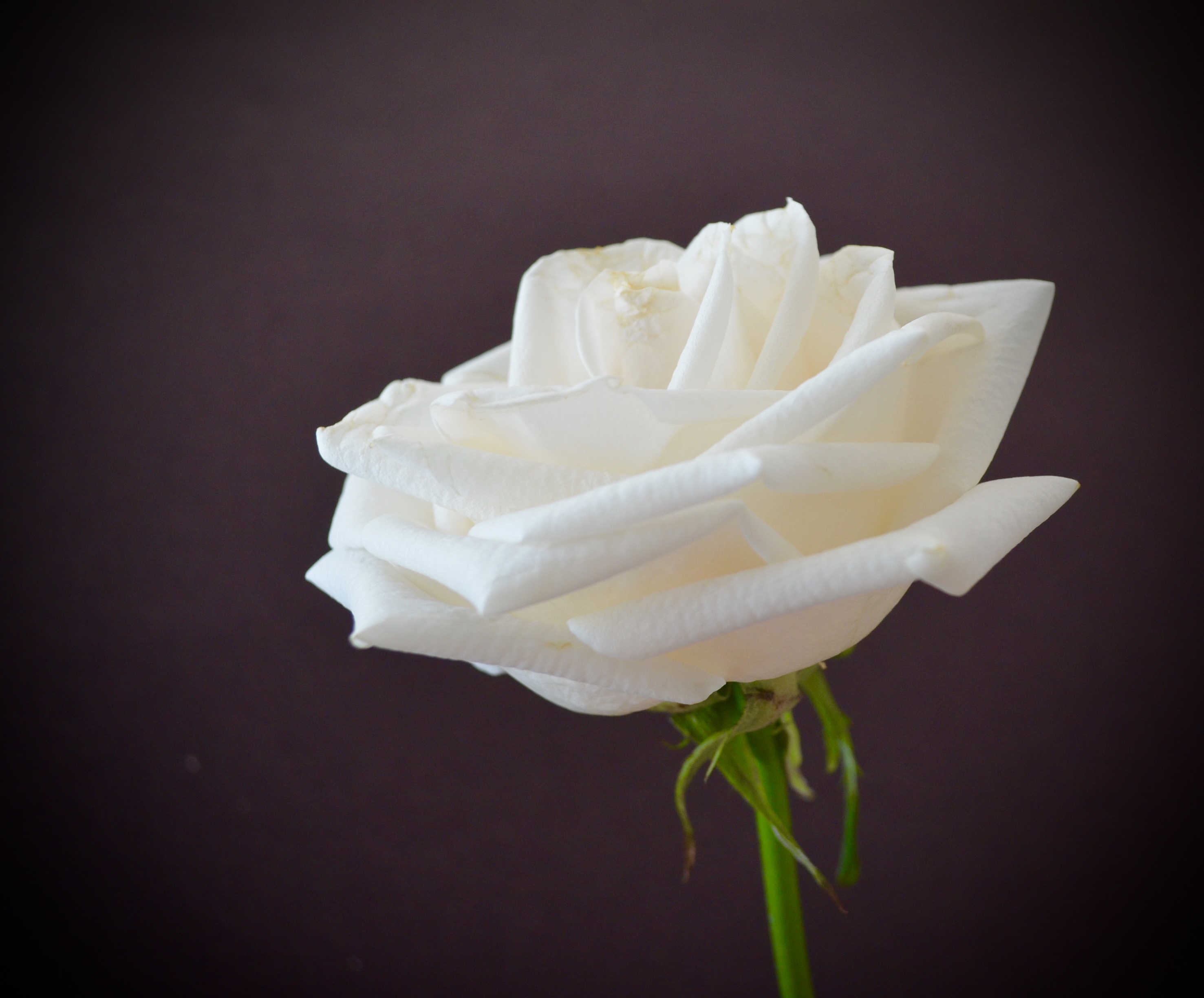
At my son’s high school graduation, each of the graduates was given a white rose before the ceremony began. Each student—all 300-something—walked in carrying his or her rose, though it seemed instruction as to the best way to carry that item in a procession was missing. It was, however, a nice touch.

After a two-hour ceremony in weather that alternated between cool, hot (for about 5 minutes), and windy, the rose that was handed to me by my graduate was limp and wilted. It seemed as though it might not be salvageable, especially after we spent another half hour or more taking pictures and further ignoring it. I had a vague thought that if I put it in water, the bud would continue to droop on a stem grown weak from mistreatment.

But I am a sucker for beauty and for living (and once-living) things. So when I arrived home, I gave the rose a bit of TLC. I clipped the bottom of the stem, stuck it in a vase of water, and placed it in the center of my kitchen table. In the next hour, it began to take on new life. First, it grew a bit less droopy. The petals stuck out in awkward directions as the bud began to right itself while it took in nourishment. It wasn’t long before the bud seemed much happier.

I left the house for a while to attend a graduation party, and when I returned, there were bits of torn leaves littering the table around the base of the vase. “Which one of you has been eating the leaves off the rose?” I scolded the cats. “Knock it off!” I moved the vase to the kitchen counter because I am delusional enough to believe my cats do not frequent the counter tops.

In the middle of the night, I was awakened by a thunk and an additional strange noise and then nothing. I fell back to sleep and quickly forgot about the disturbance. When I went downstairs in the morning, the vase lay on its side on the counter, and the rose was on the floor beneath, lying in a puddle of water.

Sighing, I clipped a smidge more off the stem, and once again placed it in the water. This time, I snipped off the leaves since that was the part the cats found most appetizing.

Since then, my son’s rose has bloomed beautifully, even growing shoots with fresh new leaves where the old ones had been snipped off the stem. This rose has become a fitting symbol for the life to come for my graduate. Sometimes, things don’t go smoothly. We may be weakened by the experiences we withstand. We may face adversity. We may be torn down by those around us. But through it all, we learn that we are stronger than we might have thought. We learn to gain strength from our trials. We learn that growing in new directions is always a possibility. And we learn how to let our inner beauty shine through it all.