Positivity Post: Lack and Limits

It seems more and more that society has a distinct focus on “lack.” So many people focus on what is lacking in any given situation that they look right past all of the good and positive things about life. The focus on lack spreads and begins to permeate all aspects of our lives, and we end up living a life in which we are merely skimming the surface of what is possible.

Society is caught up in consumerism, and as we look around at what other people have, we see what we don’t have. In an effort to keep up with others and maintain social status, we feel a need to go out and buy the things that are missing from our lives. The more we have, the more we need. And while we think this “stuff” will fill the void we feel, ultimately, it only adds to the problem.

I believe this is how we are getting it wrong. If we begin to open our eyes to what is around us, we will begin to appreciate what we have and be more available to live in the present moment. For example, if we focus only on how cold the winter is or how short the days are, we will miss the beauty of the snow and the colors of the first morning light as they dance with the gray scale of the winter landscape.


 

As we focus on material possessions, lack begins to spill into other areas of our lives, affecting our very ability to be happy. We bring that focus to our work, our home life, and our relationships. If we focus on all the things that are missing from our lives, we will not be happy. Friends and family members are unable to be who we want them to be; our job is not fulfilling; our location will never be as urban/rural/warm/cool [fill in the blank] as we want it to be. In short, we cannot be satisfied with what we have because we are too focused on what we don’t have.

As an agent of positivity, I am putting forth a challenge. For one week, work to stifle your focus on “lack” and begin, instead, to focus on what is present in your life. Take the time to really look around you. What is working? What is happy? What do you consider to be your blessings? What are you grateful for?

Start there. Focus on the good. Tell people how much you appreciate them by focusing on their good traits. Take a few moments to play with your pets. Recognize the beauty in the little-kid hand prints on your refrigerator. Really study the variations of color in the sky as the sun goes down at the end of the day. And reflect on what was good about the day.

Perhaps if we take time to really see what we have—all we truly have around us— and be present with our blessings, we will not have to search so hard for some elusive who-knows-what. And with all that extra time and positivity energy, the possibilities that open up in your life may just be limitless!
Kindness

We all have stories we tell ourselves. I have stories that I’ve woven into my reality that have been created to serve some purpose or other. Sometimes, the stories allow me to stay in my comfort zone. For example, lately I have been telling myself that once it warms up outside, I’ll start walking. If I tell myself this story, I don’t have to push myself to step out into the cold. In the winter, I like being warm, and even though I should go out and walk each day, it’s cold. And icy. And the wind will cut through even the heaviest of winter jackets. Winter is not the time to exercise outside, even though I used to do it all the time back when I was younger and more tolerant of the extremes in weather.

Sometimes, the stories I tell myself are designed for self-protection—i.e. so I am not disappointed about something that isn’t likely to happen. I might tell myself that a story won’t be published or that I am not good enough to be included in a group or accepted into a coveted program or opportunity. These stories are woven specifically to protect me from disappointment. Because after all, if I don’t get my hopes up, I won’t be let down, will I?

But the worst thing is the constant self-talk in my head. I can be brutal—constantly chastising myself for the things I say, the things I do, the things I don’t do. I have a whole series of conversations and monologues that I run through my head that focus on the worst about myself. I don’t think I am an anomaly in this respect. I think it is something that women, especially, do on a regular basis. Why do we do this? Why do we convince ourselves that we will never be enough?

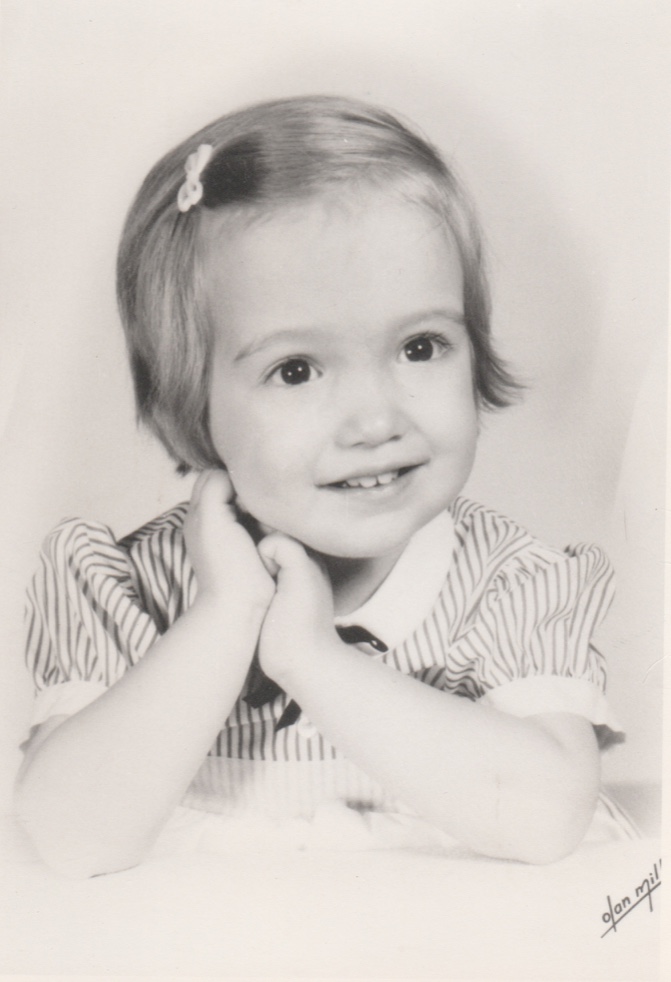
Recently, I saw this video by TruthBomb Mom on Facebook in which she spoke with other women about their self talk. They admitted that they are harder on themselves than they should be. When the host then produced a picture of the woman as a little girl, she asked if the woman would say the same things to this child. And so, I took out a picture of myself as a child. Would I tell her the things I tell myself? Perhaps what we all need to do is be a bit more gentle on ourselves.

The next time I am tempted to criticize myself for every little thing I do, I am going to think of this girl. If I think of her, I have an inkling I am going to be just a bit more gentle, more patient, and more kind with myself. Because I am a work in progress, and deep inside my soul, this little girl is still a big part of who I am.

Fleeting Thoughts

I am sitting on the couch all cozy under a blanket as I watch my cat. She is looking for something to play with or something to do to keep her busy. She contemplated eating the charging cord to my computer, but then she remembered she’s not that kind of cat. She is the kind of cat who enjoys pulling my kitchen towel onto the floor, so she moved into the kitchen, perhaps to do just that.

The energy it took to get through the day has drained me, and I am savoring a few peaceful moments before I move upstairs to reread one of the books I will be teaching next week. Peaceful moments equal reflection and writing time, and since I couldn’t corral my thoughts into something coherent, I am writing down the ones that make sense.

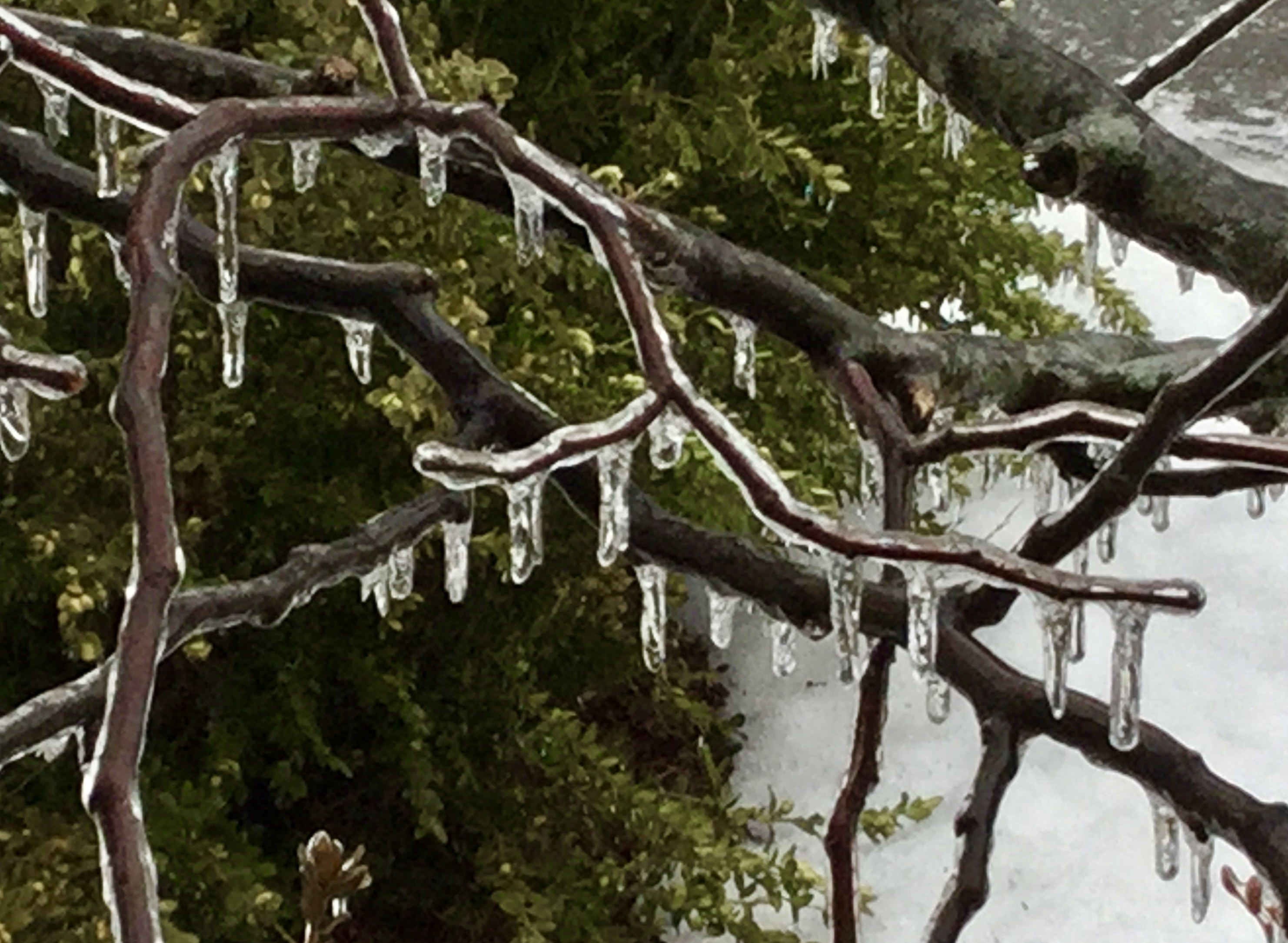
Today was one of those days when the world seemed to stand still. The weather dampened everyone’s mood as the rain poured down in buckets and froze on every surface, both horizontal and perpendicular. In fact, everything has been so slippery that school was tardy for itself today, with a two-hour delay that came in an unexpected pre-dawn phone call. Since then, it seems, the day has been working to catch up with itself.

Here in the Northeast, I am craving sunlight and warmth, the advent of spring. It is the dead of winter, and my body is bereft of vitamin D. Like my cat, I want to spend the day curled up in a sunbeam, soaking in the light and the warmth, feeling the positive transformation within the depths of my being.

For now, perhaps sleep will have the effect of a sunbeam. And maybe tomorrow, time will follow a more predictable path.

Positivity Post: Middle Ground

The recent trend in society focuses on rigid dichotomies. On all issues, it seems, we must fall on one side or the other. We are either one thing or the opposite; for some unknown reason, it is no longer okay for our ideas to fall anywhere in the middle.

Just ask anyone who is directing the societal rhetoric these days. We are either right or wrong. We are either winning or losing. We are a success or a failure. As everyone on social media is happy to tell us, we cannot be a partial success or a partial failure—we are one or the other. There is no longer and acceptable in-between and there is no way to be anything other than an extreme. Or is there?

It seems we have forgotten that all the good stuff resides in the middle. If we are wrong—and even if we are right—there are lessons to be learned from our situation. If we win, there are still important things that we should examine in order to continue the trend of winning. And if we lose, there are moments of greatness within our losing that are worth reviewing. These lessons, these moments, these important messages… they lie somewhere in the middle.

When we have two sides that are opposing—Republican and Democrat, to name a hot one—it is vital that we don’t let our differences get in the way of our progress. We must examine the middle ground to see what we have tossed aside in our desperate need to be right—so right that we forget to leave room for something else.

That middle ground—it is incredibly fertile. That’s where there are ideas and inspirations and moments and messages and tidbits and wisdom and experience that we can use as tools to help us navigate our differences, overcome our struggles, and get us closer to the spot where the sun shines and “argument” turns into “discourse.”

So come with me to the Middle Ground. Let’s go together. Let’s have some brilliant discussion and come up with some inspiring ideas. Let’s toss around our creativity, have some snacks, and share some laughs. If we can meet in the middle [and linger there], there is no doubt that our common threads of color and light and inspiration will lead us to solutions. Perhaps by examining the Middle Ground, we might even rediscover how much we like spending time together in conversation, and we can begin to build a bridge between us.

The Right Tools

On Christmas morning, we woke up to the quintessential “white Christmas.” Snow was falling thick and heavy, sticking to the trees and piling up on the lawn and driveway. It was the scene everyone longs for on Christmas.

But a white Christmas does not come without its challenges, most notably, the need to deal with snow removal. Snow doesn’t simply go away, and it can’t stay on the driveway and walkways… unless we want to be immobilized until spring, that is, and I’m pretty sure that was not in the cards. So I donned my warm winter snow boots, jacket, and gloves, and I trudged to the shed where—it was promised—I would find my dad’s “snow shovel.”

Let me take a moment to explain my use of quotes on the term “snow shovel.” In my parents’ house, the shovel that had been used (for many years) to rid the walkways of snow seems to be more of a lightweight garden shovel than an actual, dedicated snow shovel.

Sure enough, the shovel that I expected to find was standing at attention on the floor of the shed, waiting for me, taunting me, no doubt. Mom had also offered me a beautiful, rusty child’s snow shovel that I had when I was a child, back in the Dark Ages. This shovel held a picture of a cheerful snowman, and the handle was wiggly and just a few sizes too short for my adult frame.

I used the child-shovel to do a quick scraping of the stairs before I grabbed the larger shovel and headed out toward Mom’s car. After I removed the snow from the car (with a proper tool, not with the shovel!), I started to clean out the snow around the car. I shoveled, removing the snow so she would be able to get to the drivers side door without incident. The shovel was heavy with a long handle. It wasn’t flat like the scraper I was used to, and I struggled with it. With each scoop of snow I threw, I could hear Dad’s voice: “I’ve used this shovel for 40 winters, and it has always served me well. It’s a good snow shovel, nice and light.” Clearly, Dad had not held one of the newer plastic shovels designed specifically for snow. If he had, he’d know it was the right tool for the job.

From the car, I shoveled a narrow path down the driveway, a temporary walkway until the plow arrived to remove the snow from the driveway. When I was done, I retreated to the cozy warmth of the house.

The next day, I went out and purchased two new shovels for Mom, one large with a wide, flat blade and one, a very small scoop with a telescoping handle. It was far from an extravagant purchase, but Mom now has the tools she needs for the next storm. However, I am willing to confess it was maybe a little selfish of me. Now, when I’m at Mom’s house and it snows, I have the shovels I need so I don’t feel like I’m stuck and trying to dig out from the 1950s!

Weather

The weather outside is frightful. And by frightful, I mean the weather has been anything but mild. This weekend started as a snowy mess, and the next day—as the temperature was hovering just below freezing—it rained. Nonstop.

Friday morning, I had a long overdue hair appointment, and I stopped on the way home to pick up some Christmas presents. The drive was slow and somewhat dicey, and I was more than happy to finally land safely at home. My children were already home as the last day of school before vacation had been cut short for an inclement weather dismissal.

I had been home for about half an hour when the question came from the living room. “Mom, are the roads really that bad?” It was a question fashioned to determine whether or not the ask-er would be allowed to head out to the home of one friend or another.

“Yes,” I responded. “They’re pretty bad. No one is going to venture out on the roads today.”

From the kitchen table behind me, as if I had been conversing with a different child, came the statement, “I’m hearing off-roading.” I paused for a minute, just long enough to process that comment. And then I turned around and looked at W, my eyebrows raised in question.

He was smiling. “What?” he shrugged. “You said, ‘No one is going out on the roads today.’ You didn’t say anything about going somewhere off the roads,” he responded. And then he started to list off all of the places he could go off-roading.

These kids, they are always full of great ideas ….

Snippets of Life

Memories of my life are filed away like index cards carefully placed in drawers, an ancient and ever-expanding card catalog of snippets of life. I can open the drawers, flip through the memories, and see the things that have brought me to this place—this point in time.

Different drawers contain different sets of memories. The good memories fill several drawers, and I can flip through them quickly, as if spinning a Rolodex, or slowly like I am engrossed in detailed research. When I look in one drawer, I can see my children toddling down the hall. There are first words, first steps, first days of school. I pause for a moment on an afternoon spent running around the front lawn, desperately trying to catch leaves tossed and blown on the wind. The giggles are as vivid in memory’s ear as they were that day.

If I work really hard, I can go back to memories of my own childhood: picnics on an old wooden bridge, dressing up for church on Sundays, holidays, and the occasion or two when I walked home from school in the middle of the day for lunch. There are memories of lessons learned, family time, and brief vacations thrown in here and there for good measure.

Silliness weaves through most of the drawers, knit into the fabric of my very being. Here and there, a memory will bring up the humor that my children often take for granted. It is an essential part of our family life.

There are memories I draw upon for inspiration. Times I was the definite underdog, but I persevered and met with success. Times I was on the receiving end of Mercy and Grace. Times when love and laughter were on my side as I worked through a challenge.

The not-so-positive memories are in a drawer of their own, lest I accidentally stumble upon them while I am surfing my pleasant memories. I don’t open that drawer much—I don’t need to. It is stiff and broken and hard to work. It doesn’t quite close all the way, and sometimes, the memories slip out, catching me when I am low, and nagging at the edges of my brain. These memories, they chastise me for… well, for everything. Not good enough. Not strong enough. Not thin enough. Not happy enough. Not. Enough.

And I work diligently to recover and move on as quickly as I can to another drawer. Because the catalog has never been a bad thing. It helps me to stay organized and grounded. And it helps me to move in a positive direction. The good memories outweigh the not-so-good memories. File away the “mistakes made” as lessons learned, and they suddenly become a necessary step in the process. Because every step and every misstep, every turn and every detour, every moment lived through every age is a tiny building block in the process of creating my life. The good, the bad, the happy, the sad, every card in my catalog… these are all lessons learned.

Journeys

It’s been a tough week of walking the line. Some days, it seems gremlins have attached themselves to my brain, and they are sneaking around the edges, working their way into my thoughts when I least expect it. There has been much going on around me—accidents, illness, suffering, loss—all way too close. So many of these situations demonstrate how quickly our paths can veer off course and life can change. But these are also the things that tend to bring my blessings into focus. Being an eternal optimist, I always look for the blessings.

This year, our Thanksgiving table was filled with many family members. But throughout the day, I couldn’t help thinking about the one who was absent… Dad. There was much laughter around me, and I spent the day tip-toeing the precarious line between laughter and tears. Wanting to flee to a quiet spot to cry, but being drawn by the warmth of the laughter. I chose to show up and be present.

Life is a one-way trip, and we’re all going the same way. The clock always moves in one direction. We continue to move forward because… well, it’s the only worthwhile choice. There is no going back for a do-over. If you make a mistake, learn from it and keep moving. If there are gremlins in your brain, holding you back, figure out a way to get rid of them or sneak by them. Just. Keep. Moving.

Life is a journey. Pack what you think you might need, show up (with as much confidence as you can muster), and be present. If you need directions, I can help. Forward. Go forward.

And along the way, be the eternal optimist. Always look for the blessings.

Community

On Monday, I had a conversation with my college freshmen about community and responsibility. This conversation came after we had viewed a documentary on extreme poverty—living on a dollar a day—and attended a presentation by one of the young men who was involved with the project. Despite the poverty in the community, the families were very close as they worked together to help each other and make a better life for themselves. Our class discussion revolved around the responsibility each person has and how our responsibility extends from family to neighbors to the larger global community.

On Tuesday morning, I was driving to work. I had just pulled onto the entrance ramp for the highway when everyone around me suddenly began to slow and then they stopped. I looked to the highway on my left just in time to see a car flip over and land on its roof in the median. I pulled over and put my car in park. I sat for a minute catching my breath and working to calm my nerves as I watched several people get out of their cars and run to the flipped car to check on the driver. Before long, all traffic had stopped in both directions.

[I will say, I stayed in my car. Unfortunately, while I remain calm under pressure and can deal with emergencies, I do not deal well with injury/blood/death/etc. These things cause me to grow faint and shaky, pass out and become completely useless to anyone who might need help. Knowing our limits—it’s an important part of self-awareness.]

Four or five people gathered around the car and helped the driver out and to her feet. They walked her gingerly away from the car, and went back to check that the car was empty of other passengers. At this point, I decided the situation was under control, and I slowly made my way around several stopped cars and drove to work.

There are times when I think we are on our own in this country. The sense of community and our responsibility to others gets lost in the craziness of everyday life. And yet, this incident was an example of the many ways we come together to help others in need. We are all here together, and when we most need help, others generally show up, We have a responsibility to our community—both locally and globally—and if we take the time to look around, we will see ways in which we might just make a difference.

Compassion

It’s a complicated world we live in, and it’s important that we stop dancing around some of the bigger issues that threaten our safety and our society.

Today, I received a lengthy and detailed email from some overarching authority at one of the institutions for which I work. This email discussed how to recognize and assist individuals in Distress, with a capital D. “Distress” was then broken down further into several categories: general distress, victims of sexual misconduct, those at risk of suicide or self-harm, and those who may be dangerous.

This last one—oh yikes! But true, even though it seems to hit a bit too close to home as we begin to dissect yet another mass shooting. I listen to the news as the sheriff says, “No one expects this…” even though we are all coming to expect this. I hear an official on ABCNews instruct, “We all should think about what we would do in this situation…” and I know that any plan I could make would be lost in the terror of the situation.

But for those of us who daily deal with vulnerable individuals on a personal level, it is important that we are familiar with the warning signs of Distress. It is important to know what hurt looks like; how pain manifests; and when anger crosses into danger. So I read through the email, and I will read it again to commit the details to memory.

To all of my family, friends, students, neighbors, acquaintances, past and present; to all the people I know only in passing… if you are in Distress, I am here, and I am listening. If you need to talk, I will hear you. If you need a shoulder to cry on, mine are strong and broad. If you need a hug, my arms are open. If you need to sit in the corner and cry without judgment, I will sit with you. If you need encouragement, I will cheer you on. If you need prayers, I will offer them up.

I know I am not alone in the offer of help. The world is full of caring, kind, compassionate individuals who will listen and be present. They are willing to lend a hand, give a hug, connect over coffee, offer words of encouragement, or say just the right thing to make you smile. If you need something, we are here. Please… speak up and let someone know. If we all work together, perhaps we can make this world a little friendlier, a bit softer, and just a touch less complicated.