Sibling Challenge

Through years of parenting and even more years of working with teenagers, I have gained a certain perspective on teen shenanigans. When this weekend started out with a “friendly competition,” I knew things were not headed in a positive direction.

We were getting ready to leave for a weekend away, and we were rushing around to take care of the few final tasks that had to be completed before our departure. We needed to dispose of the garbage and load the car. My youngest agreed to “take a quick run” to the condo dumpster. But instead of walking, he thought he would ride his bike.

Now, anyone with more than one teenage boy knows that nothing is real—or fun—unless it is made into a competition of some sort. In this case, “a quick run” became the point of competition.

“I’ll get down there and back before PiE gets here,” my son announced. “But instead of walking, I’ll take my bike.” His bike was lying in the front yard waiting to be loaded onto the bike-rack.

“I’m gonna time you!” challenged his older brother. “I’ll start the timer as soon as you get outside.”

“NO!” I told them, sternly. “We are going away, and if you race to the dumpster, you’re liable to end up hurt. I don’t want to be taking you to the ER before we leave. Or spending the weekend at the hospital, thank you very much.”

“Oh, I’ll be fine,” W pronounced as he continued out the door, grabbing the garbage on his way.

“Don’t race!” I hollered after him, but my command fell on deaf ears as he strapped on his helmet and took off at break-neck speed, his brother’s challenges urging him on. “Ugh!” I groaned in his wake as C focused on the stop-watch on his iPod.

It was only seconds before C was running out the door to check W’s progress, fully expecting to see his little brother disappearing in the distance. He stood outside for a minute, yelling after W, and then he came back into the kitchen, laughing. “He fell,” he informed me. “He was standing at the bottom of the hill saying, ‘Mom was right!’” Of course, these kids joke around so much, I didn’t fully believe him.

But sure enough, when W returned to the house, he had an odd combination of scrapes and cuts—his left elbow and his right thigh and ankle. While his injuries didn’t require medical attention, they did slow him down (just a bit) during our weekend adventures.

The lesson learned, “Mom was right,” could be priceless. But this lesson will fade as quickly as the pain of the road rash, and he will have to be reminded, once again, that sometimes Mom can see into the future and can predict how things will end. Some lessons need to be learned again and again in order for them to eventually… maybe… stick.
Fine

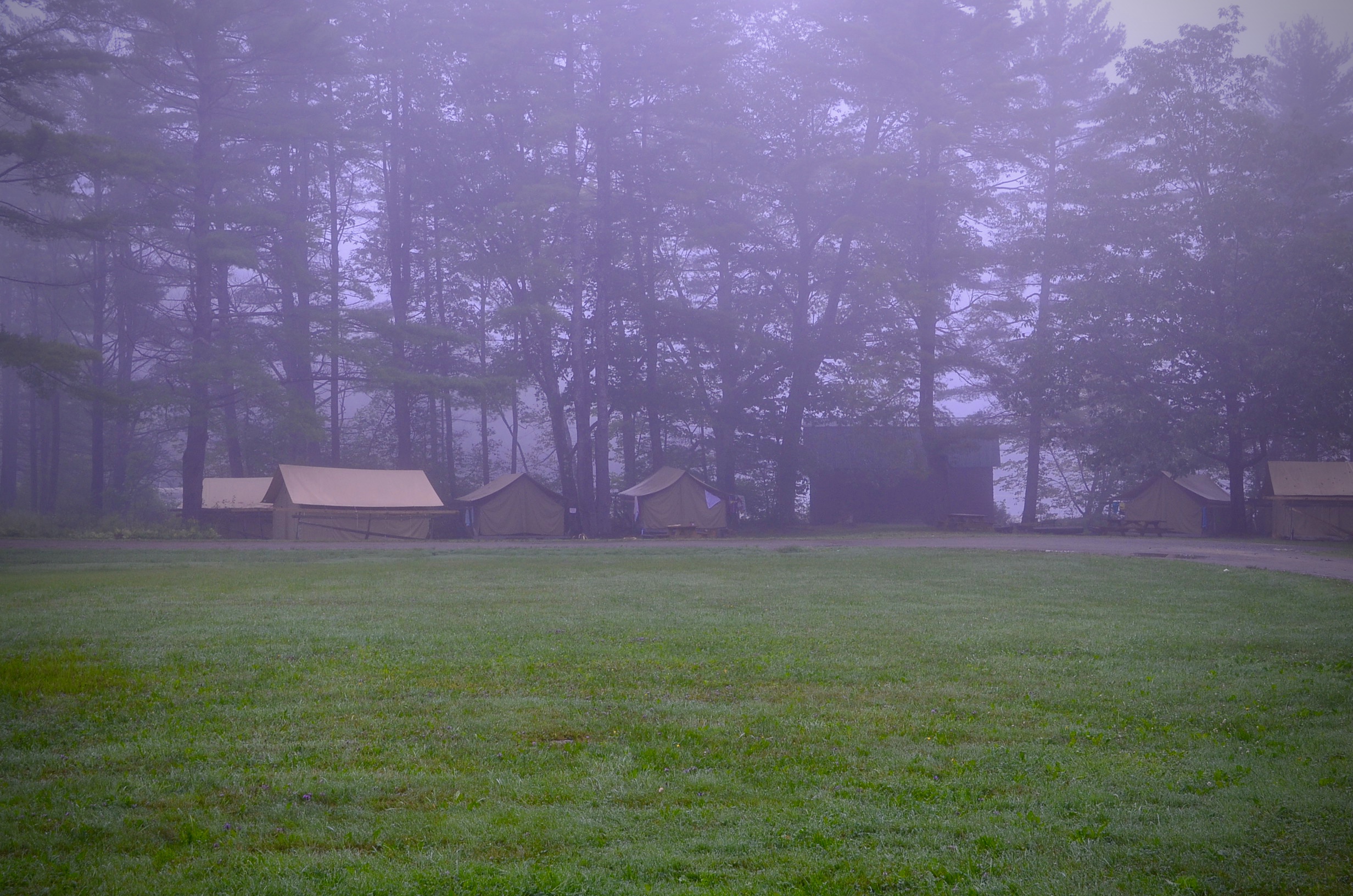
“This is the camp nurse,” I heard through the phone in the shallow end of Friday morning’s sleep. This was the third call I’d received that morning and the one that truly woke me up. I’ll admit I was sleeping late, but in my defense, I am recovering from surgery—and minor or not, it’s a perfect excuse to savor extra time behind the hazy veil of sleep where there are no demands on my time and energy.

“Your son is fine,” she continued. No, I thought. If my son was fine, there would be no reason for you to call me. I have been around the sun more than once, he’s my third kid, and I understand if the camp/school/health center nurse is calling me, all is not fine. I held my breath as I sat up too quickly, waiting for her next words.

Low-grade fever, sore throat, general achiness, she outlined my son’s not-so-fine physical state. A virus, it seemed, or possible strep. “Since he works in the kitchen…” she stopped and let me fill in the rest of the sentence. Yes, he would need to be seen by the doctor.

As an educator, I completely understand. But in the back of my mind there is the nagging lack of fairness that even though it’s fine for the campers to get my son sick, it’s not as fine for my son to get the campers sick. I drove to camp earlier than expected to take my son to the doctor where he was pronounced fine, as I suspected. Well… there is no doubt he has a virus, but thankfully, no strep.

In fact, on the way back from the doctor, we remembered that last year, when he was a CIT, he had the same symptoms at almost exactly the same point in the summer,  so we’ve dubbed it “camp crud.” Next year, when I get a call from the camp nurse during week five, I’ll know to say, “Oh, it’s just camp crud. He’s fine!”

When Aliens Move In

I was having a conversation with my neighbor recently, and midway through our discussion, she said, “Was your son home the other day? I said ‘hi’ to him, but then I wasn’t quite sure it was really him. I thought it was, but he’s changed so much….” Her voice trailed off.

I get it. We have lived in our neighborhood for the past 13+ years, and the kids were very, very little when we moved in. Now, they are hovering on adulthood, driving, working. They have grown from knee-high to taller than Mama. Their schedules are busy, and they don’t cross paths with the neighbors as much as they used to. So it doesn’t surprise me that recognizing them might be a challenge.

There is this subtle change that all kids experience on their journey from childhood to adulthood. But then there is the not-so-subtle change when they are suddenly much more adult than they were yesterday; one day—quite suddenly—they almost seem to be different people altogether.

It usually happens after a feeding-frenzy when they have somehow managed to consume every edible morsel in the house. They go to bed and the next day, or the next week, they wake up, come into the kitchen for breakfast, and you think, Is that really my child at the table? As you look at said child, you notice that the face is more angular; the shoulders are a bit broader; the voice is deeper and the vocabulary is more mature; moods and attitudes vary from moment to moment; and wait… my child would never have worn those clothes yesterday. Where did he even get that outfit? You rack your brain trying to remember if you purchased that shirt, or from whom he might have borrowed it.

As you begin to get used to this taller, louder, hungrier being that now inhabits your home, you simultaneously start to wonder what happened to your child. Where is the child who—just yesterday—was climbing trees and catching frogs? Where is the child who cuddled up next to you while you read bedtime stories? Where is the little one would get up from a Lego-building session and come into the kitchen for a hug?

In fact, I will admit that last summer, I dropped my son at camp, as I had every year for several years. A week later, when I went to pick him up, I could not find him in amongst the crowd of boys all dressed alike. I even spotted him at one point, only to continue scanning the crowd because that kid just didn’t look like my kid. Seriously. My own kid.

And then there was the day over the last year when I called home on my commute from work. A man answered the phone and my heartbeat quickened. WHO IS THIS?? I almost screamed, but then I heard a lilt that I recognized in the strange male voice. Oh, wait…. Perhaps this is the new voice of my kid…?

It’s been a process, but I’m beginning to get used to the new kids who share my house with me. Because with these new kids come some unexpected adventures and new idiosyncrasies. These new kids help each other, they work together, they brainstorm solutions to their own problems, they have goals and dreams, and through their daily experiences, they are developing the grit to reach the goals they set for themselves.

And every now and then, I know they are the same children who have always lived here. When I am really lucky, one of them will come into the kitchen and surprise me with a spontaneous hug.

Potato Chip Rant

My kids eat potato chips. Now, I’m not going to say they eat a lot of chips. They actually have fairly healthy diets, but chips are an “extra,” bringing crispy, salty goodness to snack time. If you’re trying to feed hungry teenagers, sometimes you go for the high calorie, filling foods. But in truth, don’t potato chips count as a vegetable? P-O-T-A-T-O-E-S, after all.

If you buy a “regular” bag of potato chips—and for the sake of our argument, we are using Wavy Lays in the red bag—you will get 7.75 ounces of chips. One serving of Wavy Lays potato chips is one ounce, or “about 11 chips.” [I’m sorry… eleven chips? First of all, who counts out eleven chips? What does “about” mean? Can I have eleven chips or can I only have ten?] Anyway, in the “regular” bag of potato chips, there are “about 8” servings, but I can do the math, and I know the eighth person is going to get gypped. Therefore, I would say there are “about 7” servings in a bag. That way, all seven people get a bonus chip (especially with the chintzy, eleven-chip serving size).

If you buy a “Family Size” bag of potato chips, you can still only eat those eleven chips, but now (because you are part of a family), you will get ten ounces of chips. The “Family Size” bag offers 2.25 ounces more than if you were a single person buying the regular bag of chips, I suppose because a family is only slightly bigger than one person. It doesn’t seem that a two-and-a-quarter-ounce difference justifies the denotation of “Family Size,” but maybe most families are different than mine. The nice thing about the “Family Size” bag is that there are ten servings. None of this “about 10” servings with the last person being gypped. Because chip makers knows how families work. And families must be fair to all parties so as to prevent World War Three.

Now, if you are really going to go hog wild on the chip-eating thing, you might splurge on the “Party Size” bag because then you will get a full fifty percent more than if you are only in a family. Yes friends, you will get 15.25 ounces, allowing you to invite half the number of people in your family to your “Party” as long as your guests count out their eleven chips. I am thinking they should see how many ounces they might cram into the “Hungry Teen Snack Size” bag.

And speaking of hungry teens, about this eleven chip serving size…. Whoever determined that eleven chips is a serving has most likely never even met a teenager, never mind eaten with one. Perhaps, they have never even met someone who eats potato chips….

Grocery Receipts

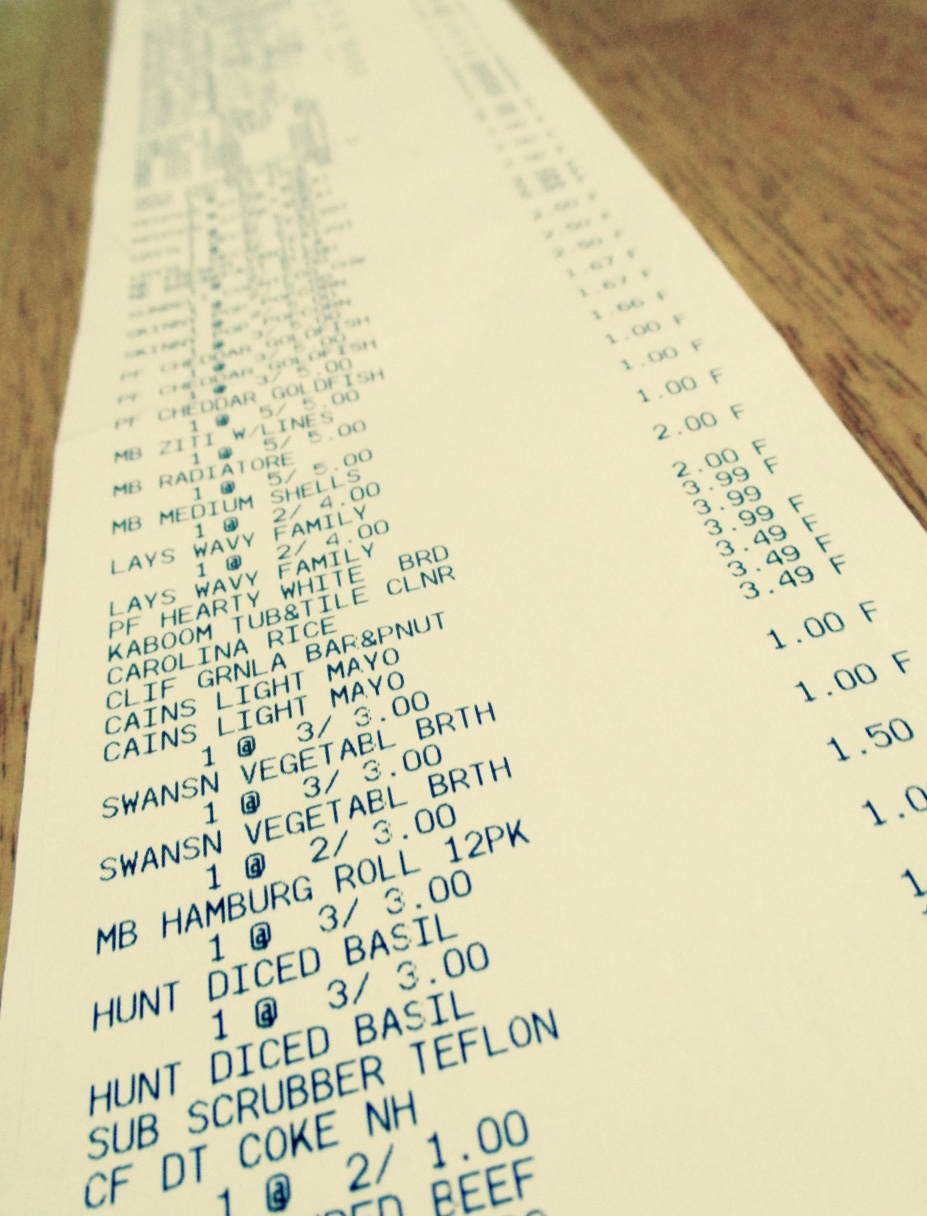
When I was a kid, and I mean a very little kid, I used to think a long grocery receipt was so amazing—in an awesome sort of way. I would watch the receipt poke its way out of the cash register and lengthen with each item the cashier keyed in during our weekly grocery trip. At first, the paper would loop around on itself. But soon, it would spill over and inch closer and closer to the floor, moving under its own weight. When the cashier pulled it out, she would wind it back and forth like an accordion until it was the same size as the bills, handing Mom a neat pile of dollars, receipt, and green stamps. How exciting it would be, I thought in my little girl mind, to get such a long strip of paper as a receipt. When that happened, it would mean I was truly an adult.

Back then, the receipt was a tally of every single item, unlike now when some things that are bought in a quantity of more than one might only count as one line on the receipt. And back then, each item was keyed in by the cashier. There were no scanners in my childhood, but we didn’t seem to mind the wait in the check out line. Of course, we didn’t have a choice.

Today, I am here to say that if a long grocery receipt is the sign of adulthood, I have (definitely) made it! Not only have I made it, but I will be back at the local grocery store in the middle of the week. Because no amount of food lasts long in my house. The reality… that 2.7 pound bag of cherries I bought at 2:30 this afternoon that I thought would last the week? That was a snack for a hungry teen.

It’s funny, isn’t it, how our perceptions change as we grow older. Nowadays, I am likely as not to cringe at the long grocery receipts. What did you used to think would be really cool, but now makes you cringe?

Positivity Post – Caring from the Inside Out

I have always loved to bake. More importantly, I love to bake for others. In my early adulthood, I was a member of the dorm staff of more than one boarding high school, and my living quarters were accessed from the dormitory floor.

Back then, when I baked treats, students were well aware as the scent of baking cookies [muffins, cupcakes, etc.] wafted through my door and out onto the hall. They knew that when study hours were over, there would be freshly baked snacks. This was one of the ways that I let my students know I cared.

Nowadays, I am still committed to baking for others—for my family, my students, my coworkers, my children’s friends/parties/bake sales, etc. And every now and then, I have this strange urge to combine unusual ingredients. Last week, I had an avocado that needed to be used up, and I considered using it to make muffins.

A quick Google search, and I found Gimme some Oven, where I scored this recipe for blueberry avocado muffins, a healthy and amazingly delicious alternative to the traditional blueberry muffins. Because these muffins are both healthy and tasty, I will definitely be making them again! This is one of the ways I let my family know I care.

Don’t Say Anything…

When I was a kid, my mother made sure I was kind and polite, and she often repeated the adage, “If you can’t say anything nice, don’t say anything at all.” I will admit that even as a young girl, if I wasn’t careful, I would easily tumble into a snarky comment before I could catch myself. But with my mother’s frequent reminders, I learned to think before I spoke—most of the time, at least.

These days, it seems “If you can’t say anything nice…” has gone by the wayside. More and more frequently, it seems people on social media sites are posting comments specifically to pick a fight. I am not naïve enough to think there are so many full-grown adults who are incapable of recognizing inflammatory remarks when they are posting to social media. Kindness just takes a bit of forethought.

If we are trying to discourage our children from engaging in cyber-bullying, why are so many adults modeling the opposite behavior? Why are we so quick to be nasty to others behind the shield of our computers? In the early days of the Internet, online comments were made under a guise of anonymity. Nowadays, people on social media post their comments—anything from nice and complimentary to mean and judgmental—attached to their full names.

The lack of kindness has grown tiresome, and with everything else that’s going on in society, I have decided I am going to opt out of all this negativity. I am going to create a blog exercise designed to promote positivity. The Positivity Project. Now, I’m not going to argue life is all sunshine and rainbows. Not even close. But I am going to suggest that if we look hard enough, we can find something positive in [just about] every situation. And if we get in the habit of looking for the positive, eventually, it will become second nature, and we will notice the positive without looking.

I would like to puncture the bubble of negativity that threatens our society and instead, start a wave of positive feelings, thoughts, and ideas that can carry us forward from here.

Today was positively productive for me. I completed some necessary work, and I was able to do some cleaning and organizing. And now, I invite you to join me! In the comments below, or on your own blog, write about one positive thing from your day.

Lessons from the Tollbooth

Every experience, good or bad, can be considered an adventure. And every adventure, positive or negative, has its lessons. Let me set the scene….

It is 6:00 in the morning. It is still dark, and there is an unmistakable crispness in the air, despite the calendar’s July date. My daughter and I are traveling an unfamiliar highway in a Midwestern state to get to the airport for an early flight home from a nearly week-long adventure.

I have my electronic toll pass in the car with me, and even though it is from our home state, in theory, it should work here. The toll experience on the way in was spotty, but we made it through. Our home state removed the gates on their tollbooths many years ago in favor of speed and efficiency. Such is not the case here in this Midwestern state.

At the first tollbooth, we pull up to the gate, but the booth does not pick up the signal from our transponder. I wave it around in the car. Nothing. I push the “help” button on the tollbooth, and a male voice wishes me a good morning. I explain my situation. He asks me to read my transponder number. Um… it’s fairly dark in the car and I don’t have my reading glasses, but I don’t tell him this. I pass the transponder to my daughter. She reads the number, and I repeat it to the voice in the void. Once he confirms that I do, in fact, have an account, the gate rises, and I drive through.

After an hour or more on the road, the second tollbooth comes into view. We pull up, fully expecting (well… hoping for) our toll pass to work. Of course, it doesn’t. I roll down the window and lean way out, holding it under the barcode scanner that I discovered at the last tollbooth. The bright red laser line crosses the code. I watch the gate, but it doesn’t move from its persistent placement directly in front of the car. I push the “help” button and wait for a friendly voice. Nothing. In my rear view mirror, I see a semi truck approaching, but I figure he will go into a different toll lane. He doesn’t. In seconds, the massive rig is directly behind my car. We are trapped, and my daughter is trying desperately to hold herself together as she begins to panic in the seat beside me.

I step out of the car into the chilly dawn air, transponder in hand. I frantically wave it in front of the scanner while simultaneously pushing the “help” button. This tollbooth is completely unresponsive—nothing functional here, it seems. I breathe deeply, forcing air into and out of my lungs. I turn to the truck driver behind me. I muster my most helpless and apologetic expression and I shrug, still holding my transponder in my hand.

He pauses for two seconds. Then motions for me to get back in my car, and he begins to slowly back up so I can switch to a lane with a real, live attendant. But not only does he back up, he angles his truck in such a way as to block any traffic that might be approaching. Oh, bless you! I think to myself. I roll down my window as I move over several lanes, and I wave my thanks.

“How many more tollbooths do we have to go through?” my daughter asks quietly.

I sigh, reluctant to tell her. “I think only one,” I say, keeping my tone low and tender.

It’s finally light out when the third—and final—tollbooth comes onto the horizon. The tension I feel from the passenger seat is pulling on my heart. I take a deep breath. “It will be fine,” I say by way of calming us both down. And it is. We sail right through. What? How is that possible? I glance in my rearview mirror, looking for answers that are not there. I take a deep breath and finally relax.

We survived and have had substantial time to decompress, and I am happy to share the lessons I gleaned from my not-so-good-morning at the tollbooth:

Don’t believe everything you hear or read on the Internet. We heard our toll transponder would work, but I checked the website to confirm. Even so, our transponder didn’t work exactly as we’d hoped.

Trust that people will work with you and rely on the kindness of strangers. For the most part, if people see you are in a tough situation, they generally offer their assistance. That could come as a helping hand, but it could also come as a truck driver backing up and blocking oncoming traffic so you can do what you need to do.

Always have an escape plan, or just a plan, in general Even if you don’t need it, it is good to have a plan in the back of your head. Just think, for a moment, about what you will do if you get stuck. What is it they say…? Anticipate the worst but hope for the best.

Be a calming force for those around you. Now in reality, I had no idea how we were going to get out of our predicament. But experience tells me that these things have a way of working themselves out. And after only a brief panic, they did work out. After all, when was the last time you heard of someone being permanently stuck in a tollbooth?

{Image: FreeImages.com / Travis Cripps}

[Mom] Behaving Badly

There are days when where we should be is a vast distance from where we are. We should be close to self-sufficiency. We should be willing to go places on our own. We should be able to find things (tools, shoes, staplers, sweatshirts, etc.) within the confines of our not-very-large house. And in the moments when we can’t do whatever it is, my failings as a mommy come tumbling in on me like a building with an unstable foundation. How, I ask myself, have I failed to provide the very basic skills required for navigating the world?

Two steps forward, one step back, I remind myself. But when all three children are experiencing lapses at the same time, it is sometimes more than I have patience for. On these days, I want to throw everyone out of my house, barricade the door, sink to the floor and melt into a river of never-ending tears. Not very mature, I know, but I am the only parent, and the entire burden of raising productive members of society falls on my shoulders. And my shoulders are weary. Some days, the cracks brought on by the weight of my life are more evident than others.

Perhaps the long stretches of dreary weather have affected my usually positive outlook. We have had a more than healthy portion of bad weather, experiencing spring in one-day spurts that only show us what we are missing. It has been cold and rainy for months. And non-stop rain and heavy storm clouds can really wear on a girl. Enough already!

But then I remind myself that this moment—the moment when I want to barricade the door—is one moment in the grand scheme of things. We are moving in a forward direction… generally. My children may stumble, but they continue to grow and change and become young adults. It takes time, but they (hopefully) will figure out how to get things done. My mood will improve. Once I’ve wallowed in my puddle of tears long enough, I will stand up, adjust my burden on my shoulders, and move on.

And if the weather doesn’t change… well, at least the drought is over.

The Driver

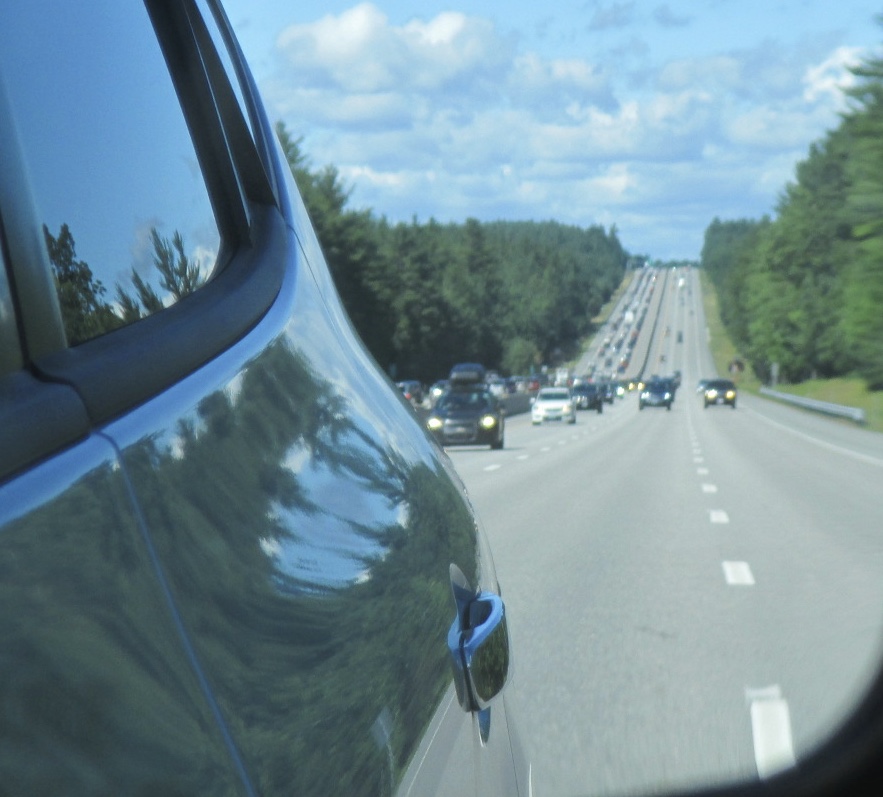
I have found myself in the interesting situation of no longer needing to drive my own car. Well, not very often, at least. I can sit in the passenger seat, look out the window, and enjoy the ride.

I have moved into “chauffeur mode.” In this mode, I announce that I have to go somewhere, and I immediately hear, “Can I drive?” It doesn’t matter if I was planning to go alone or with my newest driver. New driver will find any trip—real or imaginary—a chance to do the driving and rack up some of the 40 hours he needs behind the wheel before he can get his license. Never mind that he is still 4+ months away from being of licensing age.

Imaginary trips involve the need to make up places to go just so he can get behind the wheel. We have taken a trip to Lowe’s for a three dollar package of screws, spending more in gas to get there than we did on the actual purchase. I think this kid would be more than happy to drive me around town in search of places that didn’t exist. Perhaps we could start a new adventure: new driver geo-caching from behind the wheel. Not only would they be driving the car, they would have to navigate while also paying attention to necessary land marks. Obviously, the kids would have to get out of the car to access the actual treasure and sign into the log at the end, but that would aid in the ever-challenging skill of parking the car.

In truth, I appreciate the fact that this driver is eager to get behind the wheel and regularly asks to drive. My other two were a bit more reluctant as far as volunteering, or even wanting to drive, often saying no when asked. And even though I am in “chauffeur mode,” I still have to constantly keep my eyes on the road.

If we cut a corner too close, and I say, “You’re going to hit the curb,” the reply comes instantly.

“I’m not going to hit the—” his voice breaks off when the rear wheel scrapes the edge of the curb.

But we are still early in the driving process, still learning to judge distance and where the car is on the road. My job as the chauffeured will become easier with time and practice. And soon enough, he’ll get his license. Then he’ll say, “Hey, can I drive?” And he’ll walk out the door, get in the car, and drive away without me.