Disposable

IMG_2425

Yesterday, I learned something because, as we all know, “You learn something new every day.” But what I learned yesterday is disturbing, at best, and indicates a new level of waste and laziness.

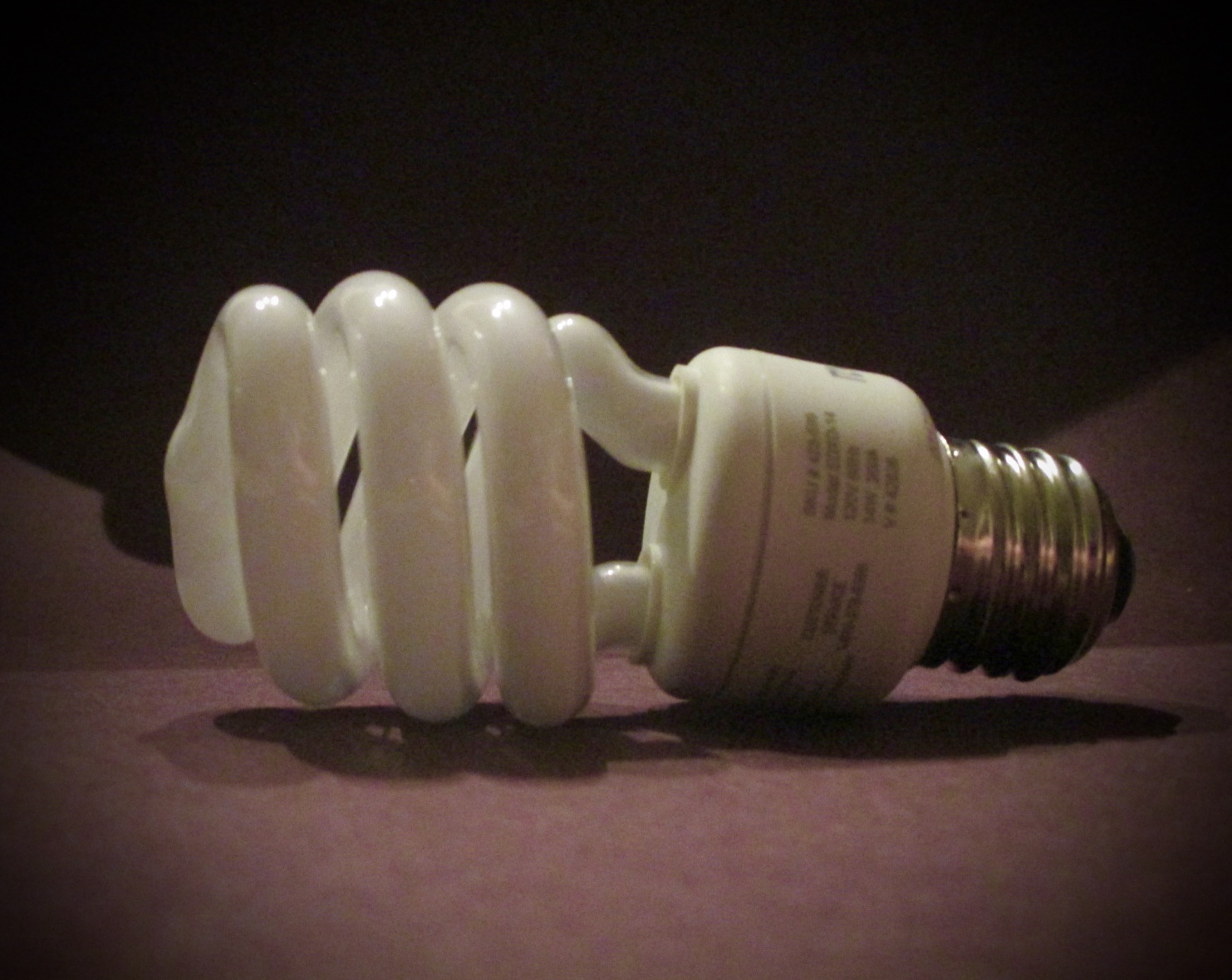
My kitchen light is on the blink—quite literally—since last week. I was sitting at the table working when it blinked off. But only halfway. Now, it has that annoying fluorescent strobe effect going. Or it would if I left the bulbs in it. I purchased new ones and then returned them when we deemed the problem to be the fixture.

My 14 year old examined the light and determined it needed a new ballast. He went online to find out where we could get one, and how much it would be. I still have to look in the local big box stores, but the proper part was located on Amazon for $40, which seems a bit steep to invest in an old, ugly light. Then again, I don’t have to invest in an electrician because I have a 14 year-old, but I digress.

When we went to the local home center to look at lumber (don’t ask), we stopped in the lighting department. I figure if I can get a fixture for not much more than a ballast, it might be a better option.

“No bulbs to replace,” my son read off the box of one of the lights as we strolled the aisle. “Oh, that’s not good.”

I turned and looked at the box. “Wait. So those are disposable fixtures?” I asked to no one in particular. “That can’t be right.” And yet, the majority of fixtures on the shelf were in similar boxes, all of which touted, “No bulbs to replace.” As if that is somehow a good thing.

I couldn’t believe what I was reading, so I opened one of the boxes and pulled out the light. In fact, there were no bulbs, and inside the light was a circuit board with several small square non-replaceable LED lights on it.

“Not only are there ‘no bulbs to replace,’” my son said, pointing to the LEDs. “Those are all going to go out at different times.” He smirked.

“Well that would stink,” I remarked, thinking of my own half illuminated kitchen light.

But really, I am still in disbelief. A “fixture” is supposed to be fixed, and yet, the fixtures we saw yesterday are disposable. When did it become so difficult to change a light bulb that it’s easier to remove the entire light and throw it away? And just how is that easier?

Either I’m on a steep learning curve, or I’m missing the purported benefits of no light bulbs.

Preparation (2) : The Reaction

IMG_2421

So maybe I went a little overboard on the medical supplies. Then again, maybe not.

My children were away for ten days with their father. While they were gone, I had a bit of time to gather some of the items my son still needed for college. It was during this 10-day span that I created the box of medical supplies.

He asked for a “First Aid kit”—bandaids, Neosporin, pain reliever, cold medicine… the basic stuff. But I knew he’d need more than that. During this time, I also happened upon a post on a social media site with a do-it-yourself medical kit for the college bound student, complete with supplies list. Booyah! So while he asked for a first aid kit, what he got, well….

“Whoa! It’s like I have a scary, overprotective mom!” I heard him exclaim from his room when he first discovered the box. Images of Mrs. Benson from the once-popular television show, iCarly, flooded my mind.

I went to his room to explain. “You know,” I started, in my own defense. “This is all stuff you might need, and other people in your dorm probably won’t have this stuff, so they’ll come to you. Who knows?” I smiled my most innocent, non-crazy smile.

“I don’t even know what half this stuff is,” he stated as he poked through the box. “Saline nasal spray? And this,” he picked up the thermometer. “I wouldn’t even have thought of this.”

“But you might need it,” I shrugged. I pulled out a small box that was tucked along the side. “And covers for it in case other people need to borrow it.”

He pulled out the bottle of ibuprofen, much smaller than the one we keep in our medicine cabinet. “I might need more than this,” he told me.

“That’s fine for now,” I responded. “There are fifty in there.” He continued to poke through the contents. “I put your chapstick in there, too,” I told him. “Oh, and I got you some gloves.” I pointed to the small box of eight medical gloves.

He looked up from the box, his mouth hanging open. “Really?” he finally managed.

“Hey, the first time you have to clean up after someone, you’ll understand why I got them.”

Now, let me explain. I have lived in dorms for more years than most people I know, and I’ve been cleaning up biohazard since before it had that name. First of all, as a freshman in college, I very distinctly remember one night when I cleaned up after my roommate. I’m sure she could have done it once she sobered up, but in the meantime, it was my room, too.

After college, I worked as a dorm parent in boarding schools for many years. I cleaned up my share of biohazard, but the most memorable involved a fist and a window. Enough said.

I certainly hope my son is lucky enough to never need the gloves. But chances are, he might, so it’s best to err on the safe side. And if he becomes an RA in the future, I will definitely spring for a bigger box!

Yes, this medical kit will leave me forever be branded as the crazy, overprotective mom. But one day, when my son needs something for congestion or coughing or dry eyes or whatever, and he looks in his medical kit and finds what he needs, he may just say, “Wow, thank goodness my mother thought of that!”

Preparing

IMG_2415

My Facebook feed is filled with statuses of young people who are going off to college. Parents have posted pictures of various aspects of the approaching college experience: the “stuff” that has been accumulated to outfit a dorm room; dorm rooms after set up; student send-offs and final hugs; and these same young people posing on beautiful campuses, just before the parents get in the car for the drive home.

My son will leave for college in a few short days. We have a pile of “stuff” in our house that we are trying to pack into as few containers as possible. I am washing towels and bedding and clothes. I have collected paper goods and toiletries and school supplies. He tells me his pants are too short, and he definitely needs new sneakers. Luckily, he can wear shorts until he comes home to visit in October. After all, it won’t be that cold on campus until then….

It is an exciting time for these college freshmen. They are going off on a great adventure, and they are, quite rightfully, excited. And I am excited for my son. But I have other feelings, as well. Even though this is a great step in his life, I know that there will be times when he feels like he is in the wrong place. When he thinks he has made the worst decision of his life. When he is deeply lonely. And I recognize that these are all necessary feelings and experiences as he navigates the waters of life and of grows into adulthood. But I am his mother.

So, there are some things I wish he didn’t have to go through. I wish he didn’t have to question his decisions, experience loneliness and homesickness, navigate the challenges of being away from home, and wonder if he would be better off somewhere else, but not really know where. If I could, I would guarantee him a life of smooth sailing and unbridled excellence. But what kind of life would that be? Certainly not one of growth and ever expanding maturity.

So I will send him off as prepared as possible to tackle the things life throws at him. Today, I am packing up a box of medical supplies, simple things like bandaids, cough drops, pain relievers, and a thermometer to get him through the bumps and bruises of the next four years. These things are minor, but they are things he would have readily available here at home. Hopefully, when he is feeling down and not his best, he will open the box and realize that even though I am several towns away, I am still caring for him, supporting him, and loving him.

And hopefully, he will remember that I am only a phone call (text, email, whatever) away. If he needs me, I will always be here.

Maybe…

DSC_0022

I once read the book The Boy on the Bus by Deborah Schupack. I believe this book was born out of the very familiar and somewhat unsettling concept that children tend to change just a little bit each day, until one day you look at your kid and you think, There is something vaguely unfamiliar about this child. Is this really my child?

The book itself was unsatisfying in its lack of resolution, but the premise of the book is that the boy who gets off the school bus one afternoon is not the same boy who got on the bus that morning. He looks almost like the same boy, but there are things that are just a bit off about the child.

I would like to admit this is a fairly universal experience for parents. Well, it is for me, at any rate. The child who leaves my house in the morning is sometimes very different from the child who comes home that afternoon—whether in mood or demeanor. And every now and then, the child even looks just different enough that I question myself. Is this really my child? Maybe not.

Earlier this summer, when I retrieved a child (my child) from a week at camp, I hesitate to admit that I almost didn’t recognize him. It had only been a week, after all. What kind of mother doesn’t recognize her own son after only a week??

Well, first off, he was wearing a baseball cap. The same red baseball cap that adorned the heads of all of the campers on that day. And my kid doesn’t wear a baseball cap. He hasn’t since he was about six or so. Second, all of the campers were dressed alike. And third, he had gotten a haircut right before he left. His hair was a bit shorter than usual, making him look older than I was used to. Therefore, I would attribute my brief lapse in recognition to the combination of those obscuring traits.

It took me an extra minute or two to find my child that day. But even on a regular day, I can look at one of my children, recognize something unfamiliar, and have the unsettling thought, Maybe this is not the same child….


*image is a silhouette of my child at sunset

Mother Image

DSC_0360

I sit in my car listening to NPR, staring out across the lake. A group of water-fowl float in a line in the middle of the lake, lazily drifting across the surface. The story on the news is focused on discussion of the opening ceremonies of the Olympics, the troubles in Rio, and the profound separation of the haves and the have-nots in that city.

It is peaceful and quiet at the camp. The campers left for home earlier in the day, and only the staff remains, finishing up their Friday staff meeting. Every now and then, a burst of deep male crowd voice breaks the silence. First, a cheer—a group of young men voicing the same words loudly and in unison—bursts from the meeting hall up the hill. A little while later, laughter. And still later, applause.

The voices are deep and grown up, and can’t possibly include my youngest child. But then again, they can. He has grown and changed—and continues to do so—on a nearly daily basis over the last year or so. The image that I have of him in my head doesn’t match the reality of who he is and who he is becoming. He is part of this group. He fits in.

Somehow, my mother-image of my children is not keeping up with their growth and their approaching adulthood. My image is mired in memories and the experiences of raising them from their earliest days through the years up to the present. Every moment blends together to create the image that I hold of them—always younger than they truly are unless they are standing right in front of me.

Some people might say my mother-image needs adjusting, but I think it is fine just the way it is. At least for now.

Watch

IMG_2346

My son and I were shopping, checking items off his packing list for camp. So many things he needed this year, it seemed, perhaps because he was going to a different camp for a more intensive week of training.

I had brought a short shopping list that included a couple of items, but I knew there was one more. What was it? I couldn’t remember. Then we walked past the display of watches. “Oh! You’re supposed to have a watch,” I told him.

He looked at me and then at the watch display. “I hate watches. They’re so annoying,” he reported.

It’s kind of funny how some people wear watches every day and others do not. I started wearing a watch when I was in elementary school, but none of my own children have felt the need to wear one. I wonder sometimes if it has to do with the prevalence of cell phones—if kids have their cell phones, they always have the time.

And we had tried this before—buying a watch. Each of my children has had a watch at one point or another. But it was back when they were quite young, and time wasn’t an issue because I was the keeper of their schedules.

“It’s up to you,” I said. “Your packing list says you need one, but I’m sure some of the other boys won’t have one.”

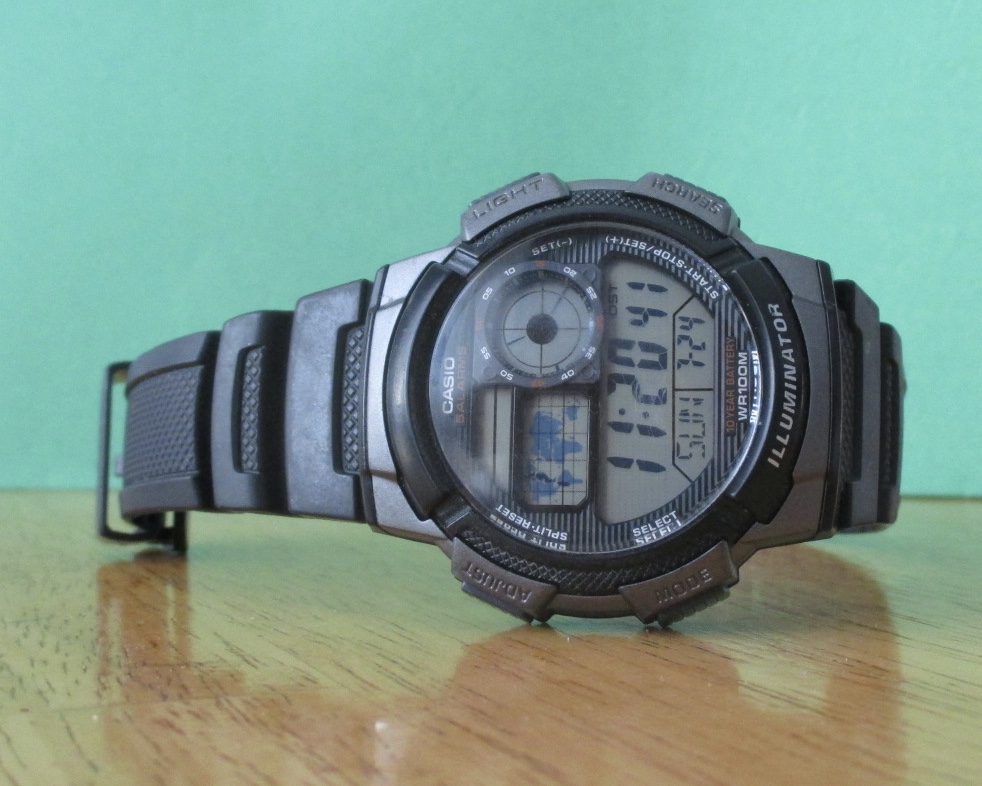
He walked around the watch display, checking out his options. “This one’s kinda cool,” he said, picking one up and examining it. It had a couple of features beyond the basics. The coolest feature was the time zone feature. Plus, it was water resistant and had an alarm, both of which would be handy at camp.

“If you want it, you can get it,” I told him, knowing the coupon in my pocket would reduce the price. “I’m sure it will be handy to have at camp.” Especially since cell phones wouldn’t be prevalent because electronics were discouraged.

At home, he spent a little time learning the features of the new watch, so he would know how it worked before we left for camp in the morning. (Yes friends, it was a last-minute shopping trip…). The next day, he walked out the door actually wearing his new watch.

A week later, when I picked him up at camp, he was still wearing it. As we walked to the car with his gear, he talked about the experiences he’d had over the past week: the hiking, the cooking, the activities.

Then he smiled that crooked smile he gets when he’s about to say something funny. “You know,” he said. “It’s really convenient to have a watch. You never have to wonder what time it is.”

“Yes,” I replied, looking at my own watch. “It is convenient, isn’t it?”

Socks and Stockings

IMG_2342

I went out on an errand with my son this morning, and we came across an interesting sight. On the side of the road, there was a man walking his bicycle up the hill. That, in itself, is not an unusual thing to see. However, this man was pushing his bike up the hill in just his socks because he was carrying his shoes.

Observing this from the passenger seat, my son said, “Why is he walking his bike?” Because from his perspective, if you have a bike, you should ride it.

My mommy-brain kicked in. “I am more concerned about the fact that he is carrying his shoes and walking in stocking feet!” I exclaimed. Then something in my mommy-brain started to dial back what I had just said.

Stocking feet…

 When was the last time I heard that idiom? Had I ever used it with my son before? Did he even know what that meant? Does anyone know what that means anymore? And I started to think about the word “stockings” and the fact that we never refer to our socks as “stockings.”

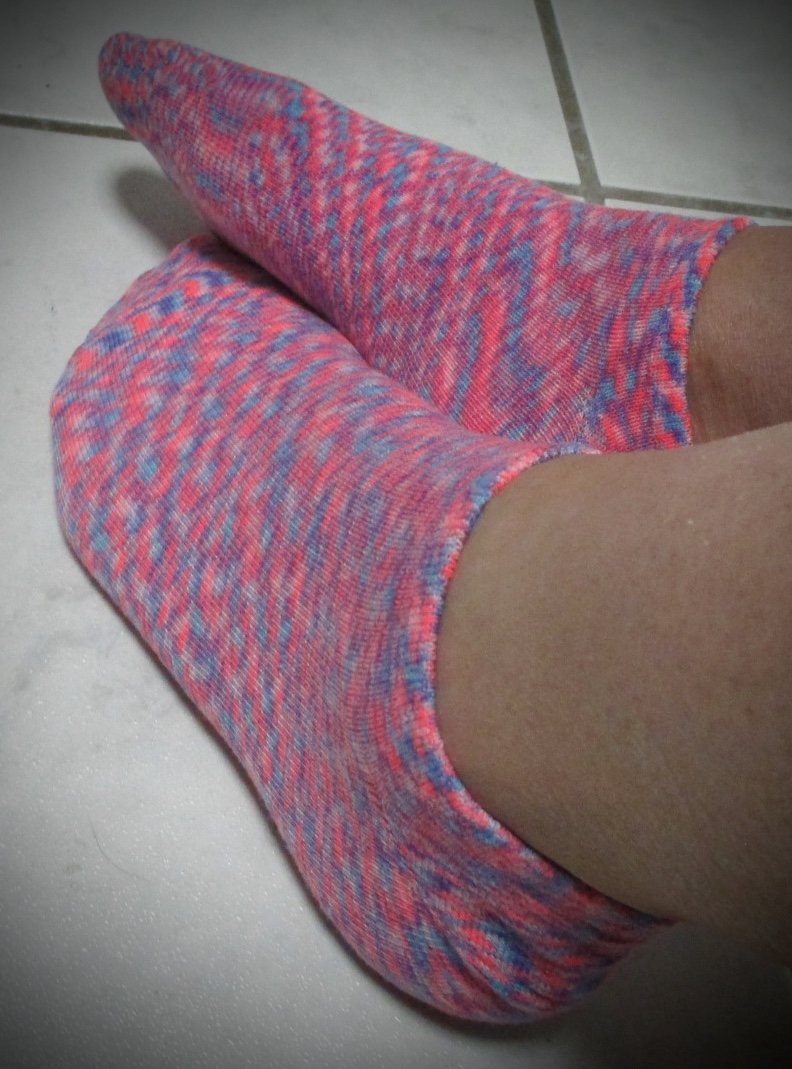
Over the years, when my children run through the door and out onto the walkway without their shoes on, I will say to them, “What are you doing outside in just your socks?” I have threatened to make them buy their own socks when walking on the pavement creates holes in their soles. But I don’t remember saying anything to them about “stocking feet.”

This is a term from my childhood. I can still hear my own mother clearly telling us not to walk around in stocking feet, that we should wear shoes or slippers or something. I half expected to Google the term and see—before the definition—the notation “archaic.” I was relieved to see the notation wasn’t there, and the examples were fairly current.

Perhaps I have used that term more recently than I remember because my son didn’t question my words, and I didn’t say anything more about the man walking his bike and carrying his shoes. Even still, my mommy-brain is stuck on that sight.

Reality

After her drivers ed class today, my daughter assumed the “browsing position” in front of the refrigerator. She had the doors flung wide open, one handle in each hand, and she was searching. Up on tiptoes to check out what was behind the condiments on the top shelf. Bent down to look behind the bowls on the bottom shelf. I could tell this was serious business. It was lunchtime, and she was hungry.

She sighed. “Is there no tortellini left?” she questioned. Really, from where I was sitting on the opposite side of the door, it was tough to tell.

“Is it not in there?” I asked, not admitting that less than an hour earlier, I had offered it to her younger brother as a lunch option.

“I don’t see it.”

I opened the dishwasher, and the empty bowl presented itself as evidence. I closed the dishwasher. “No more tortellini,” I reported.

“And there’s no pasta salad left, either, is there?” She already knew the answer, but I could tell she was holding on to a shred of hope.

“No, there’s not,” I reluctantly reported. “We finished that for dinner last night.”

“So there’s nothing to eat!” she griped. “Why does everyone always eat all the food without me?”

Hmm… it must be a conspiracy.

Or, more likely, it’s the reality of life in a house with teenage boys.

IMG_2305

Driving with Teens

IMG_2268

I’m going on a drive or two. Why don’t you hop in the car and come along. I’ve written another post about what it’s like to drive with new drivers. Since most parents will likely experience this thrilling adventure eventually, I’d like to take you along on a couple of my experiences. So Buckle up… it’s going to be quite a ride!


Drive #1: Pedestrians

We are driving along when I see people walking in the road up ahead. (One might argue that these people should not be walking in the road, but that would be another blog post.) These people are a distance away, but close enough that we should begin to slow down.

“There are people walking in the road up ahead,” I inform the teen driver.

“I see them,” the teen replies. We continue moving at the same rate of speed.

“You should slow down,” I instruct.

“I am,” the teen driver informs me. I feel no difference in the speed we are traveling.

“SLOW DOWN!!” I snap.

“MOM!” the teen replies. “I AM slowing down. I’m not going to HIT them!!”


Drive #2: Highways

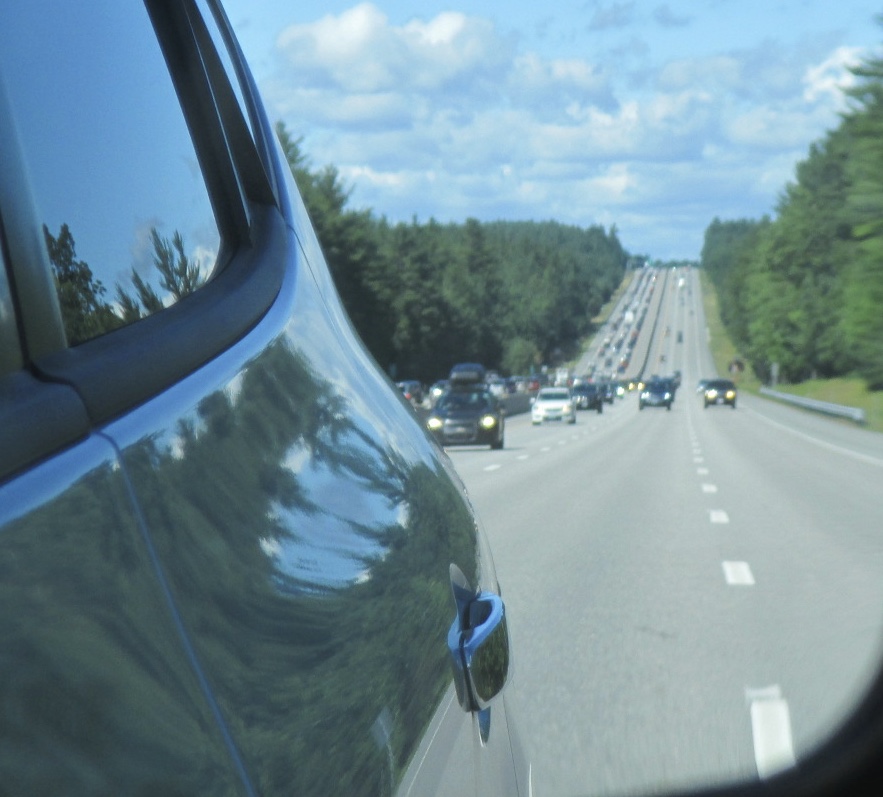
Highways are always a bit dicey. After all, highway driving requires a consistent high rate of speed, which most people who have only been driving for a month or two are not used to. Add in the occasional need for an evasive maneuver and, well, it’s not always pretty. On this drive, the traffic is fairly heavy. We are driving through a “city,” so vehicles are entering and exiting the highway. We are approaching an entrance ramp, and there is an 18 wheeler getting onto the highway.

“That truck is going to need to merge,” I say to my teen driver. The truck is far bigger than the car we are in.

“I see it,” my teen driver says.

“So… you might want to give him space so he can get in here,” I nudge.

“It’s his job to merge with me,” the teen informs me. This is information learned in driving class.

“I understand that,” I say. “But he is bigger than you.” And coming up fast, I want to add.

“That doesn’t matter, Mom,” the teen states. “I am in this lane, and he has to merge.”

“Yes,” I say, beginning to get impatient. “But he doesn’t seem to be slowing down. He wants to get in this lane, and it doesn’t seem to matter that you are here.”

“He can merge with me,” the teen is emphatic, but I see that the trucker clearly has no intention of “merging” with anyone. He owns the road he is not yet on.

“GIVE HIM ROOM!!” I raise my voice. “He is much bigger than you, and he is NOT stopping!”

“He was supposed to merge with me,” the teen grumbles. “I am in this lane.” While I can’t argue with my teen’s knowledge of the laws and right of way, there is something to be said for “an ounce of prevention….” Especially in the case of a vehicle that is many times bigger than the one you are in.


Drive #3: Medians

Sometimes, learning about medians can be an interesting adventure. Pulling out of a shopping plaza with a very new driver means the teen is not yet even paying attention to things like medians. We are at a four-way intersection of several parking lots as we are leaving a restaurant, and my teen is driving.

“Turn left here,” I say, not even thinking that there are two possibilities. My teen does as I say, turning left and completely missing the “keep right” sign. We end up to the left of the median.

“STOP!” I say, and the teen stops the car and looks at me.

“What?”

I am simultaneously breathing a sigh of relief and laughing at the situation. “Back up.” I point to the median out my passenger window. “You need to be on the other side of this median. See those cars?” I point to the intersection up ahead. “They are going to be coming in here.”

“Oh. Well, you told me to turn left, so I did.” Thankfully, everyone in the car thinks this is marginally funny. “You didn’t tell me I had to go to the other side of the median.”

“No, I did not. My bad,” I say, as we readjust into the correct lane and continue on our way.


Drive #4: Impatience

We are driving on a two-lane road. We are observing the exact speed limit. I will be the first to admit, the speed limit feels a bit slow on this road, but kudos to the driver for maintaining a consistent and perfect speed.

The car behind us does not appreciate driving the speed limit. It has been on our bumper since we turned on this road. I don’t believe the teen driver has noticed, but I have.

Suddenly, the car behind us pulls out into the other lane and speeds past us. The teen driver slows to allow him easier passage in what is a no passing zone.

“Well, he’s in a hurry!” the teen comments, accelerating back to the speed limit.


Hey, thanks for coming along for the ride! These teen drivers, my first two… they have been somewhat easy to teach. My youngest, he’ll be driving in just a few short months (nine to be exact, but who’s counting?) I’m a bit concerned about that one. He is already calculating how fast my car can go without self-destructing….

Knots

IMG_2287

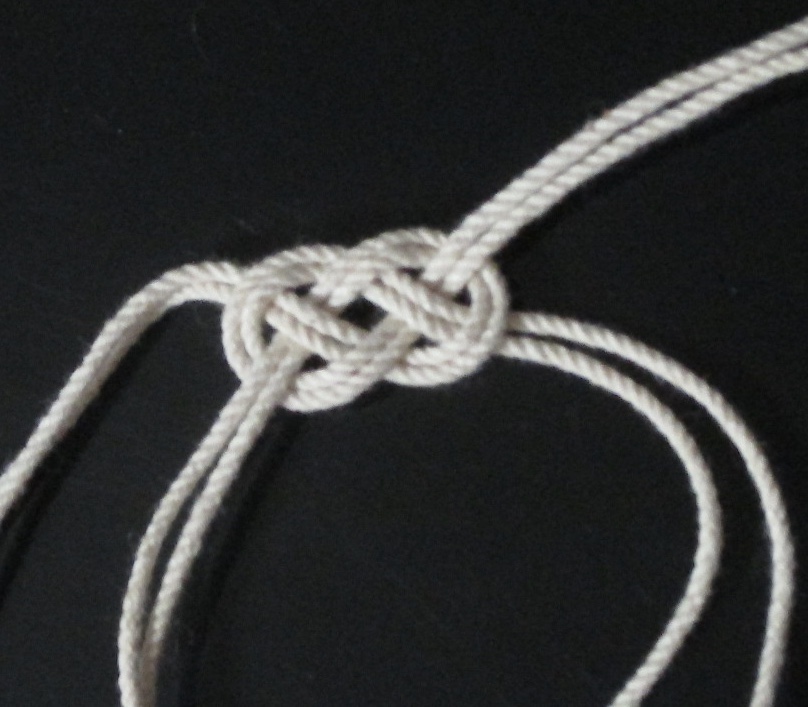
One morning last spring, W was practicing his knots (because Scouts do that kind of thing when they’re bored…). He was using a long length of climbing rope, and somehow, he thought that tying one end to the couch and the other to himself was a good idea. Hold that thought….

J and I were in the kitchen having a conversation about the day. We were preparing to do some community service, and we were reminiscing about previous experiences at this same site in years past. I had started my breakfast, but as usual, I had twenty-five different projects I was also tending, including the laundry in the basement.

W kept calling to me, wanting me to know just how far (or not) he was able to stray from the couch. He was, quite literally, on a relatively short leash.

I popped a bagel in the toaster, cracked two eggs in a pan, and took a quick trip upstairs to gather laundry. When I returned, the bagel popped up, and I removed it from the toaster. However, because the bagel was frozen when I put it in, one particular part just didn’t seem to be done, so I pushed it back down. I didn’t plan to leave it for the entire toasting cycle. I flipped the eggs and went down to drop the sheets in the laundry room. I started the washing machine, poured in the detergent, and added the sheets.

When I got to the top of the stairs, W made sure I saw his knots as I walked through the living room. “Nice!” I complimented as I gave him the thumbs up.

The acrid smell of burning toast hit my nose just as the smoke detector screamed a piercing bleep. Darn! My first thought came through the screaming of the smoke detector. A good bagel, ruined!

But then from the other room, interspersed with the beeps, I heard a small, pathetic, voice. “Help? Help me!”

And then a splay of laughter erupted from the child who had tied himself to the couch. Clearly, he had approached this knot-tying activity with a false sense of security. Because after all, what if…?

I looked at J and tipped my head, indicating our escape through the door. She smiled in conspiracy. We took off running out the front door (safety first, you know) where we stood on the front walkway laughing so hard we were doubled over. The bleeping of the smoke detector stopped as abruptly as it had begun. We were deeply amused with ourselves and the situation.

Back in the house, W remained in the living room, expertly tied to the leg of the couch. He, too, was laughing. Of all the times that the smoke detector could have gone off, it happened when he was unable to leave his spot in the living room.

Of course, if it had been a real emergency, I would have grabbed the scissors and cut him free from the couch before I ran out the door. He would have been mad, initially, that I had ruined his rope, but he would have been grateful that I had saved his life.

Burnt toast, however, does not constitute a real emergency, but a valuable lesson was learned that day. The thought of tying oneself to the couch to practice knots… maybe that’s not such a good idea.