Complacent

On my drive home from work tonight, I had a moment (or two) of complacency. I was caught up in my own thoughts, reflecting on my day and focused on the structure of the evening ahead, and I forgot there is generally traffic on my way home. Tonight, the backup started farther north than usual, and it caught me off guard.

On this night, the backup was not caused by the normal too-much-traffic-on-the-road-to-accommodate-the-lane-drop (which is just poor highway planning, if you ask me). Nope. Tonight’s traffic was brought to you by the state trooper on the side of the road helping a dad and his small son. When I drove by, it was handshakes and high-fives all around. No kidding. I smiled as I continued my drive, and my mind wandered into the past. As my mind wandered, my car drifted toward the shoulder where a car was stopped, jarring me back to the present and into my lane.

It’s never good to become complacent. Not on a drive, nor in life.

If you speed through life without paying attention and you become complacent, you are bound to run into an unexpected obstacle that might have been avoided. If you put yourself on a path toward a desired goal and become complacent along the way, you may never reach your desired outcome. If you reach a goal and then become complacent, you may fail to set any more goals, and you will become stuck. You will continue to coast along, happy with your one (and only) success.

But more importantly, complacency means you are not fully in the moment. It’s vital to stay present if you want to live a rich and fulfilling life. Be engaged with the people around you and the things you are doing; experience life to the fullest, so you can live your best possible life.

{Photo by Viktor Kiryanov on Unsplash}

Transformation

I’ve been away for too long. I haven’t been hiding (well, not really…), but life grew chaotic and crazy, and I’ve kept myself super busy swimming upstream. Responsibilities piled on top of responsibilities, and for a while, I felt like the donkey that got stuck in the well.

Multi-layered family obligations coupled with increasing work commitments and the normal operations of everyday life were nearly overwhelming and threatened to pull me under. But then I stepped back and looked at the big picture. It wasn’t that these things—taken individually—were overwhelming; it was that they all hit at once. If I plotted out a careful path and schedule, I could actually see the proverbial “light at the end of the tunnel.” So I took a deep breath, put my head down, and went to work. And surprisingly, everything got done.

Outside my window, the world reflected my inner transformation. Slowly but surely, spring emerged—because March and April are magical like that. Where the winter world is cold and bare, warming temperatures coax new life out of the ground in green shoots and tender flowers. Year after year, nature draws on its own ability to make spring happen.

I worked hard, drawing on what was inside of me, and I got through, but more importantly, I experienced my own transformation. My hard work brought tender shoots of possibility and promise, creativity and innovation. Just like the donkey, all the dirt and obligations that were thrown at me became my stepping stones. I drew on them for strength until I was no longer stuck at the bottom of a well, but boldly stepping out into the world, newly empowered and ready for the next challenge.

Keep Going

As I have navigated my way through life, there is one very important lesson I have learned. No matter what life throws at you, keep going. Whatever happens, you have the strength to pull yourself through. Life is not always easy. It’s not always happy. But the tough times… they help you to see the good. They help you to grow. They help you to evolve into the best possible version of you.

Keep going. When life throws you a curve ball, and you are suddenly on a path you didn’t expect, keep going. Sometimes, the biggest blessings are found on the detours.

Keep going. When you think you can’t possibly handle any more and you are stressed and frustrated and you think you are going to collapse from the weight of all you have to deal with, keep going. Look around you. Gather some support. Find people who can help you carry your burden. But most importantly, keep going. You will get through this. And you will be stronger for the perseverance.

Keep going. When the plans you have made—for yourself, for your life, for your future—don’t work out, keep going. Often, those plans don’t work out because there is something better in store for you. Keep going, keep striving, keep searching, and you will eventually find it. Or better yet, it will find you.

Keep going. When you are faced with seemingly insurmountable challenges like a solid brick wall in your path, keep going. Find a way to get over, under, around, or through the wall, but keep going.

Keep going. Use all of the support systems that you have in place. Bring in your friends. Bring in your acquaintances. Bring in the tanks, the armies, the teachers, and the pets. Bring in whatever you need to. But…

Through it all—tough times and easy times—you will discover much about yourself and others. You will learn what you want to be and what you don’t want to be. You will learn your limits and form your boundaries. You will learn to overcome weakness. You will learn to distinguish the people who are your friends from those you’d prefer to let fade into the background. You will find strength. You will find  beauty. You will find love.

And through it all, you will learn who you are.

Keep going.

Step Away

We were talking about writing, my daughter and I, about writing to an assignment when you’re not really sure of what to write. How do you not only answer the question, but write a three-page paper?

Without even thinking, I started tossing ideas at her. What is the story? Who’s involved? What is happening? Have you Googled the story and read through the summary/analysis online as a way to spark some ideas? Starting points… all things she had thought of, but approaches that weren’t helping her.

For me, talking about writing is nothing new—in fact, it is a daily conversation. This is what I do. I write. I talk about writing. I work with writers. It’s important that I include the phrase, “I write,” because if you don’t actually sit down and do the tough work of writing, it is difficult to talk to young writers about writing. And to speak authoritatively about the process of writing.

Our banter was getting us nowhere except frustrated. Sleep on it, I finally told her. The assignment wasn’t due for a couple days, so she had the advantage of time on her side. She agreed that was a good idea, and put the paper away for the night. However, she came back and texted me a bit later. “I took a shower on it, and I think I figured it out!” she told me.

That was it. She just needed to step away. In order to connect with the subject, she had to disconnect from it. Sometimes, that’s all it takes. Not just in writing, but in the process of daily life.

If you step away, your thoughts can become clearer. Let your brain rest and move on to other tasks. Because sometimes, when you’re not putting demands on your brain, it will continue to process on its own terms. In fact, it is often when we are not thinking about something that it works itself out. When we are not focused on a problem, more varied solutions—those that are lurking on the periphery—become evident.

We all have situations we need to step away from. If you step away, often the things you are wrestling with—the problems, the situations, the frustrations—they all become easier to figure out, and your brain will come up with a solution you hadn’t even considered!

Step away, and have confidence the answer might come to you. If not, at least you will return refreshed and ready to dig in.

{Photo credit – my amazing daughter}

Connections

We need to teach our children how to connect with others. I don’t mean teach them how to connect via social media—they are experts at that already. I mean we need to teach them to connect with other people face-to-face and one-on-one.

This thought struck me the other day after a couple things happened. First of all, I realized the new version of Google’s gmail is now offering me the option to click on a pre-determined email response. Essentially, it is “reading” my email and formulating a quick response that I can send to someone like, say, my boss, to thank her, let her know I will check into something, or make her think I am following up on her response or a request. In reality, the pre-determined one-click response allows me to not think. I don’t have to think about my response, and I don’t have to think about following up.

Now, I appreciate the time and effort Google has put in to formulating this algorithm, but shortcuts like this are the reason true communication skills are dwindling to non-functional levels. Seriously.

In order to have functional communication, we have to think about our responses. We have to consider whether an email deserves more than just a cursory glance. We have to think about the person who is receiving the response, and we must choose our language (and tone) based on our audience. Effective communication requires us to engage.

People are no longer engaged with communication. They are no longer engaged with others. They simply hit the reply button, send a one-to-ten word response, and they are done. That brevity does not encourage individuals to connect with other individuals. It demonstrates the power of technology to pull us apart. Yes, it does.

The second thing that gave me a glimpse into our need for better communication occurred when I was picking up a pack of colored chalk for some student tutors. I wandered into a local craft store. When I located the chalk and made my way to the check out, I was greeted by Ted. And when I say, “greeted by,” I mean Ted was working the register. He did not talk to me. He did not make eye contact. He did not speak in a voice that was loud enough or clear enough to be heard and understood. I am not sure why this corporation thought Ted was the best choice for this position. Then again, given the lack of any other visible workers in the store, I suppose their choice was limited.

Friends, we need to teach our children how to connect with others. We need to reinforce the importance of communication in all forms—face-to-face, through email, and over the phone. We need to teach them to look up from their shoes and make eye contact. We need to model and reinforce the conventions of carrying on a conversation. Being able to connect with other people is so important for living a healthy life. If our children have this skill—the ability to connect and communicate—they will have a strong foundation as they move on to “adulting.”

The Lesson of the Donut Vendor

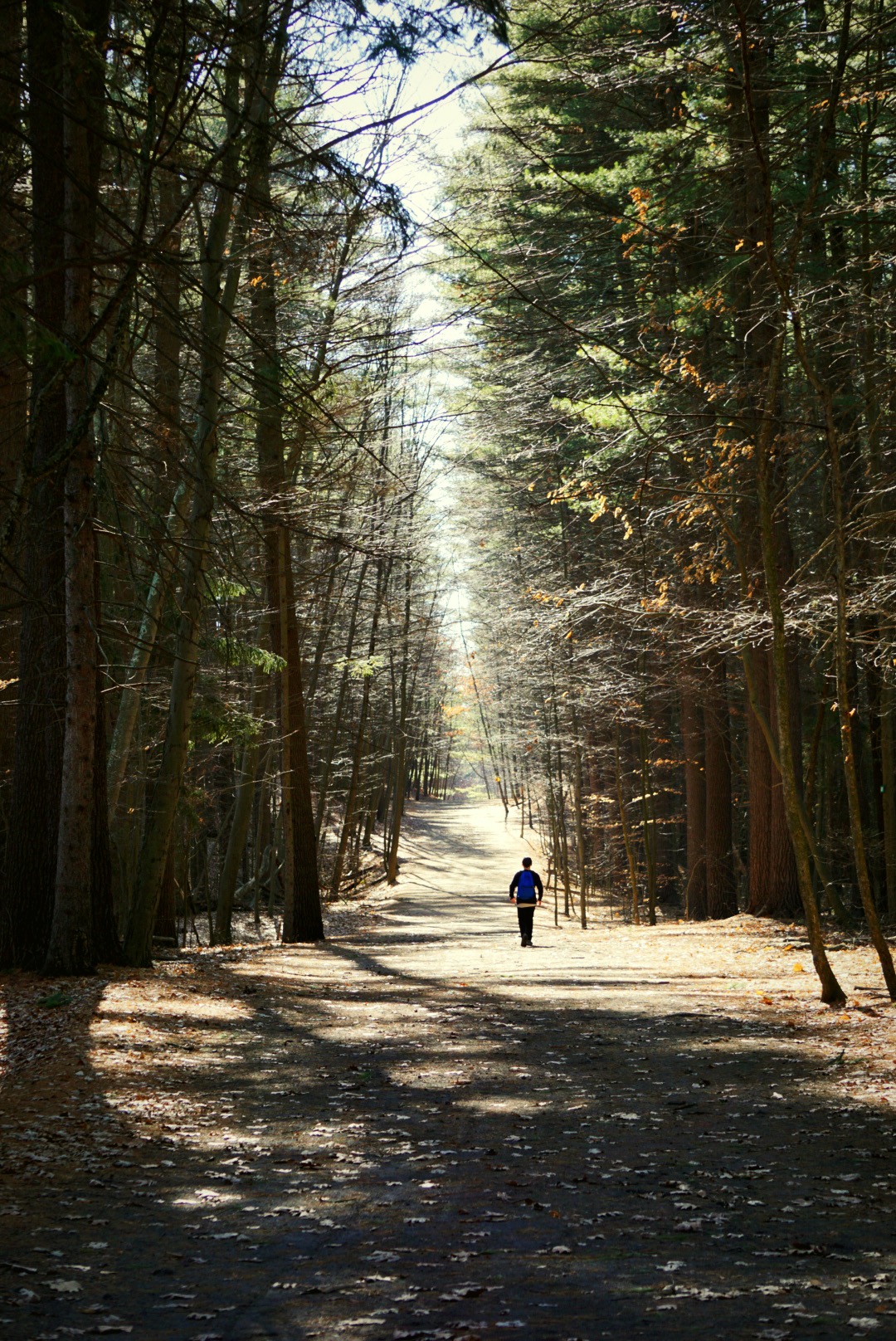
This morning, my daughter and I were racing to get her back to college before the impending snowstorm settled in. The drive is a pretty one—over rolling hills, alongside rivers and train tracks, across farmland, and through the center of an occasional small town.

We chatted as we drove, and as we wound our way through one town, we noticed a crowd gathered near what looked like an old-fashioned carriage. As we drew closer, we could see that the crowd was actually a line, and the cart was some sort of vendor. Only upon passing the scene could we read the bright pink wording on the side of the black carriage: DONUTS!

“Donuts!” we both exclaimed.

I turned to her briefly, keeping one eye on the road. “Do you want to stop?” I asked.

She thought for a minute. “Well, I don’t really want a donut…” she replied as we continued our journey. After a pause, she said, “But we should go back.”

“You want to?” I questioned. “I’ll have to find a place to turn around.”

“If you want to,” she told me. “But we do have to get back before the snow.” And there it was. The reality check to an otherwise whimsical and fun idea.

“Ugh. You’re right. I guess today’s not the day,” I said to no one in particular. And I kept driving. But I also kept thinking about the donuts and the donut vendor. What a great idea—to spend a Saturday morning selling donuts on the town green. It reminded me of the idea my dad had when I was younger to buy a popcorn wagon and sell popcorn on a busy street corner.

I thought about that donut wagon and the vendor for the rest of the day. I decided if he was still there on my return trip, I would stop and buy some donuts for my boys. After all, the line by the cart certainly hinted that his donuts must be good. But when I drove back through town over an hour later, the vendor and his wagon were gone.

This moment—the choice to stop or not stop—was an example of me being 2018 me. I was on a journey from point A to point B, and the destination was my goal.

But what if the destination is only part of the goal? What if the true journey lies in the adventures along the way?

Driving home, I decided that next time, I am going to stop when I see something interesting. From now on, I am going to work on not being so focused on the destination that I miss the experiences that might come from an occasional detour or two. Next time, I will stop when I first think of it, and I will buy donuts!

{Photo by Charles “Duck” Unitas on Unsplash}

Believing in Magic

Navigating the many aspects of childhood can be an interesting journey. There are a million situations in which kids walk a line between the reality of the world and some magical thoughts of their own making (or the making of society), simply because their imaginations allow them to believe in magic. Santa. The Easter Bunny. The Tooth Fairy. This list is lengthy.

Recently, when I was sorting through some (very) old papers, I came across a reminder of my previous parenting life, back when all three of my children still had one foot firmly planted in the magical, and it was my job—as a parent—to make sure the magic remained for as long as possible. But as a single parent, things didn’t always go smoothly.

After all, perpetuating magic is a difficult job. Everything we say… everything we do… it’s all being registered by the little ones around us, even when we don’t know they are listening. Magic takes careful planning, much thought, attention to detail, and a lot of work. It is no wonder, then, that sometimes we slip up.

The note I recently uncovered reminded me that the Tooth Fairy forgot to come. It was one of those moments when I was—no doubt—jolted awake in the early morning hours when I realized that I had forgotten my role in the magic just a bit too late. Despite my best intentions, I had failed. Instead, I had to make up a story about why the Tooth Fairy didn’t come, and some blending of various reasons came out. Unlike Santa, the Tooth Fairy can’t always get to every house…. Teeth are heavy, and if she collects too many teeth one night, she has difficulty flying….

Really, I don’t remember the story I made up, but it seemed to be enough as the child in question believed me. And somehow, over the years, I was able to instill just enough lasting magic—despite occasional slip-ups—that a bit lingers in my now grown children. Because if you think about it, shouldn’t everyone hold onto a little bit of magic in their lives?

Patience in the Un-find-able

If I had a dollar for every minute I’ve spent searching for the un-find-able, I would be a rich woman. This weekend, it was a pair of shorts that we swore were in the house as both my son and I had “seen” them on Saturday. After a frantic search of the house, he returned to camp without them, and found that he had left them in his cabin when he left camp on Friday.

Over the years, there have been so many things. The “favorite” bean-bag dog that was pushed to the bottom of the sleeping bag in the night and ended up being rolled up inside it for months. The team jacket that we accidentally left (or did we?) in the locker room after the final competition of the year one June many years ago. I called the coach before she left the venue. On Monday, I called the school where the competition had been held. I emailed the coordinator of the event. We searched the closet, the car, and eventually, realized we’d have to buy a new one before the next competition season began. At the end of August, as we headed back to the studio, one of the other girls discovered my daughter’s jacket, along with her own, on the floor of her closet.

How many times have I heard: “Hey Mom, you know that form we were looking for…? It was in my locker.” How much time and energy have I spent searching, and in the end, the thing I am looking for turns up in its own time? Many such searches have confirmed that I can’t find the unfindable. That I shouldn’t worry about things that are out of my control. The things I am searching for will appear in their own time. Sometimes, lost items appear only to eyes that aren’t frantic from looking. And in this process, I have learned that (aside from endlessly searching) all I can do is be patient and wait.

This lesson is one that we learn over and over. The lesson reappears in small ways so we might recognize when it comes into our lives in big ways. We search for our career path, the fantastic opportunity, the house, the family, our way in life…. These things will all come in time and in their own way. When we are ready. When the world is ready. When God is ready. It’s important to recognize that the unfindable may be hidden from our view because there are situations that we cannot control—that we should not control.

When something is lost—or we are lost—remember to take a deep breath and let go. The simple act of letting go makes just enough space in our lives that whatever is lost might just find us.

Metaphors

Recently, I had the opportunity to try my hand at making pottery—wheel-throwing, to be exact. In truth, I think I did this once or twice as a kid, but it was long ago. I remembered only the feeling of wet clay slipping between my fingers, the gentle prodding of the clay to create the desired shape, and the uneven feeling of lopsidedness on the wheel.

This time, I had the benefit of a patient and experienced instructor, who led me—step by step—through the process. I threw the clay onto the wheel, missing the center by more than I’d like to admit. The instructor adjusted the clay, pushing it closer to the center, and started the wheel. He demonstrated how I should hold my hands to gently push or pull the lump of clay into the center, shaping it and rounding it out. The clay resisted. I pushed harder, using some muscle to move it beyond its resistance. I was a bit surprised at the muscle necessary to move this inanimate, shapeless lump.

I smoothed the edges into a disk, and I pulled up toward the center, raising the height of the nameless object on the wheel. I used the side of my hand to flatten the clay and push it into the center. I repeated this process of centering until I had a flat disk resembling a hockey puck.

I began to work the center, slowly and gently pressing my thumb into the clay to create a hole from which I would begin to sculpt the vessel. From here, the process became one of gentle pressure—make an indent and watch it slowly become deeper and wider. The next steps would take an increasingly gentler touch as I steadied one hand against the other to work the sides upward and outward. The farther out and up I went, the more I could feel a slight off-centeredness of the piece. While I wanted to pull it back in, I didn’t want to exert too much force.

In the moments before I declared my piece “done,” and the wheel was turned off, the metaphor of potter and clay was not lost on me. The fact is, it’s not easy to mold a shapeless lump of clay into something both beautiful and useful. The clay resists. It won’t stay centered, and if it’s off center, it will become increasingly lopsided until it ultimately spins out of control and falls apart. Sometimes, it takes greater force from the potter to coax a piece back to the center. Perhaps sometimes, when we get too caught up in our lives, we are particularly unyielding and need to allow ourselves to be pulled back to center.

Ultimately, I added a spout to my piece. I not only wanted a vessel that could be filled up, but I also wanted one that could be poured out. One that would easily contain and distribute ingredients. It will take some time for my bowl to be dried and fired, glazed and re-fired. At the end of this month, it will arrive, beautiful and useful. I can’t wait to see the finished product and recognize the steps—and the patience—necessary as the potter molds the clay.

Simplify

I work from home during the summer, so this year I have decided to take advantage of the more relaxed schedule to take on the project of cleaning out my house. I am not moving. My kids are not moving. But we have way too much stuff in our relatively small townhouse. Rooms are not being used to their fullest potential, and the clutter is beginning to take over.

We have lived here for 14 years, and it amazes me that we have acquired so much stuff without weeding out what we are no longer using. Yikes! So this summer, I am getting rid of all of the junk, clutter, and just stuff we no longer need. This stuff—it doesn’t matter to me. Living life without all the encumbrances… that is what matters.

One step in the process is to sell whatever is still useful, usually on the local online yard sale sites and usually at a steal. Last weekend was my first foray into the online yard sale arena. I posted two items of furniture, just to see what would happen.

I posted the items late Friday night right before I went to bed, and by Saturday morning, no one had responded. Yep, the immediate gratification we have all come to enjoy on social media was not happening. So I sat down to work in my online classroom, figuring I was not going to sell my items, but knowing there is always the donation route.

It wasn’t long before I had messages from individuals interested in both of my items! And I was messaging them back to decide on a pick up location and time. At one point, I was messaging one of the buyers about a pick up time while simultaneously messaging a friend about something completely unrelated. My son looked on, unaware that I had pulled in a chat with a friend as well as the two buyers.

“Get them bidding against each other,” he told me. “That’s the way to maximize profits and minimize friends!” This last statement held a tiny hint of glee, as if he had just given away some closely guarded secret.

“Well,” I responded. “That would be a good idea, but I really just want this stuff out of my house. And I’m not messaging two people who want to buy the same thing.”

“Oh, too bad,” he stated. “It was a great idea, and it would get you the most money.”

Yes, I thought. If you are a businessperson. But this stuff (and its complications) doesn’t matter to me. My focus for this summer is to simplify.

Simplicity will be the best reward!