Reality

After her drivers ed class today, my daughter assumed the “browsing position” in front of the refrigerator. She had the doors flung wide open, one handle in each hand, and she was searching. Up on tiptoes to check out what was behind the condiments on the top shelf. Bent down to look behind the bowls on the bottom shelf. I could tell this was serious business. It was lunchtime, and she was hungry.

She sighed. “Is there no tortellini left?” she questioned. Really, from where I was sitting on the opposite side of the door, it was tough to tell.

“Is it not in there?” I asked, not admitting that less than an hour earlier, I had offered it to her younger brother as a lunch option.

“I don’t see it.”

I opened the dishwasher, and the empty bowl presented itself as evidence. I closed the dishwasher. “No more tortellini,” I reported.

“And there’s no pasta salad left, either, is there?” She already knew the answer, but I could tell she was holding on to a shred of hope.

“No, there’s not,” I reluctantly reported. “We finished that for dinner last night.”

“So there’s nothing to eat!” she griped. “Why does everyone always eat all the food without me?”

Hmm… it must be a conspiracy.

Or, more likely, it’s the reality of life in a house with teenage boys.

IMG_2305

Knots

IMG_2287

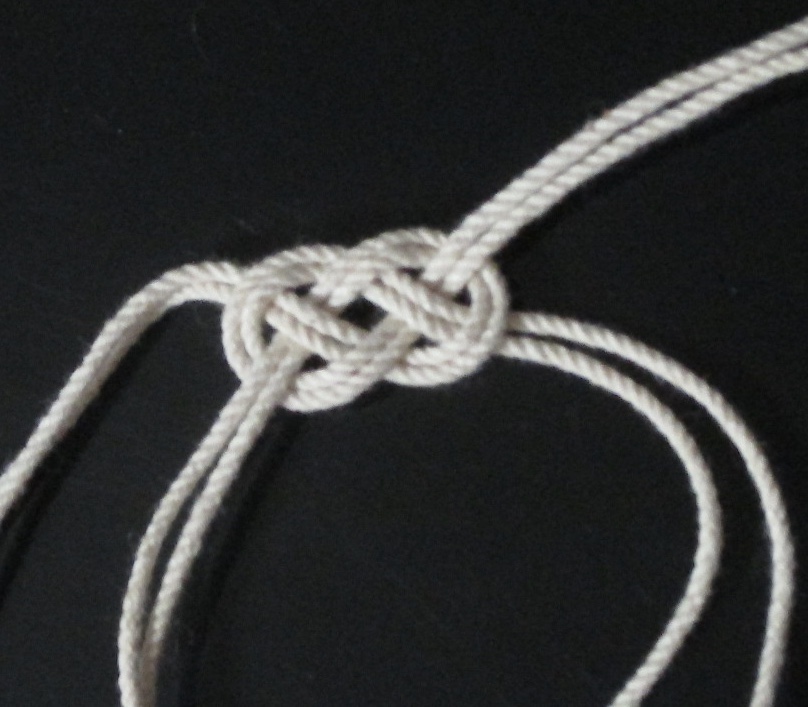
One morning last spring, W was practicing his knots (because Scouts do that kind of thing when they’re bored…). He was using a long length of climbing rope, and somehow, he thought that tying one end to the couch and the other to himself was a good idea. Hold that thought….

J and I were in the kitchen having a conversation about the day. We were preparing to do some community service, and we were reminiscing about previous experiences at this same site in years past. I had started my breakfast, but as usual, I had twenty-five different projects I was also tending, including the laundry in the basement.

W kept calling to me, wanting me to know just how far (or not) he was able to stray from the couch. He was, quite literally, on a relatively short leash.

I popped a bagel in the toaster, cracked two eggs in a pan, and took a quick trip upstairs to gather laundry. When I returned, the bagel popped up, and I removed it from the toaster. However, because the bagel was frozen when I put it in, one particular part just didn’t seem to be done, so I pushed it back down. I didn’t plan to leave it for the entire toasting cycle. I flipped the eggs and went down to drop the sheets in the laundry room. I started the washing machine, poured in the detergent, and added the sheets.

When I got to the top of the stairs, W made sure I saw his knots as I walked through the living room. “Nice!” I complimented as I gave him the thumbs up.

The acrid smell of burning toast hit my nose just as the smoke detector screamed a piercing bleep. Darn! My first thought came through the screaming of the smoke detector. A good bagel, ruined!

But then from the other room, interspersed with the beeps, I heard a small, pathetic, voice. “Help? Help me!”

And then a splay of laughter erupted from the child who had tied himself to the couch. Clearly, he had approached this knot-tying activity with a false sense of security. Because after all, what if…?

I looked at J and tipped my head, indicating our escape through the door. She smiled in conspiracy. We took off running out the front door (safety first, you know) where we stood on the front walkway laughing so hard we were doubled over. The bleeping of the smoke detector stopped as abruptly as it had begun. We were deeply amused with ourselves and the situation.

Back in the house, W remained in the living room, expertly tied to the leg of the couch. He, too, was laughing. Of all the times that the smoke detector could have gone off, it happened when he was unable to leave his spot in the living room.

Of course, if it had been a real emergency, I would have grabbed the scissors and cut him free from the couch before I ran out the door. He would have been mad, initially, that I had ruined his rope, but he would have been grateful that I had saved his life.

Burnt toast, however, does not constitute a real emergency, but a valuable lesson was learned that day. The thought of tying oneself to the couch to practice knots… maybe that’s not such a good idea.

Appetites

IMG_1543

For some reason, I had ventured into this summer thinking I might catch a break in the grocery department. My youngest was planning a backpacking trip right after school ended, a week at camp in June, and another week at camp in July. With all that time away, I wouldn’t have to buy as many groceries, right?

Wrong. Instead, my son has been on a feeding frenzy this summer. When he returned from three days of backpacking, he needed calories. And lots of them. With three days of hiking—and carrying a pack to boot—he had worked off most of the nearly non-existent fat reserve he maintains. His muscles needed fuel.

When he returned from camp, the story was nearly the same. The boys were active from sunrise until bedtime—classes and hiking and traipsing around the camp, uphill in all directions, it seemed. And the boys were responsible for cooking their own meals. Some days, the food was overcooked; some days, it was closer to raw. He ate, sure, but….

These teenagers, their hunger comes in layers. There is the: I just got up and I’m kinda hungry hunger. That one is easily satisfied with breakfast, or in the case of my oldest, who rises midday, lunch.

There is the: I’ve been at practice for three hours and I didn’t eat enough before I went. Please let me at the food NOW kind of hunger. That one requires some leftover dinner, generally a more substantial meal will satisfy this hunger.

My youngest has been experiencing the: I’ve been away [at camp, backpacking, etc.] working out all day and I haven’t had anything to eat all week but rehydrated pack food or food burned by the boys in my patrol kind of hunger. This is serious. This hunger requires hundreds maybe thousands of calories over a period of days to finally satisfy. In truth, I am not sure there is enough time between camp pick up last Saturday and camp drop off this Sunday to make a dent in that hunger. And the food at the grocery store is getting sparse from my frequent visits.

Catch a break on groceries? Not a chance. The money I don’t spend on the weeks my youngest is away is just a small down payment on the groceries for the following week. He is hungry, and he needs fuel for all of his summer activities. And he’s not the only one. I have three active teenagers, after all.

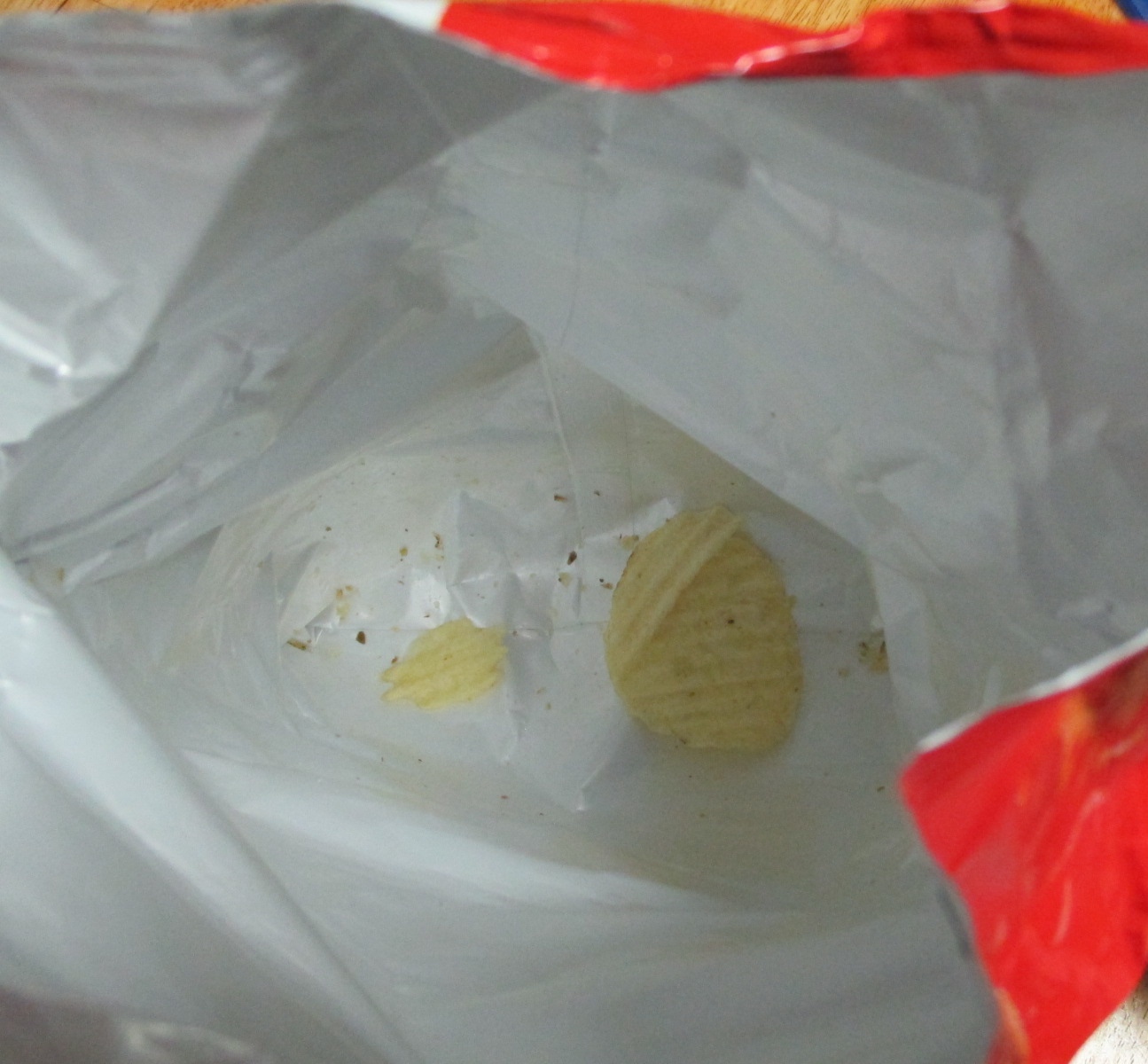
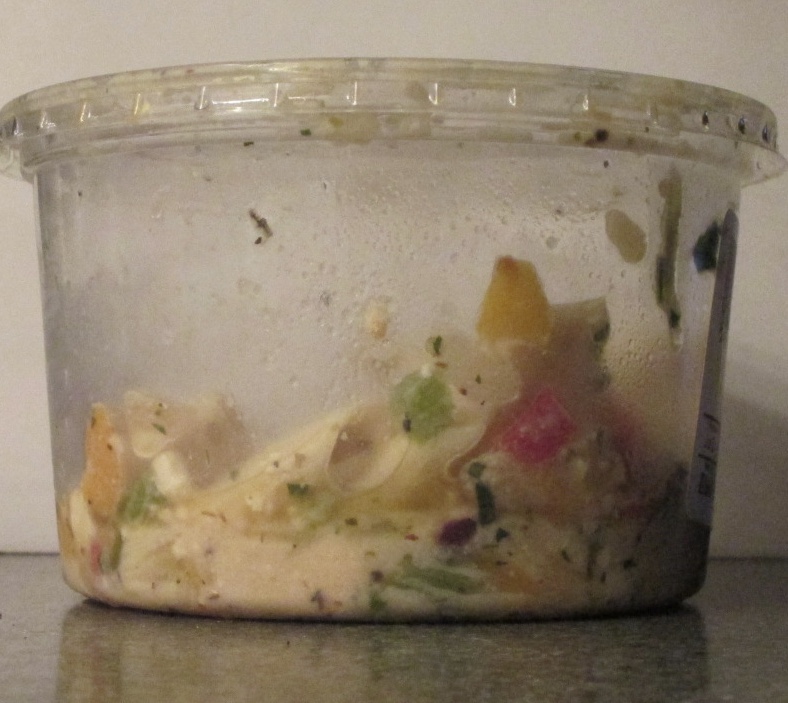
*[Image is a photo of the typical state of the food supply in my house.]

Good Fence/Bad Fence

As poet Robert Frost writes, “Good fences make good neighbors.” In New England, there is much evidence of good fences in the miles of rock walls that amble over hills and through meadows in their forgotten quest to separate the farms of yesteryear. As I look at these walls, I can see the neighbors, each on his or her side of the wall, walking the line together piling stone on stone after each hard winter.

I, however, would like to argue that good neighbors exist regardless of the state of the fences that separate them.

As the resident of a townhouse, walls are generally all that separate me from my neighbors. Thankfully, my neighbors and I get along. At least I like to think we do….

Take my neighbor with whom I have an adjoining deck. For a long while, we had a lack-of-privacy fence between us. Granted, it was supposed to be a privacy fence, but it failed miserably at that job. In fact, the fence actually rotted and began to fall apart. For two-plus years, there was a large hole—at adult eye level—which allowed us to chat without looking around the fence by leaning on the railing. If I stepped out my door, I would often hear, “Howdy, Neighbor!” and a lengthy conversation would ensue through the hole in the fence.

The new privacy fence, rebuilt earlier this season, has just enough space between the slats to allow for partial view from one deck to the other. There certainly is no true “privacy.” As we often say, it’s good we like each other!

On the other side of our house, our former neighbors had two little girls. While our decks were not joined, we did have a more effective privacy fence separating us. But that didn’t stop the girls. If they heard us on our deck eating dinner, they would lean over the railing and engage us in entertaining conversation. It usually started something like this:

“Are you eating dinner?” one would ask. And when we replied with the affirmative, the conversation would continue. “What are you eating? Are you almost done? I have sand in my shoes from the sandbox. Wanna see it?” On a crazier night, one might announce from just behind the fence, “I’m naked. Is that embarrassing you?”

Perhaps it’s true that good fences make good neighbors. But bad fences make better neighbors. Honestly, who needs fences anyway? I suppose I might need a good fence if I had bad neighbors.

IMG_2258

[Image is a photo of our privacy fence, stealthily snapped out my back door so my neighbors wouldn’t think I was creepily stalking them. Clearly, “privacy” is not the strong point of this fence.]

The Door

IMG_1104

My son stood in front of the open refrigerator, door wide open, staring at the contents. The light spilled out onto the floor, where it turned the tile a brighter shade of white. The cold air cascaded from the opening in a mist of fog that quickly dissipated in the summer heat. My son was transfixed, as if waiting—I suppose—for something appealing to suddenly materialize on the shelf in front of him.

“Close the refrigerator!” I scolded. “Figure out what you want before you open the door. Don’t browse.” I have yet to figure out why I have to say this so often….

He closed the door. “There’s nothing to eat in this house.”

I don’t know how that can be. Before I went to the grocery store yesterday, I asked him if there was anything he wanted me to get. All he said was sub rolls. I got the sub rolls, so he really has nothing to complain about.

But that is neither here nor there. I’d rather take a step back and examine the habit of standing in front of the open refrigerator door.

From the kid perspective, I can understand the disappointment of opening to fridge with the expectation of something great only to find nothing that you want to eat. I can almost understand the need to wait and hope for something appetizing to appear. Because really, if you stand there long enough, staring at the available options, something may eventually inspire the palate, right? A combination that wasn’t previously realized might become evident. Something worth eating must be contained in the refrigerator somewhere, mustn’t it? Search long and search hard, and eventually you will find it.

From the parent perspective, particularly the single parent perspective, I see the cost of standing in front of the open fridge—the energy wasted. I see the food that was purchased only yesterday being cast aside as inedible simply because the teen might have been eating that food last week (with great fondness), but the same teen doesn’t care for that particular food item this week–and won’t care for it until well after it spoils.

Yes, there are two perspectives to this problem, both justified, and I am in search of the win-win solution. The solution would be a refrigerator in which amazingly appealing food will appear, as if by magic, when you open it. That would solve this problem once and for all. And it might solve another problem or two, as well….

“What’s for dinner, Mom?”

“I don’t know. Open the refrigerator and see.”

Graduation Gift

IMG_2229

I’m stumped on a graduation gift for my son. It seems he has everything he needs right now. And the things he doesn’t have, I can’t afford. Actually, I can’t afford much at the moment, so it’s good he has what he needs.

I put this issue in the hands of my fourteen-year-old as we walked around the mall Wednesday on a mission to return a purchase. We were browsing the electronics store and the game store, and I thought maybe he would spot something worthy of a graduation gift for his brother.

As we strolled, W suddenly veered into the mall chocolate shop. “I think I found a graduation gift,” he said, as he walked toward the display of colorfully wrapped truffles. The display was full and nearly spilling over. There was a sign that boasted the current “deal” on a bag of these sweet chocolaty treats.

“We can get him a bag of 50 truffles,” W told me, pointing to the sign. I read the line to which he was pointing, and I read it a second time. I cocked my head slightly, perplexed by the discrepancy between what I was seeing and what he was saying. I read the line above W’s finger, and the line below.

“That says there is a deal on a bag of 75 truffles,” I told him. “Where do you see ’50 truffles’?”

“Well, I don’t,” W admitted. “But by the time we give it to him, it will be a bag of 50!”

Ah, always thinking, that kid—50 truffles for the graduate, 25 for the little brother. What a perfect graduation gift!

Cookies

IMG_1391

I picked up my son from the eighth grade class trip (very) late on Friday night (technically, the wee hours of Saturday morning). On the drive home, there was a tired, train-of-thought conversation that involved discussion of the things my deep thinker had been churning in his mind on the 12-hour bus ride home.

“You know, the Capitol dome was constructed of cast iron,” he told me. “In the 1850s and 60s,” he added. “That must have been quite a feat of engineering.” He stared out the window as the darkness passed by while he thought. “I wonder how they had the technology to get that up there back then.”

Nearly nine million pounds of ironwork, I have learned. My son thinks about the process of construction: how they created this immense structure. How they managed to move it to the top of the Capitol building. Meanwhile, my mother-mind wonders about the safety of the building on which that weight is resting and the lives of the people within that building. That’s a lot of weight for the walls and foundation to hold.

“And you know,” he continued, breaking me our of my reverie and revealing the randomness of his reflection. “The National Archives are much harder to get into than Nicolas Cage makes it seem.” I chuckled as my mind drifted to thoughts of the movie, National Treasure.

“Of course,” I told him. “That’s Hollywood. They had to make it possible, or the story line wouldn’t have worked.”

“Yeah,” he agreed. “I just wanted to point that out. It’s really hard to get in there.”

“I’m sure it is. Think about what’s in there.” I paused to see if he had anything else to add. The silence stretched until I asked, ”Did you finish all the cookies I sent?”

“Oh, I finished those a long time ago… on the bus ride down on Tuesday.”

“Did you share them?”

“I tried.”

“What do you mean, ‘you tried’?” I asked.

“Nobody wanted any,” he stated, as if teenagers don’t get hungry.

I puzzled over this one for a minute. Eighth grade boys and homemade cookies. This didn’t seem right to me. “No one wanted any? Did you offer them one?”

“Well,” he hedged. “I probably could have done better with that.”

“You didn’t offer one to anyone, did you?”

“Yes, I did.” he said.

“And….”

“Well, when I offered one to Jon, he was wearing ear buds.” He paused here before he said, “He didn’t answer.”

“So you ate them all?”

Even in the darkness of the car, I could see the smirk on his face.

Few Words

My son is on his school’s annual 8th grade class trip. He is my youngest. He is the third child to go on this class trip. And he is the child of the fewest words.

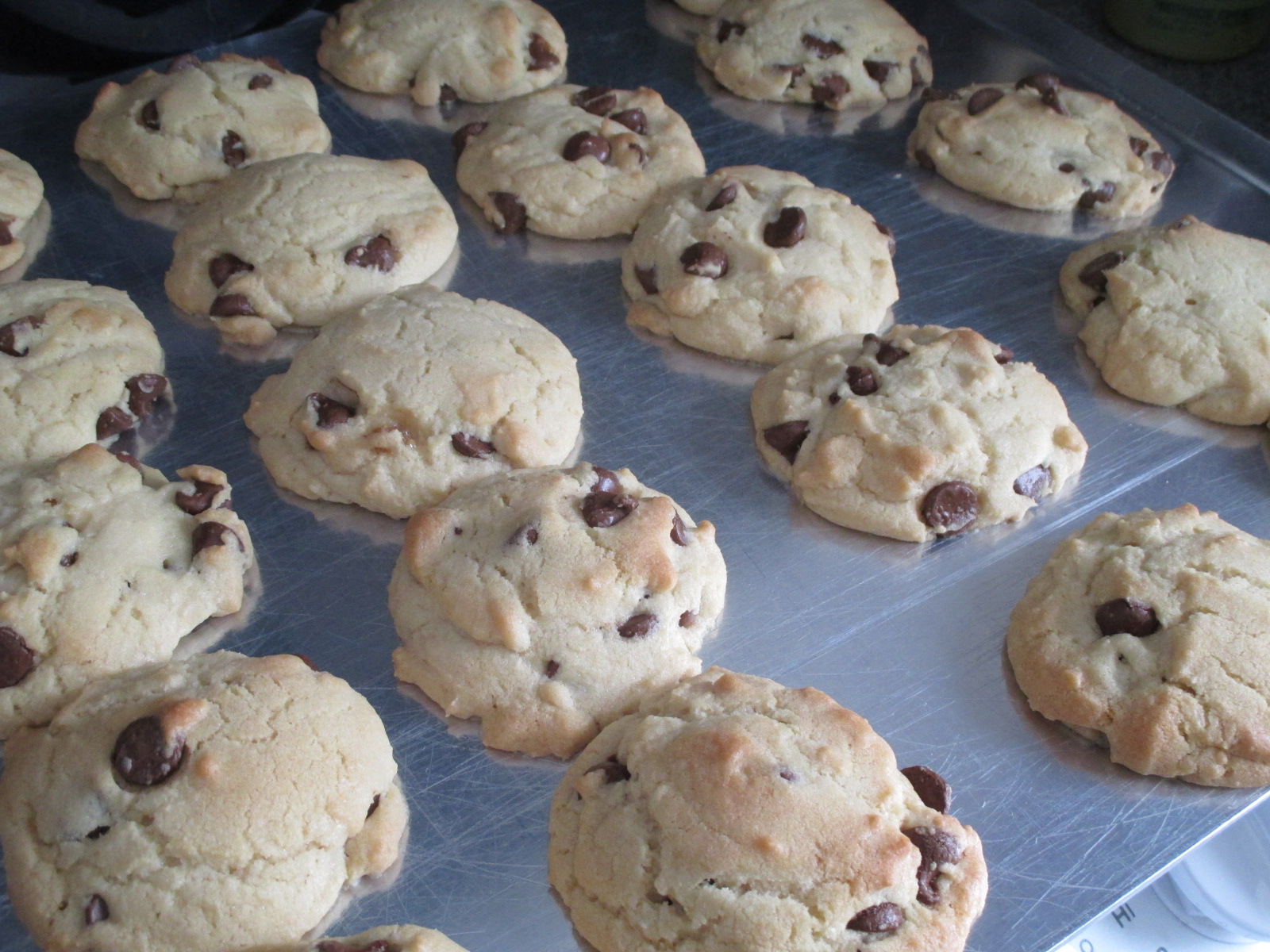
My first child FaceTimed with me from the long bus ride from our town to the 8th grade destination. It was the day after his birthday, and I had sent cookies on the bus. Likely, there were not enough cookies for everyone on the bus, but he had a lot of cookies. And he wanted to show me all of the fun they were having on the bus.

My second child texted me at various times throughout the day as she endured the long bus ride. Endured is exactly the word I would use. She hates traveling, and she hates sitting in confined spaces for long periods of time. She texted me any time she felt she needed support or distraction.

My third child would likely not have any contact with me whatsoever from the moment I dropped him off until the moment he had to climb back in my car for the drive home. When he left, I reminded him that he had his cell phone and charger, and one quick text at night would let me know that he was still alive and with his school group.

So tonight, I texted him: “Did you have a good day?”

His reply: “yes.” Did I mention that he is a kid of few words?

“Anything exciting happen?” I tried again.

“No.”

Okay then.

Tomorrow, I will ask him about food. That subject should get the attention of any teenage boy, shouldn’t it?

IMG_1459

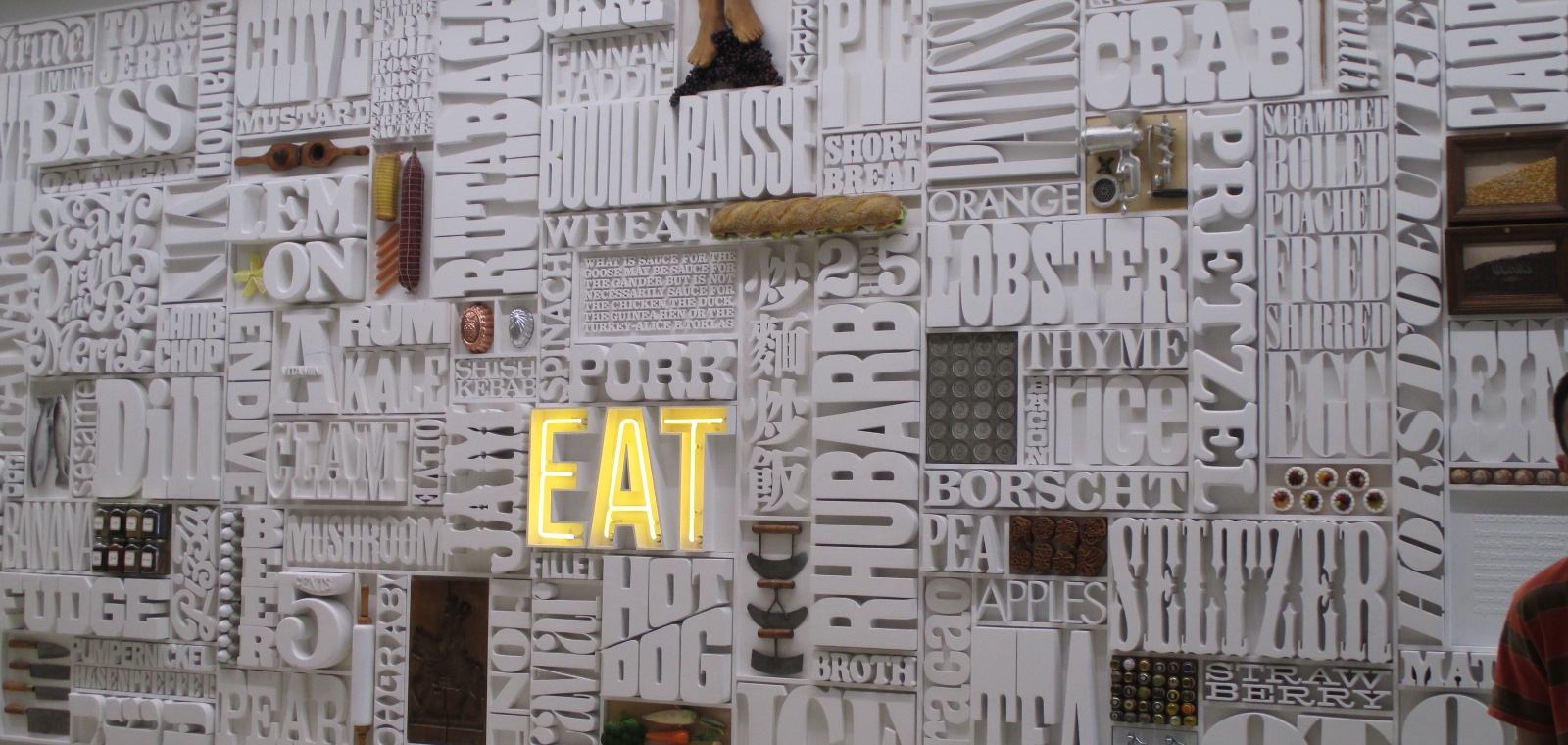
*Image is a photo of word art at the Culinary Institute of America

Veggies and Weeds #atozchallenge

Life Lessons from the Garden:

38499_1340356472522_4942090_n

I have spent the past several years as a gardener in my town’s Community Garden. At this time of year, I am typically planning my vegetable garden. I am acquiring seeds and making sure I have the proper fencing. I am hauling out tomato cages, and sorting through tools and row markers, loading up a bucket of supplies, and planning the layout of the garden I will grow. Not to mention fretting over how I am possibly going to fit everything into my small 10 x 20 garden plot (which is actually two plots in our community garden).

I have taken many lessons from the gardening experiences I have had throughout my life. I only hope that my children have learned one or two of these lessons as we have gardened together.

Planning: If you want to get the most out of your garden, you have to plan ahead. Vegetables are not planted haphazardly. Some require rows, some hills, and some—like tomatoes—are more individual in nature.

Patience: Once you plant the seeds, it will be a week or two before you even see the tiniest shoot of green emerge from the ground. And those shoots are just the beginning. It will be much longer before you can truly enjoy the fruits of your labor.

“Personal space” varies: Just like people, plants have different space requirements. Some plants only need to be separated from their friends by a couple of inches to grow to their potential, but others need their own little patch of space to grow up and spread out and produce the best vegetables.

Focus on the good: Nurture the plants you want in your garden. Remove the weeds, insects, and rodents that are not healthy or wanted and may even be harmful. These things can grow out of control, take over and ultimately, choke out the good stuff.

Persistence: As with any relationship, a gardener must constantly work at gardening. One day, you may spend hours in the garden weeding, and two days later, the weeds will have taken hold, once again, as the prominent greenery. Constant care and attention are required.

Things don’t always turn out the way you planned: There are so many variables that factor into a successful garden. Depending on the weather, the forces of nature, the local fauna, you may not reap what you think you have sown. One season might produce smaller than normal tomatoes. One season might produce a bumper crop of squash bugs—which means no squash/pumpkins/watermelon. But each season brings surprises. There maybe disappointments, but there will likely be pleasant surprises, as well.

Self-sufficiency: Growing a garden demands a great deal of attention, but it also demonstrates the amazing human potential to feed oneself using the resources of nature. And if your crop is big enough, you can preserve some of your harvest (by freezing or canning) for the coming winter.

Satisfaction: After a busy year of planting, watering, nurturing, weeding, and chasing vermin out of the garden, you can relish the satisfaction of having grown your own food. And there is nothing better than garden fresh veggies picked within the hour. Yes, vegetables taste just a bit better when you have grown them yourself.

This year, I will take a hiatus from my garden for a number of reasons. I will miss the daily reminders of these simple life lessons. But perhaps next year, I will choose to garden once again.

Turning the Tables #atozchallenge

IMG_2142

Spring has brought warm weather here in New England, and we are beginning to open windows and leave our doors ajar to let the breezes bring fresh air into the house. In our kitchen, we have a deep windowsill, and during the winter, when the windows aren’t open, things tend to collect there. Often, these items are placed there, then forgotten.

The other night, as we sat down to dinner at the table, it was warm in the kitchen despite the open front door. I surveyed the windowsill, which was cluttered with things that had not been put in their proper places.

“W, you’re going to have to clean off the windowsill so we can start opening that window,” I said, knowing that most of the time, the stuff that lands there belongs to him.

He turned and looked at the sill, most likely mentally calculating the amount of work required to complete the task. “That’s not all mine,” he determined. “J puts it there when she cleans off the table for dinner.”

“Well,” I thought for a minute. “What about those lifesavers?” I had watched him take a couple each morning on his way out the door to the bus. “What are the lifesavers doing on the windowsill?”

“Those?” he asked, pointing to the opened bag and the white candies scattered over the pile of magazines and mail. He looked me straight in the eye. “Those aren’t mine.”

I tipped my head in question. “Yes they are. You have been eating them.”

“Yeah, but they’re not mine. They’re C’s.”

With the mention of his name, C snapped to attention. “Those lifesavers are not mine!” he exclaimed. “I don’t know what you’re talking about.”

“Yes they are,” W confirmed. “They’re the ones you took to Dad’s house.”

“Oh,” he suddenly appeared sheepish. “Is that where they went?” He looked more carefully at the windowsill.

“Those are the lifesavers you took to your father’s?” I asked.

“Yeah,” the two boys confirmed, simultaneously.

“I guess they’re mine then,” C shrugged.

“If those are the ones you took to your father’s, they’re mine,” I stated, deciding to claim them since the boys were still arguing over them. After all, I paid for them. Then again, by that standard, there wasn’t much in the house that didn’t belong to me.

“Okay, they’re yours then,” W said decisively. He paused for half a second, then turned to look at me, his eyes penetrating and his face comically stern. He took on my tone and inflection. “So Mom… what are the lifesavers doing on the windowsill?”

Wait… what?