Lessons from a challenging week…

fullsizerender-1

It was a crazy week in my life. I have to say my life because it wasn’t specific to my house. It wasn’t focused on my family. It wasn’t only at work. It was my life. Everything I touched became completely crazy.

I could say that I encountered some bumps on my journey this week, or I could say that a mountain appeared on the path in front of me. I prefer to think of it as some minor speed bumps designed to get me to slow down. To reevaluate. So I slowed down, and I used this week to gather some lessons to share. The good, the bad, and the silly.

  1. You don’t have to stay positive, but it will certainly make the tough times more pleasant. All of us, in our lives, will encounter a bumpy road every now and then. As I look back on my week, I am picturing a child on a bike, hair blowing back with the speed of travel, feet off the pedals, legs outstretched, and a gleeful smile on her face. Staying positive will help you make the most of the moment.
  2. You might be presented with a hill or a mountain or a sheer rock face, but believe in yourself. Whatever happens, life goes on. Put one foot in front of the other and keep moving.
  3. Sometimes, cookies will take the edge off. When one of my coworkers called and asked what she could do to help, without a second’s hesitation, I joked, “Cookies! We need cookies!” I arrived the next morning, and on my desk I found—you guessed it—cookies!
  4. If you don’t occasionally put your own needs first, you will be useless to those around you. This is a lesson that I am constantly struggling with. It seems I spend my days addressing the needs of everyone around me, but when it comes to simple things like sleep, deep thinking, relaxation, etc., I don’t make myself a priority.
  5. Here’s the thing about hills… you can’t see through them. Things may well be more beautiful on the other side. Once all the crazy, negative energy settles, we will see where we are. I am going to keep climbing and see where life takes me. At least I can enjoy the view along the way!
  6. No matter what happens, you are not alone. There will be people who will offer to climb with you. Sometimes, they might simply walk by your side and keep you company; sometimes, they might carry you. Take them up on their offer. Life is better when you share the trials as well as the triumphs.

Oh… and bring the cookies. They might come in handy!

Spiders

IMG_0377

I was in the shower when I spotted it, which means it must have been fairly big since I was wearing neither my glasses nor my contacts. As it moved across the ceiling at a brisk spider pace, an idea blossomed in my mind.

I finished my shower, shut off the water, and wrapped up in a towel. I grabbed my tablet and snapped a quick close-up picture of the spider. I sent the image to C, who was sitting innocently on the couch, one floor below me. “Can you come kill this for me?” I messaged, knowing the obvious answer.

“No. That’s scary,” he messaged back.

“Please?” I responded. I received no answer. I waited. By this time, the spider had moved to the far corner where it seemed to be setting up shop. I snapped another picture. In this one, the spider was far off, just a spot on the ceiling in the corner of the room. “See?” I said. “Not so scary.” Nothing. “I can’t reach it,” I lied. Still nothing. “Are you ignoring me?”

“No.”

Now, don’t get me wrong. I am more than capable of taking care of the spider myself. I have dealt with every spider in this house since we moved in over twelve years ago. But seeing as C is now an adult, I want to see how he will handle this. And it’s actually quite funny.

“Why aren’t you up here killing my spider?” I ask him. Since historically, it has been him asking me to kill the spiders, I am expecting him to jump at the chance to repay the favor. Not.

“I tried to send W, but he refused,” he admitted.

And there it is, friends. Passing the buck to see if someone, anyone, might take care of the spider for him.

In the end, I trapped the spider and carried it outside where it will live a much happier life than it would in my bathroom. However,  I am not sure what C is going to do when he is on his own. I just hope he knows how many babies one spider can produce. To kill the spider or not to kill the spider? Adulting can be complicated.

Disposable

IMG_2425

Yesterday, I learned something because, as we all know, “You learn something new every day.” But what I learned yesterday is disturbing, at best, and indicates a new level of waste and laziness.

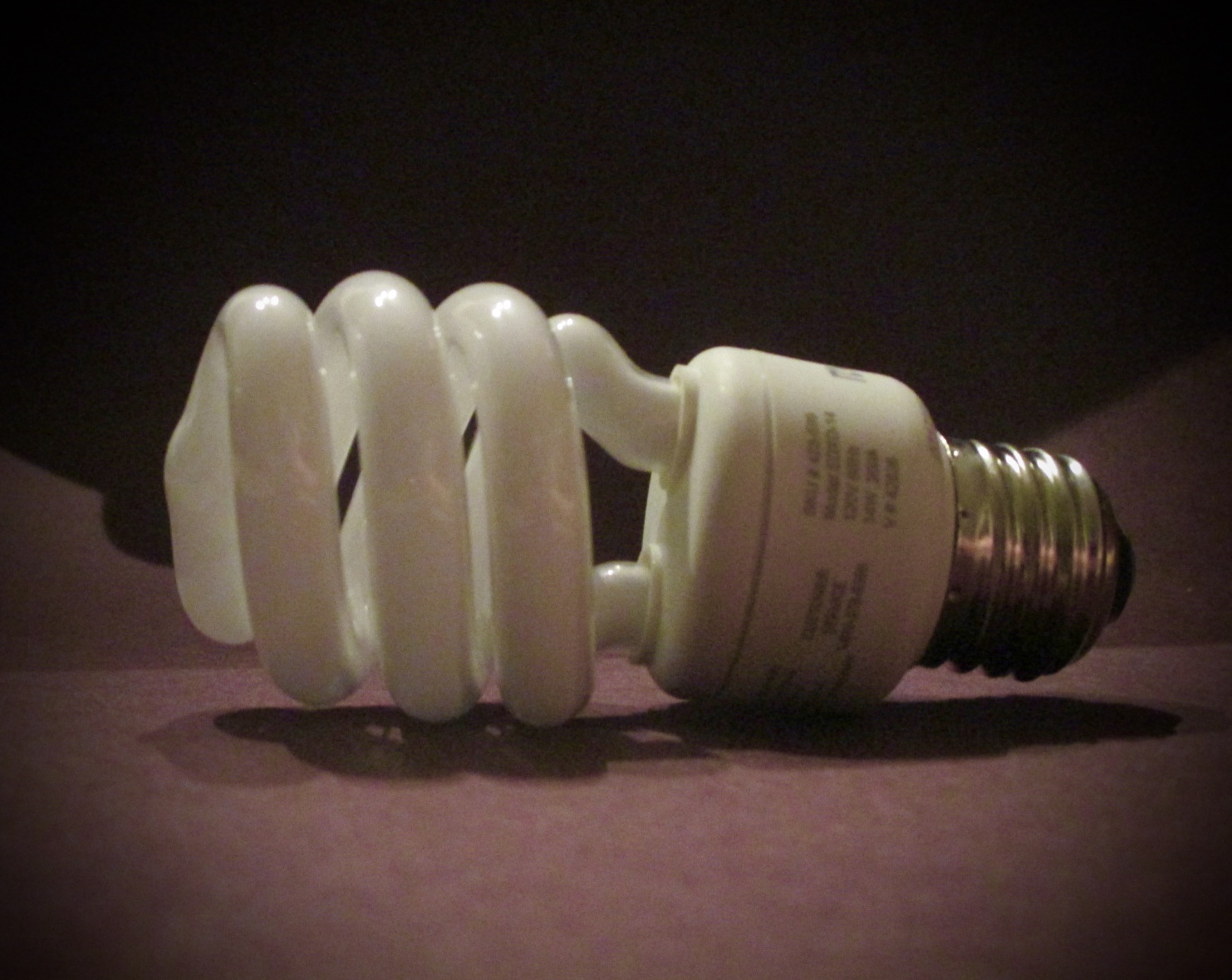
My kitchen light is on the blink—quite literally—since last week. I was sitting at the table working when it blinked off. But only halfway. Now, it has that annoying fluorescent strobe effect going. Or it would if I left the bulbs in it. I purchased new ones and then returned them when we deemed the problem to be the fixture.

My 14 year old examined the light and determined it needed a new ballast. He went online to find out where we could get one, and how much it would be. I still have to look in the local big box stores, but the proper part was located on Amazon for $40, which seems a bit steep to invest in an old, ugly light. Then again, I don’t have to invest in an electrician because I have a 14 year-old, but I digress.

When we went to the local home center to look at lumber (don’t ask), we stopped in the lighting department. I figure if I can get a fixture for not much more than a ballast, it might be a better option.

“No bulbs to replace,” my son read off the box of one of the lights as we strolled the aisle. “Oh, that’s not good.”

I turned and looked at the box. “Wait. So those are disposable fixtures?” I asked to no one in particular. “That can’t be right.” And yet, the majority of fixtures on the shelf were in similar boxes, all of which touted, “No bulbs to replace.” As if that is somehow a good thing.

I couldn’t believe what I was reading, so I opened one of the boxes and pulled out the light. In fact, there were no bulbs, and inside the light was a circuit board with several small square non-replaceable LED lights on it.

“Not only are there ‘no bulbs to replace,’” my son said, pointing to the LEDs. “Those are all going to go out at different times.” He smirked.

“Well that would stink,” I remarked, thinking of my own half illuminated kitchen light.

But really, I am still in disbelief. A “fixture” is supposed to be fixed, and yet, the fixtures we saw yesterday are disposable. When did it become so difficult to change a light bulb that it’s easier to remove the entire light and throw it away? And just how is that easier?

Either I’m on a steep learning curve, or I’m missing the purported benefits of no light bulbs.

Preparing

IMG_2415

My Facebook feed is filled with statuses of young people who are going off to college. Parents have posted pictures of various aspects of the approaching college experience: the “stuff” that has been accumulated to outfit a dorm room; dorm rooms after set up; student send-offs and final hugs; and these same young people posing on beautiful campuses, just before the parents get in the car for the drive home.

My son will leave for college in a few short days. We have a pile of “stuff” in our house that we are trying to pack into as few containers as possible. I am washing towels and bedding and clothes. I have collected paper goods and toiletries and school supplies. He tells me his pants are too short, and he definitely needs new sneakers. Luckily, he can wear shorts until he comes home to visit in October. After all, it won’t be that cold on campus until then….

It is an exciting time for these college freshmen. They are going off on a great adventure, and they are, quite rightfully, excited. And I am excited for my son. But I have other feelings, as well. Even though this is a great step in his life, I know that there will be times when he feels like he is in the wrong place. When he thinks he has made the worst decision of his life. When he is deeply lonely. And I recognize that these are all necessary feelings and experiences as he navigates the waters of life and of grows into adulthood. But I am his mother.

So, there are some things I wish he didn’t have to go through. I wish he didn’t have to question his decisions, experience loneliness and homesickness, navigate the challenges of being away from home, and wonder if he would be better off somewhere else, but not really know where. If I could, I would guarantee him a life of smooth sailing and unbridled excellence. But what kind of life would that be? Certainly not one of growth and ever expanding maturity.

So I will send him off as prepared as possible to tackle the things life throws at him. Today, I am packing up a box of medical supplies, simple things like bandaids, cough drops, pain relievers, and a thermometer to get him through the bumps and bruises of the next four years. These things are minor, but they are things he would have readily available here at home. Hopefully, when he is feeling down and not his best, he will open the box and realize that even though I am several towns away, I am still caring for him, supporting him, and loving him.

And hopefully, he will remember that I am only a phone call (text, email, whatever) away. If he needs me, I will always be here.

Maybe…

DSC_0022

I once read the book The Boy on the Bus by Deborah Schupack. I believe this book was born out of the very familiar and somewhat unsettling concept that children tend to change just a little bit each day, until one day you look at your kid and you think, There is something vaguely unfamiliar about this child. Is this really my child?

The book itself was unsatisfying in its lack of resolution, but the premise of the book is that the boy who gets off the school bus one afternoon is not the same boy who got on the bus that morning. He looks almost like the same boy, but there are things that are just a bit off about the child.

I would like to admit this is a fairly universal experience for parents. Well, it is for me, at any rate. The child who leaves my house in the morning is sometimes very different from the child who comes home that afternoon—whether in mood or demeanor. And every now and then, the child even looks just different enough that I question myself. Is this really my child? Maybe not.

Earlier this summer, when I retrieved a child (my child) from a week at camp, I hesitate to admit that I almost didn’t recognize him. It had only been a week, after all. What kind of mother doesn’t recognize her own son after only a week??

Well, first off, he was wearing a baseball cap. The same red baseball cap that adorned the heads of all of the campers on that day. And my kid doesn’t wear a baseball cap. He hasn’t since he was about six or so. Second, all of the campers were dressed alike. And third, he had gotten a haircut right before he left. His hair was a bit shorter than usual, making him look older than I was used to. Therefore, I would attribute my brief lapse in recognition to the combination of those obscuring traits.

It took me an extra minute or two to find my child that day. But even on a regular day, I can look at one of my children, recognize something unfamiliar, and have the unsettling thought, Maybe this is not the same child….


*image is a silhouette of my child at sunset

Reality

After her drivers ed class today, my daughter assumed the “browsing position” in front of the refrigerator. She had the doors flung wide open, one handle in each hand, and she was searching. Up on tiptoes to check out what was behind the condiments on the top shelf. Bent down to look behind the bowls on the bottom shelf. I could tell this was serious business. It was lunchtime, and she was hungry.

She sighed. “Is there no tortellini left?” she questioned. Really, from where I was sitting on the opposite side of the door, it was tough to tell.

“Is it not in there?” I asked, not admitting that less than an hour earlier, I had offered it to her younger brother as a lunch option.

“I don’t see it.”

I opened the dishwasher, and the empty bowl presented itself as evidence. I closed the dishwasher. “No more tortellini,” I reported.

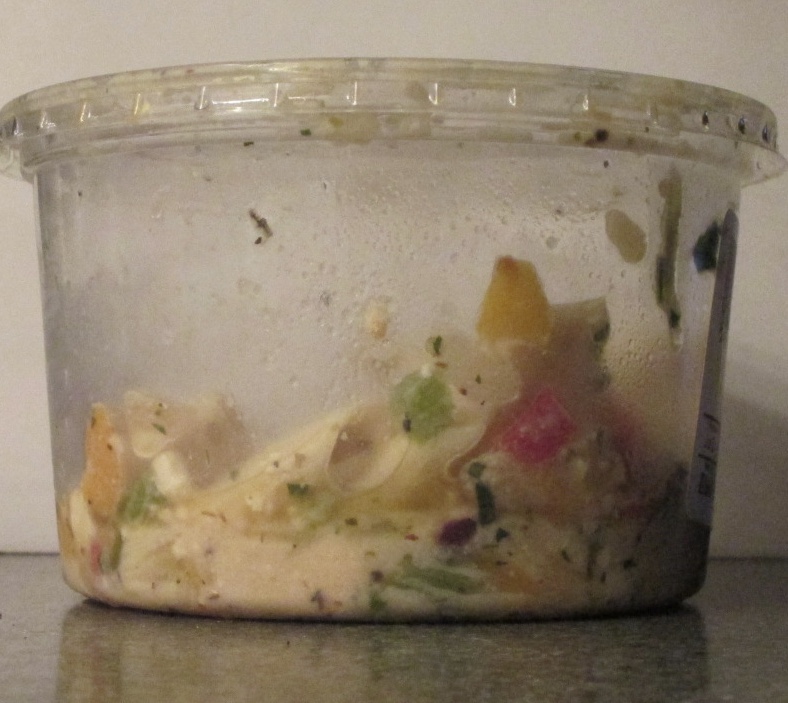
“And there’s no pasta salad left, either, is there?” She already knew the answer, but I could tell she was holding on to a shred of hope.

“No, there’s not,” I reluctantly reported. “We finished that for dinner last night.”

“So there’s nothing to eat!” she griped. “Why does everyone always eat all the food without me?”

Hmm… it must be a conspiracy.

Or, more likely, it’s the reality of life in a house with teenage boys.

IMG_2305

Driving with Teens

IMG_2268

I’m going on a drive or two. Why don’t you hop in the car and come along. I’ve written another post about what it’s like to drive with new drivers. Since most parents will likely experience this thrilling adventure eventually, I’d like to take you along on a couple of my experiences. So Buckle up… it’s going to be quite a ride!


Drive #1: Pedestrians

We are driving along when I see people walking in the road up ahead. (One might argue that these people should not be walking in the road, but that would be another blog post.) These people are a distance away, but close enough that we should begin to slow down.

“There are people walking in the road up ahead,” I inform the teen driver.

“I see them,” the teen replies. We continue moving at the same rate of speed.

“You should slow down,” I instruct.

“I am,” the teen driver informs me. I feel no difference in the speed we are traveling.

“SLOW DOWN!!” I snap.

“MOM!” the teen replies. “I AM slowing down. I’m not going to HIT them!!”


Drive #2: Highways

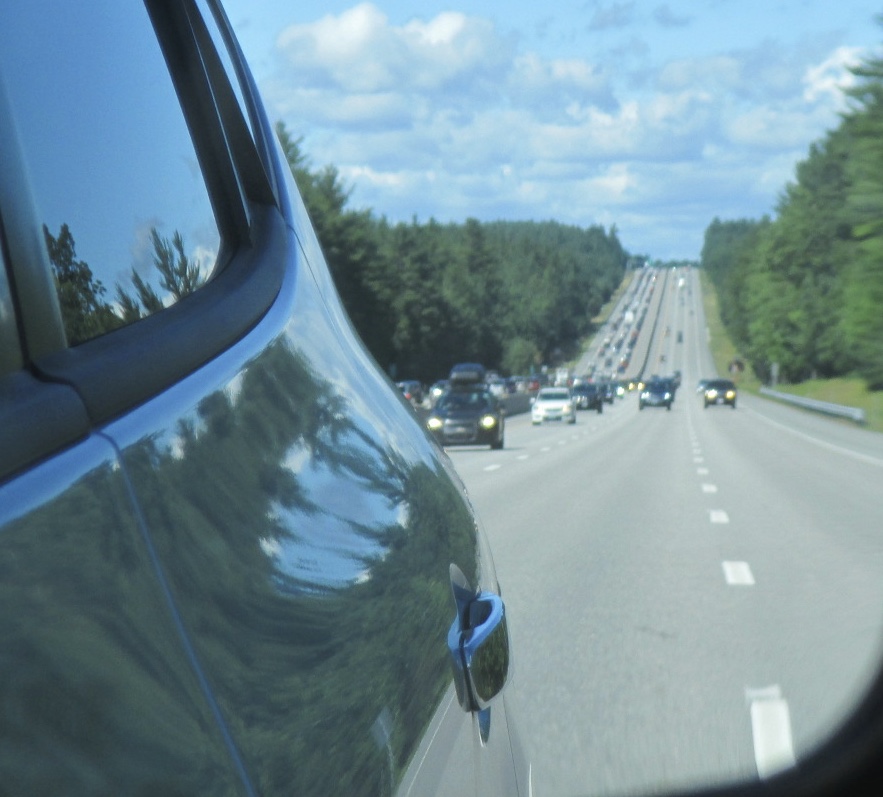
Highways are always a bit dicey. After all, highway driving requires a consistent high rate of speed, which most people who have only been driving for a month or two are not used to. Add in the occasional need for an evasive maneuver and, well, it’s not always pretty. On this drive, the traffic is fairly heavy. We are driving through a “city,” so vehicles are entering and exiting the highway. We are approaching an entrance ramp, and there is an 18 wheeler getting onto the highway.

“That truck is going to need to merge,” I say to my teen driver. The truck is far bigger than the car we are in.

“I see it,” my teen driver says.

“So… you might want to give him space so he can get in here,” I nudge.

“It’s his job to merge with me,” the teen informs me. This is information learned in driving class.

“I understand that,” I say. “But he is bigger than you.” And coming up fast, I want to add.

“That doesn’t matter, Mom,” the teen states. “I am in this lane, and he has to merge.”

“Yes,” I say, beginning to get impatient. “But he doesn’t seem to be slowing down. He wants to get in this lane, and it doesn’t seem to matter that you are here.”

“He can merge with me,” the teen is emphatic, but I see that the trucker clearly has no intention of “merging” with anyone. He owns the road he is not yet on.

“GIVE HIM ROOM!!” I raise my voice. “He is much bigger than you, and he is NOT stopping!”

“He was supposed to merge with me,” the teen grumbles. “I am in this lane.” While I can’t argue with my teen’s knowledge of the laws and right of way, there is something to be said for “an ounce of prevention….” Especially in the case of a vehicle that is many times bigger than the one you are in.


Drive #3: Medians

Sometimes, learning about medians can be an interesting adventure. Pulling out of a shopping plaza with a very new driver means the teen is not yet even paying attention to things like medians. We are at a four-way intersection of several parking lots as we are leaving a restaurant, and my teen is driving.

“Turn left here,” I say, not even thinking that there are two possibilities. My teen does as I say, turning left and completely missing the “keep right” sign. We end up to the left of the median.

“STOP!” I say, and the teen stops the car and looks at me.

“What?”

I am simultaneously breathing a sigh of relief and laughing at the situation. “Back up.” I point to the median out my passenger window. “You need to be on the other side of this median. See those cars?” I point to the intersection up ahead. “They are going to be coming in here.”

“Oh. Well, you told me to turn left, so I did.” Thankfully, everyone in the car thinks this is marginally funny. “You didn’t tell me I had to go to the other side of the median.”

“No, I did not. My bad,” I say, as we readjust into the correct lane and continue on our way.


Drive #4: Impatience

We are driving on a two-lane road. We are observing the exact speed limit. I will be the first to admit, the speed limit feels a bit slow on this road, but kudos to the driver for maintaining a consistent and perfect speed.

The car behind us does not appreciate driving the speed limit. It has been on our bumper since we turned on this road. I don’t believe the teen driver has noticed, but I have.

Suddenly, the car behind us pulls out into the other lane and speeds past us. The teen driver slows to allow him easier passage in what is a no passing zone.

“Well, he’s in a hurry!” the teen comments, accelerating back to the speed limit.


Hey, thanks for coming along for the ride! These teen drivers, my first two… they have been somewhat easy to teach. My youngest, he’ll be driving in just a few short months (nine to be exact, but who’s counting?) I’m a bit concerned about that one. He is already calculating how fast my car can go without self-destructing….

Journey

DSC_0914

Recently, I have been feeling as though my life is spent attending to the needs of everyone around me—children, adults, felines, etc. I have lost touch with myself—the very things that make me who I am—and sometimes, I feel as though I am in danger of bursting into a million tiny pieces and floating off in every direction. I imagine my children’s initial shock at the explosion, like a ‘poof’ of something disappearing in a magic show, and then the scramble to gather the pieces. But it will be too late. I will be gone. As this image fills my head, I catch myself wondering whether ‘spontaneous explosion’ is a thing that can happen to humans.

Last evening, in my need to get out of the house for a few minutes of peace, I went on a journey. Okay… I lie. I took out the trash. But for me in my condo association, “taking out the trash” means a quarter mile walk to the dumpster. It’s usually a nice evening stroll, though if the trash is particularly heavy, it can be tedious. Last night, the trash was light.

My daughter had just come in from a walk and said she had seen a turtle laying its eggs by the side of the pond. As I approached the pond, I wondered if I would see the turtle. Because of the summer heat, the pond is covered in a thin, green film of algae, swirled by the breezes that sometimes play across the water’s surface. The pond is so evenly covered that it is reminiscent of the first skin of ice that appears each year when the cold sets in. The algae though, it makes the pond seem neglected, dirty.

Further down the path, I enter a thick grove of trees—the darkest spot on the journey to my destination. I am a week too late for fireflies, I think, though it isn’t quite dark enough outside to tell for sure. Last week and the week before, the fireflies danced under these trees.

On the walk back toward home, birds are flitting near a toppled and rotting tree stump left behind by a severe storm several years back. The smells of forest remind me that there is a drought, and in my mind, I am transported to the year I lived in northern California. There, the scent was similar—dry and dusty—but was tinged with eucalyptus and Manzanita. As I pass the pond once again, a bullfrog sings his mournful song.

The walk was not long, but the noise of the day has been replaced by the soft sound of my sneakers on the pavement and the night noises of nature. The last streaks of light are fading from the sky as I duck under tree branches hanging low above the walkway. I breathe deeply of the air that is beginning to cool down, and my mind is clear. The clarity may only last a moment, but I am ready to go back to work.

I open the door to my house and step inside, feeling just a little less likely to spontaneously explode.

Knots

IMG_2287

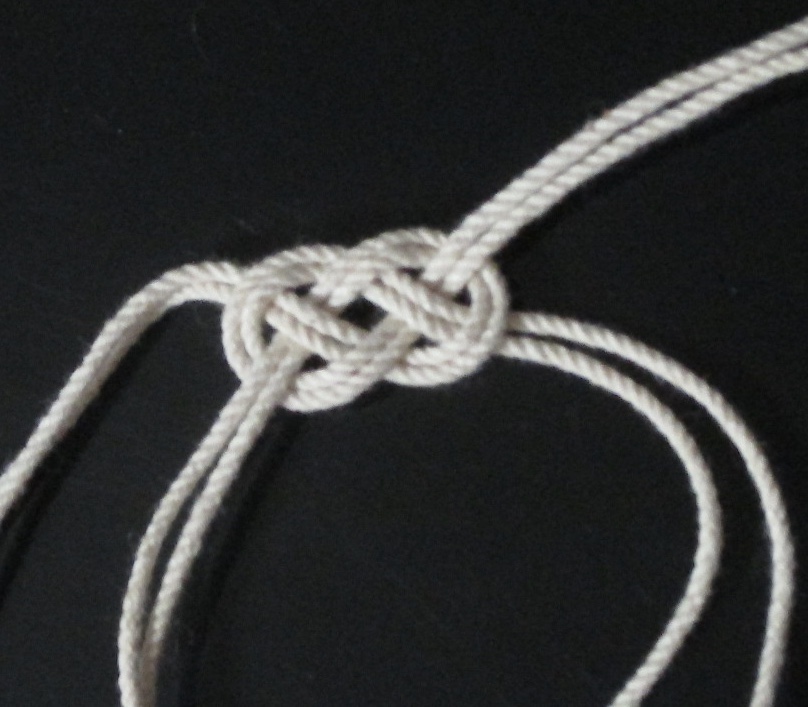
One morning last spring, W was practicing his knots (because Scouts do that kind of thing when they’re bored…). He was using a long length of climbing rope, and somehow, he thought that tying one end to the couch and the other to himself was a good idea. Hold that thought….

J and I were in the kitchen having a conversation about the day. We were preparing to do some community service, and we were reminiscing about previous experiences at this same site in years past. I had started my breakfast, but as usual, I had twenty-five different projects I was also tending, including the laundry in the basement.

W kept calling to me, wanting me to know just how far (or not) he was able to stray from the couch. He was, quite literally, on a relatively short leash.

I popped a bagel in the toaster, cracked two eggs in a pan, and took a quick trip upstairs to gather laundry. When I returned, the bagel popped up, and I removed it from the toaster. However, because the bagel was frozen when I put it in, one particular part just didn’t seem to be done, so I pushed it back down. I didn’t plan to leave it for the entire toasting cycle. I flipped the eggs and went down to drop the sheets in the laundry room. I started the washing machine, poured in the detergent, and added the sheets.

When I got to the top of the stairs, W made sure I saw his knots as I walked through the living room. “Nice!” I complimented as I gave him the thumbs up.

The acrid smell of burning toast hit my nose just as the smoke detector screamed a piercing bleep. Darn! My first thought came through the screaming of the smoke detector. A good bagel, ruined!

But then from the other room, interspersed with the beeps, I heard a small, pathetic, voice. “Help? Help me!”

And then a splay of laughter erupted from the child who had tied himself to the couch. Clearly, he had approached this knot-tying activity with a false sense of security. Because after all, what if…?

I looked at J and tipped my head, indicating our escape through the door. She smiled in conspiracy. We took off running out the front door (safety first, you know) where we stood on the front walkway laughing so hard we were doubled over. The bleeping of the smoke detector stopped as abruptly as it had begun. We were deeply amused with ourselves and the situation.

Back in the house, W remained in the living room, expertly tied to the leg of the couch. He, too, was laughing. Of all the times that the smoke detector could have gone off, it happened when he was unable to leave his spot in the living room.

Of course, if it had been a real emergency, I would have grabbed the scissors and cut him free from the couch before I ran out the door. He would have been mad, initially, that I had ruined his rope, but he would have been grateful that I had saved his life.

Burnt toast, however, does not constitute a real emergency, but a valuable lesson was learned that day. The thought of tying oneself to the couch to practice knots… maybe that’s not such a good idea.

Matches

DSC_0384

One of the skills that I have taught my children—perhaps the only one that will ever come in handy as they already use it fairly often—is the skill of searing the ends of rope, cord, ribbon, nylon, etc. I have taught them how to pass these ends and edges through a flame in order to “seal” them so they won’t fray. This is a skill I learned in an indoor/outdoor sewing class back in my high school days—one of the few useful skills I acquired in the six years spanning grades seven through 12.

The other day, C came into the kitchen with a length of black cord that was fraying. “I need the lighter,” he declared as he walked toward the crock where we keep it.

“Oh…” I hesitated. “We don’t have one that works. Your brother used it, and I meant to replace it.” I had put lighter on my shopping list countless times, but I never seemed to remember to actually buy one. The one we had was clearly empty and wouldn’t stay lit, but I hadn’t thrown it out. Somehow, I figured it would be useful (for what, I have no idea) until a new one appeared.

“So…?” he posed as a question, thinking I would fill in an answer for him. I continued typing on my laptop. “What am I supposed to do? I need to fix this.” He held out the cord for me to see, but I continued to work. By this point in my mothering career, I pretty much have eyes in the back of my head, the side of my head, the top of my head, and the bottom of my chin. I knew what he needed.

“We have matches,” I told him. He began searching the junk drawer in the kitchen, and he seemed to have found some because the next thing I knew, I heard him trying to light one. The first match didn’t stay lit long enough for him to sear all of his cord. The second one didn’t, either. He was on the third when I finally looked up from my work.

“How about if you light a candle?” I suggested. “Then you will have a constant flame, and you can work with that.”

Success! He was able to complete his task of searing the ends of three, maybe four, cords.

The next day, W walked into the kitchen with a length of paracord that he had wound into an impressive skein. “Nice!” I nodded my approval.

“I just need to seal these ends,” he said, holding them up for me to see.

“Um…. We don’t have a lighter that works,” I reported, feeling a strange sense of deja vu. “But we do have matches you can use.”

He dug through the drawer and pulled out the matches. He studied them for a minute. “How do these things work?” he asked, jokingly. As a Boy Scout, he has used matches once or twice.

“Hey, I can help you!” C said, coming to his brother’s rescue. “I’ve mastered this old-fashioned technology!”