Forever

Photo by Isaac Wendland on Unsplash

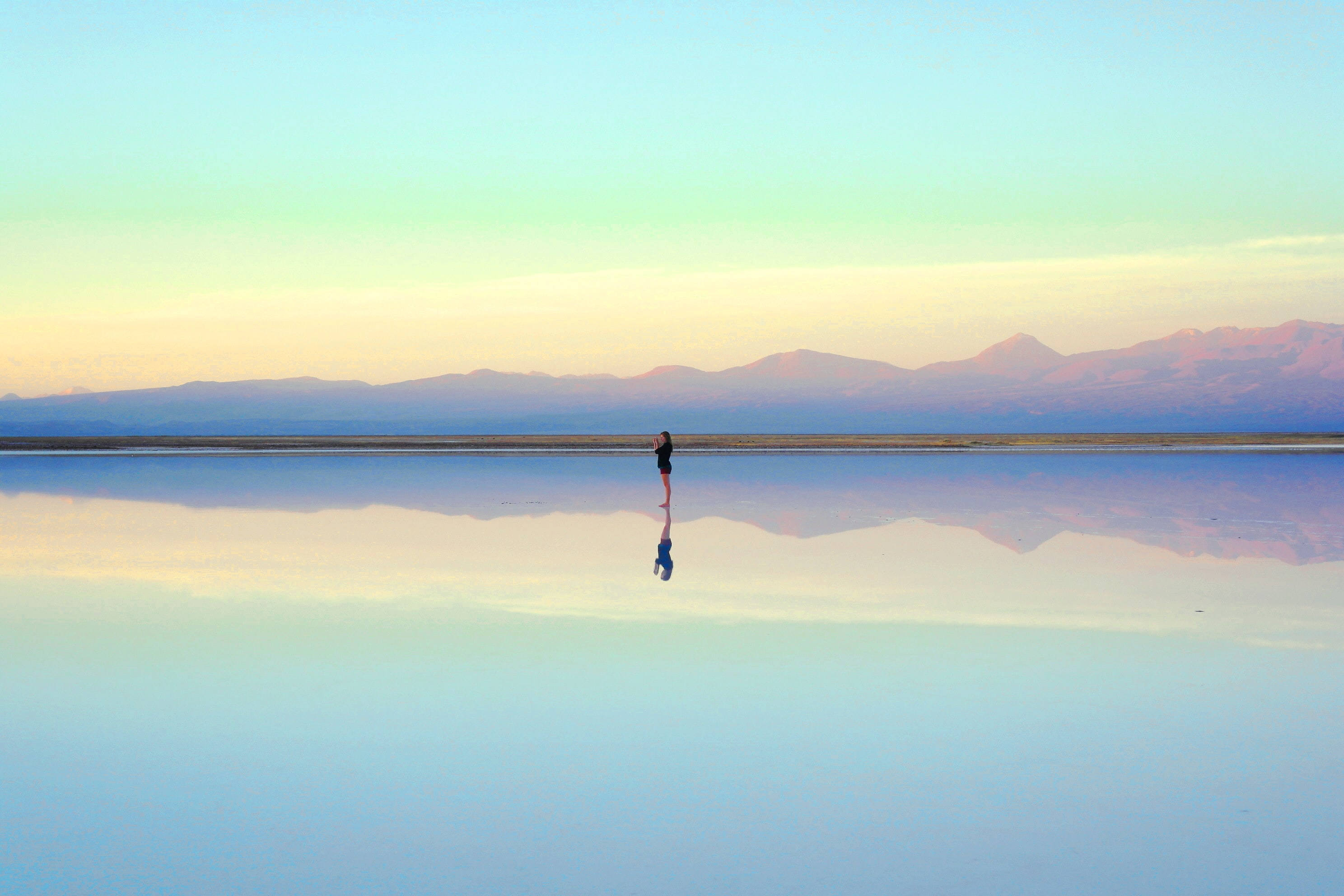
The other day, I caught a glimpse of forever. It’s really not that far, you know—forever. It comes up much quicker than we think. And all of a sudden, we are standing on the edge, looking out over all that has been, all that will be, and all that is.

All that has been. This is your past—a past you cannot change. The mistakes you’ve made, the lessons you’ve learned, the successes you’ve experienced, and the milestones you’ve reached. This past has laid the foundation of your life and has contributed to the programming that has made you who you are. It has created in you the beliefs and the ideas with which you now face the world. Bear in mind that many of those beliefs started in you when you were very young. When you didn’t know any different. They were instilled by well-meaning adults who had their own views of the world tainted by their own outdated beliefs, skewed world views, and faulty programming.

But as you look out across forever, it is tempting to focus on all that will be. The possibilities… they are compelling and exciting. You could create a whole new career, find a new partner, get a new job, buy a new home, come into some money. But there is also the other side of all that will be—the possibility that your plans might not pan out the way you’d like. Or some misfortune may befall you, or you will get stuck in a rut from which you cannot escape. There are always negative forces that counter the good and lend perspective. And life is always about how we respond and how we summon the strength within us to push forward, to measure our steps, and to created positivity and joy. If you don’t have a capacity for creating positive, all that will be—the future—may be a hard pill to swallow.

Which leads us to all that is. This, my friends, is where life happens. This is where we must stop and focus our energies. Because all that is is where we can work on redefining our limiting beliefs. This is where we can reprogram our self-talk. This is where we can set ourselves up for all that will be. All that is… where we develop our talents, our strengths, and our commitment to ourselves. This is where we adjust so we ca become the best version of ourselves.

So as you catch your glimpse of forever, remember that all of your focus and energy should be on all that is. Working solely in this sector of forever—the present—will help you to overcome all that has been and prepare yourself for all that will be.

Moments

Photo by Joshua J. Cotten on Unsplash

I have been moving along this road I am on. Day by day. Hour by hour. Moment by moment. I seem to respond to the moments most deeply because they tend to surprise me the most. For example, the moment, a week or so ago, that I noticed the great blue heron standing in the shallow water flowing from the stream into our pond.

The heron always catches me by surprise. You might think that after living here for 20 years, I would expect to see him. But I never do. Often, he is camouflaged in the reeds and grasses, his stick-like legs resembling the straight tan stems of the cattails. His body is the color of dull water reflecting the overcast winter. I’ll be walking along the path by the pond, minding my own business, and suddenly, he appears in my periphery. And I turn to look, surprised that I hadn’t noticed him sooner. Sometimes, I slow my pace or even stop altogether. And when I stop, he sometimes flies, annoyed by my insistence that I see him—even stop to take a picture like a gawking tourist—rather than pass by unobtrusively.

Sometimes, his shape rises out of the evening dusk as he stands in wait for a tasty dinner. One time, it was so dark that I only felt his presence. And when I shone my flashlight into the darkness, it illuminated his angles and lines, once again startling me, and I quickly flipped the light to the footpath before I disturbed him. I’m sure it was too late, that disturbance is, in his mind, my middle name.

But last week, when I noticed him standing in the frigid, half-frozen waters of winter, I was stunned. Last week, moments before the temperatures dipped below frigid. Last week, after snowstorms had blanketed the region with inches of snow. Mid-January, it would seem, would be well past time to fly a bit further south than New Hampshire. To someplace where the tendrils of ice and frost have a more delicate grasp. And yet, here he was, crouched close to the water. Pulled in and fluffed up against the cold.

The moments. Brief encounters with the world that cause me to pause and reflect and wonder. The moments push me to ask questions—Do herons migrate? And they spur me to notice the wonders of the world around me. The moments bring me back from my thoughts, my stresses, my worries, and my plans and they ground me firmly in the present. The here and now.

As you walk your own path down the road day by day, hour by hour, don’t let the moments pass you by.

This Is It

So often we sit around waiting for life to happen—to us, through us, around us. We wait. We expect life to come. A new perfect job will come along. Fate will lead us to our destiny, whatever that means. Opportunities or people will cross our path. And so, we wait.

But this is all very passive. This is about all the things that will happen to us while we sit around doing nothing. Waiting for life.

This is not the way life is supposed to work. As we wait, we are not taking advantage of all that life has to offer. In fact, we are likely blindly scrolling the internet or binge-watching some mind-numbing show on one streaming service or another. If we look around us at any given moment, our life doesn’t look like what we are expecting life to look like. Therefore, the here-and-now, the this-is-it doesn’t get our full attention. We stay on the couch, bored and restless.

And yet, this is what is—the present moment. This is the best we’ve got right now. And it just may be that this is it. So… I have decided to approach 2024 with a This Is It attitude. Since this is what I’ve got right here and right now, there is no sense in waiting for what might come. I mean let’s face it… we all have a plan for what we will do if we win the lottery. But you’ve got to play to win, and I don’t play, so there’s that.

A life without lottery winnings is pretty much what I’ve got. This Is It. I have the moments and the opportunities that present themselves. That, a little bit of luck, and a positive attitude. I’m pretty sure I can fly with that. And so, I will examine the moments and the opportunities that present themselves. I will dig deep into the here and now and the challenges I must overcome. And I will recognize that if I seize the moment—and I do it well—I could be facing a completely different reality as this year comes to a close, from This Is It to This Is Amazing!

If you were to take your This Is It and run with it, how would you move forward?

Enough

There is this lie I tell myself.

I’m not good enough.

And telling myself this lie holds me back from so many things.

I’m not good enough.

It instills a fear of failure before I’ve even begun a project, a painting, a work presentation, or a piece of writing.

I’m not good enough.

It weaves through my thoughts like the smoke from a campfire, winding upwards and obscuring the trees, the stars, the sky.

I’m not good enough.

It holds me back like a giant fence, too tall to even glimpse what lies just on the other side.

I’m not good enough.

It’s a common refrain in our society and not one unique to me. Sometimes it’s spoken aloud. “I could never make it [on that team, into that performance, on that hike, etc. <<< insert applicable situation here]. And what we are saying each time, time after time, like a mantra for life is

I’m not good enough.

Like all lies, if it’s fed, it GROWS. If you repeat it—aloud or to yourself—it becomes who you are. And if you share it with others, it becomes your reality.

I’m not good enough.

You are swept up in the lie as it spirals into a vortex from which you cannot escape. The lie becomes increasingly powerful, especially as we fight our way through the destructive “keeping up with the Joneses” competition that pervades so much of today’s society.

I’m not good enough.

But with a great deal of work and dedication, we can fight against the tide. Like children creating a whirlpool in a swimming pool, we can shift our thinking… swim in the opposite direction and begin to change the tide through our own thoughts and actions.

ENOUGH!!

It may start as a whisper, and that’s okay. Tape that whisper to the bathroom mirror where you’ll see it all the time. Read it every day and night. Speak it aloud to yourself every time you see it.

I am good enough.

The more you see it and the more you say it, the more convincing you are, the more you will believe it. The more you will know it’s true and the more power the statement will have.

I am good enough.

This statement is your new mantra for life. It’s a mantra that shifts the power back to you.

I am good enough.

The statement spirals down into my very being and expands my soul, pulling me up and out of the shell in which I have been hiding the best of myself. It reimagines the power within me.

I am good enough.

The Joneses have nothing on me now because I don’t need to compete with them or with anyone else. I am enough, and the talents I have make me a unique presence in my circle of friends.

I am good enough.

The wall tumbles down, allowing me to move about the world on my own terms. My limits fall away as I begin to believe in myself once again and in the gifts I possess within my soul.

I am good enough.

What I believe is what I become. Hope is a muscle that can be stretched and strengthened. Dreams can come true. This new mantra is the fuel I need to keep going and keep growing.

I am good enough.

It pushes me forward. It weaves through my thoughts, strong and forceful, opening me up to new possibilities and opportunities that I never even noticed before. I look around and I begin to realize…

I am good enough.

And now that I’ve put in the work to reprogram my thinking, I recognize without question…

I am enough.

Empty Space

On New Year’s Eve, as the final light of 2021 faded into an eerie dusk, I walked through my neighborhood listening to my footsteps, a dog barking in the distance, and the sound of tires on wet pavement as the occasional car passed by on the street. I breathed in the damp winter air as I watched the fog rise from the melting snow. I noted how the snow cover brightened my path and softened the darkness. I took in the world around me in my quiet walk to end the year.

These walks have been important to me over the past two years (since the start of lockdown back in March of 2020). These walks have kept me grounded. They have offered me fifteen minutes each morning to reflect on my day, and they have given me space to breathe, reflect, pray, and allow creativity to flow.

Too often, we tend to fill every minute of our lives with “stuff” that likely doesn’t really need doing. We keep a hectic schedule, running from commitment to appointment to activity. In between times, we cram in as much social media and web-surfing as we can in attempt to prevent downtime and keep our minds from being idle. And so as we enter the new year, I want to urge you to leave yourself some empty space.

Despite all we have been told about idleness, an idle mind is necessary to live a healthy and balanced life. Empty space allows us to recognize and process what is going on in our lives, in our heart, in our heads, and with our emotions. When we have a moment to process the heaviness of the world—and the laughter, as well—it opens up space for new ideas to flow. It opens space for new feelings, for grounded thinking, and for a more objective view of ourselves.

More importantly, it is in the empty space that ideas take shape, dreams become reality, creative ideas form, and inspiration happens. It is in the empty space that new thinking can take hold, leading you to move down an entirely new path in your life. Or maybe it allows you to come up with a plan to change the things that need changing in your life. Regardless, empty space is a vital part of a healthy life. As you fill the days, hours, and moments of 2022, leave some empty space for yourself. Leave some space that won’t be filled with the hustle and bustle of everyday life and social media interactions on your devices. Whatever your empty space brings, may it bring you joy and happiness or at least a more defined direction and self-confidence as you face all that the new year may bring!

Wreckage

My train of thought has derailed. I got caught up in the What ifs of life, and my thoughts were swept away under their own momentum. Remember the Little Engine that Could? That determined little engine used positive thinking—I think I can… I think I can… I think I can…—to pull its cargo of toys and treats up a hill it didn’t think it could climb.

In my case, it is a whole train of negative What ifs that has pulled me off track. In fact, the mantra What if… What if… What if… has been growing stronger and steadier. My train of thought picked up speed going down a hill. It was going faster and faster, and when the track veered off to the right (or the left, I can’t even remember anymore), my train of thought stayed straight and derailed.

Now, I am sitting in a pile of steaming wreckage. Twisted metal rises around me casting spooky shadows against the foggy night sky. All the cargo that was neatly in its place is now scattered across the landscape—a million pieces of life that will never fit back into place all tidy and neat as before the derailment. A million pieces of which I may find only half.

No, sometimes life needs some shaking up. Sometimes, we get too comfortable in our day-to-day, and one thing comes along—be it good, bad, or indifferent—and steps smack into our path with a challenge: “Think you’ve got everything figured out? Try THIS!” And while these challenges force us to re-examine various parts of our life—or maybe the whole thing—seeing life from a new angle can be helpful as we search for a creative solution to a difficult situation or a path to a more productive (and more positive) future.

And so… I sit here in the rubble that was my thinking, my life. I sit in silence, not distracting myself with any of the occupations of life that got me into this situation in the first place. The longer I sit here, the sharper my perspective grows. Of course, it helps that the derailment occurred in the dead of night, and the dawn is slowly claiming the darkness. It helps that the outline of what is left of the train is ever more visible against the faint tint of early day. And as the sunlight begins to poke up over the horizon, beams of light illuminate tiny tendrils of smoke winding their way out of the wreckage. The longer I sit here, the brighter my thoughts become, and I gain a sharper realization of the steps I must take to move forward. The longer I sit here, the more certain I am that I will rise from the wreckage of my What ifs, leave this mess behind me, and move into the future carrying a smaller portion of the weight of the world.

And I’m pretty sure that as I move on and leave the What ifs behind, I will take with me only what is needed for today.

Potential

This year, for whatever reason, I have been noticing pinecones—perhaps because they have been quite numerous, and perhaps because I am drawn in by their regular patterns and varied textures—the orderliness with which they present themselves to the world. They are all different—in size, texture, make up. Some are smooth and hold themselves together tightly while others are rough and open. Some have many small, flimsy seeds while others have fewer thick seeds. One day this past fall, I reached up to pull a pinecone off a tree, and it was so sharp and prickly, it dug into the skin of my palm. I pulled my hand away, imagining I might be bleeding—though I was not.

This morning, as I was out walking, enjoying some quiet time in the rather brisk air, I spotted a tiny pinecone, much smaller than most I see on my daily walks. It was about the size of the top portion of my little finger. If I hadn’t been paying attention, I might have missed it as I passed by.

But as I marveled at its size, I also considered its incredible potential. It may be small, but there could likely be a forest in this pinecone. If properly nurtured, its seeds could create several trees, and those trees could create many more seeds, and this would continue for generations of trees.

A tiny pinecone, the size of the tip of my little finger has the potential to become a forest. If this pinecone has that kind of potential, what might you become? And how might you harness your unlimited potential to create a lasting legacy?


Year One: #PandemicLife Lessons

As we run headlong into year two of this crazy pandemic life, I wanted to take a minute to reflect on where we’ve been. I thought it would be worthwhile to acknowledge the efforts and experiences we’ve lived since last year at this time. We’ve come a long way in our acceptance of our current reality, so it’s a good time to reflect on what we have learned thus far. Some of the lessons of the past year have been re-learned from childhood, but others have been a bit tougher to swallow… and to maintain. Here are some of the big ones:

Personal space: This year, we learned personal space is an actual thing. In the past, it wasn’t always respected, and people sometimes got too close. They might accidentally bump into you when they were reaching over you at the grocery store. Or you might sit three people across in a space made for one-and-a-half on an airplane. But personal space is important, and now we have come to see that more space is better! Now, when someone who doesn’t need quite as much personal space as you gets just a little too close, you can politely take a step (or five) backwards—while they are advancing—without offending them. Just claim Covid and social distance.

Cover your mouth: Whenever you cough or sneeze (or breathe, for that matter) cover your mouth (and nose, friends). This pandemic has really driven home the point that exposing others to your germy droplets can be downright dangerous. Of course, when you do cough or sneeze, make sure you do it into your elbow, so you don’t go spreading those germs around when you then touch something. This elbow-thing has been tough for me (decades of using my hand to cover my mouth is a hard habit to break), but I think I’ve finally adjusted, and I am willing to admit not coughing/sneezing into your hand makes great sense when you stop to think about it.

Be patient: This is one of the biggest lessons of the pandemic. We have no idea how long it will be before we can reclaim our “normal,” so we have to be patient. Now, there are many people who have had enough and are not waiting. They are reclaiming their “normal” now. Personally, I don’t recommend this. I was exposed to Covid and spent 10 days waiting it out; I believe erring on the side of caution is preferable to too many more periods of quarantine. So I am being patient and gathering some projects that I’ve been meaning to work on: knitting, painting, reading, walking, praying, and making exercise a habit. That last one is a struggle… but there are some great videos on YouTube. By the time we come out of this cautionary period of social distancing, I will (at the very least) have compiled a library of good workout videos with which I will (someday) make exercise a daily habit.

Inner reflection: Sometimes, in times of quiet loneliness, we are forced into some inner reflection. In fact, that is actually a good thing. I would argue that in our society, we don’t do enough reflection and personal work on figuring out who we are as individuals. Instead, we keep ourselves busy with activities and friends and events. We have appointments and meetings and conferences, and we fill our calendars as full as we can. But not since last year. If you are looking to grow and evolve into a better person, you have to start with yourself—you have to look in rather than out. What we often fail to realize is that what we want is not out there. It is inside us. What better time for inner reflection than now, when there’s not a lot else to keep us busy?

As cliché as it may sound, history repeats itself. One thing we’ve learned this year is that people don’t want to listen to what worked 100 years ago because much has changed in the last century. What has really become evident this year is that lessons from history are lost once the people who learned them are no longer with us. Therefore, history repeats again, and again, and again until we not only learn the lessons we need to learn, we internalize them and they become part of who we are as a society. I heard about the Spanish flu when I was growing up from my grandpa. He was in France in World War I, and he had lived through the epidemic. He had lost many men in his division to the flu. We used to speculate that his penchant for raw onion sandwiches at lunchtime kept him healthy. True or not, we’ll never know, but there’s no doubt he would have had much to say about our current pandemic based on his past. But we’ll never know that, either.

It’s been a long year bursting with lessons, and the lessons will continue this year and into next. Hopefully, not much longer because I, for one, am ready for the lessons to become lessons of beating a pandemic and moving forward into a new “normal.” Let’s hope the lessons learned this time will inform society and help them deal more efficiently with whatever the future may hold.

Here’s hoping.

{Photo by Pepe Reyes on Unsplash}

Beads on a String

Years ago, I was part of a writing group in which we often talked about our inner critic. You know the one I am talking about. My inner critic sits on my shoulder and tells me all the things I am doing wrong. She says things like, “You’re not going to write that, are you?”

I can’t shake her.

I could go out and run three miles or hike a mountain, and when I come back into the house and sit down to write, there she is. Still sitting on my shoulder. Still letting me know my ideas are not good enough. My handwriting isn’t neat enough. My typing isn’t fast enough. The list of criticisms is never ending.

I swipe at my shoulder, trying to brush her off. “Go away!” I grunt, batting at her as if she is an annoying and persistent mosquito.

“Your pen is running out of ink,” she taunts. “It’s a sign. Stop writing. You’re no good anyway.”

I take a deep, slow breath in, gritting my teeth as I gather strength to deal with her. Unlike an annoying bug or persistent distraction, this is my inner critic. She is a part of me, the result of too many years of disappointments and all the voices that told me I wasn’t good enough, from school-yard bullies to power-seeking bosses to abusive partners.

Logically, I can piece together all of the experiences that gave her strength. And as I quickly run through each of these negative people and events, I visualize them as beads on a string, misshapen, dull, and discolored. One by one, I pluck them from the string and flick them to the floor. They ping, bounce once or twice, and scatter to the far reaches of the room, disappearing in dark corners and under seldom-moved appliances.

With a now bare and empty string, I can re-string it with ideas, positive thoughts, and encouragement. These beads are perfect in their varied shapes. Their colors are complementary and offer hope for an uncertain future. Together, they create a beauty that is striking.

The more I am able to diminish my inner critic and soften her criticism, the more beauty I can add to this growing strand of beads.

We all have our own inner critic, and mine is not limited to writing. She is always with me, trying to pull me off track. The metaphor of beads on a string allows me to be selective about the messages I keep. By plucking negative thoughts from the string and casting them away, I can replace them with positive ones. I can refocus away from my inner critic’s constant commentary and work on creating beauty—in writing and in life. My ideas flow more freely, and I am able to play in imagination, unencumbered.