This Is It

So often we sit around waiting for life to happen—to us, through us, around us. We wait. We expect life to come. A new perfect job will come along. Fate will lead us to our destiny, whatever that means. Opportunities or people will cross our path. And so, we wait.

But this is all very passive. This is about all the things that will happen to us while we sit around doing nothing. Waiting for life.

This is not the way life is supposed to work. As we wait, we are not taking advantage of all that life has to offer. In fact, we are likely blindly scrolling the internet or binge-watching some mind-numbing show on one streaming service or another. If we look around us at any given moment, our life doesn’t look like what we are expecting life to look like. Therefore, the here-and-now, the this-is-it doesn’t get our full attention. We stay on the couch, bored and restless.

And yet, this is what is—the present moment. This is the best we’ve got right now. And it just may be that this is it. So… I have decided to approach 2024 with a This Is It attitude. Since this is what I’ve got right here and right now, there is no sense in waiting for what might come. I mean let’s face it… we all have a plan for what we will do if we win the lottery. But you’ve got to play to win, and I don’t play, so there’s that.

A life without lottery winnings is pretty much what I’ve got. This Is It. I have the moments and the opportunities that present themselves. That, a little bit of luck, and a positive attitude. I’m pretty sure I can fly with that. And so, I will examine the moments and the opportunities that present themselves. I will dig deep into the here and now and the challenges I must overcome. And I will recognize that if I seize the moment—and I do it well—I could be facing a completely different reality as this year comes to a close, from This Is It to This Is Amazing!

If you were to take your This Is It and run with it, how would you move forward?

2023_BlogPrompt #26 – Reading

Reading. One of my favorite activities, and one that has followed me through my life. Perhaps one day I’ll write about my life through the various books I’ve read because it’s a fun and fascinating journey. What is your experience with reading? As always, if you choose to take up the challenge, please add a pingback to this prompt.

I’m leafing through the pages of an old, outdated textbook, not paying attention to what I’m doing. Words on the page. Page after page. So many words. How many of these words actually matter? How many of these words build meaning and insight? Perception and critical thinking?

When I was a child, my parents read to me nearly every day. Those early moments with books instilled in me a love of reading before I could even read, back before we could get information from anything but books and magazines and newspapers and journals. And an hour a day of television news—30 minutes of local news followed by 30 minutes of national news. If you wanted substance, you had to read—books, encyclopedias, newspapers—often on microfiche. You had to read.

And so I did. I spent hours at the local library, first in the spacious children’s room and then in the little pass-through room that housed the teen books, before they were classified “YA.” It was a small room—an in-between space for those who were no longer children but not quite adults. Then we moved on to the general book stacks which filled a large back area. My younger days were loaded with books.

There are some books I remember vividly—scenes and characters. Things that happened and the way I felt when I was reading. Some were silly, like Pippi Longstocking. Others were deep and sorrowful—Across Five Aprils comes to mind. There were some books that were just okay and some I barely remember.

Then there were the magazines, the articles, the newspapers, the long days spent deep in research for paper after paper as I learned how to distinguish fact from fiction. I learned to parse words, sentences, and paragraphs. I analyzed text for the important elements so I could use these to create impact in my own writing. I learned to take the ideas of others and weave them together with my own to build and support an argument so I could discuss topics more deeply with others.

As I leaf through this old textbook, and I stare at the words, I don’t really have to wonder how many of the words matter. How many of them build meaning and help develop critical thinking. I already know the answer.

The answer is all of them. All the words I’ve ever read—they matter. They taught me how to distinguish the good texts from the bad. They taught me to move beyond the fluff to the depths of the text. They taught me to dig deep, to find meaning, and to persevere.

But the most important thing words taught me? How to make magic. When you pick up a book, study all the black squiggles on the white page, and produce a mind full of colorful images and vivid stories, fascinating characters and music and laughter and a full range of emotions, you realize reading is truly a magical experience.  

Clearing Out

Throughout my life, I have spent a good deal of time quieting the voices of others that ring through my head. These are the voices that have attempted to direct my life, to make me someone other than who I am, to make me listen and behave.

These are voices that, at one point or another, I have taken on and considered part of me, and yet, these voices are not me and do not reflect my reality. These voices reflect who I am or was in the reality of the speaker. But these voices—these words—were designed to make the speaker of the words feel better in his or her own life.

Over the years, the messages have been many:

You are not good enough.
You are not strong enough.
You are too negative
You are not smart enough.
You are selfish.
You are too sassy.
You are not pretty enough.
You are weak.
You are not feminine enough.
You are not…. You are not…. You are not….

But I am not these things that others have projected on me. Admittedly, I am broken. We are all broken.  And the only way I’m able to address my brokenness is to grab hold of the fact that life is short (and it feels even shorter while a pandemic is raging). The time to be fully me is now. The time to work on becoming whole is now. Time is running out.

If not now, when?

My life is shifting. I am shedding the me others think I should be. I am clearing out their voices from my head. My thoughts are mine, and that is enough. I will respect who I am and who I want to be, and that is enough. I will shed the ideas of others, letting them slip to the floor before sweeping them up and tossing them away.

I am making a shift in my life, respecting my thoughts, my ideas, and my wishes. I will not entertain others’ perceptions of who or what I should be as my own reality. I will be me—more me than I have ever been. And every day, I will know beyond a shadow of a doubt that I am enough.

{Photo by David Clarke on Unsplash}

Brian

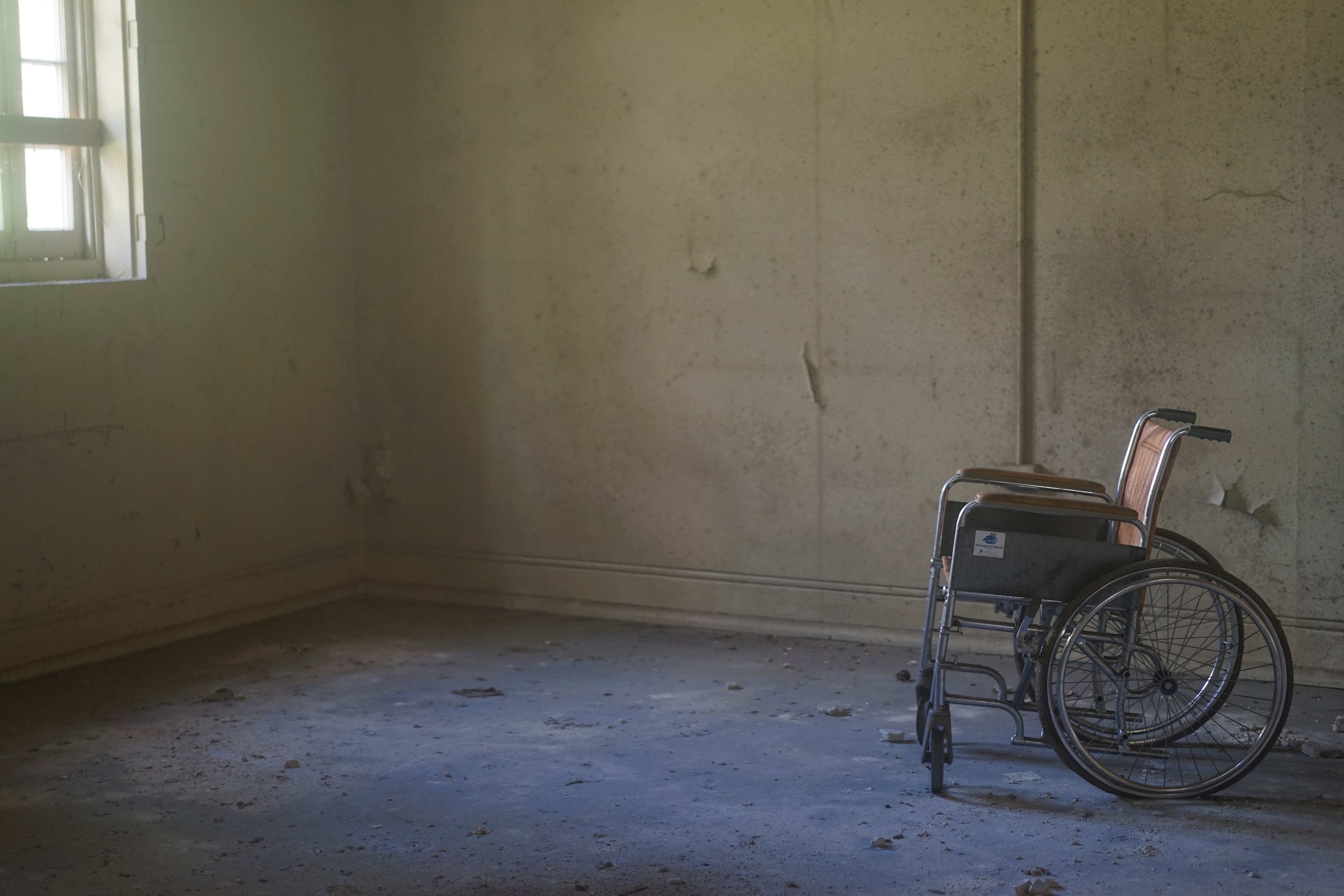
I stood in the dairy aisle examining the dates on the gallon jugs of milk. I was searching for the one with the latest date, but in this particular grocery store, I was also making sure the date had not passed. Next to me, an elderly man hoisted himself from a wheelchair, so he was standing on his one leg, and he leaned into the dairy case over the chocolate milk. I watched him for a moment. He reached way into the back and dragged two half-gallons to the front where he could see them better. He leaned over and adjusted his wheelchair, then he pulled a magnifying glass from the pocket of his jacket, and he checked the expiration dates on the milk he had just moved.

I moved closer. “Do you need help?” I ventured.

“Not yet,” he said with a smile as he turned to examine this person who had broken through his alone-space. He squinted a bit as he studied my face. “What do you do? Or what did you used to do?” he asked me. I told him I worked at the university in town. “Ah,” he nodded. “You teach?”

“Yes,” I told him. “I work in academic support.” He smiled and nodded knowingly as he told me about his cousin—the most compassionate person he’d ever known—who was also a teacher. Everyone thought very highly of her, and it was clear from his words that he did, as well.

With barely a breath in between, he began another story, this one about his life and his career, and I listened intently. He told me about the crimes he solved, the cases that he had easily cracked when no one else could figure them out, and the seventeen police departments that had extended job offers to him when he was younger because they recognized his talent. He shifted his weight on his leg as he leaned on his wheelchair for support. All the while he spoke, I watched his face. His long mustache and scraggly beard covered the lower half of his face, but his eyes held the wisdom that comes with age and experience. They held kindness. And they held loneliness.

Despite the fact that I had never met this man before this conversation, I recognized something about him. It was in his eyes. It was in the way he started his sentences… his stories. It was in the way he reached out of his loneliness to hold me in conversation, to connect with me, if only for a moment. Even though we were strangers, I recognized his humanness.

His stories, though perhaps embellished a bit, reminded me of the stories my grandpa would tell. And in more recent years, the stories of my dad. There is nothing that compares to the storytelling of the older generations.

So I listened. I learned. And for a brief, fleeting moment, I connected. I offered him the human interaction that we all need, whether we are willing to admit it or not.

When I walked into the store, this man was a stranger, but when I walked out, he was Brian. The next time I see him in the dairy aisle, as I’m sure I will, I will greet him by name, and we will pick up our conversation where we left off. Although somehow, I believe I may just hear the same stories—the stories of his youth—yet again.

{Photo by Doug Maloney on Unsplash}

Weaving

On my way to work one morning this week, I was listening to a story on NPR about a third grade teacher in LA and her chance meeting on an airplane—sitting next to a young soldier as he was preparing for deployment to Afghanistan. She talked to him, inquiring about his life and his training. After a lengthy conversation, they exchanged contact information, and the teacher had her young students send letters to the soldier while he was deployed. When he returned, he visited her and met her students, and now the two are like family. This story made me [once again] realize how deeply interconnected we all are.

We all spend our lives creating a beautiful and unique tapestry that tells our story. Each individual we encounter, every experience we have, each place we visit becomes a part of our lives and influences the greater whole of our identity. We are not only living our own tapestry, but we are contributing to that of others. And when you think of it that way, it is easy to visualize just how much—or how little—these pieces may contribute to the overall fabric. Some elements may be a thin strand woven into the overall piece. Or they may be such a major part of our lives that they are much of the background color.

My life is a fabric woven of chance encounters, momentary connections, and long-term friends and family; they all contribute to the beauty of the whole. They all contribute to who I am. My tapestry has incorporated positive and negative, intricately and inextricably woven together and connected to the lives of so many others.

Thread after thread after thread—various colors, shades, tensions, and textures—add richness of experience and interaction to the final product.

Someday, when I can more clearly see the greater whole as I look back over all of the things that made up my life, I will begin to see how the good and the bad, the momentous and the trivial were all necessary in adding depth and detail and richness to my life.

But for now, I’m going to work on making new connections and having new adventures so I can add a smattering of colorful threads. Then, when I look back over the whole, I can point to this time and say, “Right there–that is where I shook things up a bit!”

{Photo by Camille San Vicente on Unsplash}

Reconnecting

Sometimes, I like to sit with childhood acquaintances and reconnect. These are the people I’ve known since I was very young—in grade school or high school. These are the people who knew me before I headed out into the world and discovered that the “real world” was maybe not everything it’s cracked up to be.

These people, they can often pull me back to my roots and ground me in “home.” They can help me remember both the innocence of childhood and the struggles of growing up. And they can remind me of the near-constant growth I have experienced since being on my own.

I like to engage these people in conversation about how life has turned out—what has happened in all the years since we last spoke? I will frequently get an earful of the good, the bad, and everything in between. Sometimes, if the friend is not local, these reconnections might involve long email or text exchanges.

Either way, my favorite thing to ask is the question: Has your life turned out the way you thought it would?

I love listening to the answers to this question. It’s a bit of a surprise question at first. The person wants the obvious answer to be, “Yes, of course it did.” But ultimately, the person stumbles through to the real answer. Though the responses vary from one person to another, they are always the same.

Here’s the interesting thing. When I ask that question, no one ever says, “Yes, my life has been exactly as I planned it all those years back when I was in school.” No one says that. Ever.

The fact is, life is not what we expect it to be. It is full of surprises—both good and bad. It is full of trials and triumph, pain and passion. Life is full. Sometimes, life is a struggle, and sometimes it’s a breeze. Sometimes life is amazing, and sometimes it is broken. But the saying is true: Life is what you make it. If you choose to take what life throws at you and make the best of it, then you will have the best life you can. Focus on the positive, weave yourself a network of support, and keep pushing forward.

No, my life is not what I had planned back when I was younger. But every day, I work on growing and moving in a positive direction. And even though it’s not what I planned, every day, I am very thankful for the life I have.

{Photo by Hush Naidoo on Unsplash}

Sprinkles of Love

I was at the grocery store the other day, walking past the bakery on my way to the produce department for some fruits and veggies. My eye caught on a giant tub of autumn sprinkles, the kind that someone might use on a cake or cupcakes for an all-school Halloween gathering. Or… whatever you are baking for fall that might be jazzed up with sprinkles.

At first sight of the sprinkles, my mind had zipped away from the bakery, the store, and into the past. Years ago, when C was in early elementary school, his teacher had planned a fall party. I can’t remember the occasion, but I was tasked with baking cookies masquerading as pizza (cookies in a Halloween costume, perhaps…). Easy, right? I’d planned to make round sugar cookies with red frosting. But the “cheese” was eluding me. Coconut? Different frosting? I was stumped. My parents happened to be visiting, and they went off to the grocery store to see what they could come up with.

When they returned, they had a large tub of autumn sprinkles as well as some other possibilities. Dad was most excited about the sprinkles. “We can take all the brown ones out, and you can just use the yellow and orange!” While that would be a great idea in theory, in practice it seemed a bit daunting.

“That’s a bit ridiculous,” I told him. “There are a lot of brown ones in there.”

“It won’t take long,” he assured me, though I wasn’t so sure. Those sprinkles were awfully small. But I didn’t say that.

The next day, the kids went off to school, and I went off to work. Back then, I was working mother’s hours, so I arrived home in the early afternoon—in time to get my kids off the bus. When I walked in the door that day, the kitchen table had become the work area for the sprinkle project. One bowl held the yellow and orange sprinkles. Another bowl held just brown. Mom took my entry as her excuse to rest her eyes, but Dad remained bent over a pile of sprinkles on a paper towel. Wielding a butter knife as his tool, he was pulling the brown sprinkles away from the others with the precision of a pharmacist counting and separating pills.

I am sure this project was far more involved (and tedious) than Dad expected, but he never uttered a word of complaint. He finished off that whole tub of sprinkles, so I’d have “cheese” for my pizza cookies—and they looked amazing! I’m sure none of the kids eating them even suspected the amount of work—and grandparent love—that went into each cookie.

And I had forgotten, as well, until I walked by that one random item in the grocery store last week. I was immediately transported back to that day so many years ago. It was a day much like today, and my memory of Dad, painstakingly separating sprinkles at my kitchen table, was as clear as if it had been yesterday. The love (and self-imposed duty) of a parent was captured in the memories grounded in a tub of autumn sprinkles.

Patience in the Un-find-able

If I had a dollar for every minute I’ve spent searching for the un-find-able, I would be a rich woman. This weekend, it was a pair of shorts that we swore were in the house as both my son and I had “seen” them on Saturday. After a frantic search of the house, he returned to camp without them, and found that he had left them in his cabin when he left camp on Friday.

Over the years, there have been so many things. The “favorite” bean-bag dog that was pushed to the bottom of the sleeping bag in the night and ended up being rolled up inside it for months. The team jacket that we accidentally left (or did we?) in the locker room after the final competition of the year one June many years ago. I called the coach before she left the venue. On Monday, I called the school where the competition had been held. I emailed the coordinator of the event. We searched the closet, the car, and eventually, realized we’d have to buy a new one before the next competition season began. At the end of August, as we headed back to the studio, one of the other girls discovered my daughter’s jacket, along with her own, on the floor of her closet.

How many times have I heard: “Hey Mom, you know that form we were looking for…? It was in my locker.” How much time and energy have I spent searching, and in the end, the thing I am looking for turns up in its own time? Many such searches have confirmed that I can’t find the unfindable. That I shouldn’t worry about things that are out of my control. The things I am searching for will appear in their own time. Sometimes, lost items appear only to eyes that aren’t frantic from looking. And in this process, I have learned that (aside from endlessly searching) all I can do is be patient and wait.

This lesson is one that we learn over and over. The lesson reappears in small ways so we might recognize when it comes into our lives in big ways. We search for our career path, the fantastic opportunity, the house, the family, our way in life…. These things will all come in time and in their own way. When we are ready. When the world is ready. When God is ready. It’s important to recognize that the unfindable may be hidden from our view because there are situations that we cannot control—that we should not control.

When something is lost—or we are lost—remember to take a deep breath and let go. The simple act of letting go makes just enough space in our lives that whatever is lost might just find us.

Apps

“There’s an app for that.”

It seems there’s an app for everything these days. I have this growing list of apps that I’m supposed to check out because they are all the rage and using them will be life changing. Today, as I was cleaning off my desk at work, I came across a post-it note that had just one word: “Wunderlist.” So I spent a few minutes Googling Wunderlist and wondering what it was about this app that was so compelling. Like so many other apps that have been recommended to me, this one will help me organize my life. I can make lists, set reminders, create folders, share my lists, collaborate with friends….

It seems that these days, apps are designed to do everything for me except the actual tasks that need to be done. Like shopping for groceries, for example. And cooking dinner. Or finding a recipe or cleaning the house. An app that schedules these things, lists all my tasks, and reminds me to do them is not really what I need. After all, wouldn’t I have to spend the time to input the list into the app in the first place? That requires time spent not doing the actual tasks….

While I’m sure these apps are notable—as someone has recommended them to me in the first place—they are not what I need.

I don’t want to organize my life. I want to simplify my life. And by simplify, I mean I want to stop relying on technology to make my life easier. I want to interact with the people around me. I want to enjoy nature, climb a mountain, play in the tide. I want to be present as I live my life. I want to be mindful enough to observe what is going on around me. And I want to be reflective about who I am, what I’m doing, and who I am becoming.

Apparently, “There’s an app for that.”

Nope. I don’t think so.

Simplicity

Recently, I was on a social media site, and I saw a picture of a pinecone in a tiny pot sprouting itty bitty pine trees. This picture was astonishing to me, both in its cuteness, and in its simplicity. The idea that I could take something as generally disregarded as a pinecone, put it in some dirt, and watch it grow captured my attention.

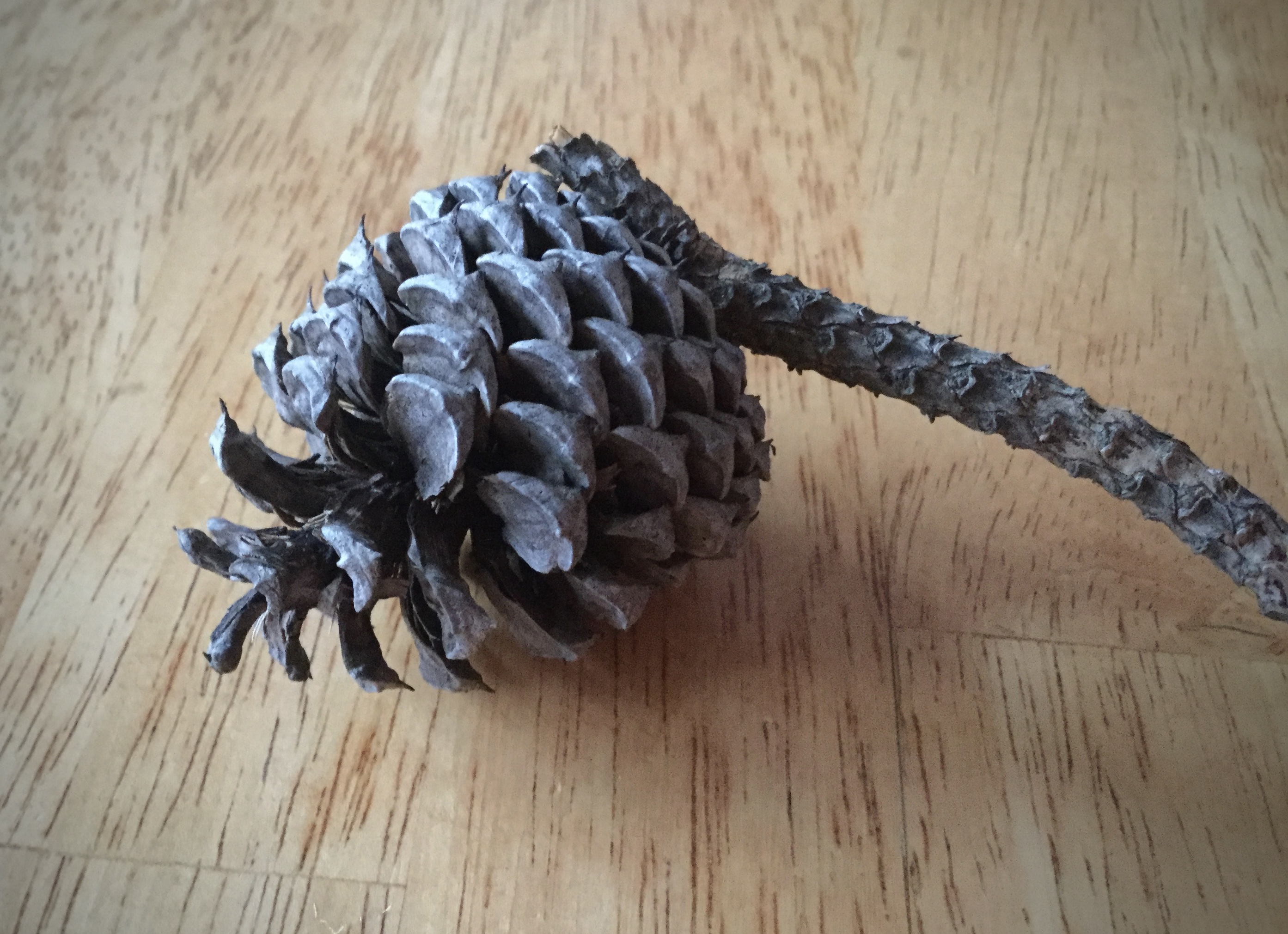
Not long after seeing this picture—on one of only a smattering of gorgeous spring days we’ve experienced—I stepped out for a walk during lunch. Rather than walking toward the road, I chose to walk to the back of our building. I had only a couple minutes to enjoy the warmth and the sunshine, and the grassy yard was calling to me. The ground under the pine trees was littered with beautiful, perfect pinecones. I’m going to try to grow one! I thought to myself, so I picked one up and brought it inside.

One of my students immediately discounted my idea to grow it. “It’s so dry,” she commented. “I can’t imagine anything growing out of that.” But then again, that is the miracle of a seed, isn’t it? That an object so small and dry and seemingly worthless can sprout life and become something as majestic as a tree.

Maybe my little pinecone will grow a seedling, and maybe it won’t. But I’m going to give it a try. I’m feeling a need for simplicity and growth in my life.

And if this pinecone does grow, maybe it really would be just a little bit of a miracle.