Change (and a bit of Creative Reframing)

This morning, I woke up with Billy Joel’s “I’ve loved these days” stuck in my head. Why this song? I have not heard this song in years, and yet, there it was, going round and round in my head. So… I started to think about it.

Now, there are a lot of things that I don’t like about these days: the loneliness, the fact that I can’t see my students, the monotony of the same few rooms that keep me confined. But truth be told, it’s comfortable here, and if I look at things in the right light, there are blessings in this situation.

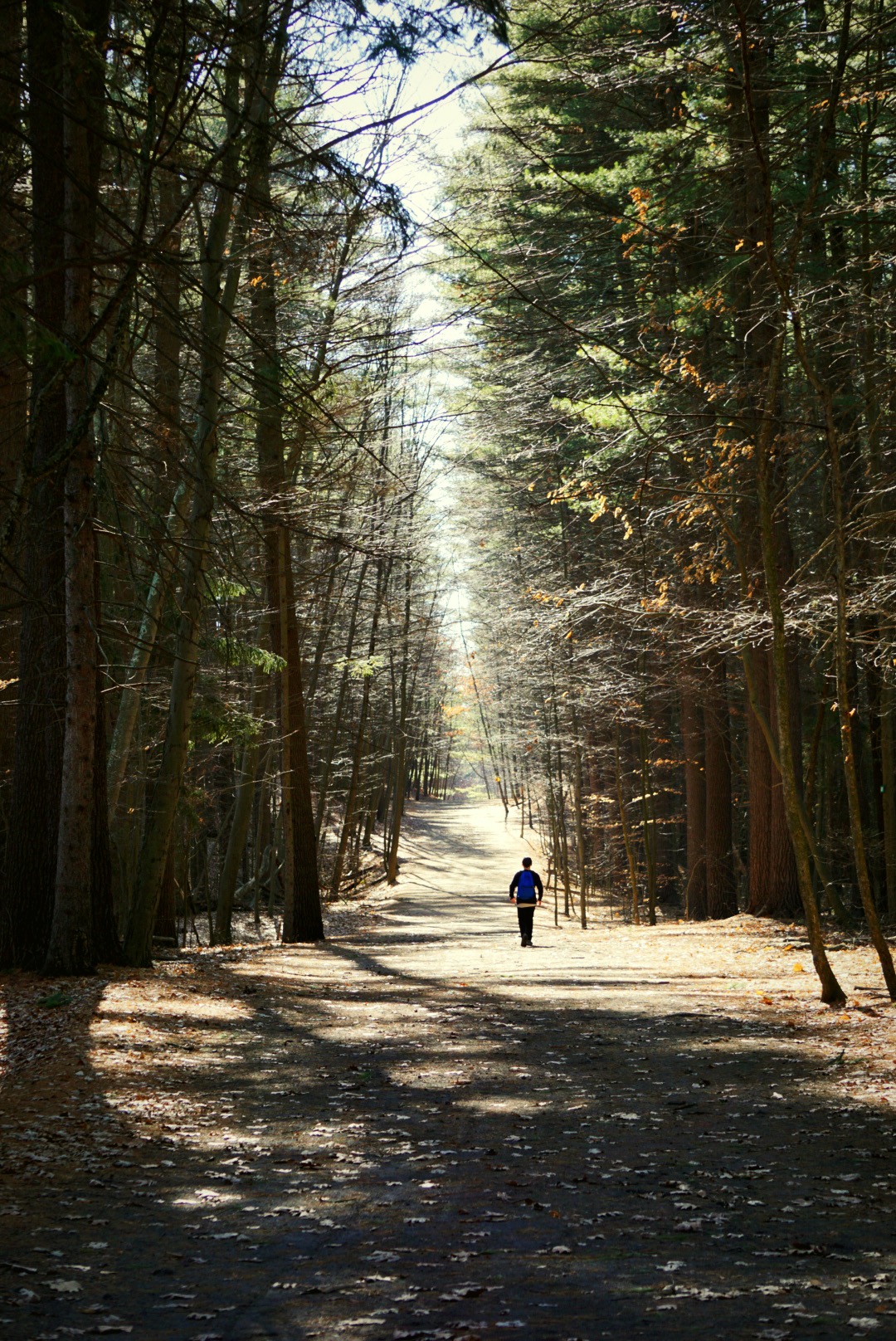
Since I’ve been working from home, I am not up at 5:30 in the morning to see my son out the door. Nope. These days, I’m often up at 7:00, but I can get up as late as 8:30 and slide into work with slightly damp hair—coffee in one hand and toast in the other—by a 9:00 meeting. I can wear jeans and slippers and wrap in a blanket when I am cold. Better yet, if my “office” is cold, I can bake a batch of muffins to warm things up a bit. When I need to clear my head, I step out into the fresh air and go for a walk. I don’t have to plan ahead if I want lunch.

When I am outside, I see more families spending time together. Because the weather is beginning to warm up, children are out riding bikes, and parents often accompany them, either on bikes or maybe walking the dog.

In the space of only three weeks, there have so been many changes, but they haven’t all been bad. Our space may have grown smaller, but the pace of life is noticeably slower. People are more patient and understanding. “Oh, it’s fine that you didn’t get that done. We are all trying to figure this out.” And despite our distance, people are coming together more. They are organizing drives to help others, checking on their neighbors, and offering a helping hand.

When things eventually go back to “normal,” I will try to remember what I’ve loved about these days. I really hope some of these changes stick around. The challenges of a global emergency might just make us better people.

{Photo by Kylo on Unsplash}
Struggle

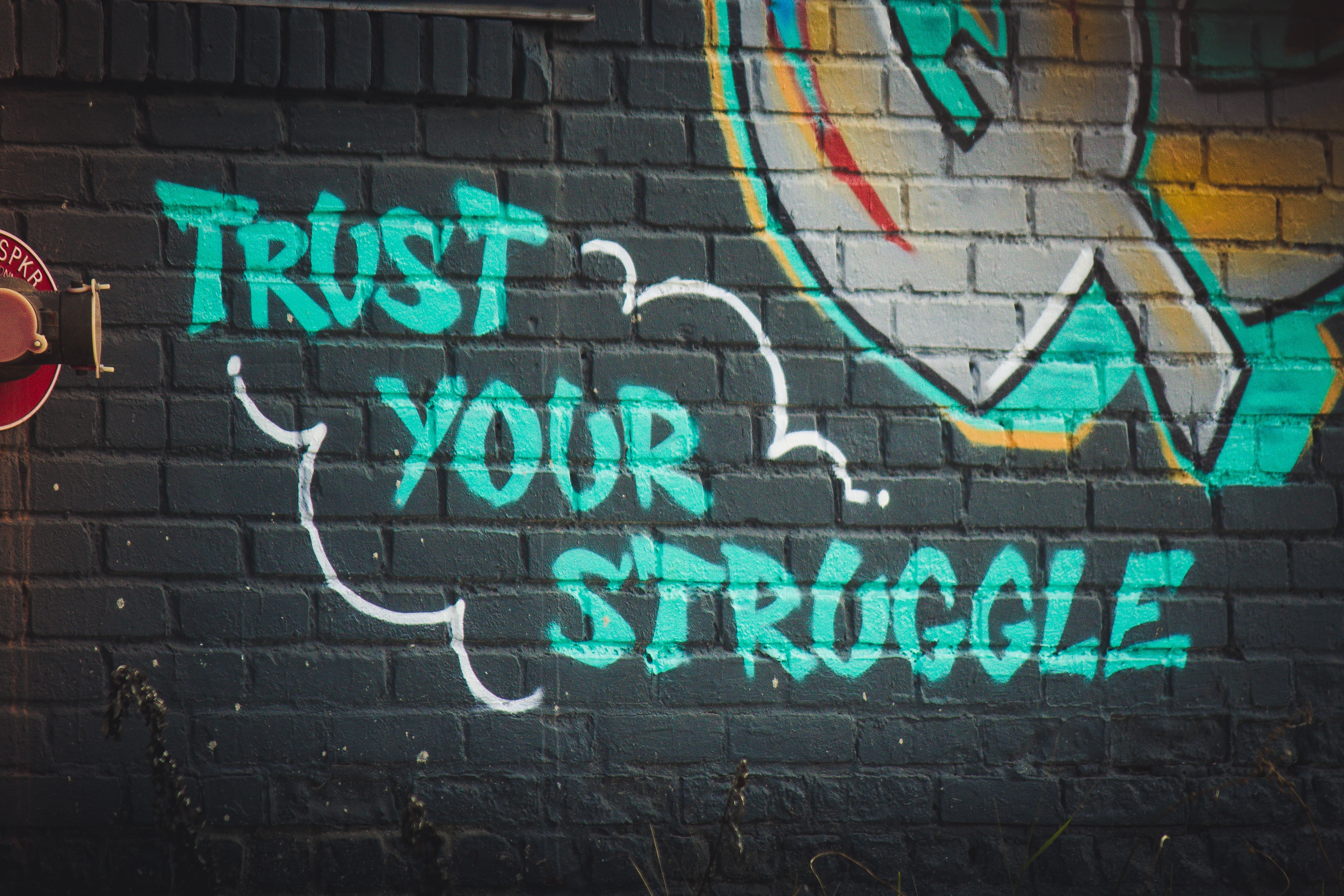
I am struggling to find something to write about, to find a topic that works, that fits with where my head is. I have been thinking and striving and trying for a while now, but for the life of me, I cannot come up with a topic that works. In fact, I’ve written several blog posts recently, but none is right to post, though I may come back to those someday. Who knows?

I know this is part of the process, this struggle and striving. Writing is not as easy as it seems. Sure, it seems like all I have to do is string a bunch of words together to make some sense of the world. Anyone can do that, right? But there are times—so many times—when there is just nothing. No light shines through the cracks in the walls as it usually does, bringing with it a flood of new ideas on which to focus. No light.

Just a dark silence that reverberates through my brain, voiding my imagination of all… well, imagination. My creativity needs a new igniter.

I know this is a temporary situation; I’ve been here many times before. And I also know that pushing through it to write something—anything—will help me begin to move beyond this creative vacuum more quickly.

And so, press on I do. I have written those several aforementioned blog posts that are too bad to share. I have written letters and freewrites and quotes that might make me think. And still, the struggle continues. Over the weekend, I will work on some writing exercises. Anything to get some ideas flowing. And who knows? One of these days, the floodgates of creativity may just give way to a fast and furious overflow of ideas.

{Photo by DJ Johnson on Unsplash}

Nothing

Nothing. That is where I am. Still. After weeks of struggling with nothing, I am still at nothing. No ideas. No motivation. No creativity. N-O-T-H-I-N-G.

So… I have decided to go out and steal some ideas. I’m going to go and listen in on other people’s conversations. I’m going to use their ideas to jump-start my writing. Maybe, if I’m feeling particularly persnickety, I will interrupt their dialogue—jump in and try to redirect their ideas. I might even mess with them just a bit to see if I can incite a heated debate or two. You know what might be fun? I could follow someone around the grocery store while they carry on a phone conversation. I could keep reaching in front of them to collect items from my list, and since I am there, I might offer them advice to deal with the person to whom they are talking!

I am going to engage in some random acts of mischief. Maybe I’ll swap some price placards at the grocery store (those things are so easy to change out!) or leave messages on chalkboards in random classrooms: Today’s class has been moved to room 302. I could walk around in a Halloween mask, or—if I’m really feeling daring—flip the arrows on construction detours. (This last idea would be best carried out under cover of darkness…).

I am going to pretend to occupy myself with some intensely secret projects. These projects will involve all kinds of crazy equipment and supplies, none of which will be related in any conceivable fashion. But I will collect everything I “need” in a massive pile on my front lawn, all the while touting my “top secret endeavor.” Or maybe I’ll just dig a six by six by three-foot hole in my front garden. That might make  my neighbors curious about what I was up to….

I am going to plant seeds of kindness. I am going to leave post-it notes with inspirational messages in places where their discovery will be a pleasant surprise—next to the toilet paper dispenser, inside the elevator door, on people’s car windows, and on the napkin dispensers in the dining hall. I am going to hold doors, offer words of encouragement, and hand out flowers on a street corner.

I am going to hold a wacky raffle and give away tickets for free. (How many people will write their names and emails on wacky raffle tickets for a stranger?) I will raffle off items from my home that I no longer need or want. This will be a much easier way to get rid of my clutter than selling it or hauling it away. And imagine what a pleasure it will be to email strangers and say, Hey, you’ve won this week’s wacky raffle!!

I am going to go out on a limb once a day for the next week and step out of my comfort zone. I am going to sit with a stranger who is crying or upset. I am going to talk to the children whose parents are consumed by their phones and not paying attention. I am going to offer a helping hand, a hug, or a kind word or bit of encouragement and hope that I can make someone’s day just a little brighter.

And maybe when I’m done with all of this, maybe … just maybe … ideas will start to flow. Because right now, I’ve got no ideas. Not even one. I’ve got nothing. But if you want a wacky raffle ticket, let me know. I’ve got those!

{Photo by Mark Eder on Unsplash}

Silence

I have been sitting with the silence that many creative types (artists, writers, inventors) face at some point. This is the silence in which ideas don’t come. Silence can be frightening. Or silence can be an opportunity.

I will admit that I have likely played a role in this silence as I fill my days with a job that is demanding and draws on much of my energy—both physical and emotional. I have been implementing new programs, rethinking the way things are done, and pouring energy into helping students adjust to college.

So lately, ideas come and flit in my mind like a butterfly that lights ever so briefly on a flower or plant. But by the time I turn my attention fully to capture the idea, it is gone. And if it lingers, when I focus to put it on paper, it slowly fades until I can no longer see it, and it disappears.

But silence is a powerful teacher. By sitting with the silence, I am learning more about myself. About who I am, and about what truly moves me and drives me on. Something within me is beginning to emerge, playing with the edges of my conscious brain, but staying just within the boundaries of my subconscious.

As I sit in the silence, the ideas are starting to work their way into the space that I am holding for them. Today, two ideas came to me and stayed long enough to be held, turned, examined, and fleshed out—at least vaguely.

As I sit in the silence, I am hopeful for the future. I have reevaluated where I am and where I want to be. This particular period of silence has been deafeningly loud and longer than I would have liked. But now, I am ready for the ideas to come. I am ready to take the lessons of silence and turn them into something beautiful. I am ready for the sweet music of the muse.

Recharging

I am having difficulty writing these days. I don’t know where I’m stuck, but my mind will focus just long enough for me to have an idea and to think it is going to result in a blog post. But when I am part way through the writing, the idea fizzles, and I can’t figure out what it is I thought I would say. Or I’m distracted and end up a thousand miles away. Or perhaps… I have lost the magic.

Admittedly, I have been busy. The start of the school year has kept my mind moving a million miles a minute, or thereabouts. And long days of training students and prepping classes have kept me away from home and far from my computer.

Sometimes, we just need to take the time to work on finding balance and regaining our footing. So I am putting this here as a place holder to say, “I’m working on it.”

And I am. I am brainstorming and freewriting, doodling and walking. And I am staring at maps and asking for directions to help me find my way.

Before long, I will be back. The ideas will flow, and I will have direction. With any luck, my writing will be better than ever. Because the fact is I haven’t lost the magic. I am simply recharging my magic wand.

{Photo by Cristofer Jeschke on Unsplash}

Step Away

We were talking about writing, my daughter and I, about writing to an assignment when you’re not really sure of what to write. How do you not only answer the question, but write a three-page paper?

Without even thinking, I started tossing ideas at her. What is the story? Who’s involved? What is happening? Have you Googled the story and read through the summary/analysis online as a way to spark some ideas? Starting points… all things she had thought of, but approaches that weren’t helping her.

For me, talking about writing is nothing new—in fact, it is a daily conversation. This is what I do. I write. I talk about writing. I work with writers. It’s important that I include the phrase, “I write,” because if you don’t actually sit down and do the tough work of writing, it is difficult to talk to young writers about writing. And to speak authoritatively about the process of writing.

Our banter was getting us nowhere except frustrated. Sleep on it, I finally told her. The assignment wasn’t due for a couple days, so she had the advantage of time on her side. She agreed that was a good idea, and put the paper away for the night. However, she came back and texted me a bit later. “I took a shower on it, and I think I figured it out!” she told me.

That was it. She just needed to step away. In order to connect with the subject, she had to disconnect from it. Sometimes, that’s all it takes. Not just in writing, but in the process of daily life.

If you step away, your thoughts can become clearer. Let your brain rest and move on to other tasks. Because sometimes, when you’re not putting demands on your brain, it will continue to process on its own terms. In fact, it is often when we are not thinking about something that it works itself out. When we are not focused on a problem, more varied solutions—those that are lurking on the periphery—become evident.

We all have situations we need to step away from. If you step away, often the things you are wrestling with—the problems, the situations, the frustrations—they all become easier to figure out, and your brain will come up with a solution you hadn’t even considered!

Step away, and have confidence the answer might come to you. If not, at least you will return refreshed and ready to dig in.

{Photo credit – my amazing daughter}

Tidbits

Over the past month, I have had the opportunity to sit in on several hours of student-led review sessions for Anatomy and Physiology. In fact, I have spent so much time in these sessions that I am pretty sure I had an outside chance at passing the first exam, even though I never attended an actual class lecture or read the book.

As a non-science-type in these review sessions, I have begun to extract random tidbits of information that I find interesting or thought-provoking, that I might write into something meaningful (or completely meaning-less, I’m not sure). I would compile a bunch of random, overheard sentences or thoughts into a book, perhaps—something like Lessons Plucked from a Life of Listening. This book would contain helpful tidbits of information from many areas of life.

The particular idea that set me on this trajectory was the question of what would happen if our skin weren’t waterproof, and we were to go swimming. While the thought in the room was that the body would explode, I started to really think about that. If your skin weren’t waterproof, how waterlogged would you become? How heavy would your body be as you attempted to drag it out of the water? And what unsanitary microscopic creatures might enter your body if you were swimming in, say, a lake? My mind took off on a jaunt through a hundred different possibilities, as it often does. This book could definitely be a wild adventure—especially for a reader who would never know what was coming up next!

These thoughts, and the wanderings of my mind, led me back to reality… and to life. As I was running through the possibilities of the book such tidbits might become, I began to realize that life, too, is a series of tidbits. We take our memories and experiences as well as facts, thoughts, and ideas, and we pull them together into something that makes sense to us. From such a grouping of tidbits, we form a life. As we think back on our past, memory is a series of moments we remember for one reason or another. These memories become treasures that we hold onto, or lessons that we learn from, as we continue to move forward and create new experiences—new moments, or tidbits, which we will add to our ever-growing treasure trove.

So if I can create a (marginally) meaningful life by compiling tidbits, it would seem I could create a (marginally) meaningful book in the same way. And once compiled, that book might just be about life, in some strange way. So I’m going to keep compiling my list of tidbits while I live my life, and maybe one day, that list will make its way onto a different page.

Be Bold!

Each year, as I head toward January, I buy myself an inspirational calendar because… well, because it will be inspirational! And believe me when I tell you that I don’t flip through the calendar when I first get it to see what is waiting to inspire me each month. No. I wait. I am a delayed gratification kind of girl.

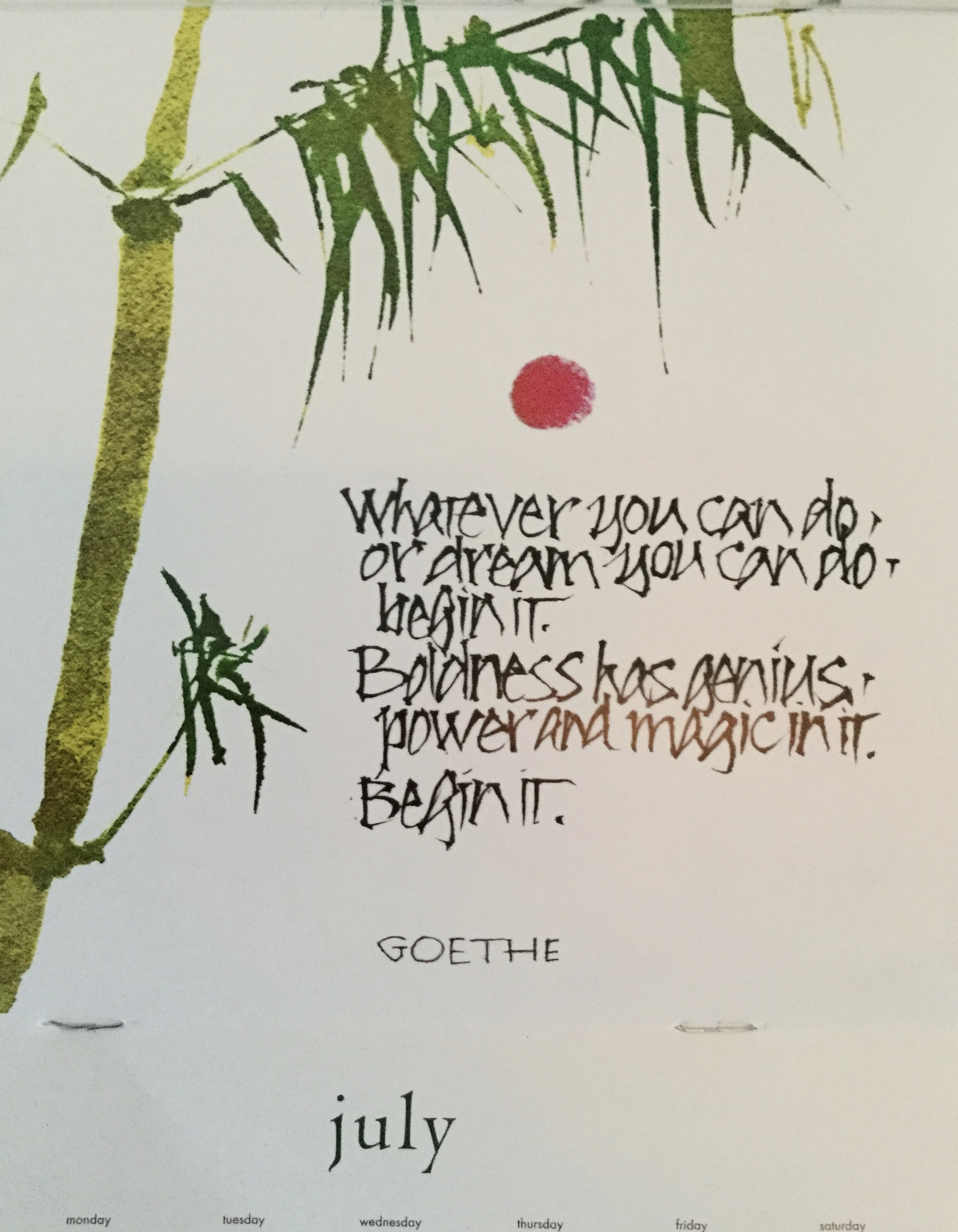
When I turned my calendar to July, I was met with a quote from Goethe: “Whatever you can do, or dream you can do, begin it. Boldness has genius, power and magic in it. Begin it.” What a great thought to start the month!

And so for this month, I will be bold. For this month, I will write more blog posts. I will take more steps, set more goals, and implement more action plans. For this month, I will take more risks.

Because boldness has genius. And power. And magic. And for me, it’s all about the magic! Come on and join me. Just for this month, be bold!

Default Settings

Recently, I stumbled across two separate articles that referenced navigating life on Default Settings. This idea of moving through life on “default” definitely gave me some things to think about. After all, it makes complete sense. We respond to things without thinking, and we never bother to reflect on how we might handle a situation, what we might do differently. Instead, we respond first. Think later. This idea made me stop to ponder: How often do I navigate my life on a default setting, and how does this affect my life?

I believe we all have a tendency to be reactive rather than proactive. Life gets busy, and conscious decision-making in every situation gets pushed to the back burner. I react to what is coming at me rather than purposefully living out my life. I do not take the time to think and respond intentionally, but I act on the emotion of the moment and the patterns that have been established in the past. I make up elaborate excuses to keep doing things the way I have always done them, so I don’t have to disrupt my “zone of ultimate comfort.”

But beyond that “zone” could be amazing possibilities, and my defaults might just be holding me back….

So… over the next few weeks, I am going to examine my “default settings.” I am going to begin to think about how these settings, and my knee-jerk reactions, may be holding me back. I am going to think about how I can push myself beyond my “default” to live a more intentional life—a more authentic life. And I’m going to start making choices that will push me beyond comfort into possibility.

What are your default settings, and are your defaults working for you?

Jalopy

We are driving up the highway on our way home from a typical crazy trip out. The afternoon started with a long-awaited appointment, and spilled into a trip to the craft store for fabric paint for a school project, a hop into the grocery store for two necessary items for a cake, and a stop at the pharmacy, which (for future reference) closes early on Saturdays.

Just behind my peripheral vision, the clouds are on fire with the setting sun. Up ahead, the sky is tinged with residual pink, as if someone took a paintbrush and accidentally touched a couple spots with the wrong color. It is this time of day on this drive up the highway (as wonder streaks the sky with end-of-day color) when I am most likely to feel that Dad is present.

Suddenly, a large pick up truck pulls alongside my car, then passes me. He is towing a trailer on which rests enough of another truck to allow me to recognize it as an antique from the 1930s.

“There’s a jalopy,” I comment, speaking as much to myself as to my daughter, sitting in the passenger seat. The sight of the antique truck and the recall of the word “jalopy” bring to mind memories of being in the backseat as a child with Dad driving. He would comment on a jalopy on the road or sitting on someone’s front lawn.

“What’s a jalopy?” my daughter asks.

I smile to myself, remembering Dad. “Look it up when we get home.” It’s a Grampa word, I want to tell her, but I don’t.

“I don’t even know how to spell that. How can I look it up?” she asks.

“You’ll figure it out,” I say.

What a great word. Jalopy.