Goodness as a Gift

This morning, as the sun came up bright on the new day, I realized that even in these trying times—through any trials we face—goodness is all around us. Right now, despite the difficulties we are facing in our global society, goodness shines through like a gift just waiting to be discovered. Just outside my window, flowers are blooming in my garden, and the plants my kids and I put in at the end of last season are beginning to poke through the dirt, reminding me of the weekend we spent cleaning up the garden.

Today was a quiet Easter day. We could not go to church. We could not have people over to share in some rowdy dinner conversation. Regardless, the weather was gorgeous. I ventured out for a walk with only a sweater rather than the jacket I have been wearing until now. Several small children, out on walks in the neighborhood with their families, stopped in front of my house to look for my cat and play with him. My cat has been dubbed a “neighborhood celebrity” because he is overly friendly and just confident enough to appear more human than feline in his interactions with passersby.

Out further in the world, where I prefer not to venture these days, our essential workers are fighting the battles we cannot fight. They are stocking the ever-emptying food shelves while sanitizing between customers, hauling our garbage away and cleaning even at the town dump, filling prescriptions for medications to keep people healthy, caring for the sick, and comforting the dying. They are tending to the emotional needs of those who are struggling in this strange new world, and they are keeping our utilities up and running. Our teachers have not only transitioned their entire jobs online, but they are digging deep to make it look easy so they can smooth the same transition for their entire student population.

The goodness is always there—not just now, but always. If we take the time to look for the it and recognize its presence in our lives as a gift, the goodness will grow. Our attitudes will shift. We will more readily see the goodness, have a positive attitude, and be the goodness for someone else. We will begin to influence others, and soon, goodness will displace negativity. We will begin to see that we all want the same things, and we will begin to work together for the good of us all. Positivity begets positivity. Take the time to look for the goodness and highlight the goodness because goodness will grow. And once it starts, there’s no telling what could happen.

See the goodness. Be the goodness. You are a gift.

{Photo by Annie Spratt on Unsplash}
Fun with F words

Today is F day in my alphabet rotation. I am a few letters behind, but I’m forcing myself to keep going rather than falter in my quest to finish the AtoZ challenge, especially so fresh out of the gate. It is a few days from Friday, and far back in our former times, my friend (in fact, my BFF), had formulated plans to visit for Easter. Her flight was to arrive today. But her plans were foiled, and she is far away, while I remain frozen to my flat. We have resolved to plan a fun fiesta sometime when the future permits.

In the meantime, one could easily fixate on frustration in times like these. But I pledge to remain a force to be reckoned with, finding no functionality in the stress of fizzled plans. Positivity is far more fitting to my personality.

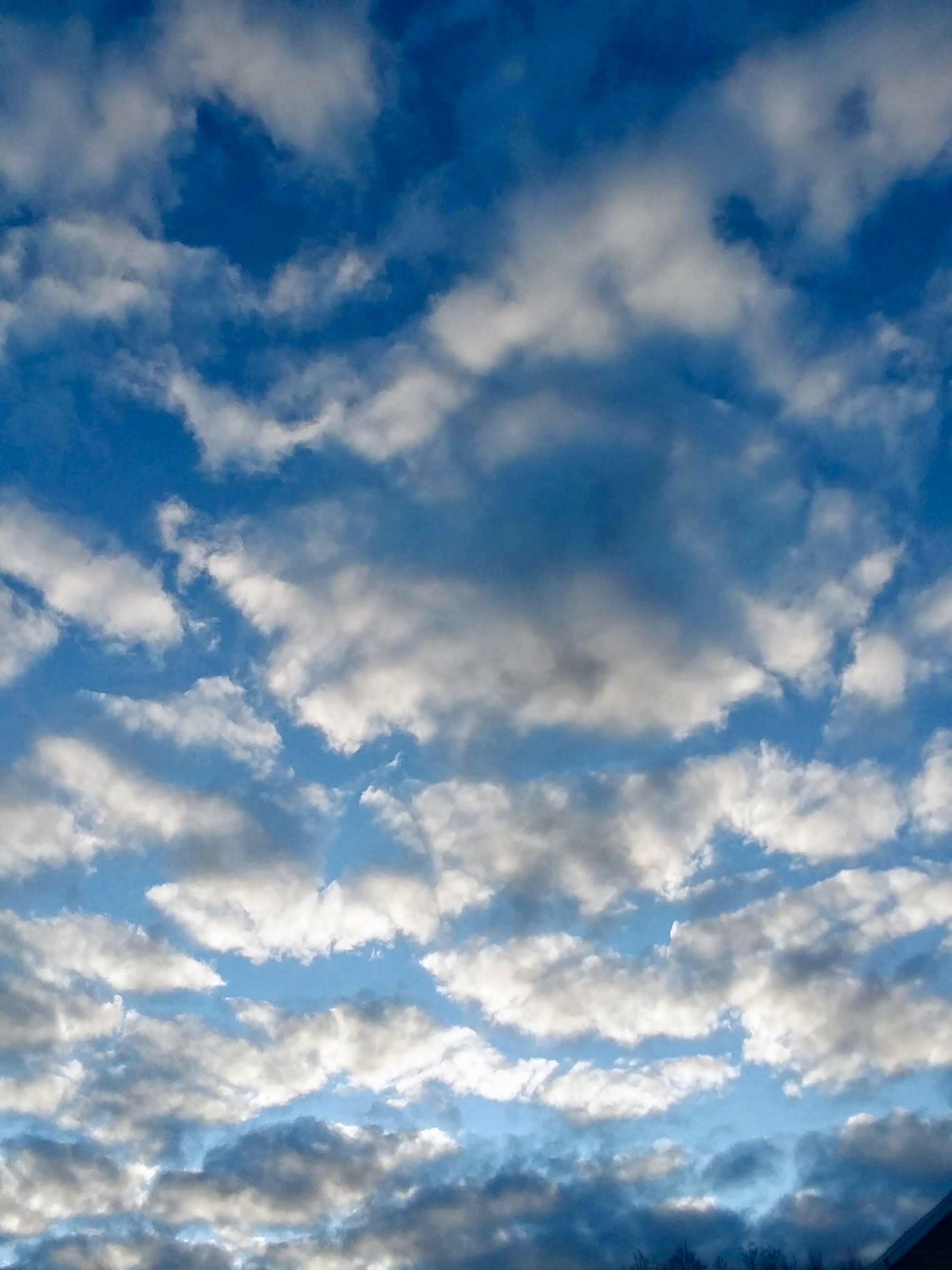
So this afternoon, I wandered out for some fresh air. The flowers are finally poking their flashy colors through the faded not-quite-green that follows winter. Forsythia have burst their sunny yellow blossoms for all the world to see. And the fabulous sapphire sky above me was furrowed with puffy clouds, the perfect end to an invigorating stroll.

I hope you’ve enjoyed the Fs I’ve furnished in following through on my quest to float through the full alphabet by the end of April.

Dots… and Everything Else

Life is a process of connecting the dots. When we are young, our lives are full of dots that have little connection. We live life one day at a time with few plans. We play with this friend, that toy, and we work to discover our talents. As children, we live moment to moment, figuring things out as we go.

When we grow, we take all the things we have experimented with in our “play” and in our growing up, and we examine them, figure out which things we want to keep, and which things we really don’t enjoy or prefer not to pursue.

Now, here’s where the tricky part comes. In order to connect the dots and begin to fashion a life that has meaning and purpose, we have to determine how our “dots” fit into the bigger context of the world around us. We have to figure out what we bring to the world, and how that talent or  interest meets a need that the world has. That is where meaning, purpose, and passion come together.

One of the things I do in the real world is ask college freshmen to begin connecting their dots. What did you LOVE to do when you were nine or ten? What is something from your childhood you wish you hadn’t given up when you transitioned to adulthood? What are you doing when you are most likely to lose track of time? If you were asked to work alone in isolation every day, would you be able to do it, or do you need to be with people?

That was the dot that got me back when I was graduating from college. I had planned a desk job for my life, working in a cubicle in an office building. But a teaching internship slammed on the brakes, showing me I was on the wrong path. I had forgotten to consider the dot that needed dynamic, face-to-face interaction with people. [Now, of course, here I am in Corona Isolation, craving dynamic, face-to-face interaction, but this is a temporary story.]

If you haven’t yet taken the time to examine your dots and figure out how they connect, now is a perfect time to start thinking about that. Are you doing what you love? Are you fulfilling a need in the world? Are you happy? And more than that, do you experience regular moments of joy?

Not only is now a great time to begin to connect any dots you haven’t yet connected, it is also a good time to begin to examine Everything Else. What is it that makes you fully you? Are you in the best job for you? Do you have enough time for family? Is there something else you need to be doing? How can you put steps in place to get where you belong?

Here in this down time, take a moment or two to examine the Everything Else that makes up your life; if you are not on the right track, create a plan to get back on track.

This time—this quiet time when we have opportunity for greater reflection and focus, when we can look deeply inside ourselves and see who we really are and what we really want for our lives—this is a gift.  Don’t let it slip away without at least taking some time to think. Your dots deserve to be connected, and you are the only one who can do that.

{Photo by Michael Dziedzic on Unsplash}

Change (and a bit of Creative Reframing)

This morning, I woke up with Billy Joel’s “I’ve loved these days” stuck in my head. Why this song? I have not heard this song in years, and yet, there it was, going round and round in my head. So… I started to think about it.

Now, there are a lot of things that I don’t like about these days: the loneliness, the fact that I can’t see my students, the monotony of the same few rooms that keep me confined. But truth be told, it’s comfortable here, and if I look at things in the right light, there are blessings in this situation.

Since I’ve been working from home, I am not up at 5:30 in the morning to see my son out the door. Nope. These days, I’m often up at 7:00, but I can get up as late as 8:30 and slide into work with slightly damp hair—coffee in one hand and toast in the other—by a 9:00 meeting. I can wear jeans and slippers and wrap in a blanket when I am cold. Better yet, if my “office” is cold, I can bake a batch of muffins to warm things up a bit. When I need to clear my head, I step out into the fresh air and go for a walk. I don’t have to plan ahead if I want lunch.

When I am outside, I see more families spending time together. Because the weather is beginning to warm up, children are out riding bikes, and parents often accompany them, either on bikes or maybe walking the dog.

In the space of only three weeks, there have so been many changes, but they haven’t all been bad. Our space may have grown smaller, but the pace of life is noticeably slower. People are more patient and understanding. “Oh, it’s fine that you didn’t get that done. We are all trying to figure this out.” And despite our distance, people are coming together more. They are organizing drives to help others, checking on their neighbors, and offering a helping hand.

When things eventually go back to “normal,” I will try to remember what I’ve loved about these days. I really hope some of these changes stick around. The challenges of a global emergency might just make us better people.

{Photo by Kylo on Unsplash}

All of Us

April first. Spring is arriving to my yard with bulbs sprouting into crocuses and hyacinths, dotting the fading winter browns with color. Lying in bed this morning as consciousness began to awaken, I breathed in the depths of April. The difficulties of April. The heaviness and huge expanse of April that stretches out in front of us.

This afternoon, I went out for a walk. My afternoon walks keep me sane and give me time to reflect. There were lots of people outside. Some were walking their dogs. Others, like me, were just walking themselves. In the woods, I saw two teenage girls sitting together on a rock, shoulder to shoulder, bent over the same phone. Up the road a piece, in a cul-de-sac, a group of children played together as if it were any normal nice day. They huddled in groups discussing the game they would play.

It seems that many people are missing the social distancing point. Playing with friends—even outside—is not social distancing. Sitting with your friend on a rock or walking side-by-side with your friend is not social distancing. Hanging out with friends does not create the necessary distance.

The toll this virus is taking is already staggering. If we are going to beat it and “flatten the curve,” we have to be vigilant. We have to take on a new mindset. We have to assume everyone we see has the virus, and when we go out of our houses, we have to act like we have it. We have to stay away from people, and we have to protect ourselves and others. This is our main job right now—to stem the deadly tide of this enemy.

One of the reasons this virus spreads so fast is because it hides in people with no symptoms. It spreads through undetected infections and asymptomatic carriers. Look at the choir rehearsal in Washington state back in mid-March. None of the people in attendance had symptoms and yet the virus spread through 45 people in that group. No one knows for sure whether they are infected or not. We can’t take chances unless we are willing to risk our lives and the lives of our loved ones.

All of us, Friends. It’s going to take all of us to get through this virus and to beat it. Don’t hang out with friends. Don’t meet up with a group in a parking lot and stand six feet apart. Don’t drive with a carload of friends to a state park to hike. Don’t go to a store that’s open because it’s an essential business just to get something to keep you busy. Just don’t.

Do your part. Stay home and stay away from others. Do your part for all of us.

The View from Here

The view from here is very different than it was a couple weeks ago. We have now been in social distance mode for just under two weeks—far less time than most of the world. We knew it was coming—we watched it sweep slowly across the globe on its way.

That doesn’t make the view from here any brighter. We are broken people in a society that is also severely broken. In our attempts to deal with this global pandemic, we need to come together—work together and protect one another. But we can’t.

Because the view from here looks out over a broad chasm that has been growing and deepening and pushing us farther apart. We have forgotten that we are one humanity in a global environment, and we are stronger when we band together and create a united front. We will always be stronger together.

We have forgotten that life is not about all the things we want in this life and how we will get them, no matter the cost. We have forgotten that most of the “things” we possess don’t matter, especially when weighed against human health and life itself. Even in our isolation, we continue to buy and buy and buy to the point of hoarding because “enough” is a concept our society ignores as it pushes spending and materialism and greed as a way to promote a “healthy” economy.

We have filled our lives with material things. We have been so conditioned to look outward for happiness and acceptance and validation that we have lost sight of the most important element—what we are feeling on the inside. Who we are. The very traits that make us special and unique and individual—these have been cast aside for too long. They have been stomped down and buried deep inside ourselves as we live a life that is filled to the brim with a busy-ness dictated by society. Most of us—we aren’t even truly happy anymore.

The view from here is not in touch with the things that matter. It is weighed down by all the lies society has been telling us for decades. The expectations we are supposed to live up to. We are tired and weary. The burden weighs on us, and we are struggling to break free.

But the view from here—it is quiet and lonely. We are in a period of grieving all that we have lost or perceive we have lost. We are grieving what we may lose. And we are grieving all the changes our society will face—changes that we just can’t fathom from this particular vantage point. But if we take the time to really look and examine our lives, the view from here may be (dare I say) just a little peaceful.

While we may be feeling overwhelmingly burdened by our current situation, the view from here may shift, giving us a glimpse of elements of peace, simplicity, and kindness. It is quite possible that with a bit of time and a new perspective, the view from here might just be the soil in which we begin to change and blossom.

Vulnerable

The other day, I sat in the parking lot of the grocery store watching people freak out about what they don’t have in their homes, and stuffing as much toilet paper as they possibly could into their grocery carts and cars. Truthfully, I was a bit shocked by the behavior I was witnessing. For whatever reason, people are panicking and stocking up on items like it’s the end of the world (in which case, they won’t need all this stuff, by the way…). This country has become so self-focused that “every man for himself” is the obvious motto people live by. In an emergency, grab everything you can! Don’t leave anything for anyone else! This mindset is both destructive and detrimental to any sense of community.

As I gathered my courage to enter the noise and complete chaos in the store for my weekly grocery run, I looked to my left at the car that was parked next to me. There, I saw a sad and curious sight. The car was packed full of stuff. Aside from the microwave sitting on the front passenger seat, the rest appeared, on first glance, to be garbage, in part because it was thrown in every which way, as if it had been carelessly tossed aside. There were open boxes of tissues and hangers and clothing. Small white paper bags that looked like they were discarded fast food bags and large plastic bags that appeared to be trash bags. A rolled up sleeping bag. Some socks and a shirt. The car was stuffed. Full of garbage and so much more.

There was a woman sitting in the car, and I was trying not to stare, but curiosity got the best of me. I wanted to study the contents of the car further, figure out what she was doing there.  She was parked in the handicapped space near the front of the store, and it appeared that she was eating a sandwich in the little space she had that was not taken up by stuff. She presented a stark contrast to the activity around her.

Homeless, I realized. She was likely homeless and living out of her car. I had a vague recollection of seeing this car, in this disorderly state, in this parking lot before—the tissue boxes sparking the memory. There was not much space for this woman to move about and get comfortable since so much of the car was taken up by her stuff. And yet, here she sat, alone and eating dinner in the silence and isolation of her car. Just outside her car, so many people bustled in and out of the store, stocking up on items to keep them fed and occupied and happy in the comfort and warmth of their homes while they wait out the coronavirus pandemic.

This, friends, is the reason that our panic and our focus on ourselves is not productive. We need to be mindful of the more vulnerable among us—the sick, the lonely, the homeless, the destitute. In times like this, we need to come together to look in on our neighbors. Make a phone call or check in with a quick knock on the door (keeping a safe distance from the individual who answers). Be willing to ask the question, I have to go pick up a few groceries. Do you need anything?

This is a challenging time for all of us, but for some more than others. Let’s come together and show the world who we really are.

{Photo by Kelly Sikkema on Unsplash}

Warming Station

This morning, I received a local alert text. You know the ones I mean—they typically warn of accidents or road closures or malfunctioning traffic lights. This morning’s text read: “Arctic Cold Temps Tonight/Tomorrow.” This was followed by information on the location of a “warming station” where residents can go if they are in need a warm place. Perhaps this text was directed to the homeless or to people who have a home that isn’t as warm as they might like. Or maybe, these people don’t have the heating budget set aside to keep their home warm enough in the impending arctic cold.

Regardless, I got to thinking about warming stations and responsibility and how we tend to others. In many respects, we are (or should be) responsible for one another. If the weather is not friendly—if it’s too cold or too hot, if the pavement is icy, or there is a blizzard coming—we need to watch out for those who might not be able to watch out for themselves.

I grew up in a neighborhood with a number of elderly folks. The woman next door was (I assume) a widow who lived alone. On the other side lived an elderly couple, and they shared their home with the man’s elderly sister. Farther down the street lived my mother’s former high school coach who walked with two canes. While she definitely needed the canes, they often seemed most helpful for moving things and people out of her way.

Over the years, these people became part of a circle of caring that was integral to my upbringing and instilled the importance of caring for others. On Sundays, I would deliver donuts and the Sunday paper. In the summer, we shared the harvest from our garden, and on Christmas Eve, we would deliver heaping plates of homemade cookies. I would hang laundry, sweep porches, and shovel snow. But under the guise of delivering some goody or other or offering to help with light chores, there was a more important purpose. We were checking up on these people who were more vulnerable to various elements of life—like the changing weather. We were the “warming station” for our neighbors.

A warming station is not just a physical place where someone can go to get warm. A warming station provides safety, security, and comfort. That, my friends, is something that any one of us can provide, if we are willing.

So as I read the text this morning, I realized that it shouldn’t take the community to set up the security others may need . It takes people who are willing to go out of their way to check up on others. And hopefully, when we reach the point of being more vulnerable to the forces around us, someone will be the warming station for us.

Spinning

On a recent afternoon, I was working with one of my regular students. She is a first-year student, with whom I have developed a relationship comfortable enough that we joke around a fair amount. In reality, I joke around with most of my students because it helps them to relax and work better with me when I am … redirecting … their writing. And their academic focus.

This particular student has been working with me weekly—or semi-weekly—all semester. During our appointments, we laugh. A lot. And every now and then, we cry because that’s just the way life is.

On this afternoon, however, I was tired—silly tired—and she was working hard on developing a couple of her points before she moved on to her conclusion. As she took the time to think and compose, I started to spin in my desk chair.

“You keep working,” I advised her. “I’m just going to sit here and spin.” And with that, I spun the chair in one direction and then the other. (My office is just small enough that I couldn’t quite spin all the way around without hitting her backpack on the floor or my desk against the wall).

With that announcement, her face lit up with a smile. “You should!” she exclaimed. “Adults don’t take enough time to have fun!”

And you know, based on my experience as an adult, I have to say she’s right. Being a single mom put lots of responsibility squarely on my shoulders, and even though my children are now grown and fully capable of taking care of themselves, I haven’t quite figured out how to shake the weight of my parental duties. I still have a tendency (as we all do) to get busy with the mundane tasks and duties of adulthood, and I don’t take the time to be present, enjoy the moment, and have fun.

So I’m making this my goal into the first few months of 2020. I am going to be intentional about taking time to have fun. I will spin at my desk, regardless of who is watching. I will find opportunities to get away for an hour, a day, or a weekend. I will dance in the rain and play in the snow. I will decorate my house, go to the movies, find some new friends, look for rainbows, and wish on falling stars.

And hopefully, you will too!

{Photo by Scott Higdon on Unsplash}

Hitchhikers

On my way home from Parents’ Weekend at my daughter’s school, I passed three hitchhikers. Now, when I was younger, people used to hitchhike all the time. But in recent years, this ride-hailing method seemed to be a thing of the past. Honestly, I believe I’ve run across maybe two hitchhikers in the past 15 years. Until Sunday.

It was drizzly on Sunday and not ideal weather to venture out onto the road to hail a ride. Aside from the guy hitchhiking in the other direction, the first hitchhiker I passed was wearing a green hoodie and carrying what looked like a sleeping bag in a red stuff sack. Just a sleeping bag. Nothing else. It had just started to rain at this point, and he didn’t look happy. In fact, he looked downright grumpy. He was young—early twenties maybe. He stood on the side of the road, looking down, waiting for a ride. He pulled at the heartstrings of the mother in me, but I didn’t stop because… well, strangers, you know. We’ve all heard the warnings.

The other hitchhiker piqued my curiosity. She had positioned herself on the entrance ramp to the highway with a small cardboard sign just large enough to hold the name of a town farther north. She was looking to travel about 70 miles up the highway, but I was only going to the very next exit—3 miles at best. The hitchhiker looked to be a bit older than me, with a sassy mop of short grey hair. She was energetic and working excitedly to get a ride. Her face was expressive and smiling as she appealed to the passing motorists—she looked like the kind of person who would entertain the driver with animated stories of her life experience for the entire 70 miles. Up the road a few feet, she had placed her name-brand suitcase with an additional bag on top—as if she had just stepped off a flight at the airport. She intrigued me.

I experienced a momentary urge to stop and pick her up. I wished I was traveling farther in her direction so I might give her a ride and get to know her. From my brief glimpse of her as I passed, I envisioned her as the “Thelma” to my “Louise,” the partner-in-mischief I have been searching for. I could just imagine the conversation we might have as we drove—so engrossing that we would miss the exit. From our brief moment of eye contact, I wanted to know this woman. She was that intriguing.

And from my brief encounter with this intriguing stranger, I learned something. Everyone we come across on our journey—whether for five seconds or five years—has a lesson to teach. From this woman (and the contrast between these two hitchhikers), I learned that one’s approach to life can have a huge impact on how people see us. The first hitchhiker—he was definitely a stranger, and he would remain so. The second, however, was a potential friend.

Two strangers, one activity, two very different approaches. Whenever you have the chance, be the engaging “friend.”

{Photo by Atlas Green on Unsplash}