Accepting my role

100_2222

I woke up on Saturday to a somewhat quieter house than normal. Only my youngest was home, and I had the brief realization that in another couple years, this—this quiet, this [relative] stillness—would be the norm in my house. When I went downstairs to the kitchen, I found W finishing up breakfast, dressed in khakis and a t-shirt, the beginnings of an outfit chosen for the day’s job interview.

Now, I am good at telling myself I am prepared for this whole growing up thing. After all, I have already been through this with my oldest child. He graduated from high school, left for college, and last week, I dropped him off at school for his second semester. He is doing great, making his way in the world. He is growing up and becoming an amazing adult—and I couldn’t be prouder.

But this?

Perhaps I’m not ready after all. It was one thing when my oldest was making all of these successful steps out into the grown-up world. But my youngest? I never said they could ALL grow up….

It’s times like this that reality hits. These children were only mine for a brief moment in time. That was what I signed on for, though I didn’t necessarily realize it at the time. As their mom, I was responsible for getting them to the point of launch—raising them into independent (or… semi-independent) young people who are capable of venturing into the world, making good decisions, and becoming increasingly self-sufficient and integrated into society.

I have done that, and I will continue to do that. I will support them through their growth, their challenges, their stumbles (and falls), and their u-turns and redirects. I will be here for them in whatever they need as they gain exposure to the world and establish a foothold.

As their mother, I have been here for them when they’ve needed me, and it is my goal to be here as long as I can. They will continue to need me, but my role changes as they change. And I’m beginning to understand that more and more, I am just along for the ride.

I may not be ready, but my kids… they are well on their way, taking on increasing responsibility. I probably wasn’t ready for many of their other milestones either, but that didn’t stop them. So like it or not, I will step back, let them go, and enjoy the ride as I see what the future has in store!
The Process of Learning

fullsizeoutput_2a10

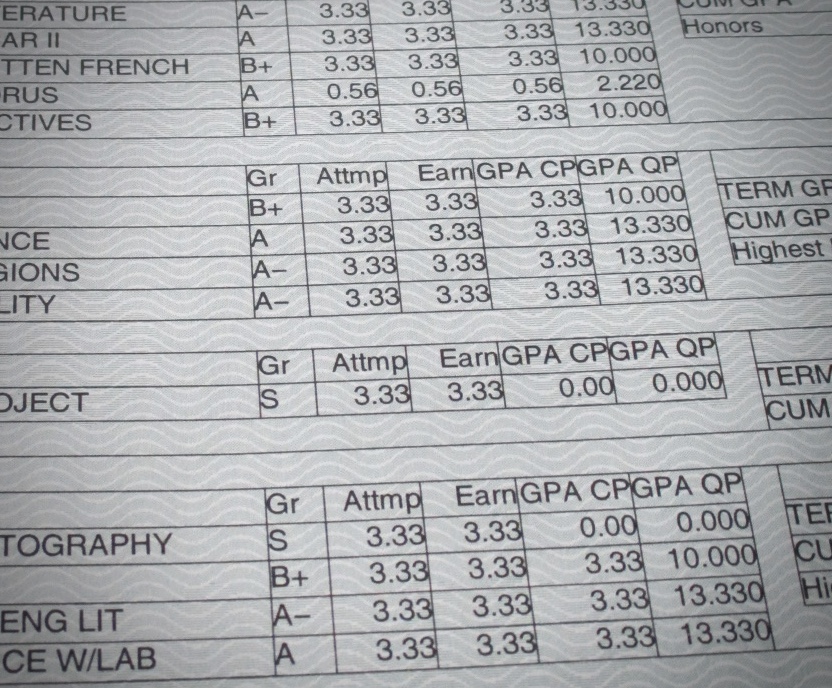
At dinner recently, my children mentioned the struggles some of their friends face with their parents. They recounted stories of friends who are grounded for having unacceptable grades when their parents check their Powerschool account.

Ugh, Powerschool. For those not familiar with academic technologies, Powerschool and other similar online grading tools can be valuable for checking on grades and making sure your child is on task, and also allowing them to adjust their studying and homework as necessary before grades close. But this type of technology can just as easily be abused as a micro-management tool.

When I was a student in high school (as with most parents of teenagers today), my parents saw my grades at the end of each quarter when I received my report card. Between report cards, I had the choice of what I would share with them and what I wouldn’t. If I chose not to share an “oops” grade, I had to be pretty certain that I could bring up my grade in that subject before the end of the marking period; and not sharing a bad test grade would give me extra drive and motivation to do so. Nowadays, parents can see grades along the way. Every day, if they’d like. Every. Single. Grade.

Here’s the thing. Learning is actually about growth, not grades. Learning is a process—one that we hone over time—that is sometimes successful, and sometimes not so much. The process of learning requires constant revision and self-evaluation.

Grades are part of the process of learning, and can help students with the self-assessment and re-evaluation necessary for improvement. Grades are not merely a product of the learning process, as people often think.

I work with college writers on a daily basis, and by the time students come to my office, they are already focused on the grade they will receive and not on the process of improving their writing. Very seldom does a day go by when I don’t say to one student or another, “Writing is a process.” Students want to focus on the product—the final, graded draft—and be done with it. But it is a rare writer (at any level) who can write a quality, finished essay the first time around and not have to go back and revise.

Overall, learning is a lot like writing. As students learn more challenging material [or learn a different subject matter … from a different teacher… in a different textbook or context], they have to put into practice what they know about learning, the subject at hand, and their past experiences, all while they constantly adjust their process to fit the situation. What worked last week for one bit of material might not work as well this week. A poor grade on a test or quiz will alert the self-aware student to what is not working, and will allow that student to re-evaluate and revise what he or she is doing.

Come to think of it, this is a lot like life. We are constantly editing and revising; we are examining our approach and making adjustments—fine-tuning, if you will. If we, as parents, don’t step back and offer our children some space to figure things out and some room to grow and examine their own performance, we are teaching them that learning is about the product, in this case, the grade. This parental approach to academics does a grave disservice to our children. Not only are we hijacking our children’s learning process to get the result we desire, we are teaching them that the grade is more important than fostering the innate intellectual curiosity and creativity that comes when they follow their learning in a direction that is of interest to them.

When children are conditioned to only look at the end result—the grade—the fear of failure can become paralyzing. And more than likely, children in this situation will learn not to take risks, but to take the “safe” path. Learning how to deal with failure, on the other hand—how to bounce back from a low essay grade or a bombed test—is a far more effective life lesson than learning to be afraid of failure. They also begin to realize that failure is an integral part of the process.

My son recently completed his first semester in college. For the first half of the semester, he struggled with one particular class—it was a subject he had never studied, and the professor had a well-earned reputation for being tough. In the end, my son received his lowest grade of the term in that course. However, I believe that grade was the one he was most proud of because he learned more about the process of learning, approaching the academic rigors of college, and self-advocacy from that class than he did from all of his other classes put together.

If I were to give advice to parents, I would say, step back. Give your children some room to fall while they still have you there to guide them and help them navigate the rough waters they encounter. Without a little room to figure things out on their own, not only will children have no motivation to get up when they fall, they will not learn how to get back up—to recover from setbacks and move forward.

Let your children stumble so they can assess and reassess and redirect. Help them to learn the important lessons that lead them toward resilience. Now, more than ever, our society is going to be looking for people who can not only face setbacks with grace, but can help others do so, as well.

Changing views

fullsizeoutput_2a08

Yesterday, I was having coffee with my boyfriend, and we were planning a future day-trip to Boston. Because of my daughter’s art and her interest in art supplies, I suggested to my parents that they give her a gift card to Blick Art, a place where she has never been but I have (and love!). The main point of our trip will be to visit this amazing artists’ supply store, an awesome excursion for both my daughter and myself. And my boyfriend—he’s a trouper for coming along with us!

We looked at dates and other possible activities, and I pulled up the bus schedule. Sometimes, we take the train into the city, and other times, we drive part way and take the T in. However, because it’s winter, we decided this time, we will take the bus. That way, we won’t have to worry about navigating the narrow, snow-clogged streets. Or parking. And we can relax on the journey.

We chatted and planned, and I began to reminisce about the times I traveled into Boston with my sister when I was a teenager. My parents would take us to the “bus station” in our small town (really, it was just a glorified bus stop) early in the morning, so we could catch the first bus. From my hometown, it is a 2½ hour bus ride into Boston. My sister and I—and sometimes a friend or two—would spend the better part of the day in the city, sightseeing, shopping, and grabbing a bite to eat. Then, we would catch the last bus home, arriving close to 11:00 pm.

In those days, there were no cell phones, and no way to keep in touch or check in. It is possible that we made a quick collect call home from a payphone just to say we had made it to the city, but the specific memories are foggy. I just remember I was in high school, and this was a great adventure.

As I reminisced, I thought about putting my own children on a bus for such a day trip. Would I be content to let them go? Were we more “worldly” than the children of today? My children have cell phones and would be able to check in with me on such a trip.

I looked up from the bus schedule and said, “Is the world really that different—,” and my boyfriend opened his mouth to answer. But I continued….

“—or are we?”

He paused and closed his mouth. He looked at me, and didn’t say anything for a moment. “You know,” he said, “I really don’t know. That last part… I don’t know.”

Perhaps we have been jaded by what the world has become. The constant deluge of media focuses on what is wrong with the world. It plays and replays and replays the same stories of violence, death, and destruction with graphic images and videos until we believe that we are doomed. At the same time, we have become accustomed to constant contact, not only with our children, but with our spouses and partners, our families, our friends, and even our acquaintances.

Maybe the world really hasn’t changed as much as we like to think. Maybe… just maybe… we—along with our views and expectations—are the things that have changed the most.

Altered Messages

fullsizeoutput_2a04

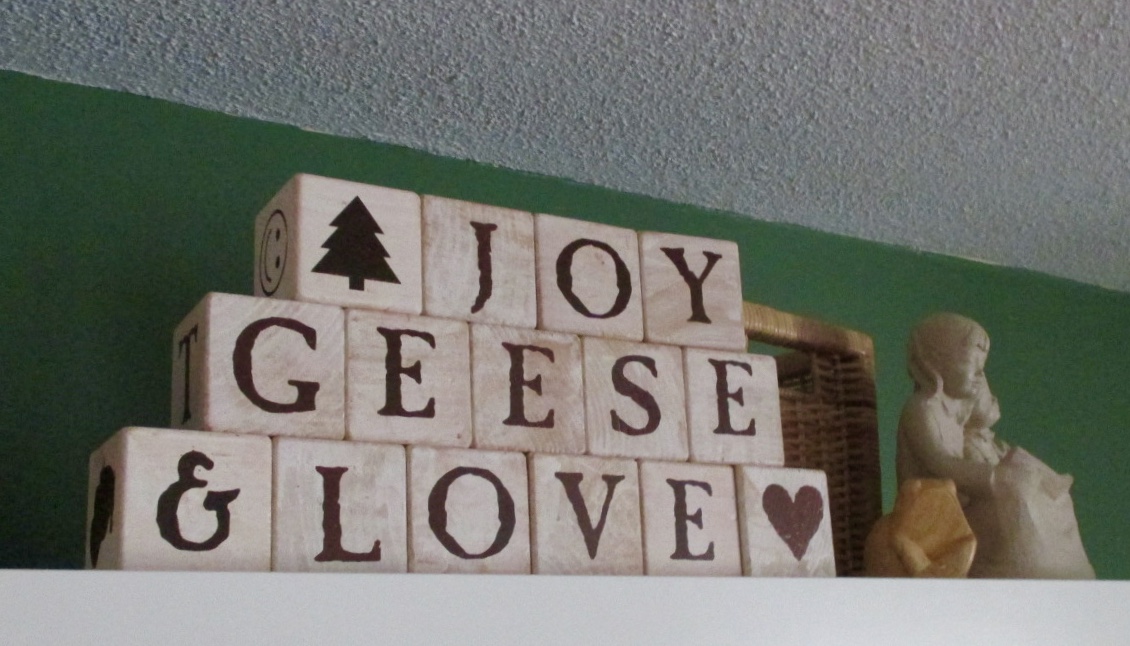
I have a set of “grown up” alphabet letter blocks as part of my living room décor. With these blocks, I can create a wide variety of sayings and greetings—pretty much anything that can be said in 18 or fewer letters. I have had the letters for many years, though I don’t remember which mail order catalogue I found them in. After my initial set of letters, I asked for the images and numbers for Christmas (or my birthday) one year. Over the years, I have used the blocks for greetings, holiday sayings, birthday wishes, announcements, etc.

The sayings have a spot on the top of the shelf-unit where the television sits. The shelf is six feet high, so I create the sayings on the living room rug, and move the words to their perch one at a time. I move the bottom word first and work in ascending order, placing one word on top of the other until the message is complete. For many years, I could create a saying, place it on the shelf, and not even think about it again until I it was time to change it.

Lately, however, I have noticed that the sayings I write are often … well, altered in some subtle (or not so subtle) way. For example, my Christmas message: Joy, Peace & Love morphed over time. After only a couple of days of sitting on the shelf, it suddenly read: Joy, Geese & Love. Hmm… because everyone hopes for geese at this time of year…?

Now that everyone is tall enough to reach the block sayings, it’s anyone’s guess as to how the message will change from what I write, but there is no doubt that it will be altered in one way or another. I can only sit back, relax, and anticipate the changes. Certainly, the message I put on the shelf makes sense. At least for the first day or two….

One final thought–Christmas antics

fullsizeoutput_29f6

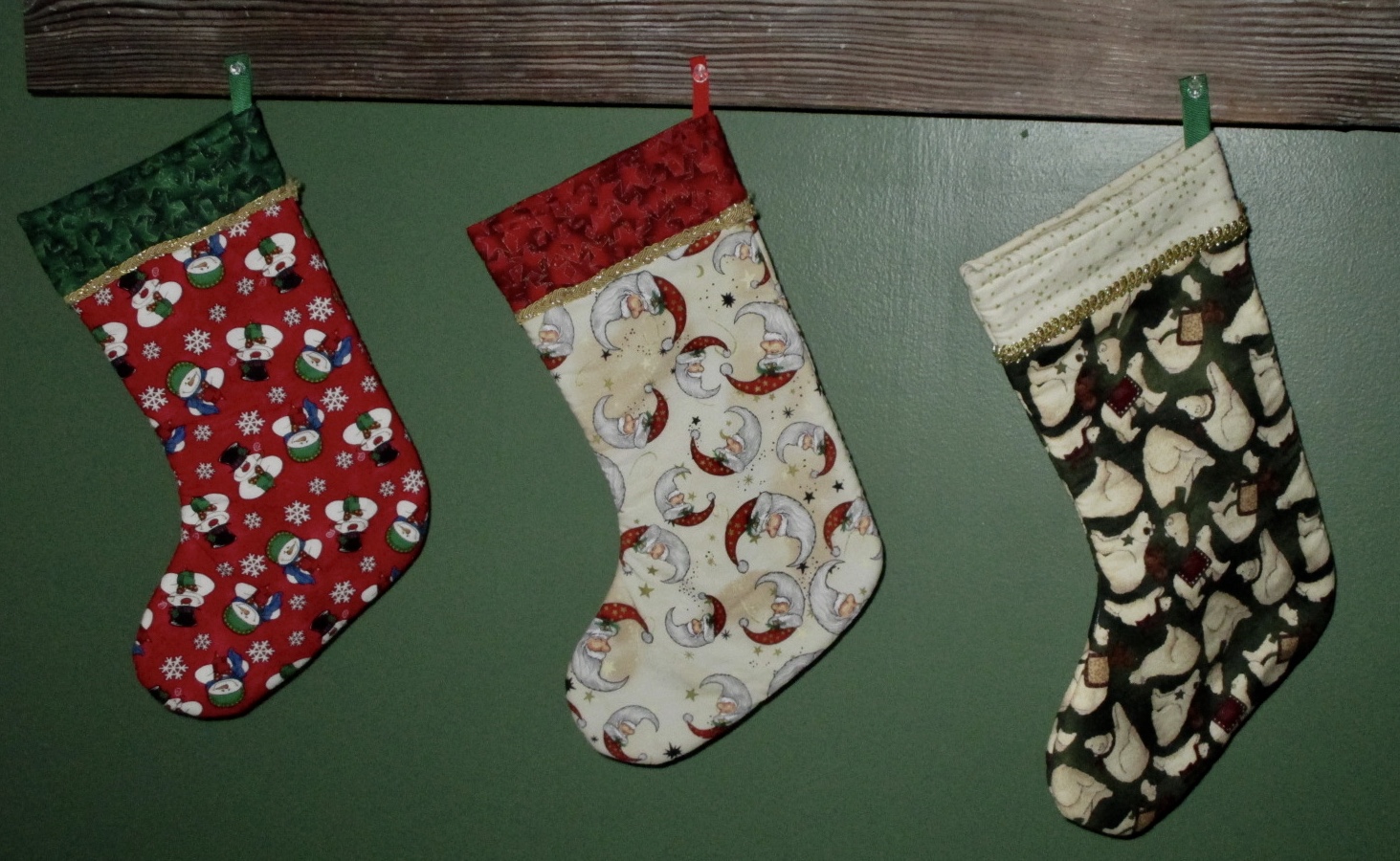
Stuffing stockings—one of my annual Christmas challenges. Have I found enough stuff to fill each stocking? Will I have too much stuff, and if so, what will I do with the extra? Even after years of filling the same stockings, I always second-guess myself.

This year, we approached the holiday in “scaled down” mode. Finances are a little tight, so when I was searching for stocking stuffers, I decided to go the practical route. In addition to some toiletries, toothbrushes, and a tiny puzzle-y-thing or two (okay, and the requisite chocolate…), I purchased socks and underwear to fill the extra space in the stockings because, well… practical (and necessary).

When I started to actually fill the stockings, I found that I did not have enough room for the underwear. I had purchased a package of underwear for each of the teens in my house. While the packages were a good idea and would have taken up a sizeable chunk of space, the stockings were full enough without them. So late on Christmas Eve, I made the decision to place the packages of underwear in the children’s rooms, as if Santa, himself, had gone to their rooms to check on them and placed the item there.

On Christmas morning, I wanted to make sure none of them missed this amazing Christmas treasure. W was the first one up. “Did you see that there is underwear in your room?” I asked him.

“Yes,” he told me, and then his face brightened. “I was so excited that I had to wake C to let him know. ‘Santa came! Santa came! And look what he brought us: new underwear!’” he recounted the scene for me, and I had to smile at his sense of humor and fun. In fact, he actually did wake his older brother with his humorous rendition of childlike Christmas excitement.

And because that childlike excitement of their younger days has tempered to a much calmer holiday emotion, I always smile at the moments like this one—humorous or not.

The big brother who is trying to sleep in … maybe he doesn’t find these antics quite so entertaining.

Christmas Cookies

img_0454

Each year at Christmas time, I bake several different kinds of cookies, which I immediately place in the freezer until Christmas Eve. On that day, I make up plates of cookies and distribute them to friends and neighbors.

The day before my son came home from college, I texted him a picture of his favorite Christmas cookies. (Please ignore the fact that one is missing from the cookie sheet. It accidentally slipped from the spatula into my mouth when I was freeing them from the pan. Quality control is imperative, you know).

“Yum!” he texted in reply.

When he arrived home the next day, we sat down to dinner, and when we were done eating, he looked around the kitchen. “Where are the Christmas cookies?” he asked.

“That picture was from last year,” I lied, realizing I shouldn’t have let him know his favorite cookies were in the house. In my head, I could picture nearly empty containers of cookies on Christmas Eve….

“Oh!” he exclaimed in deflated response. “I was looking forward to those….”

And then I felt bad for telling him I didn’t have any. What kind of mother was I, sending him a picture of his favorite cookies and then telling him they weren’t in the house? I was caught between a lie and the possibility that my cookies would disappear before Christmas Eve.

I took a deep breath to calm myself. “They’re down in the freezer,” the words escaped me in a very small, quiet voice.

I sat back and watched as he ate a cookie. Then another. And another. Finally, I spoke up. “You have to put the cookies back in the freezer now.” And he did. Of course, I haven’t checked the contents of the containers since that night about a week ago now, so I am only assuming he hasn’t had more since.

But having my cookie connoisseur home with me has its advantages, as well. Last night, I made a new type of cookie for my Christmas plates. When they came out of the oven, I cut one in half and tried it. It was good. I brought the other half into the living room for C, who was the only one still awake. He thought it was good.

Of course, half a cookie isn’t a good indication of whether or not a recipe is actually tasty. A little while later, C came into the kitchen and asked if he could have one of the cookies fresh from the oven. I nodded and steered him to the baking sheet that had been cooling the longest.

I was at the sink cleaning up the dishes. I pretended not to notice when he polished off his first full cookie and took another, but secretly, I knew these cookies were a success. Score one for the new recipe!

Snow day with a side of snark

img_2691

Monday was a snow day in our school district, the first for the school year, and an early one, at that. Despite the fact that a day off will have to be made up at the end of the year, I must say, it was a welcome break at this busy time of year.

Throughout the day, it seemed my daughter’s mood was fueled by the energy and anticipation that pre-Christmas snow days can bring. I was folding her laundry when I realized I once made a sweater very much like one she had in the wash. I dug it out of the cedar chest and brought it to her room. I let her know that I made it when I was in college, and asked her if she would want to wear it.

“Sure,” she responded, taking the sweater from me and holding it up to examine it. “It’s perfect! I have an ugly sweater party on Friday, and I can wear it!”

“Um…” I started, reminiscing on the January term that I had painstakingly knit the sweater in question, placing each stitch of the Fair Isle pattern in exactly the right place. And now it was considered an ugly sweater? She looked up and saw my expression.

“I don’t mean this is an ugly sweater,” she back-tracked. “But it would work for the party because it’s in the style of an ugly sweater. There’s a difference.” This last bit was said as she turned to walk back into her room. No doubt so I would not see her silently laughing.

Her snark-streak continued after lunch, when she asked if she could eat one of the Christmas cookies I had just made, my famous snowman cookies. These cookies end up dispersed among family and friends, so I tend to be a bit stingy with them. “You can have one of the ugly ones,” I told her. “Pick one that’s cracked or deformed.”

She looked them all over. “Don’t worry,” she assured me as she selected a cookie. “There are plenty of ugly ones here.” Indeed.

Still later, I was coming up the stairs from the laundry. I had been singing made up songs that probably were a bit crazier than I thought. “Hey Mom…. Oh, never mind, that wasn’t going to come out right,” she said as I entered the living room.

“You’ve spent the day saying things that didn’t come out right. You may as well just say it,” I coaxed. It was actually a challenge, but she didn’t know it.

“I was just wondering, is it ever too early to put someone in assisted living?”

“Oh my. So I’m going to assisted living already?”

“I’m not planning anything. I’m just preparing. In case you might be going crazy….” Her voice trailed off. “But don’t worry. I’d take care of you at home before I put you in a facility.” She smiled that sweet smile that let me know she was going to do whatever she needed to once I had slipped into the depths of crazy. It’s always nice to know your kids have plans to keep you safe.

I wish I could say that was it for the day, but it was not. After dinner, I prepared for my tap class. I was talking to myself as I walked through the kitchen, saying how much I loved tap and how happy I was to be going to class. But then I stopped. I looked right at her, and I said, “But no worries. I would never dance on stage, like in the recital. I would look ridiculous, and nobody wants to see that.”

Her eyes narrowed as she considered my words. “I think you should dance on stage, Mom. Everyone would watch you, and they would see how much you love it. They would be so happy for you.”

I might have thought that was a very sweet thing to say. But as teenagers too often do, she continued down this road, one she should not have traveled. “They might be laughing, Mom, but they would be laughing with you, not at you. Because you just said you know how ridiculous you would look.” And again, the smile.

Ah, life with teenagers. If you ever have a moment when you think you might actually feel good about something, just wait. One snarky comment, and they will humble you in an instant.

And if I am perfectly honest… I wouldn’t want it any other way!

[Image is the “ugly” sweater in question]

Art supplies

img_2360

This evening, I had to stop by one of our local craft superstores because I had a question for one of the more experienced individuals in the framing department. I waited for a while before the sales associate walked right by me as I stood at the counter. Before she walked by me the second time, I stopped her. “Is there anyone in the framing department to answer a question?”

“I’m sorry!” she exclaimed. “I thought you were being helped. And here I am walking right by you…. Hold on. I’ll find someone for you.” And off she went.

Meanwhile, my daughter perused the aisles, captivated by the appealing art supplies. Pens. Markers. Sketch pads. Ink. Paint and brushes. Canvas. I watched as she picked up various items, studied them, then put them back in their places.

The woman returned, apologizing that there didn’t seem to be anyone available to help me. In the end, she was able to offer a passable answer to my question.

As my daughter and I exited the store, she was clearly thinking about all the items she had just seen.

“Why do art supplies have to be so expensive?” she asked.

“I don’t know,” I said. “You could get a job to help you buy some.”

“Yeah, but where am I going to get a job?”

“Hmm…” I thought for a minute. “You could work here. Then you would get an employee discount!”

There was a brief pause while this piece of information registered in her mind. “That is a great idea!” she finally said. “Why haven’t I thought of that before?”

Indeed, I thought it was pretty brilliant, myself. Maybe I could get a job there….

Chocolate chips or…

img_2631

Yesterday, I baked some cookies. Baking cookies at this time of year serves two purposes. First, it provides us with dessert for school lunches. But second, using the oven takes the chill off the house when the sun goes down in the evenings. And so far, I really haven’t had to use my heat much this fall.

I asked W what he wanted in his cookies: chocolate chips or M&Ms. He opted for chocolate chips. I asked J the same question.

“How about nothing?” she suggested. She is one of those kids who has never really cared for sweets. Regardless of what I add to the cookies, she’ll pick them out.

However, I had just stocked up on baking supplies for my holiday baking. “I have toffee pieces,” I told her. “I can use those instead of chocolate chips?”

She shook her head. “No thanks.”

“Cinnamon chips? I have some of those….”

Again, she shook her head.

I opened the pantry cabinet. “Ooo, I know! How about Skittles?” I ventured hopefully. “I could put Skittles in the cookies.”

“Mom, that’s gross.”

I suppose that would be. Or, maybe not….

Pillage

img_2572

This evening, I was rooting around in the fridge, and I came across a large bowl with a very small amount of pasta sauce. “This can go,” I announced. “Especially since someone ate all the sausage out of it.” I placed the bowl in the sink.

“Who would do something like that?” W asked, feigning disbelief.

“Hmm. I wonder…” I let my voice trail off. “Perhaps your brother?”

“Oh, that’s right! He comes home for less than 24 hours, pillages our food, and then goes back to school. He doesn’t have to deal with the consequences.”

I looked at my son, nodding. Pillage. What a fitting word for what goes on with the food in my house. From now on, I am going to use that word with all of my teens.

Stop pillaging and shut the refrigerator! See what I mean? Perfect!