Annotation

When you live in my house, you never quite know what you’ll come across. Last week, I found that my grocery list had been annotated.

Generally, when I write an item on the list, I do it quickly with very little thought. As long as the item makes it to the list, all is good. Apparently, sometimes my handwriting is not legible to others in the house, which shouldn’t really matter where the grocery list is concerned since I am the one who buys the groceries.

And yet, someone noticed that what I had written—the word “bread”—did not seem to resemble the word, and wrote some wise-crack note to let me know such was the case. When I took the time to study my hasty handwriting, I could see how an unsuspecting reader might misread the word. But really, who writes “mead” on the grocery list? I don’t think they even sell mead in the grocery store.

Just wait…. The next time he’s home, I’m going to add some crazy items to the grocery list. Then I’m going to send him to the store to find them!

Teen Dinner

So there I was yesterday afternoon, minding my own business, sitting in my office proofreading a document. It was 3:30, and I was thinking about how the evening was likely to play out. At home, my youngest was packing for a weekend camping trip with the Scouts. When I left work, I would go directly home and drive him to where the troop would be meeting. However, I had just reread the email, and a worrisome feeling came over me like a shadow.

According to the email, my son was responsible for eating dinner before the troop assembled, a fact which was frequently true before camping trips. However, before I left for work on this particular morning, I had cooked a pound of spaghetti and popped it in the fridge so the assembly of a dinner casserole would be hastened before I sped off to a class. In my mind, I could see the bowl in the fridge, his hands reaching for it, and the majority of it disappearing before I even got home. Once he got to it, that will be the end of the spaghetti.

Anticipating his approaching dinnertime, I texted him, listing the food options he might choose other than the spaghetti. Thankfully, we had some leftover chicken he particularly liked.

If you are looking to evoke a slight panic at the end of the work day, there really is nothing like the realization that your hungry teen might consume your partially prepared dinner!

Family Dinner

When I was growing up, we always had our evening meal together as a family. I have maintained that tradition as much as possible in my life with my children, as I feel it is important that we sit down together and share a meal and conversation. At dinner, we can sit together, relax, and enjoy each other’s company while we are doing something we need to do anyway. After all, from my experience, there is nothing as effective as food to bring teenagers to the table.

Our family meals might start out calm and orderly. “Could you pour the milk?” “Please pass the salt.” “This is really good, Mom. Thanks.” But any time you have three teenage siblings in the same small space for any length of time, “calm and orderly” can unravel fast and stuff begins to happen. I’m just gonna say it: Our family dinners can get a little rowdy. Take last night, for example.

I don’t know how things deteriorated as quickly as they did, but it started with one of the younger siblings deciding that the oldest would be responsible for fetching anything that was needed—milk, salt, dessert, utensils. The jovial requests picked up in intensity. When younger brother said, “Hey C, can you get me some ice cream? Oh, and I’ll need a bowl. And a spoon. Don’t forget the ice cream scoop…,” C decided spoon, bowl, and scoop would be best delivered via air mail. And so, a spoon flew across my kitchen into the [thankfully] nimble hands of little brother.

“Did you just throw that?” I turned to ask. But by the time the words had come out, a ceramic bowl passed through the air from one boy to the other. “STOP!” I commanded. “Do not throw dishes and utensils!” Seriously? Why is this even something that has to be explicitly stated? This could have gone very badly, but thankfully, it did not. It was not until a few minutes later, when C was playfully tossing a cup in the air to tease me that he dropped it. At least that one was plastic. It does make me wonder what they do when I’m not home.

Come to think of it, this may just be the very behavior that has carved so many chips out of the edges of my dishes….

Advice to My Younger Self

Watching teens go through their various challenges is one of the more difficult parts of parenting. I always thought it would be great if I could somehow spare my children the trauma of middle school and high school. These are the years when kids are jockeying for some kind of ridiculous social position. They want to be seen as the best, the brightest, the funniest, the prettiest, the most popular, the most athletic, etc. The “senior superlatives” celebrated in the local high school speak to the role such competition plays in the lives of teens.

And yet, competition—being the best athlete, having the most friends—these are not the things that are the most important in life. The most important things in life are how we treat other people and how we treat ourselves.

By channeling my younger self and tapping into some of the challenging experiences I remember, I can offer some advice to my teenage self [which is actually thinly veiled advice to my teens…].

Mind your own business, and don’t get involved in other people’s drama. There may be situations that look enticing, and times when it is tempting to step into someone else’s train wreck. And there is no reason not to step in with a sincere offer of help. Otherwise, drama is always good to avoid—your own, and that of others.

Set your goals high. The higher your goals are, the farther you will go. If your goals are easily obtainable, you will not have a reason to keep pushing yourself and keep growing. As a wise teacher once said, “If you are not growing, you are dying.” Setting your goals high will give you a reason to keep growing.

Find your own internal motivators. You have to find meaning in what you do, and that meaning has to come from you. No one else can make sense of your life and your activities. No one else can give you reason to complete tasks, to earn good grades, and to pursue your goals. That meaning and sense of purpose has to come from you.

Walk away from those who don’t treat you well. Keep walking and don’t look back. There are many people who use others, manipulate them, control them, etc. These people, they will get what’s coming to them. It’s called karma, and it really does exist.

Don’t let other people define your limits. Other people are always quick to tell you what you can and can’t do. For example, You shouldn’t pursue a career in [insert creative endeavor here] because you won’t be able to make a living. When I was in graduate school, my advisor—who had met me moments before—looked at my proposed plan of study and said, “You can’t take that many courses. You won’t be successful.” I wanted to say, Watch me! Instead, I just nodded and said these were the courses I would take, thank you very much. Sometimes, people tell you things because they want what’s best for you. Sometimes, they don’t want you to be disappointed. However, only you can determine what’s best for you. And that leads to the next point…

Find your passion and pursue it. If you love to write, find a way to incorporate that love into your college program or your career path. If you are passionate about biology and music, be creative about how these two pursuits might fit together into a career that will feed your soul. If you can’t figure out how to form your passion into a career, at least continue to pursue the activity in a way that is meaningful to you.

Always be true to yourself. You know who you are and what you stand for. Don’t compromise your values or yourself to fit another person’s idea of who you should be. Be you because that is the best and most viable choice you can make.

Weather

The weather outside is frightful. And by frightful, I mean the weather has been anything but mild. This weekend started as a snowy mess, and the next day—as the temperature was hovering just below freezing—it rained. Nonstop.

Friday morning, I had a long overdue hair appointment, and I stopped on the way home to pick up some Christmas presents. The drive was slow and somewhat dicey, and I was more than happy to finally land safely at home. My children were already home as the last day of school before vacation had been cut short for an inclement weather dismissal.

I had been home for about half an hour when the question came from the living room. “Mom, are the roads really that bad?” It was a question fashioned to determine whether or not the ask-er would be allowed to head out to the home of one friend or another.

“Yes,” I responded. “They’re pretty bad. No one is going to venture out on the roads today.”

From the kitchen table behind me, as if I had been conversing with a different child, came the statement, “I’m hearing off-roading.” I paused for a minute, just long enough to process that comment. And then I turned around and looked at W, my eyebrows raised in question.

He was smiling. “What?” he shrugged. “You said, ‘No one is going out on the roads today.’ You didn’t say anything about going somewhere off the roads,” he responded. And then he started to list off all of the places he could go off-roading.

These kids, they are always full of great ideas ….

Positivity Post: Secondhand Banana

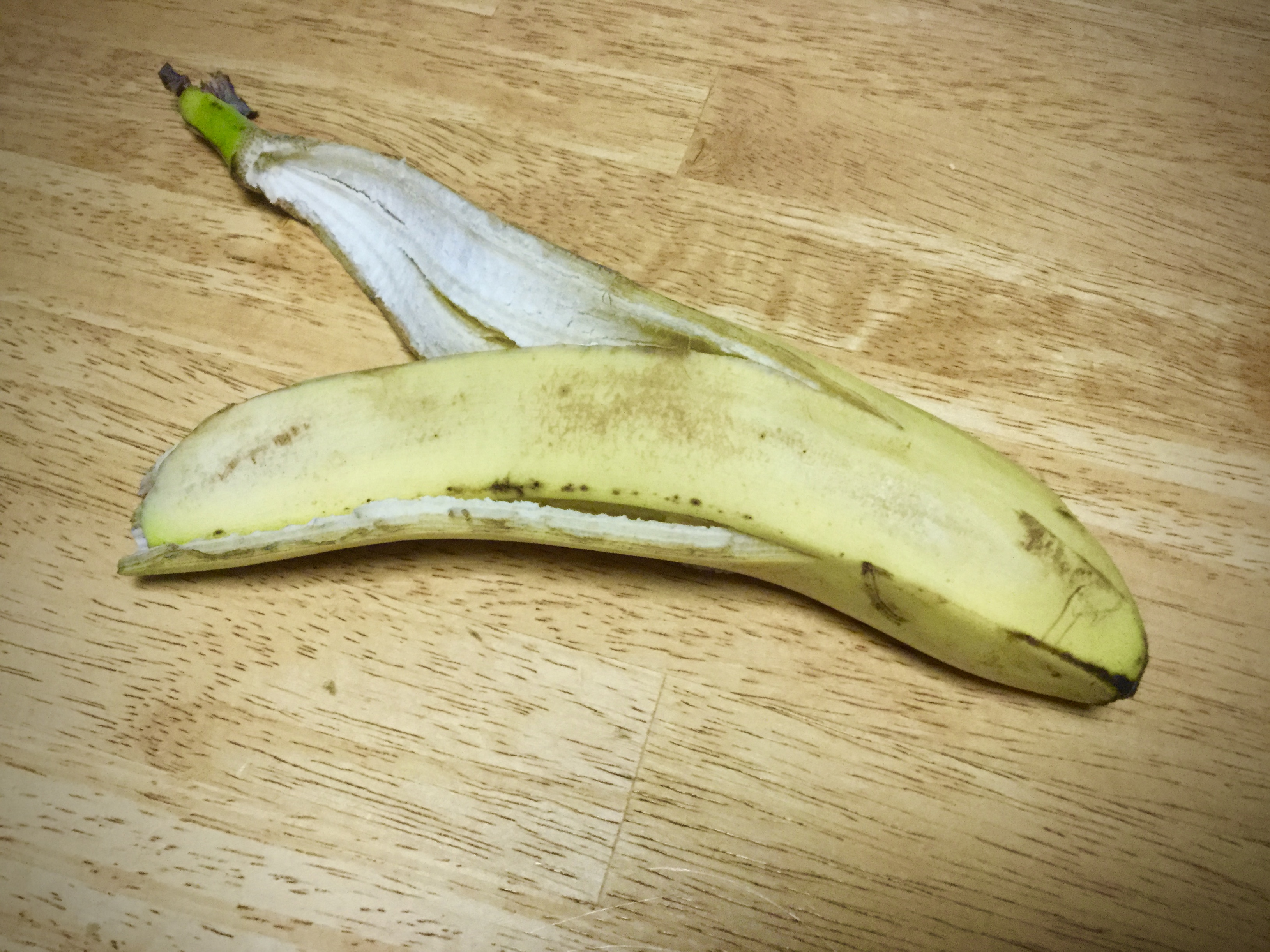
On school mornings, we have a routine. Sometimes one element or another will change up a bit, but generally, there are things I can count on each morning. One of those things is that on her way out the door, J will say to me, “You can have the rest of my banana.” And every morning as quiet settles over the house, I look on the table, and there rests a two-thirds eaten banana, splayed out for my review and approval.

Now, I will admit that at first, I didn’t see the appeal in this meager offering. As it sat on the table, the empty part of the peel would deepen in color, browning with an unappealing cast of rotten fruit.

But then, I realized that I cut up fruit each morning to have with my yogurt—kind of an “on the fly” fruit salad. Tangerines, melon, strawberries, pomegranate… whatever I have on hand that’s in season. I could use the bit of banana to add to my salad! And so I began to look forward to that little bit of extra sweetness [and love] each morning.

When life (or a teenager) hands you secondhand bananas, make fruit salad!

Blink

Over the years, we have hit milestones with the regularity of the thump of a flat tire. Thump… thump… thump…. At first, it’s kind of reassuring to know that your child is hitting all the important milestones. But recently, it seems the car is speeding up and the milestones thump by faster and faster—at an alarming rate of speed, really. And this week, my daughter completed—and submitted—her first college application. Breathe.

These monumental occasions always give me pause and compel me to take a quick (or leisurely) inventory of the years that have come and gone. This most recent milestone hints at the small amount of time I have before she is off and testing her wings.

The early years of single parenthood are still vividly etched in my memory. I spent the days looking in the rearview mirror, counting heads in the backseat of the car. As the one parent of three very small children—all under five—I was always afraid that in my sleep-deprived state, I would leave one behind. Maybe one slipped by me somehow, and was still hiding in a store in the mall. Perhaps someone went to use the potty and was in the bathroom finishing up, or worse, didn’t get in the car and was standing in the driveway in a puddle of tears wondering why I left without him/her. In those early years, that fear never fully dissipated.

I blinked and we were in a new house in a new neighborhood with new friends and a new school. Little hands reached for mine with regularity. A hand to hold; a hand to help; a hand to lead the way. Those were days of constant attention and discovery and learning. There were toys and games and books and building and dancing and crafts. LOTS of crafts.

And then I blinked.

And the day came when they were all in school, mornings first and then full days. The school bus rumbled up the hill in the morning and swallowed them up. I would watch as the bus drove off up the road and out of sight before I ran home to switch to “adult” mode and be on my way to work. In the early days, I was home from work for 3:15, always needing to beat the bus to meet the kids so they were supervised and transported to the activity of the day. Always rushing so I wouldn’t be late.

Until I blinked.

The kids were able to ride the bus to their activities. My work hours increased, and an after school sitter took on some of my role. Extra keys were made and cell phones purchased and the kids further shaped their identities as they took their first tentative steps toward independence.

I blinked again, and now they are nearly through high school. They will be out on their own soon, with jobs and lives that take them all in different directions. That doesn’t mean my job is done. A mother’s work is never done, is it?

Just don’t blink.

Positivity Post: Silliness

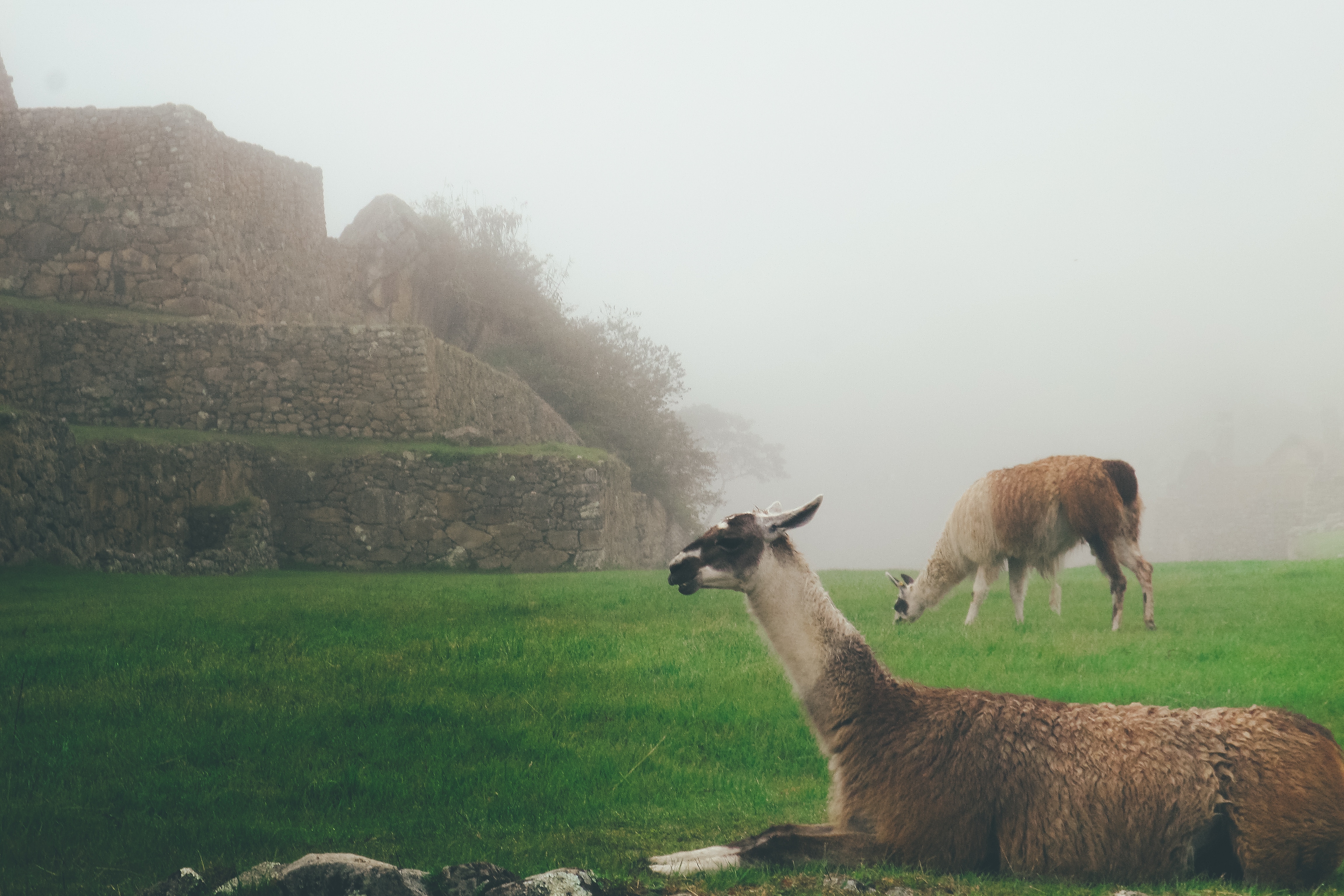
It was Saturday, and we were visiting my son at college, looking for ways to bide some time before a theater performance later that evening. “Here’s a thought,” I ventured. We were seated at one end of the long dining hall table. “We can go pet the llamas!”

The college is situated at the top of a hill. On the way up the hill, we pass an alpaca farm, and the alpacas are frequently outside grazing. I chose, for this moment, to call them llamas because… face it, “llamas” is a word that is both more fun to say and more fun to write.

My son stared at me as if I had made one of the craziest statements he had ever heard. “Mom,” he admonished. “I’m pretty sure those are private llamas.”

“Well, we can just go pet them for a minute. Then we’ll go to the farm stand and look at the succulents.”

“Mom! Those are not public llamas!” He spoke just a little louder this time, to make sure I heard and understood. Which I did. But really… who would keep llamas out where everyone could see them and not share? But I gave in and instead, we decided to check out all of the little shops in town.

Later that afternoon, as we attempted to find an acceptable place for dinner, we happened to drive by the farm with the alpacas. “Oh,” I feigned my deep disappointment as we ascended the hill. “The llamas aren’t out….”

“No, Mom,” my son said sternly. “That’s probably because they belong to someone and that someone put them away.”

So… I suppose that’s the definition of “private llamas,” huh? I believe if I had llamas, I would definitely make them public llamas!

{Image credit: Unsplash.com/Colby Thomas}

Tools for Online Pursuits

As a mom, I feel it is my job to make sure my children know everything they need to know when I send them out into the world, but there are two problems with that. First, how could I possibly know all that they will need to know? And second, I can’t keep up with the ever-changing world to make sure my children are fully protected with an armor of knowledge. I can only give them tools they will need to build their own armor and change it as necessary. And the tools they will need are constantly evolving.

Take the recent situation of one of my students as an example. She did everything as she thought she should, yet she still got stuck in a situation that seemed a bit sketchy. Thankfully, she recognized enough signs of danger to seek advice.

I entered the situation as she was negotiating feelings of mounting unease around a potential job opportunity. She had responded to an interesting job posting she found on a professor’s course site, a seemingly legit opportunity because of where she found it. She applied, and—through communication completely via text message—was asked to attend an interview, which she did. But the interview situation was a bit off. First, the student was greeted by the father of a client (here is where age and experience are beneficial—those of us who have been in the real world for any amount of time know that a professional organization would never have a client greet a potential worker in the first interview.)

When the interviewer finally did show up, she was dressed in leggings and a t-shirt and made excuses about the work not being conducive to business attire. Both of these things caught my student off guard, and made her more attentive to her feelings about this job.

It wasn’t until the following week that she dug in her heels. The woman texted my student that she had scheduled an orientation session before the second interview—in fact, it was before she had officially been offered a job—and it would be that afternoon. The student was given an address and a time and told to bring her identification documents.

It seemed like an odd turn of events, and this is where I started asking questions: What is the name of the company? Where are they located? What will you be doing? When she could answer none of these questions, we sat down and did some research. We looked up the address that she had been given for her “orientation.” Google maps gave us a nondescript office building on which there was no company name. We Googled any and all information the student had, but we came up with no more answers than when we started. At that point, I advised her to forgo this particular job and look for something more certain.

A few days later, she and I sat with the Career Planning director to figure out where the job posting had originated and how best to deal with it. The director had the same advice that I had already given the student. Even if this was a legitimate job offer, the company was so unprofessional that she didn’t want to work there, anyway.

In truth, there is no way of knowing what might have happened if my student ignored her instincts and went to the orientation session. However, this situation got me to thinking about how best to guide my children as they navigate the tangled web of the “business” aspects of the online environment.

Teach your children—and any young people you are in contact with—to be aware of fraud and scams such as this may have been. Teach them to look for inconsistencies, to be alert to potential problems, and help them to determine when something is legitimate and when it is not. The fact that there was no searchable company information on this job posting was the first of many red flags.

Let your kids know that the rules of safety in social situations also apply to any other situation that is unknown—professional opportunities, buying/selling items off Internet sites, meet-up groups, etc. Bring a buddy, let others know where you are, check in, and meet in a neutral and public location.

If things don’t seem to add up, don’t pretend they do or dismiss any warning signs. It is easy to excuse one issue. Okay, the interviewer is dressed for comfort because the company works with children. However, when there are two things that don’t add up, three, or four, pay attention. The pieces don’t fit together because the situation may not be what it seems to be.

Encourage your teens/young adults to listen to their instincts. That “bad feeling” you have? It’s there to warn you. Too often, we encourage ourselves to deny our gut reactions to situations. Animals are equipped with instinct to protect them from harm. We, too, are animals, and if we pay attention to our instincts, they will help to guide and protect us.

Teach them to ask for help when they need it. If young people need advice about a situation, or they are feeling threatened, they shouldn’t hesitate to seek help—even if that means making some noise. And likewise, if you see a young person who seems to be struggling or needs some advice, step in and offer to help them out. So many young people are left to figure out the subtleties of life, of growing up, on their own, and they may welcome the guidance an older, more experienced adult.

The College Search – Tips

I spent last weekend looking at colleges with my daughter. Of course, it had been my plan to complete this process a bit earlier this time around, yet here we are, the fall of senior year, we’re ready to launch, and we are just finishing up our college visits. However, I do think we are in pretty good shape. Of the final three remaining school visits, one is a third visit—to sit in on classes—at the current first choice school; one is an “official” visit to my son’s college; and one is a school that was added to our list just this week. Once those visits are complete, we’ll stop visiting. But for those of you just beginning this process—no matter the age of your child—I have compiled a list of helpful tips.

Start Early. Let’s face it. High school guidance is not what it once was. I remember in my public school days, we sat down with a guidance counselor and developed a list of the colleges we should investigate. That list contained safety schools, reach schools, and several schools in between. Perhaps that is why I have helped my children to create lists of schools that run the gamut. And then we have taken the time to investigate each school and visit the most promising schools on the list, a time-consuming process that should be started in late sophomore or early junior year. Even in the fall of senior year, our list is changing, evolving, and constantly re-ordering.

Invest your time. If you pay attention on the tours, you will know where you will be investing your resources—both your money and your child. If I am going to invest a good deal of money in a school, I want to know about it. Recently, I was on a tour with another mother who was so busy texting that she was not at all focused on anything the tour guide was saying. I felt bad for her daughter, who will receive little meaningful advice from her mother, and I also felt bad for the tour guide, who was more than aware of this mother’s inability to put her phone away and offer her full attention.

Be an advisor in the process. High school seniors are still kids in so many ways. The decision of which college to attend is a big one. My kids have always attended the local schools and been with the same people. How do they know where they will be happy for the next four years? I can gently guide and suggest, and I can push them complete each step of the college process. I can pay attention to things we see and hear on the college visits, but most importantly, I can listen to what my child is saying and how he/she is reacting on our various campus visits.

Don’t be afraid to say the things your child needs to hear. I have been known to comment on the minimal endowment of a school and how that shows fiscal instability. I have commented on the glaring lack of students on a campus as well as inattentive faculty and staff. I have also been known to say, “That wasn’t the cleanest campus I’ve seen,” because maintenance is often the first area where cuts are made. As parents, we can spot problem areas that our children might miss.

Trust your gut (and teach your son or daughter to do the same). Every college campus has its own atmosphere and feel. When you walk onto the campus, you will get a feel for whether the school is a place you will be comfortable or not. The students, the buildings, the attitudes are all apparent, and they all reveal secrets. Pay attention. Feel the feels. If you don’t feel enlivened and comfortable with what you see, it’s probably not the school for you. Then again, if you look around and think, “I could definitely be happy here,” maybe it is your school.

Watch your step. And finally, a tip for the wanderer. If you decide to wander around a school on your own, be careful. Some doors will lock behind you. Those with a school ID can use it to unlock the doors, but those without may find themselves trapped in a hallway or stairwell they didn’t intend to be trapped in. I have no reason (at least not one that I will admit) to know this information. I will just say, trust me on this one. Check all doors before you let them close.

As I finish up my second time through this process, I am constantly learning. Next time, I’m going to complete the college search earlier, especially because my youngest has very busy summers. But also, I have a feeling the third time around—the last time—I might be able to get it right.