Respite #atozchallenge

DSC_0918

I am taking a break from complaining—not that I complain a lot. However, I have come to the realization that the things I tend to complain about are things that I cannot—or at least not at this moment—change, for whatever reason. And so it is really not worth the time and energy to complain about them.

My son, on the other hand, has taken up complaining with a vengeance. We got in the car the other day, and someone on an NPR talk show used the word, “acrossed” which, of course, isn’t a word.

“I hate when people say ‘acrossed,’” he informed me. “That’s just wrong!”

“I know,” I agreed. “Me too.” I turned to back out of the parking space. Now, W was focused on the back of the car to our right.

“I can’t believe the dealer put their insignia on the car crooked. You’d think they could at least put it on there straight,” he commented. Silence ensued for a minute while he thought about his words, and then he said, “Apparently, I am just complaining tonight.”

We had only traveled a few feet when he said, “Can you believe how that person parked? Who would park like that?”

As we drove, he found myriad complaints—from the items in people’s yards to the cars passing us. And he jumped on everything I said. “Oh yuck!” I said, commenting on a particularly nasty roadkill as I quickly turned away.

“What?” he asked, suddenly looking at my side of the road rather than his.

“A squirrel,” I told him.

“Someone hit a squirrel? Who would do such a thing?” By this point, he was having difficulty keeping a straight face. “How rude!”

As we drove, he continued to complain about everything he could. A tree that was not growing straight; a person running on the side of the road; a shrink-wrapped boat that has not moved from the same yard in several years. Anything was fodder for his complaining, and by the time we reached our destination, I was laughing, and he had cracked a smile that he couldn’t extinguish.

Complaining seems to suit him for now, but I’m glad I’m taking a break. I just thought this break would be more… well… peaceful.

Middle School #atozchallenge

school-hallway-1559891

My youngest child is finishing up middle school this year and moving on to high school. I have to say that I couldn’t be happier. Overall, middle school has been my least favorite parenting experience. And it was my least favorite childhood experience, as well. Middle school is the time when children are forming their own identities away from their parents, moving into cliques, discovering what they might like to do, what they are good at, and realizing that they can project the things they don’t like in themselves onto others.

When my oldest entered our town’s middle school, I distinctly remember sitting in a parent meeting in the cafeteria with a large group of parents. The principal stood on stage giving her spiel, and finally, she proudly stated, “There is NO bullying in our school. None.” And then she turned to the students she had coerced to be on stage with her and said, “Isn’t that right, students?” To which they all nodded, looking like deer in headlights.

As a teacher, a parent, and a long-ago middle-school student, I remember thinking that principal must have buried her head so deeply in the sands of self-created utopia that she had no idea what was happening in the halls she walked each day. And in fact, I was correct.

There was plenty of bullying at our middle school. But there was also much opportunity for growth. Middle schools are tough places, and so I offer some thoughts to help prepare for this experience.

1. You will not find “your people” in middle school. There will be a lot of people there, but they might not be people that you want to hang out with. They might not even be people you like. Don’t be discouraged. You are more likely to find them your people high school, but you might not find them until college. You will eventually find people with whom you have much in common.

2. Don’t work on being popular. From my experience, middle school popularity (even high school popularity) is fleeting. The people who are popular now will find themselves in amongst people who are older and smarter and more popular than they are, and they won’t know how to fit themselves in with those people. Besides, the focus on popularity holds you back from true success in life.

3. Those people who look like they have it all together? The people who don’t accept you because you don’t play a sport or you don’t live in the right part of town? They are just as insecure as everyone else. If someone doesn’t accept you, that is a reflection on who they are, not who you are.

4. Middle school is just a brief period of time. I know it may seem like it lasts forever, but it will be over before you know it. Keep your focus on your school work and on developing the best you that you can be, and you will come out stronger and more amazing than when you started. You are enough, and you are exactly what this world needs. Develop your talents and figure out who you are becoming.

I am quite happy that we are reaching the end of our middle school experience. For all of you who are not, I wish you the best of luck. Remember: this too shall pass.

Hiccups #atozchallenge

When I was a kid, I would get the hiccups something fierce. My hiccups would often last the full day, and while I don’t remember them bothering me too much—other than being a serious annoyance—I think my parents would beg to differ. Once, I remember being on a roof, helping my father while he made some repairs. When my hiccups began, he made me get off the roof for fear I might fall.

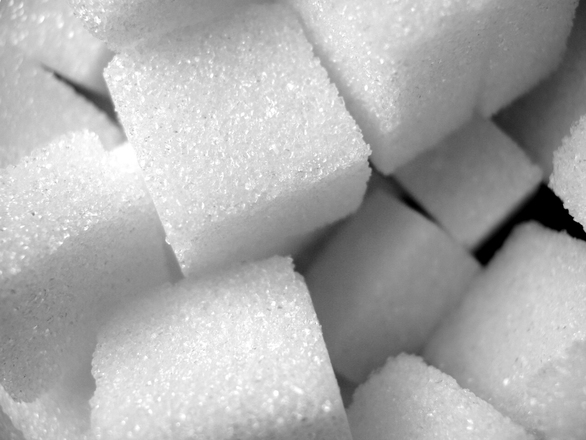
My parents’ go-to hiccup cure was always a spoonful of sugar. Every time I had the hiccups, I would choke down that spoonful of dry granules, and every time, I would still have the hiccups.

My most memorable case of hiccups was one time when we were involved in a family activity in the kitchen—I can’t remember whether we were coloring Easter eggs or carving jack-o-lanterns, but it was that type of activity, and it clearly took all of my focus. As was typical for me, I had been suffering with the hiccups for the better part of the day. I had tried the spoonful of sugar cure. Twice.

My mother slipped out of the room unnoticed while I was hard at work on my project. We finished, and when we were in the middle of cleaning up, my father sent me upstairs to get something for him. As I rounded the corner from our living room to our front hall, my mother jumped out and scared me. In fact, she scared me so badly that I started to cry. The one consolation—my hiccups were gone.

Several years later, we had a book of natural remedies on approval through the Readers Digest book club. In that book, there was a cure for hiccups that sounded ridiculous. According to the book, if you took a tall glass of water, placed a spoon in the water, held the handle of the spoon between your teeth as you drank some of the water, you would cure the hiccups. Ha!

It wasn’t long before I was able to put this cure to the test. And it worked! The quickest and easiest cure for the hiccups ever! In the years since finding this cure, it has helped me, my children, and any hiccup-ridden person I come in contact with.

For me, this cure has worked 95% of the time. It’s much easier than choking down sugar, and much safer than being traumatized by your mother!

Expectations #atozchallenge

candid-europe-8-1533627

When I was in high school, I spent a summer as an exchange student in a far away country on the outer edges of Europe. Before we left the States, we had a two-day orientation to prepare us for our journey, meeting our host families, and immersion a new culture.

There is not much I remember about those two days. I remember eating peanut butter out of a jar because dinner was of the tasteless, institutional variety. Oddly, I remember the omelet I had for breakfast the next day because it consisted of a thin bit of egg and a slice of American cheese. Most importantly, I remember a valuable lesson that I have carried with me since that time.

We were sitting in a circle on the grass. It was a breezy, early summer day, and the sun might have been shining. The leader of our group, who was once an exchange student through the very program we were part of, looked around the circle and offered us his best piece of advice—advice he wished someone had given him.

“Go into this experience without any expectations,” he told us. “If you have expectations, the reality is going to be different. It might be better, but it might be worse. If you enter your host country, meet your host family, try new foods, make new friends, all without expectations, then you are likely to be pleasantly surprised.”

This advice: it has been my go-to in new situations—in all situations, really. If we build things up in our minds to be more than they possibly can be, we are likely to be disappointed. But if we approach situations with no expectations, we might just be pleasantly surprised.

E

Danger & Discovery #atozchallenge

danger-1256276

I am navigating the line that separates danger and discovery. Walking this line used to be a piece of cake—it was solid, and there was a clear delineation from one side to the other. But over the years, the line has flexed and grown treacherous, making my footing uncertain.

When my children were younger, it was easy to create opportunities for them to discover the world in ways that involved little risk. They would play in the sink with soapsuds, “experiment” with science kits that were designed specifically for kids their ages, or don their puddle boots and wade along the shoreline of our pond with a net and a bucket catching frogs and fish and turtles.

Now that the children have become teens, the line I walk is thin and often barely visible. Their discoveries involve delving into some project that has an uncertain outcome. Take, for example, the electronic interests of my younger son.

He has, in our basement, an area in which he satisfies his technology-driven need to create. He has electronic components culled from the drawers at the back of his favorite Radio Shack stores, before his they all closed. He has an array of lights and breadboards and switches and transistors and miles of wire.

For his most recent project, he created a speaker, wired and assembled and tested by his fourteen-year-old self. But then he needed a transformer and an amplifier, so he built those, as well.

And then he took his creation, and he plugged it into a wall outlet carrying 120 heart-stopping jolts of electric current. That part I made him do in my presence at the kitchen table. And I readily admit, I took a step away from the table, just in case. There was a deep sigh of relief from this mom when the entire contraption did exactly what it was supposed to do.

Yesterday, he began to assemble a box for his speaker. He used power tools to cut the ¾” MDF while I made dinner, pretending not to hear the whine of the saw emanating from the basement. Pretending there was no danger involved in my son’s latest exploits.

Today, when I arrived home from work, he proudly demonstrated his new speaker—assembled and working and sounding pretty darn good, I must say. There is no doubt in my mind that the “discovery” aspect was an integral part of the process: he built, he learned, and now, he will move on to the next project.

Bigger and better discoveries lie ahead for him. And the line I walk—between danger and discovery—becomes ever more treacherous.

D

Past and Future

This post is in response to Writing 101, Day 7: Start with a quote.

“Don’t cry because it’s over, smile because it happened.”     –Dr. Seuss

Right now in my house, we are navigating senior year of high school. The first senior year. The oldest child. As we move through the daily life of classes and activities, we are also evaluating colleges, considering futures, contemplating resumes and jobs. We are looking outward and forward, to what lies ahead.

Each morning, my son walks out of the house, gets into the car, and drives off to school. As he walks away from me, I can clearly see his two year old self walking down the hall, his toddler feet struggling to hold onto my adult running shoes. The memory of the clop-clop of the shoes hitting the floor and his exaggerated walk as he tries not to trip on the massive shoes makes me chuckle.

I look out the window and see his face through the car windshield as he settles into the driver seat, puts the car in reverse, turns and backs out of the parking space. It is the same face I watched in my rear-view mirror on the boy strapped into the car seat, the five-point harness securely holding him just above the shoulders. Because he is the oldest, at this tender age, he still had the monopoly on my attention. In the mirror, I could see his curiosity and wonder; he would ask a million questions; and he expressed concern that the cars coming toward us might be just a bit too close for his comfort.

I stand and watch as he drives away, and I am thinking about all of the times that he left me behind. When I took him to preschool for the very first time, I stayed with him until he was ready, his warm hand in mine for reassurance. And he finally let go and joined new friends in their play. At four, he rode in a red plastic wagon around the halls of the outpatient surgery center at the hospital before his tonsilectomy. But when they pulled him through the double doors, and I could not accompany him, his face reflected a fear and anxiety that reflected my own and planted a tight knot in my gut.

To him, his daily life is the same as all the other years. Nothing is unusual or different; this year in high school is simply his last year. His reminiscences are not as deep and far-reaching as mine. He is focused on the future. He is thinking about where he will go, what he will become, and when he will see the friends he leaves behind. I am thinking about the future and the man he is becoming, but I am also thinking about this boy as my baby, my toddler, the little boy who was constantly collecting “treasures” that I would have to empty out of his pockets before doing the laundry.

As his childhood transitions to young adulthood, I look back on the many years I have spent raising him—and all of my children. I know that I am blessed to have had this time, and the memories make me smile.

Writing

This post was written in response to the Writing 101, Day 1 prompt: I write because….

I write because I grew up in a small town where fitting in was not my forte. I was artistic and academic, borderline hyperactive (before that was a diagnosis) and just about the opposite of athletic. I created “treasures” from items that were tossed aside, and I was overflowing with sass. The combination was one that didn’t work well for a kid navigating the waters of small town school life. At first, the fact that I didn’t fit in mattered to me. But after a while—and too many reminders that my sharp edges and rounded corners didn’t match everyone else’s—I accepted my lot in life.

I write because in kindergarten, a light went on when I learned to squeeze meaning from the squiggly lines that formed words on a page. A door was opened to new adventures and new worlds where I could easily lose myself. The public library and local bookstore became my refuge, and I hid behind the mask of a voracious reader.

I write because sometimes, when I felt lost and alone, reading was not enough. I would take out a notebook, usually in the late hours of the day when dusk turned to darkness. At first, I wrote fiction and poetry, depending on my mood. I would craft stories, churning out page after page, simply to see how much I could write and to watch the page curl under the weight of my words.

I write because as I ventured from adolescence into adulthood, my ideas and my identity were fluid and changing. I wrote my feelings and my dreams into stories as I worked to make sense of the world and my place within it. I wrote stories of realistic fiction with characters who might have been my friends.

I write because when I divorced, I needed a way to pull myself out of the all-consuming black hole that is emotional abuse. Suddenly, I was the character, and the world was my own. There were many soul-searching journal entries. Many nights of listening to the rain outside my window while my thoughts and my words spilled onto the page.

I write because once I freed myself from the abuse and regained my confidence, not writing was no longer an option. Through my journey, I had evolved into a writer. I had discovered a home in creative non-fiction. I discovered that writing my story helps me to live a better life.

I write because I never did find the place where I fit in. But fitting in is over-rated. Writing is a journey that fits perfectly with who I am.

Food heist

IMG_1761

One day, out of the blue, my daughter said to me, “I am not going to be a good mother because I would never be able to give up a good sandwich for one of my kids.”

Well then.

Giving up food items started is something I have done on many occasions. I can very distinctly remember summer mornings ten or so years ago when I would get up early and enjoy a moment of quiet reflection with a cup of coffee. Then I would make myself breakfast.

In the summer, one of my favorite breakfasts consists of a bowl of fresh fruit with vanilla yogurt. Usually, I start with watermelon, add strawberries, blueberries, grapes, and sometimes raspberries or peaches, depending on what is in the fridge. When I am done washing and cutting the fruit, and my bowl is an array of bright and fresh color, I add a dollop of yogurt, usually vanilla.

When the children were little, inevitably, just as I sat at the table and pulled up an article on the computer, a little person would appear next to me, jammie-clad and rubbing sleep from its eyes. The child would ponder my breakfast briefly before stating, “That looks good,” or the tougher, “Can I have some?” And my bowl would be usurped, slid across the table to the spot in front of another seat, and the child in question would consume the entire bowl while I created a new breakfast for myself.

While this was a common scene at the breakfast table, over the years, it has not been limited to the morning meal. My children descended from a long line of hunter/gatherers, and they can sniff out a good sandwich from two floors away. Nowadays though, I am more likely to point the kids in the direction of the ingredients than to pass them my own food.

So when my daughter says she doesn’t want to give up a good sandwich, I know where her thought originated. Being on the receiving end of the process is great, but the other end… maybe not.

Even still, I’m pretty sure my daughter will make an excellent mother one day. The truth of the matter is that if the sandwich [fruit bowl, etc.] is good enough, I’m not giving it up, either!

Abandoned

The other day, I was in the fridge looking for something. (Of course, my “looking for something in the fridge” is very different from my teenagers’ “looking for something in the fridge,” but that’s another story…). As I looked for whatever it was, I spied the same half-consumed bottle of soda that I had seen in there for too long. “Whose soda is this?” I asked to no one in particular, though based on the flavor, I already knew the answer.

“It’s not mine,” W answered. “But I’ll take it.”

I wrinkled my nose, which was still poking around in the fridge. “You’re not going to drink it, are you? It needs to be tossed.”

“I’m not going to drink it. I’m going to use it for something.”

I handed it to him. “Why don’t you dump it?” I suggested. He took it from me, set it on the counter, and walked out of the room.

When my brief foray in the fridge was over, I went back to working on my laptop at the kitchen table. W reappeared in the kitchen and picked up the soda. Plunk, I heard a hard object hit the bottom of the plastic bottle.

I turned from my work, curious. “What did you just do?”

“I put a nail in it,” he replied, as if this was the most normal thing in the world. He screwed the cover on and set the soda back on the counter. I continued to watch him as he came to the table and sat down, returning to the magazine article he was reading.

Um… well that was interesting. “What’s to stop your brother from drinking that?” I questioned.

He looked up from his magazine. “Huh? Oh right.” He stood up, fetched the masking tape, and ran a small piece around the cap. “There. Now no one will drink it.”

“Really? Because that tape doesn’t look like anyone will even notice it. Why don’t you write a note?”

He sighed a heavy sigh that let me know he thought I was being ridiculous. Humor me, kid, I thought, as he took one of the smallest sticky notes we own and scribbled a hasty message. He stuck the note on the counter by the soda before he glanced at me as if to say, Happy? “Fine,” I told him, though I knew I’d eventually have to tape the note to the bottle.

It’s been several days, and the bottle still sits on the counter. The nail remains inside, doing whatever nails do in soda.

The note has been taped to the bottle, and I know no one is likely to drink it. At least not anyone in my household. But if you happen to be visiting and find part of a soda in the fridge, I wouldn’t suggest you drink it. There’s no telling what kind of mad science might be going on inside….

IMG_1755

Projects

image

This summer, more than any other I can remember, my children have been off in different directions, pursuing their own interests. I have one who can drive, so he will frequently take the car and go off with his friends.

My daughter trained for, traveled to, and competed in a national competition in her chosen sport. She returned home only to sequester herself in her bedroom so she can complete her many hours of summer reading and projects for the courses she will be taking in the fall.

The youngest has spent the better part of the summer in the woods. He has been to camp; he has been camping; he has hiked more than one mountain; and he went off on a multi-day canoe trip. In between his adventures, he has been pursuing his other interests by finding ways to “tinker” and improve one aspect of our house or another.

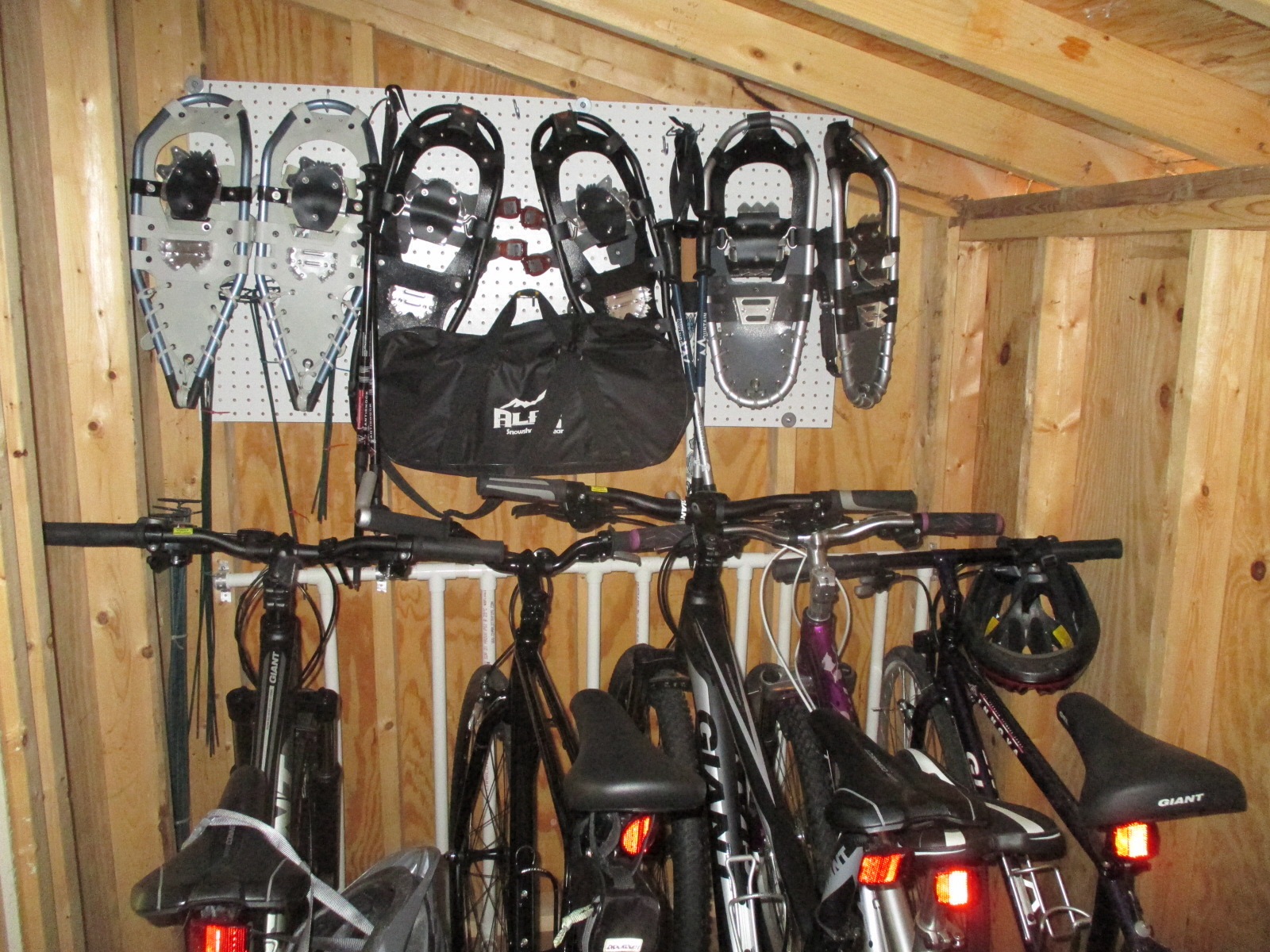
When I returned from several days away with my daughter, I found a fifth bike in my shed, and all of the bikes leaning against each other. Since my shed provides tight quarters for four bikes and the small amount of junk that usually resides there, the fifth bike had to be crammed in.

“These bikes shouldn’t be leaning against each other like they are,” I told W. “The gears are going to get bent.”

“They’re not leaning on each other,” W replied as he walked to the door of the shed and peered in. “Oh. Oops. They must’ve fallen over.”

“Right. That would be my point.” I walked back up to the house, but the seed had been planted, and a plan was beginning to develop.

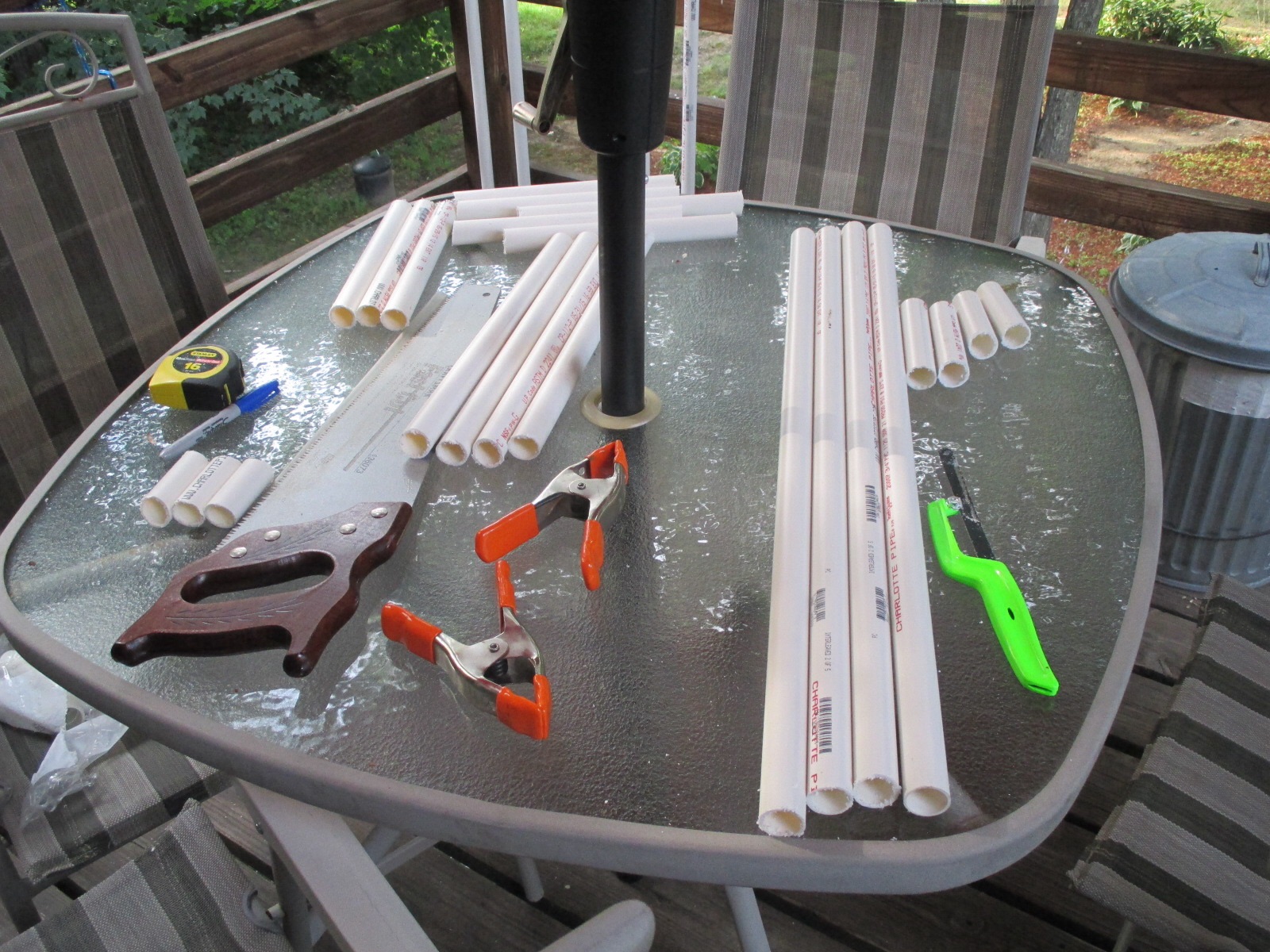
Two days later, I had several ten-foot lengths of PVC pipe, joints, and various hardware on my living room floor. Acquiring the materials was the first step of the project. But then the project leader left the house for a meeting to prepare for his next journey into the woods.

C, who had been out with a friend for the day, returned home around dinner time. He walked in the door and started to tell me about his day, and about his thoughts on the headaches he’d been having lately. He was walking into the bathroom while he was telling me this.

“This morning, I didn’t sleep late at all. I really don’t think that the headaches are from sleeping too—” His monologue stopped abruptly. He had apparently spied the “supplies” scattered on the floor of the living room. “Oh no,” he paused for effect. “What’s the new project?”

I burst out laughing. It seems there is always a project. Always “supplies” somewhere in the house. The supplies for the bigger projects end up in the living room for a time. The last time we had PVC pipe in the living room, there was a model “black hole” in the works for a school project.

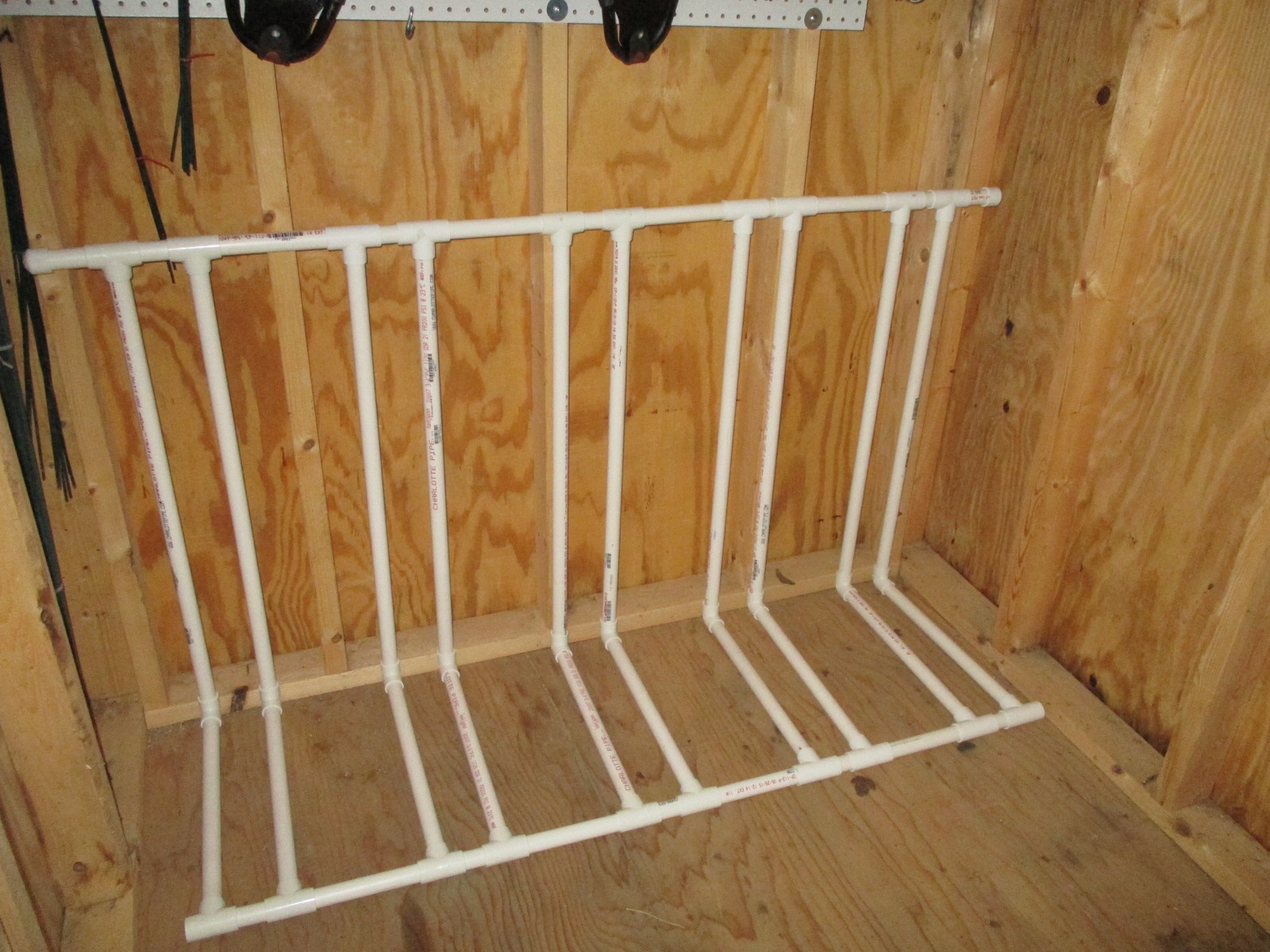
But this time, the project was for the family. Together, W and I sketched and planned; he measured the space, considered distances, and manipulated the plans to get them to work. He tried the “prototype,” and revised his design. He cut the pipe into appropriate lengths, and connected them all together. And now, we have a bike rack in our shed that keeps the bikes upright.

Isn’t it amazing what summer boredom can do?

image   image