Anomalies

DSC_0384

Yesterday’s November blog challenge prompt was supposed to be “20 facts about me,” but I wrote something different. Today, I give you Fact #1:

When I was growing up, my father owned a business that was housed in what was once the town fire house and opera house. It was an interesting combination, to say the least, and I’m not exactly sure how that worked. If there was a fire in town, did the show stop while the firemen and trucks clanked out of the building, sirens screaming? I really have no idea, and that is not really the point of this story.

The point is that the building had a working fire pole from the second floor to the first. By “working,” I mean that it was still standing and connected on both ends. And it was sturdy. And since I was a regular visitor to this defunct firehouse, I was presented with the opportunity to take up a career in pole dancing… way before pole dancing became vogue.

However, the phrase “Do not play on the pole” was part of the vernacular of my house. But I have to say, it was sooooo tempting! What kid wouldn’t want to slide down a fire pole? Every time I went down the front stairs (which wasn’t often because the stairs by the stage were the ones we typically used), my eyes would lock on the pole, and I would long to slide down it. Or try to climb up it. Just once.

But I didn’t. The words, “Do not play on the pole,” rang in my head every time I reached my arm out, brushing the cool metal with my fingertips as I walked by. And I know it really wasn’t because they thought I might become an exotic dancer.

Looking back, I realize that this was one of the anomalies of my childhood narrative. Not many people can say that their parents regularly warned them about a fire pole. So I got to wondering… what are some of the anomalies from your childhood narrative?

This Moment

cam26

[I began this post last week, right before my son left for college, but I wasn’t able to finish it. Until today.]

The car is packed and sits waiting for the inevitable morning drive to college for freshman drop off. I stare out the window, watching the silent car sitting in the drive, wondering if I will be able to sleep.

Over the past few days, I have lived in a state of internal panic. My mind is bombarded with all of the wisdom I have neglected to impart to my son, the lessons I didn’t remember to teach, the “teachable moments” that have slipped by as I carelessly thought, Next time, I’ll teach that lesson. As a single mother, the burden of guiding and teaching has fallen solely on me, and I know there are things (many things) I have forgotten.

Yet, this day is one that has been looming on the horizon since the birth of this child. It has been talked about, planned for, worked toward, and encouraged for as long as I can remember. As long as my son can remember. My son, my first-born child.

This is the child who taught me how to be a mother. When he was born, the weight and solidity of his tiny infant body in the transition between womb and world was unexpected to me. In the early days and subsequent weeks—months… years—he taught me to sleep lightly, so I could hear the murmurs and cries when he woke. By sleeping lightly, I could hear the disturbances, the coughing, the bad dreams, and the nonsensical phrases uttered in the depths of sleep.

He taught me to watch carefully to protect him from dangers. He taught me to stay a step or two away, so he could explore on his own with me always ready to catch him—physically or metaphorically—if he fell.

I pushed this child gently, urging him to step away when he held tightly and wouldn’t let me out of his sight in his first days of preschool.

He taught me to be brave in the pediatrician’s office—most notably when the doctor was painstakingly and painfully placing four stitches into his three-year-old lip late one February night.

He taught me that my instincts for him, for all of my children, were as valid as a single teacher’s decree. When his preschool teacher advised me to hold him back so that someday he might be a leader, I chose to keep him with his age-peers. He became a leader on his own schedule.

He taught me to love fiercely because childhood is just a blip on a parent’s radar.

This child is the one who taught me how deeply a parent can love.

I now realize that over the years, this child has been teaching me to let go, a lesson that will continue through his college years and beyond. Now, this child is teaching me one of the toughest lessons of all: to say good-bye. Again and again.

Now, it is my job to step back, get out of his way, and watch him continue to grow, with guidance from afar, as he gains independence and finds his path.

This child…. This young man…. This moment.


Maybe…

DSC_0022

I once read the book The Boy on the Bus by Deborah Schupack. I believe this book was born out of the very familiar and somewhat unsettling concept that children tend to change just a little bit each day, until one day you look at your kid and you think, There is something vaguely unfamiliar about this child. Is this really my child?

The book itself was unsatisfying in its lack of resolution, but the premise of the book is that the boy who gets off the school bus one afternoon is not the same boy who got on the bus that morning. He looks almost like the same boy, but there are things that are just a bit off about the child.

I would like to admit this is a fairly universal experience for parents. Well, it is for me, at any rate. The child who leaves my house in the morning is sometimes very different from the child who comes home that afternoon—whether in mood or demeanor. And every now and then, the child even looks just different enough that I question myself. Is this really my child? Maybe not.

Earlier this summer, when I retrieved a child (my child) from a week at camp, I hesitate to admit that I almost didn’t recognize him. It had only been a week, after all. What kind of mother doesn’t recognize her own son after only a week??

Well, first off, he was wearing a baseball cap. The same red baseball cap that adorned the heads of all of the campers on that day. And my kid doesn’t wear a baseball cap. He hasn’t since he was about six or so. Second, all of the campers were dressed alike. And third, he had gotten a haircut right before he left. His hair was a bit shorter than usual, making him look older than I was used to. Therefore, I would attribute my brief lapse in recognition to the combination of those obscuring traits.

It took me an extra minute or two to find my child that day. But even on a regular day, I can look at one of my children, recognize something unfamiliar, and have the unsettling thought, Maybe this is not the same child….


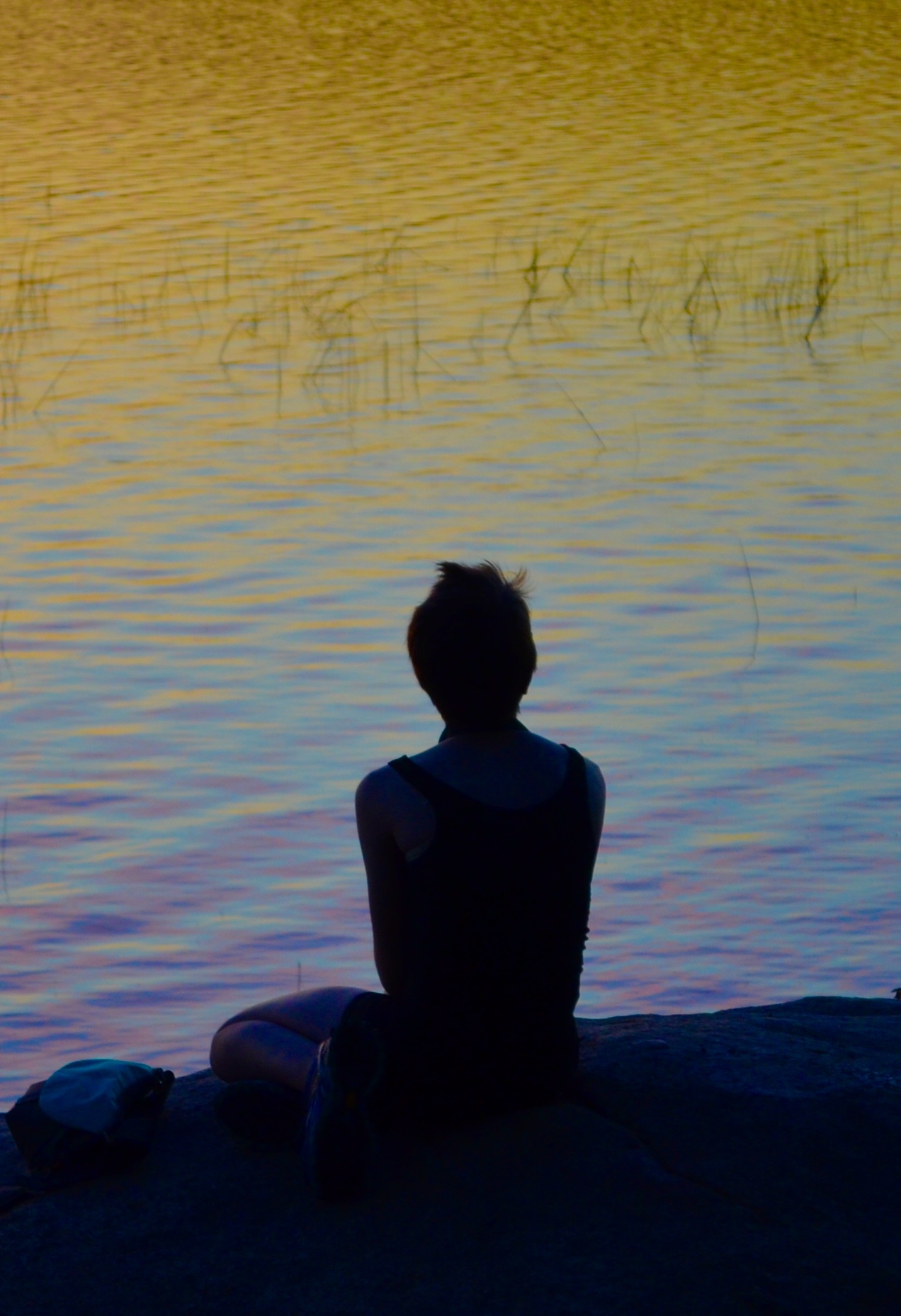
*image is a silhouette of my child at sunset

Mother Image

DSC_0360

I sit in my car listening to NPR, staring out across the lake. A group of water-fowl float in a line in the middle of the lake, lazily drifting across the surface. The story on the news is focused on discussion of the opening ceremonies of the Olympics, the troubles in Rio, and the profound separation of the haves and the have-nots in that city.

It is peaceful and quiet at the camp. The campers left for home earlier in the day, and only the staff remains, finishing up their Friday staff meeting. Every now and then, a burst of deep male crowd voice breaks the silence. First, a cheer—a group of young men voicing the same words loudly and in unison—bursts from the meeting hall up the hill. A little while later, laughter. And still later, applause.

The voices are deep and grown up, and can’t possibly include my youngest child. But then again, they can. He has grown and changed—and continues to do so—on a nearly daily basis over the last year or so. The image that I have of him in my head doesn’t match the reality of who he is and who he is becoming. He is part of this group. He fits in.

Somehow, my mother-image of my children is not keeping up with their growth and their approaching adulthood. My image is mired in memories and the experiences of raising them from their earliest days through the years up to the present. Every moment blends together to create the image that I hold of them—always younger than they truly are unless they are standing right in front of me.

Some people might say my mother-image needs adjusting, but I think it is fine just the way it is. At least for now.

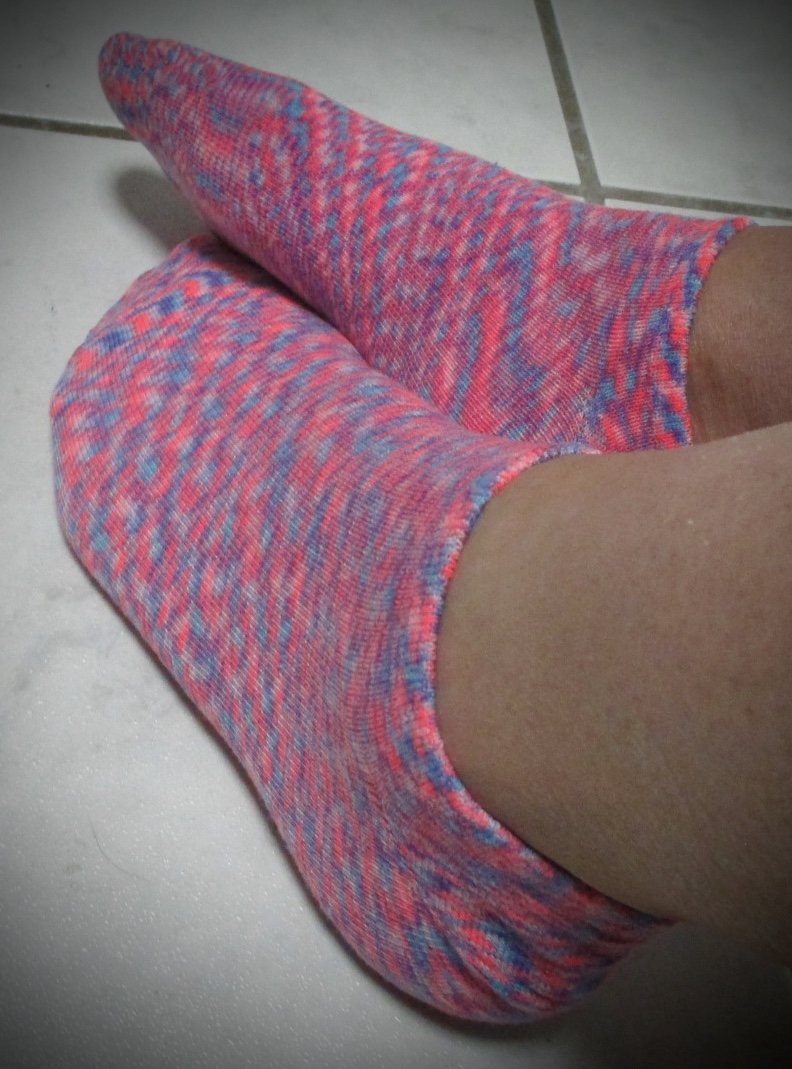
Socks and Stockings

IMG_2342

I went out on an errand with my son this morning, and we came across an interesting sight. On the side of the road, there was a man walking his bicycle up the hill. That, in itself, is not an unusual thing to see. However, this man was pushing his bike up the hill in just his socks because he was carrying his shoes.

Observing this from the passenger seat, my son said, “Why is he walking his bike?” Because from his perspective, if you have a bike, you should ride it.

My mommy-brain kicked in. “I am more concerned about the fact that he is carrying his shoes and walking in stocking feet!” I exclaimed. Then something in my mommy-brain started to dial back what I had just said.

Stocking feet…

 When was the last time I heard that idiom? Had I ever used it with my son before? Did he even know what that meant? Does anyone know what that means anymore? And I started to think about the word “stockings” and the fact that we never refer to our socks as “stockings.”

Over the years, when my children run through the door and out onto the walkway without their shoes on, I will say to them, “What are you doing outside in just your socks?” I have threatened to make them buy their own socks when walking on the pavement creates holes in their soles. But I don’t remember saying anything to them about “stocking feet.”

This is a term from my childhood. I can still hear my own mother clearly telling us not to walk around in stocking feet, that we should wear shoes or slippers or something. I half expected to Google the term and see—before the definition—the notation “archaic.” I was relieved to see the notation wasn’t there, and the examples were fairly current.

Perhaps I have used that term more recently than I remember because my son didn’t question my words, and I didn’t say anything more about the man walking his bike and carrying his shoes. Even still, my mommy-brain is stuck on that sight.

Yesterday…

IMG_6705

Yesterday… I held my first child in my arms—all six pounds of him—as he wiggled his feet and studied my face, searching for recognition and committing my features to his brand new memory.

Yesterday, my first-born said good-bye to his childhood, adulthood dawning the next morning despite the fact that his birthday wouldn’t be official until late in the day.

Yesterday… I held my fingers out for two chubby hands to grasp, and I bent over to toddler level to “walk” him up and down, up and down, up and down the hall while he smiled his gleeful smile.

Yesterday, I stood on tippy toes to hug my son good-bye before school. The morning good-byes are now bittersweet, and I (at least) am holding on to each and every precious one.

Yesterday… I sat with my son at preschool because he didn’t want me to leave him behind. I sat in the classroom for several of the first few days, quietly watching, until he grew comfortable with the idea of me leaving.

Yesterday, my son walked out the door—too rushed for a decent breakfast—in his need to pick up his girlfriend and consult with this friend and that group adviser before the school day was underway.

Yesterday… my son spent hours at the kitchen table with paper, scissors, glue, stickers, ribbon, clay, etc. crafting some of the most impressive art projects seen in the past few decades. His eyes would be bright with ideas and possibilities as paper shards scattered across the floor where they would stay until the vacuum came through to gobble them up.

Yesterday, my son finished assembling the high school literary magazine. As with his projects of old, he was excited to watch it come together. To move from individual pieces of writing and artwork to a finished compilation, bound into a single, cohesive whole that will be distributed to the student body.

Yesterday… my son graduated from kindergarten. It was a warm, sunny day, and the room was sticky from little kid use. When the ceremony was over, we celebrated with ice cream sundaes, pictures with the teacher, and some playtime on the playground before we left the tiny “campus” to move on to a bigger school and a full day program.

Yesterday, my son’s graduation announcements arrived in the mail. The paper was stiff and fresh and official and embossed with the school seal and His. Full. Name. He promptly reported that his name was misspelled, compelling me look more closely. The glint in his eye and his sense of fun have not changed or faded over time.

Yesterday, when I was talking to my daughter about her brother’s birthday, I accidentally referenced it as his 13th birthday rather than his 18th birthday. Because in my mind, he will always be some combination of ages that is far less than his actual years. And because…

Time. It’s like that. It bends and warps and does crazy things to our brains, making us think that moments have stood still when years have passed.

Yesterday. So many yesterdays.


*Image is a photo taken yesterday by my talented daughter and used with her very gracious permission

Editorial

IMG_2177

“I don’t know how to write an editorial,” W told me when I arrive home from work one day this week. “And I need to write one for language arts.”

I was rushing around to get dinner started before I had to run out again to pick up J from theater practice. “Why don’t you Google it, look at a couple examples, and I can help you when I get back from picking up your sister?” I acknowledged his statement, though I didn’t completely register what he was saying.

When I returned, he tried again. “I have to write an editorial from the point of view of a character in our book, and it has to be ‘historically accurate.’ Can you help me?”

“What do you need help with?” I asked.

“I don’t know how to write one.”

“Didn’t your teacher go over it in class? She must have given you some examples,” I queried, hoping he would think back to the class and remember what he was supposed to do.

“Not really. She never told us how to do it.”

“I’ll bet she did, but you shut off,” I stated, probably more bluntly than I should have.

“What?” he asked, unsure of my meaning.

“You shut off,” I repeated. “Your teacher was talking about it, and you decided it was information you would never need. So you shut off.” A smirk of recognition crept across his face.

“She never talked about it. She gave us newspapers, but she never said we’d need to know it.” Imagine that!

I stifled a groan, and I hoped he couldn’t hear my eyes rolling….

Surprise Memory

IMG_2158

I was cleaning a drawer today, on a crazed hunt to find matches for the socks that had become separated from their mates months ago. Sometimes, the matches reappear in a future batch of laundry, and the individual socks linger in the drawer, one buried and the other floating near the surface. Once in awhile, I am motivated enough by the mess that results from my daily “stirring” of the drawer’s contents that I take the time to sit and straighten things out.

This morning in my straightening, I came across a pair of socks that I put in the drawer for safe-keeping, a pair that I frequently forget I have saved. It is a pair of teeny tiny baby socks that I received before C was born, 18 or so years ago. Each time I come across them, they catch me by surprise. The socks are so tiny that it’s difficult to believe he actually wore them in his first months. But he did.

Each time I stumble across these socks, I am reminded how quickly time passes. I finger the soft material as I mentally measure the passage of time in the exponential growth of my children. I click through each of their stages, from infancy to now.

I see smiles and a hint of mischief in their eyes, feel the warmth of their tiny hands in mine, remember random moments like how each of them would lick soap off their hands when I washed them after supper. I can hear their little voices, their footsteps, their cries. The socks bring back images and memories of so many of the things that have happened in our lives: the funny things they said and did, the experiences we had, the life struggles we faced. All of these things we did together.

Each new rediscovery of these socks is a gift. I find the socks, Itake a walk down memory lane, and then I place them back in the drawer where I can find them again in a month, a year, or two. Perhaps when I discover these socks again in six months or a year, when C is off at college, the walk down memory lane will be even more bittersweet.


[Image is a photo of the socks in the hand of the child who once wore them.]

Teens and Hints of Adulthood

13001199_1733344030236939_1103181138293098902_n

Twice in the past week, I have heard about a teen who has been kicked out of his or her home at 16 or 17 years old, essentially (in the parents’ mind) “aging out” of the need to be sheltered, nurtured, and—no doubt—financed. In one case, the individual came home from school on his sixteenth birthday to find his belongings outside the house, the locks changed, and a note on the door saying, “You’re 16. Get your own d**n place.” Happy birthday. In the other case, the mother decided she needed space for her newest project, so she told her daughter, “You need to leave as soon as possible.”

In both cases, the understandable response of the teen in question was to cry. No doubt, these tears originated from an array of emotions: grief for the loss of a “parent,” sadness and self-doubt at the depth of such rejection, fear and anxiety over the completely overwhelming thoughts involved in, what happens next? And in both cases, even though I do not know either of these individuals, my heart breaks for the young adults who are not yet ready to fly, but are being pushed out of the nest.

I have worked with teenagers for thirty years [which definitely makes me sound old…]. I have worked with teens in classrooms, in dormitories, on the playing field; I have worked with teens in large groups, small groups, and one-on-one. I have been a teacher, a coach, an advisor, a dorm parent, and a parent. From my [somewhat extensive] experience, I will say, it is a rare kid who—at 16, 17, or even 18—is ready to be self-sufficient. It is an even rarer kid who can pick him or herself up from such devastating total parental rejection and move forward unscathed.

As I look at my children, I can see the hints of adulthood emerging from their more-adult-than-child physical selves. I see responsibility coming through in more areas of their lives each day. I see them beginning to take the lead in situations in which they might have been followers in the past. I see glimpses of the adults they are becoming.

But their “formative years” are not over just because they are teens or they reach the age of majority. As they begin to navigate some of the biggest decisions of their lives to date, the groundwork may have been laid early in their lives, but the direction, the guidance… these things are such an important part of the parenting process. Guidance in these big decisions will help my children to learn to be better decision makers as they proceed through their lives. My willingness to be available as a shoulder, an ear, a sounding board will help my teens to grow their self-confidence and learn how to consider all sides of an issue. And it will let them know that they are not alone. If they stumble, I will be here as a safety net.

Leave my kids to their own devices and kick them out of the house? No friends, my job here is far from done. I only hope there is someone to pick up the pieces left by the parents who are done.


[Image is a picture drawn by my daughter and used with her gracious permission.]

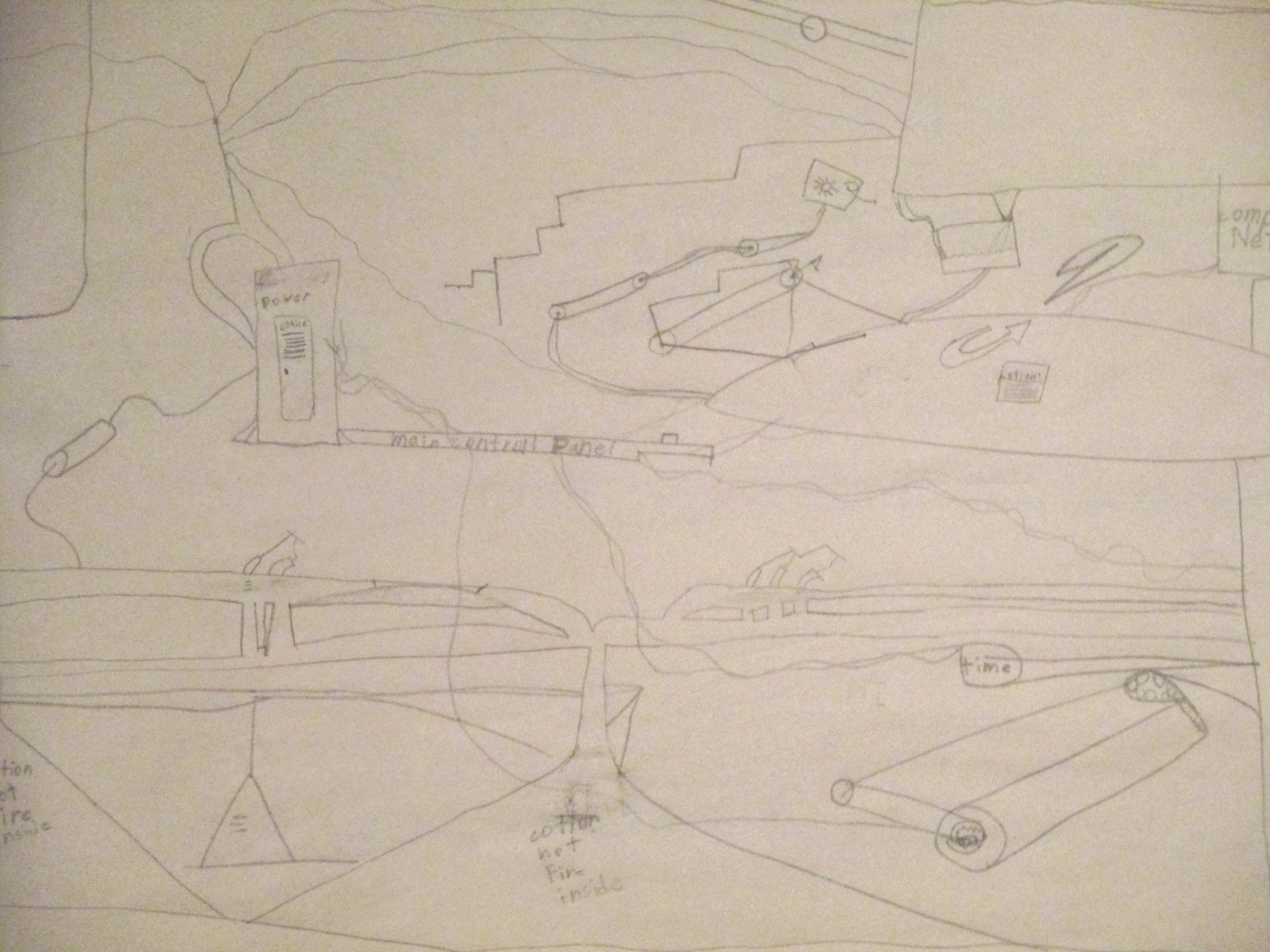
Yesteryear #atozchallenge

This evening, I was looking through a closet to see if we had some black drawing paper. I didn’t think we actually had any, but since we have a number of art supplies acquired through a factory clearance sale, and I wasn’t exactly sure of our “inventory.”

As I looked, I came across a tattered pad of newsprint. It was an 18×24 pad, and I could picture my children much younger, lying on the floor drawing sprawling pictures. Nostalgic, I pulled out the pad, and flipped it open.

On the first page, there was a child’s drawing of an airport. Planes sat on runways. There was a plane on a flatbed trailer, and some maintenance vehicles. “What nerd drew that?” W asked, looking over my shoulder. He stepped in closer.

IMG_2148

I turned to the next drawing. Wind turbines, solar panels, and water wheels dotted the landscape of the large white page. I smiled at W. “There’s your answer.” Only W was constantly producing drawings that had to do with alternate energy sources, vehicles, geography, etc. And as we looked through the drawings, this pad held it all.

By the time we had flipped the last page, we were laughing at the spelling he had used in labeling various elements of the drawings, the complicated yet simplistic concepts, the lists of supplies necessary to build some of the things he had drawn, and the calculations—always in extraordinarily large numbers—he had completed.

At the same point, we realized we had stumbled upon something that C would later label “a keeper.” This pad of newsprint was truly a gift from yesteryear.

IMG_2149   IMG_2150