Baking

IMG_1578

I was making fresh strawberry scones the other morning.

I dumped a small pile of flour on a piece of waxed paper so I could flatten the dough and cut it into scone-sized triangles.

“Is that your bench flour?” C asked.

“My bench flour?” I looked at him, unsure of his reference. “You mean this pile here? Is that what you call it?”

“Yeah. And you save it when you’re done.” I spread the flour with my hand and plopped the dough onto the flour where it (hopefully) wouldn’t stick. I rolled it into a ball, worked it for a minute, then started to spread it out.

“You save it?” I asked, a bit incredulous, knowing what my ‘bench flour’ looks like when I’m done. In fact, as the dough stuck to my hands, I would rub little bits of dough off my fingers and into the ‘bench flour.’

“Why wouldn’t you save it?” C asked. “It’s just flour and little pieces of pie crust.”

“Well, not really….” I thought for a minute. “What if you are making chocolate scones? Then your ‘bench flour’ has little bits of chocolate dough in it. When you roll out your pie crust, it gets chocolate in it.”

“That’s half the fun,” C replied, mischief creeping into his tone. “It’s like a treasure hunt. ‘What will I find in my bench flour today? Oh look! A whole blueberry!!’”

“That’s gross,” I stated, but I laughed in response. “I think I’ll throw out my bench flour. Thanks.” Funny or not, there will be no “treasure” traveling between my baked goods.

But from here on, every time I eat something from a bakery, I will wish there were some things I did not know.

Settings

One of my least favorite chores is buying groceries. I don’t really know why it’s my least favorite, other than it takes time out of my schedule; I have to physically touch every object I buy multiple times (way too many, in my book); and it’s EXPENSIVE (and getting even more so by the second). Nowadays, I tend to get groceries on my way home from work, which delays my arrival home AND our family dinner.

When my children were younger, we all went to the grocery store together much more often than we do now. Occasionally, when I had only a few items and I was feeling particularly adventurous, we would use the “self-scan” registers. One time, when C was about 10 or 11, he ran ahead of me into the self-scan lane, and hit the button on the screen indicating that we wanted our checkout experience to be in Spanish. Um… what?

First of all, it is important to understand that throughout junior high, high school and college, I took French. Back then, we didn’t have exposure to foreign languages before we hit 7th grade, and at that point, we had to choose our career language—the language we would take through high school. Nobody ever switched. Thus, I know English and French (and a little bit of Greek from a two-month exchange trip back in the dark ages). No Spanish. None.

I stared at the screen with no idea what to do. How do you fix the language setting when you can’t understand the language in which the machine is prompting you? Ugh! Out of frustration, I moved to another register and let that one time out and reset itself. And I made a mental note not to let C beat me to the self-scan registers anymore.

Yesterday, a new laptop arrived in the mail for C. He was in the living room running through the set up procedures, and I could hear him reading the options aloud. “Set language….” And BAM! Just like that, I was transported back to that day in the supermarket. I could see the sly smile he gave me that day, just like it happened yesterday.

“Set it to Spanish, C!” I called to the living room. “Just like you used to do to me in the grocery store!”

He snickered. “Yeah. Wouldn’t that be fun?”

Yes, I thought, my own sly smile brightening my face. It would be kinda fun, wouldn’t it?

Nothing Good

One day this week, my daughter came downstairs for breakfast. She opened the fridge and looked inside. She stood there just a moment too long, surveying. She sighed, “There’s nothing good in here.” No, there is never anything good to eat in my house.

This is one thing I dread about school letting out for the summer. My children will check the refrigerator, the cabinet, wherever, sigh and declare, “There’s nothing good to eat.” In an hour or so, they will come back to stare into the fridge and repeat the process. They don’t seem to notice that I have not left the house and no one has entered. “There’s nothing good to eat,” is a complaint I hear daily.

Last night, I made a batch of blueberry muffins—a dozen muffins in all. I got up this morning to make lunches and get the kids out the door. By the time I sat down for breakfast, the muffins were gone.

Monday afternoon, I came home from an errand to find C, who had just arrived from school, sitting at the kitchen table downing a rather large bowl of pasta salad. Actually, it was the “Family Sized” bowl, and I know this because we were going to have it for dinner.

“What are you doing?” I asked, trying to temper my accusatory tone into curiosity. I didn’t want him to think that I was accusing him of doing something wrong when he had made a relatively healthy snack choice.

“Mom!” he nearly yelled, immediately defensive that I should walk in and catch him eating, of all things. “I eat four meals a day! My school lunch is at 10:30. You can’t even call that lunch.

“So this is one of your meals?” I questioned.

“Yeah. This is my lunch!” Well, it’s good to know my pasta salad wasn’t merely a snack, I suppose.

And during the warmer weather—like now—I try to keep some cut up fruit in the fridge. I cut up an average of two whole watermelons a week. I cut it into bite-sized pieces and put it in a bowl, so it will be cold and delicious and ready to eat. Every time I think I might snack on some watermelon, I go into the fridge and it’s not there. The empty bowl sits in the sink with only a bit of pink juice remaining in the bottom. One of the teens in the house has consumed the contents of said bowl, though he or she blames another. “I only ate some of it. C ate the rest!” or “J ate the last piece….”

Come to think of it, I’m beginning to understand why my kids say, “There is nothing good to eat!” I can’t find anything, either….

Bribes

For much of the week, the students at the school where C has his culinary program have been taking a new, way too time consuming standardized test (because another test is a good use of their time). So there has been no Voc program first thing in the morning. Needless to say, he has been getting up a few minutes later than usual. Friday morning, he was back to the regular schedule.

On Thursday night, he made it a point to tell me that he needed to get up in the morning; that I should not let him sleep in, as I have been. That is an interesting interpretation. I have been getting him up as usual, then calling to him more than usual—and more urgently than usual—to get him out of bed. “Make sure I’m out of bed early in the morning,” he told me.

“I am not the reason you have been sleeping in,” I informed him. “I have tried to get you up. You choose to stay in bed.”

“I know, but that’s because I don’t have to leave as early. Tomorrow, I need to get out of bed because I have to go.” True enough.

In the past, I have used a number of tactics to wake this sleepy head. When he was little, I would roll up socks and throw them at him. I tried a water gun once. I would sing to him. I tried tickling his nose. I put rings on all of his fingers while he slept. I contemplated applying make up….

Now, I have one tried and true way to wake my reluctant teen and get him moving, but it required just a bit of advance planning. I pulled out my supplies and started baking. We would have raspberry muffins for breakfast!

In the morning, after waking him, I made one simple statement. “If you don’t get up, all the raspberry muffins will be gone!”

W walked by me, fully dressed and ready for the day. “I’m going downstairs to eat all the muffins!” he reported.

That did the trick! I just hope C can find someone to bake for him when he goes off to college….

IMG_1552

3D Printers

We have been sick at our house for what seems like forever. The normal winter viruses hit hard on the first day of spring, and they haven’t stopped.

C has spent the spring struggling with bronchitis, pneumonia, bronchitis, etc. It’s a nasty cycle, and with the number of viruses that have gotten him, it just keeps cycling. The rest of us have been cycling in and out, so there are generally two of us sick at any given time. Enough already.

Meanwhile, W has spent the spring talking about 3D printers. He wants one. Badly. He also has enough money saved up to buy one. The kid doesn’t even have a job, but somehow, he has collected enough money in his bank account to pay for a 3D printer. A friend of his has the one he wants, so he knows how it prints pretty well.

Every chance he gets, he talks about 3D printers. At dinner: “If I had a 3D printer….” At breakfast: “Do you know what I could do with a 3D printer?” After school: “I could print you one… if I had a 3D printer.” While I’m cooking: “So, I was reading about 3D printers….”

After awhile, I just go with it. Whatever comes out, I fly. “So, this 3D printer I want…” he starts in for the gazillionth time.

“Did you know you could make body parts with a 3D printer?” I respond, without missing a beat. “You can print heart valves and ears. They are even using them to make affordable prosthetic limbs. You could go into business. I’ll bet you could make a lot of money!”

He looked at me, speechless for just a split second. I had stopped him in his tracks. He shook his head. “Not with the one I’m getting.” He paused to breathe, as he does when he is trying to shift the direction of the conversation.

“Really…” I jumped in before he had time to start his new direction. “If you could figure that out, it would be great. Think about all the people you could help!”

“Mom. Stop.” A bit of frustration was evident in his tone. “Those printers cost thousands of dollars. Mine won’t do that.”

“I KNOW!!” I said, an idea taking shape in my head. “You could print a new set of lungs for your brother!! Clearly, he could use them.” I pointed to the coughing, hacking, wheezing (and laughing) C across the table.

“Well…” said W, looking at me and smiling broadly. “If it means I get my 3D printer…. I can figure it out!”

Going nowhere

We were on vacation recently, staying in a place that has all sorts of fun things to keep active kids of most ages occupied and entertained. One of these attractions is a Fun Barn in which there is a bounce house, a ping-pong table, a climbing wall, and an area in which kids (um… and adults) can have nerf-ball battles. This area is caged in with netting and has hundreds of foam balls with several air powered shooters strategically placed around a climbing structure with a slide, making it easy for groups to have rousing battles. So we did.

It was after dinner on our last night. As four teenagers and two adults, we were able to have quite a battle before some younger children showed up, and we had to turn the energy down a notch. It was getting dark by then, so we decided to leave the Fun Barn to walk back to the lodge. It was chilly for the end of April, but the days were getting longer, the snow had finally (mostly) melted, and the flowers were starting to bloom. We could hear spring peepers off in the distance.

As we exited the Fun Barn, J wanted to go to the playground. It was getting dark, and the sign posted on the playground fence claimed the area closed at dusk. But a simple sign would not deter J. “Let’s just go see,” she said, running ahead with W to check out the playground. “The chain’s not up!” she reported of the yellow plastic chain used to discourage after hours playground use.

Gleefully, the two of them slipped through the gate and ran to the merry-go-round. Not a carousel merry-go-round, but a playground merry-go-round—the kind that most schools did away with years ago as children flew off when they spun too fast and couldn’t hold on. My two each grabbed a side and started running to get the merry-go-round moving.

“When I say THREE, jump on!” called W. “One, two, THREE!” They both landed with the muffled thud of rubber soles on metal platform. They hung their heads off the edge, hair flying up in the centrifugal force. They completed this exercise several times before their activity diminished to lying on the platform while the movement slowed, looking up at the branches of the tree above.

“Mom, can I have your camera?” J asked, and I handed it over. She started taking pictures from her spot on her back looking up at the sky. She spent several minutes clicking, checking the the screen, sighing and trying again.

What she didn’t realize was that it was too dark for pictures. And she also didn’t realize that what she wanted to capture was not the branches above her and the moon in the background. She wanted to capture the moment, the feeling of a beautiful spring night, vacation, and family time spent together. She wanted to capture the spinning, the breeze, the feeling of going nowhere, and the thrill of the ride.

IMG_1519

Modifications

One day this week, I went to the basement to take care of the cat boxes. I had an empty plastic bag in my hand; it was rustling and I was doing my normal “sing my way through the house” thing. It was pretty obvious that I was coming, so I am not sure why I surprised W when I entered the basement hangout. But I did.

“Oh, hey there,” he said, a tone of I’m not doing anything I shouldn’t be in his voice. He had quickly put his hands in his lap, removing them from the counter where he was working, and I sensed he was trying to hide something.

I glanced at the computer screen. It appeared that the computer was off, but since I had been singing, I decided to ask, “Are you talking to someone?” He often comes to the basement to FaceTime with his father or his cousin.

“No.”

“What’re you doing?”

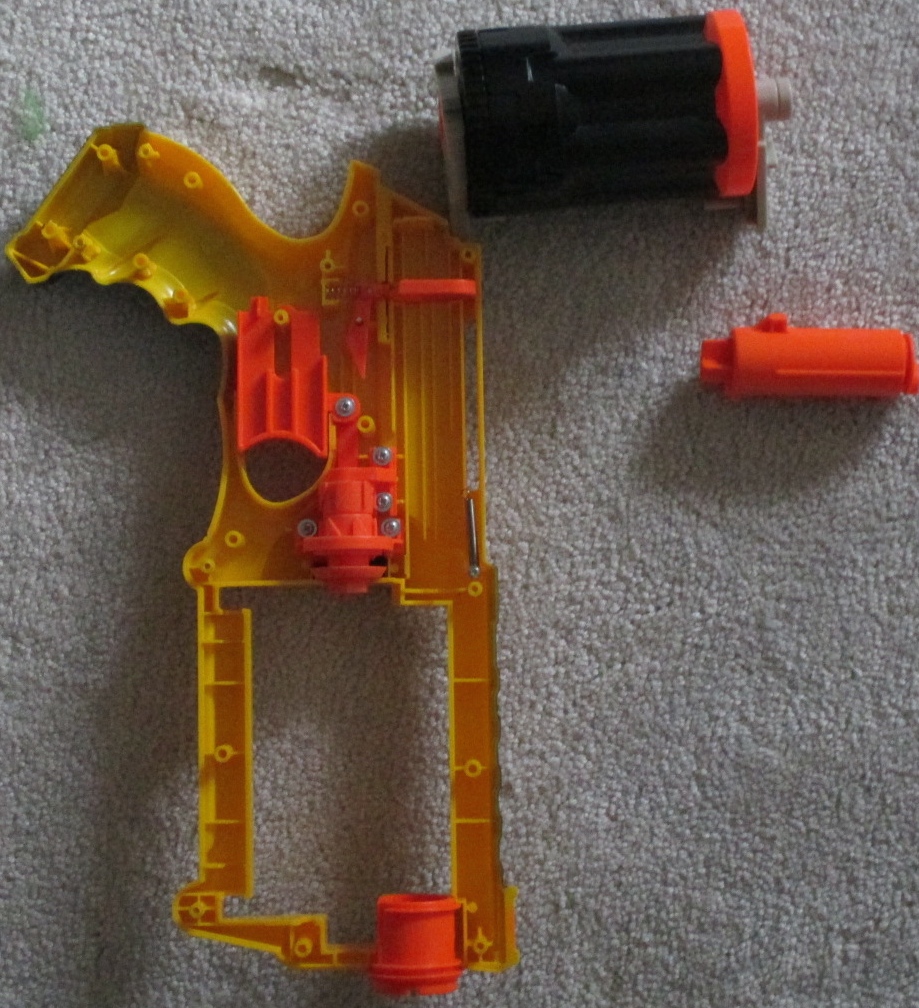
“Nothing,” he replied, still watching me with an overly guilty look on his face. He did not resume whatever activity he was involved in before my arrival to the room. I studied him for a long moment, but I couldn’t figure out what he was up to, so I went about my business scooping the litter box. But then, something bright yellow caught my eye. His nerf gun sat on the counter in front of him, in the beginning stages of dissection. With all of the projects, pieces of projects, and electronic components on the counter, I almost missed it.

“Got a project going there?”

“Oh,” he said, looking down like this was the first he’d heard of it. “Yeah…. I’m trying to automate my nerf gun. And make it faster.” He grinned.

“Hmm,” I replied, my tone remaining matter-of-fact. I have learned over the years to maintain neutrality whenever possible. In the back of my mind, I always keep a thought of the Radioactive Boy Scout and the ways in which projects can get out of hand, just as a reality check. Really though, it’s a nerf gun. “Do you think you can do it?”

“Yeah.” He paused. “It does say here, ‘do not modify darts or dart blaster.’ But… you know.”

Yes, I do know. If you are a boy who likes to figure out how things work, if something can be taken apart, if there is even the possibility that it can be modified (and improved)… well, why not?

Carry on, then.

IMG_1456

Snacks

The idea of a snack in my house has been evolving lately. It used to be that the kids would ask for a snack, and they wanted some crackers. I would put some crackers in one of our little plastic bowls with a handle, and they would sit quietly in front of their latest art project or a favorite tv program and eat the crackers. As the kids grew, they began to add a little protein to their snacks—yogurt, string cheese, peanut butter. For the most part, my children have been pretty good about eating healthy snacks.

Fast forward to the teen years. Well… to today. I had just arrived home from work and was preparing to make dinner. Mondays involve lots of evening activities, so dinner is quick. I opened the fridge and started to pull out the leftovers to go with the pasta that was happily boiling away in a pot on the stove. I found a great variety of leftovers: a bowl of baked ziti, some deviled eggs, a chunk of meatloaf. I studied the meatloaf as I removed it from the fridge. Huh… I would have sworn the piece was (quite a bit) bigger, but I have moments in which my memory is not what it used to be. But then a thought crossed my mind.

“C, did you have some meatloaf after school?” I questioned. Total stab in the dark here.

He looked up from his iPad, staring at me blankly for a long moment. “I might have.” He turned back to his iPad, no further explanation. Really, none needed.

“Protein,” W said walking by me through the kitchen. “Growing boys need protein.”

Yep. Meatloaf has now become an acceptable snack. Along with spaghetti and meatballs, chicken parmesan, a ham and cheese sandwich (with some pepperoni thrown on for good measure), half a dozen eggs­­—you get the picture.

I’m going to need a third job….

Crying

The other day, my cats were bad. VERY bad. In the midst of a scuttle, they tipped over a kitchen chair, the chair fell into my oven, and the exterior glass of the door shattered. Glass skittered from one end of my tiny kitchen to the other, littering the entire floor. It was a mess. And it was not funny. At all.

I was in the kitchen when it happened. Had I been just a foot or two closer, I could have intercepted the chair. Instead, I watched the shattered glass cascade to the floor in disbelief. It was Friday, and I would clearly be living with an oven missing its front for a few days, at the very least. After calling to order a replacement part, I posted a picture on Facebook because really, who would think cats could do such a thing?

It wasn’t long before the four-year-old neighbor girl came to my door, sent by her parents, who were in the yard nearby. “I came to see if you’re okay,” she said in her little voice, a shy smile on her face.

“I am,” I assured her. “Do you wanna come in and see what my cats did?” She nodded. “I have to pick you up because there’s glass all over my floor.” I opened the door and lifted her into my arms. I gingerly tiptoed through the broken glass so she could see over the kitchen table.

Her eyes grew large as she stared at the mess, contemplating how cats could do such a horrible thing. Finally, she turned to me and studied my face. “Why are you not crying?” she asked, unable to contain her child curiosity.

Hmm. To tell you the truth, crying had occurred to me only as a briefly passing emotion. Until she suggested it. And once she had suggested it, I found it to be quite a valid suggestion. Perhaps as adults, we don’t allow ourselves to cry nearly as much as we should. After all, if I had cried in this situation, she certainly wouldn’t have questioned it. So crying was now a thought that was floating around in my head.

But there was another thought that was more urgent, tugging on a tiny corner of my brain, threatening to tear a hole unless I faced it, head on. My cats had made a huge mess of my kitchen and caused destruction that I would not have believed possible had I not been standing three feet away when it happened. I was home only because it was a holiday on my work calendar. My children were still at school.

Had I not been home that day, I would have walked in to this mess. (No one would have cleaned it up, but that’s a story for another day). I would have seen the glass scattered from wall to wall. I would have noticed the gaping hole on the front of my oven. And I would have blamed the boys.

When you have two nearly grown boys who feel the need to constantly slam each other around, why would you believe such destruction was the result of a tussle between two ten pound cats? The boys would have argued with me, explained that they had found this mess, that something must have happened while they were at school. I would not have given them the benefit of the doubt. After all, who would believe such a thing?

And so I have this newfound awareness that perhaps I am too quick to judge. I am too quick to point fingers. I am not open-minded enough to listen to slightly far-fetched stories. Perhaps every situation demands that I listen, that I understand, and that I give others the benefit of the doubt. Perhaps there are circumstances that I might not be willing to consider before jumping to conclusions.

So the question remains: why am I not crying? I’m not sure, but now that I have processed all that came of this incident, maybe I will. And I will definitely leave that option open for the next time….

IMG_1434

Perspective

Every now and then, we catch a glimpse of our children’s lives through reflection on our own experiences, past and present. Recently, I had one of those moments… when my thoughts on my children’s attitudes suddenly clicked into place in a new and unexpected way. It was an “ah-ha” moment, of sorts.

Over the weekend, I was introducing my sister to some people who grew up one town over from our own hometown. Since it was a small town in a rural area, growing up in the next town implies that we shared a fair degree of history. We knew some of the same people, competed as rival schools in sports, hung out at some of the same places, frequented the only local movie theater, and shopped in the same stores.

As we briefly discussed the fact that my sister graduated from a different high school, my mind wandered back into the past. My sister and I had different teachers. And just like any school, a handful of teachers were known to be “difficult,” more in their behavior and attitudes toward students than in their educational expectations.

For the most part, I had teachers who were memorable in positive ways: they wanted to teach, and they genuinely liked working with students. However, there were exceptions. There were teachers for whom unflattering nicknames had been passed from one class to the next for near generations. And it was one of these teachers with just such a nickname that I stumbled over while I was taking my ‘mind journey’ down memory lane over the weekend.

And after stumbling, I sat sprawled on memory’s path, realizing that we hadn’t been very nice back in high school. And then, I was pulled to the present, to the words I had recently said to my son when he called one of his (male) teachers a diva. “You shouldn’t be disrespectful to your teachers, C. They have a tough job teaching you guys all the things you don’t think you want to know.”

Gulp!

There I was, stuck straddling a line. As a teacher myself, I would normally advocate for the teacher in this instance. Getting up in front of a classroom full of apathetic, sometimes ungrateful (insert year here: sophomores, seniors, you name it) day after day is not an easy task. It can be brutal.

Then again, being a kid in a class with a teacher who has forgotten what it is like to be a teenager—a teacher who hasn’t updated his or her approach to teaching since the age of the dinosaurs, and chooses not to (ever) smile—is not easy, either.

Suddenly, I realized that what I perceived as “disrespect” was really something of a rite of passage. As we work to figure out our relationship with the world and how to deal with people we don’t necessarily want to get along with, but need to get along with, we seek to find a comfortable place to fit them into our experiences. We use nicknames to diminish these people so they are slightly less intimidating and they fit more neatly into our experience. For teens, this can be the way they survive the classes that otherwise threaten to bore them, annoy them, or terrify them.

And straddling this line between kid and teacher is the constant battle I face as a parent. This is the battle that determines if I am successful or not. I am constantly faced with the need to remember what it was like to be in my children’s shoes—whether they are teenagers or toddlers, while still teaching the skills necessary for them to function in a world which requires an ever changing mix of diplomacy, sensitivity, and candor.

For the most part, my children are respectful and polite when they walk out my door and into the world. Perhaps then, they really are learning what they need to know to make their way in the world. Perhaps a little name-calling, in the right context, can help to put relationships in perspective.