Stage directions

IMG_1555

Always, there are the insights of people who are part of our lives, but just outside the inner circle of our immediate home life, to bring an objective perspective to what we do. With a word, a phrase, we suddenly see our everyday actions in a different light.

Last night, my sister stopped by my house on her way home from work. I had picked up some plants that she wanted for the garden, but I did not want the responsibility of keeping them alive through the predicted weather of another night of drought or severe thunderstorms—either seemed a distinct possibility. So she agreed to pick them up.

She arrived as we were eating dinner, and since part of our meal contained none of the ingredients that trigger her allergies, I offered her some food, and she accepted. Which is a long-winded way to say she hung around for a while.

After dinner, there was some talk of who was responsible for the dishes, and it was determined that it was J’s night. She promptly left the room, stating that “the leftovers needed to be left-overed” before she could begin. She spent the next ten minutes flitting in and out of the kitchen—complete with her J-like theatrical flourish—while I talked with Auntie.

The cat came in from outside and proceeded to regurgitate the organic material he had ingested—as cats do—onto the kitchen floor. It was a lovely addition to the non-stop-ness of the evening.

J flitted back into the kitchen. “Steps wide over the cat vomit,” she announced as she lifted her foot in an exaggerated dance-step over the puddle the cat left behind.

Auntie scrutinized J’s action. “Does everything come with stage directions now? ‘J enters the kitchen. Steps wide over the cat vomit….’”

I laughed. How many times had I heard one of the kids narrate his or her actions? How many times had I done so myself? Often, I would make a similar statement as I stepped over a child sprawled on the floor; my objective was first, to let the child know that I was trying to avoid him or her, and second, to let the child know that he or she was smack in the middle of the pathway through the room.

But this statement—a simple observation—from my sister helped me to reframe these narrations. They are like stage directions, and they tell the actor or actors what to do and how to do it.

I wonder if there is some way that I can edit these narrations and add my own. “J enters the kitchen; cleans up the cat vomit….’”

I think I’ll work on that….

3D Printers

We have been sick at our house for what seems like forever. The normal winter viruses hit hard on the first day of spring, and they haven’t stopped.

C has spent the spring struggling with bronchitis, pneumonia, bronchitis, etc. It’s a nasty cycle, and with the number of viruses that have gotten him, it just keeps cycling. The rest of us have been cycling in and out, so there are generally two of us sick at any given time. Enough already.

Meanwhile, W has spent the spring talking about 3D printers. He wants one. Badly. He also has enough money saved up to buy one. The kid doesn’t even have a job, but somehow, he has collected enough money in his bank account to pay for a 3D printer. A friend of his has the one he wants, so he knows how it prints pretty well.

Every chance he gets, he talks about 3D printers. At dinner: “If I had a 3D printer….” At breakfast: “Do you know what I could do with a 3D printer?” After school: “I could print you one… if I had a 3D printer.” While I’m cooking: “So, I was reading about 3D printers….”

After awhile, I just go with it. Whatever comes out, I fly. “So, this 3D printer I want…” he starts in for the gazillionth time.

“Did you know you could make body parts with a 3D printer?” I respond, without missing a beat. “You can print heart valves and ears. They are even using them to make affordable prosthetic limbs. You could go into business. I’ll bet you could make a lot of money!”

He looked at me, speechless for just a split second. I had stopped him in his tracks. He shook his head. “Not with the one I’m getting.” He paused to breathe, as he does when he is trying to shift the direction of the conversation.

“Really…” I jumped in before he had time to start his new direction. “If you could figure that out, it would be great. Think about all the people you could help!”

“Mom. Stop.” A bit of frustration was evident in his tone. “Those printers cost thousands of dollars. Mine won’t do that.”

“I KNOW!!” I said, an idea taking shape in my head. “You could print a new set of lungs for your brother!! Clearly, he could use them.” I pointed to the coughing, hacking, wheezing (and laughing) C across the table.

“Well…” said W, looking at me and smiling broadly. “If it means I get my 3D printer…. I can figure it out!”

Going nowhere

We were on vacation recently, staying in a place that has all sorts of fun things to keep active kids of most ages occupied and entertained. One of these attractions is a Fun Barn in which there is a bounce house, a ping-pong table, a climbing wall, and an area in which kids (um… and adults) can have nerf-ball battles. This area is caged in with netting and has hundreds of foam balls with several air powered shooters strategically placed around a climbing structure with a slide, making it easy for groups to have rousing battles. So we did.

It was after dinner on our last night. As four teenagers and two adults, we were able to have quite a battle before some younger children showed up, and we had to turn the energy down a notch. It was getting dark by then, so we decided to leave the Fun Barn to walk back to the lodge. It was chilly for the end of April, but the days were getting longer, the snow had finally (mostly) melted, and the flowers were starting to bloom. We could hear spring peepers off in the distance.

As we exited the Fun Barn, J wanted to go to the playground. It was getting dark, and the sign posted on the playground fence claimed the area closed at dusk. But a simple sign would not deter J. “Let’s just go see,” she said, running ahead with W to check out the playground. “The chain’s not up!” she reported of the yellow plastic chain used to discourage after hours playground use.

Gleefully, the two of them slipped through the gate and ran to the merry-go-round. Not a carousel merry-go-round, but a playground merry-go-round—the kind that most schools did away with years ago as children flew off when they spun too fast and couldn’t hold on. My two each grabbed a side and started running to get the merry-go-round moving.

“When I say THREE, jump on!” called W. “One, two, THREE!” They both landed with the muffled thud of rubber soles on metal platform. They hung their heads off the edge, hair flying up in the centrifugal force. They completed this exercise several times before their activity diminished to lying on the platform while the movement slowed, looking up at the branches of the tree above.

“Mom, can I have your camera?” J asked, and I handed it over. She started taking pictures from her spot on her back looking up at the sky. She spent several minutes clicking, checking the the screen, sighing and trying again.

What she didn’t realize was that it was too dark for pictures. And she also didn’t realize that what she wanted to capture was not the branches above her and the moon in the background. She wanted to capture the moment, the feeling of a beautiful spring night, vacation, and family time spent together. She wanted to capture the spinning, the breeze, the feeling of going nowhere, and the thrill of the ride.

IMG_1519

Modifications

One day this week, I went to the basement to take care of the cat boxes. I had an empty plastic bag in my hand; it was rustling and I was doing my normal “sing my way through the house” thing. It was pretty obvious that I was coming, so I am not sure why I surprised W when I entered the basement hangout. But I did.

“Oh, hey there,” he said, a tone of I’m not doing anything I shouldn’t be in his voice. He had quickly put his hands in his lap, removing them from the counter where he was working, and I sensed he was trying to hide something.

I glanced at the computer screen. It appeared that the computer was off, but since I had been singing, I decided to ask, “Are you talking to someone?” He often comes to the basement to FaceTime with his father or his cousin.

“No.”

“What’re you doing?”

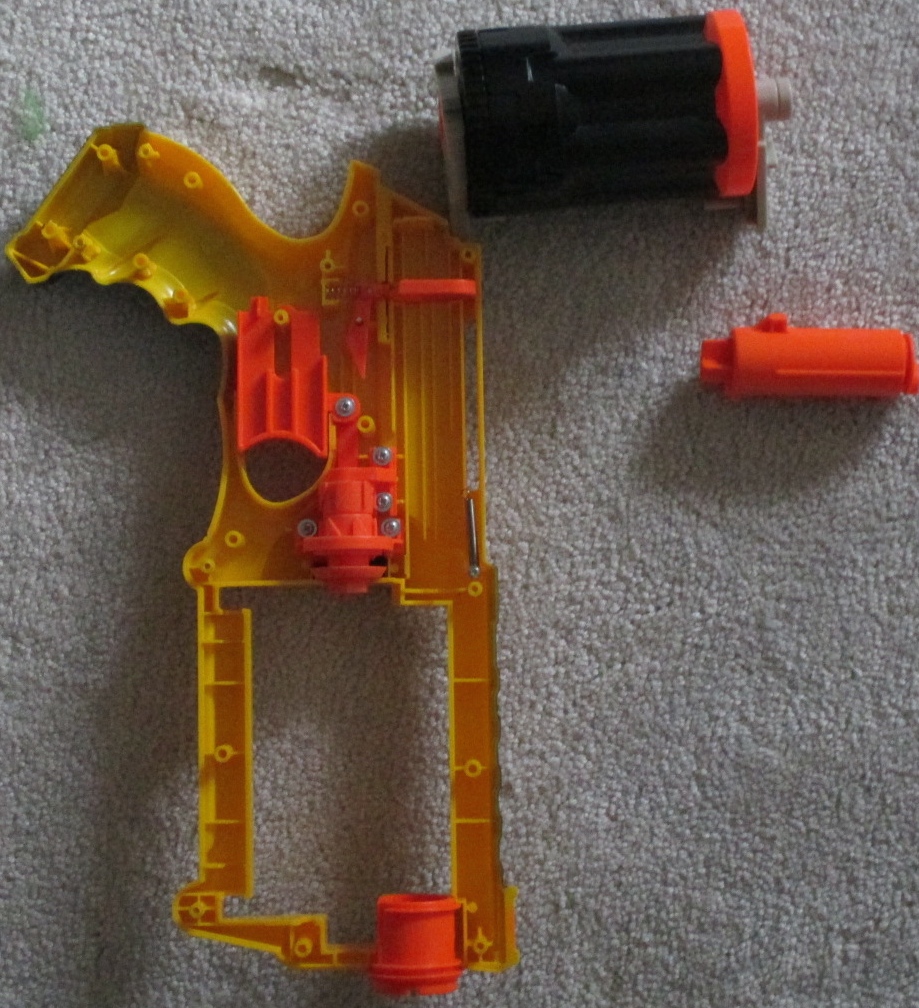
“Nothing,” he replied, still watching me with an overly guilty look on his face. He did not resume whatever activity he was involved in before my arrival to the room. I studied him for a long moment, but I couldn’t figure out what he was up to, so I went about my business scooping the litter box. But then, something bright yellow caught my eye. His nerf gun sat on the counter in front of him, in the beginning stages of dissection. With all of the projects, pieces of projects, and electronic components on the counter, I almost missed it.

“Got a project going there?”

“Oh,” he said, looking down like this was the first he’d heard of it. “Yeah…. I’m trying to automate my nerf gun. And make it faster.” He grinned.

“Hmm,” I replied, my tone remaining matter-of-fact. I have learned over the years to maintain neutrality whenever possible. In the back of my mind, I always keep a thought of the Radioactive Boy Scout and the ways in which projects can get out of hand, just as a reality check. Really though, it’s a nerf gun. “Do you think you can do it?”

“Yeah.” He paused. “It does say here, ‘do not modify darts or dart blaster.’ But… you know.”

Yes, I do know. If you are a boy who likes to figure out how things work, if something can be taken apart, if there is even the possibility that it can be modified (and improved)… well, why not?

Carry on, then.

IMG_1456

Staples

“What are you doing with all of the toilet paper you are stealing from the cabinets?” I asked an unsuspecting W Sunday morning when he returned from his weekend camping trip with the Scouts.

He looked at me blankly. Then a puzzled look overtook his face. “Huh?”

“The extra rolls of toilet paper you are taking from the cabinets? What are you doing with them, and where are you putting them?” I asked again.

The conversation had begun the night before, when he wasn’t here, which is why he didn’t see it coming. I had gone into the kids’ bathroom to get some medication for a coughing, sniffling kid, and I noticed there was no toilet paper in the holder. (Now, I’d love to rant about why the paper roll can be empty and no one would address the issue, but I’ll save that for another time.) When I opened the cabinet to replace the paper, there was none.

“Where is all the toilet paper?” I asked, to no one in particular. “I think I just put several rolls in here.”

“You did,” responded C. “You gave me like four rolls about a week ago.” Yep. My recollection, exactly.

“Did you put them in the little cabinet?”

“Yeah, right here,” he said, opening the cabinet. He turned and opened the cabinet under the sink, just to check that he hadn’t put them in the wrong place.

And so the conversation turned focus to W, who was always experimenting on something… and always using household goods to do so. Then it devolved to the neighbors with keys to our house, and the fact that they might be coming in for toilet paper. After all, who would notice if a roll (or two) of toilet paper disappeared here and there?

And so today, since the other two kids had blamed W, I figured I’d pull him into the mix before I settled on the neighbors.

“Is this like the spoons?” W finally asked. Ah, the spoons! I had forgotten about the spoons. With three teens in the house, we never have enough spoons. At one point, I accused the boys of ferreting them off and melting them down to make something more interesting: swords, knives, etc.

More recently, my measuring spoons went missing. But not all of my measuring spoons, just the ¼ teaspoons. All of my ¼ teaspoons, of which I once had four and have since located one. I didn’t blame anyone in particular that time. I just mentioned that someone must be coming into our house and stealing my ¼ teaspoons.

“Yes! This is just like the spoons!” I answered, too jubilantly.

“What’s the problem in there?” J hollered in from the living room.

“Just Mom being all paranoid again. Something about the toilet paper…. She thinks the neighbors are stealing our toilet paper.” We all three dissolved into giggles.

My “paranoia” is my way of using the little issues to have some fun. What the kids don’t realize is that if I didn’t express my “paranoia,” I would be pointing the finger at them and requesting that they work to curb their excessive use of essential household staples. Or maybe I am pointing at them….


The Frog

IMG_1411

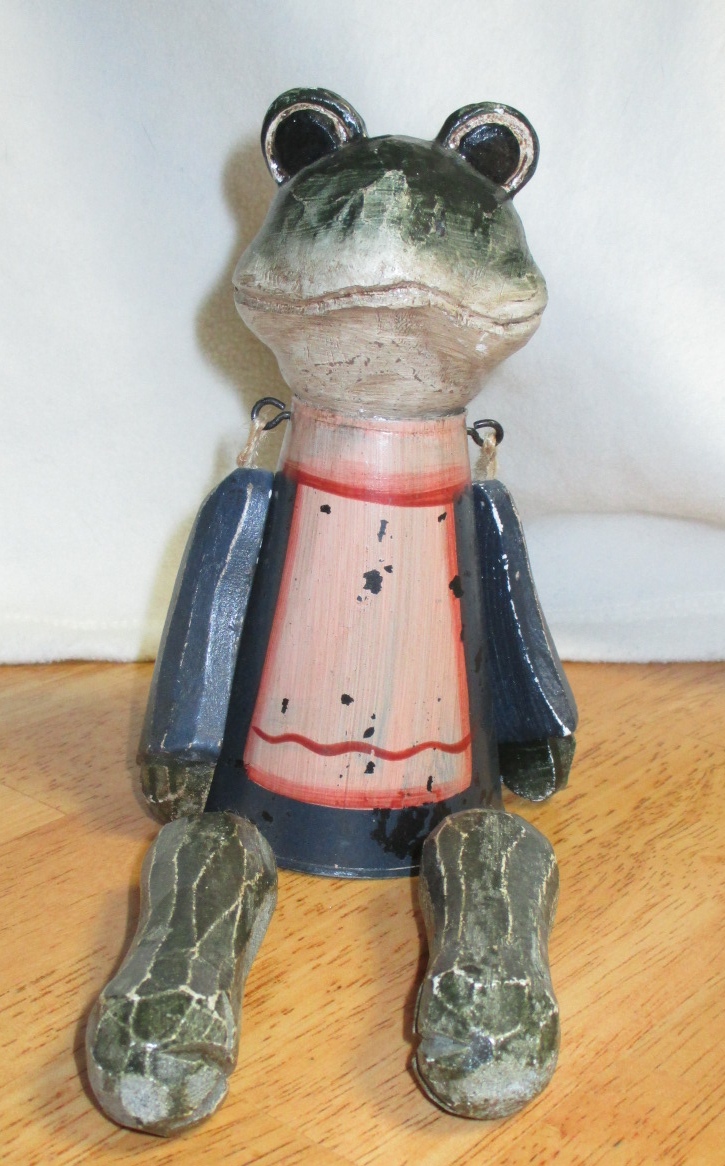
When I was younger, I had a collection of knickknack frogs. One of these—made of tin and wood with limbs that dangle from joints of twine and wire—was a gift that I received many years ago, and it has a simplicity to it that is reminiscent of an earlier era. As I have moved residences over the years, I’ve pared down my collection to my favorites. This particular frog remained as it reminded me of my past for reasons I can’t exactly pinpoint.

In the townhouse where I landed with my children after my divorce, the frog took up residence on a shelf that held some books and a few ornamental items. Seldom did I notice it sitting there in its decorative, take-up-space kind of way.

One day when my children were still fairly young, I found this very frog sitting in the middle of my propane heat stove, right next to a candle that I had placed there at the end of the most recent heating season. It was late spring, and warm enough out that the windows had been open with regularity. The sight of the frog startled me because I wasn’t expecting it to be there. How odd, I thought. I wonder who put that there? It seemed like a bold placement for such an object, and I picked it up and moved it back to its normal location on the shelf.

The next morning, I woke the children, and I took a quick trip to the basement laundry room to gather some clothes. As I passed through the living room, I stopped abruptly, startled when I spotted the frog, once again sitting proudly—albeit unexpectedly—on the heat stove. The children were upstairs waking and preparing for school. I glanced around the room, not really sure what I was looking for. The room was empty. I set the laundry basket on the floor, and returned the frog to his spot on the bookshelf.

I took a deep breath, shaking off my surprise, and I went about my morning preparations.

When I was ready for the day, I went downstairs to the kitchen. I opened the door to welcome the spring air, and went to the back of the house to open the back door. Mid-way through the living room, I froze. There, on the stove, was the frog, sitting right in the middle where he’d been twice, now three times. My heart pounded in my chest as I thought through the possibilities. I glanced around the room expecting the unexpected, only daring to move my head. I pondered going to the basement to look around, but I couldn’t do it. Not alone. I went to the kitchen phone and called my neighbor.

“I think there’s someone in my house,” I reported in a near whisper. “Can you come over?”

“I’ll be right there.” She arrived a minute later, wielding a kitchen knife.

“What are you going to do with that?” I asked her.

She looked down and shrugged, smiling weakly. “It’s better than nothing!” Together, we searched the house while I explained the unexplainable to her. We found nothing, but we got a good laugh. We concluded that one of the children was playing a trick on me. No one would fess up.

It wasn’t until several months later that my oldest finally admitted to moving the frog. He read in a book how to secretly move an object. Or something. I have to say, he got me good, and we will forever joke about it.

Since that experience, the mere sight of this little frog holds an unexpected emotional charge. When I happen to see it sitting (usually in its normal place) on the shelf, I have a momentary jump in heart-rate, as if its very glance in my direction has power beyond its inanimate self. Then I laugh at the memory.

Temperature Check

It has been a cold winter; there is no question about that. Even in the early days of March, the morning temperature still hovers around the 0° point. One day recently, I went into the kitchen at just about the crack of dawn and glanced at our indoor/outdoor thermometer. The outdoor temperature read -1°. This fact barely registered in my brain; the morning low had been nearly the same for days, maybe weeks.

I went about my early morning business packing lunches, filling water bottles, and overseeing the consumption of breakfast. My mind was not fully on the task at hand because I was pondering the day ahead. W came to the kitchen, puttered around for a minute longer than usual, and fixed himself breakfast. C stumbled down the stairs next. He stood in front of the open fridge for a moment, declared the space void of anything edible, and began packing his backpack.

Sandwiches were made, thermoses filled. I moved on to water bottles. J made her way down the stairs, popped a bagel in the toaster, and sleepily sat at the table. I pulled the pitcher of water from the fridge and began pouring it into the bottles.

“OH MY GOSH!” J exclaimed, startling us all. “Why is it so cold out?!”

Why the alarm? I wondered. Not registering that I had already checked the temperature, I looked at the windowsill. The thermometer read -17°. My mind ticked back through its stash of morning snapshots. Confusion tugged at the edges of my memory. It wasn’t that cold a few minutes ago. Was it? Had it really dropped so fast? What was going on? All of these thoughts slipped through my mind, one after the other, like a deck of cards being shuffled.

Overhearing the conversation, W came in to the kitchen from the living room. “I suppose I should change that back to Fahrenheit, huh?” he said. He picked up the thermometer and pressed the Celsius/Fahrenheit toggle button. He ducked his head to hide the mischief evident in his satisfied smirk as he made a quick retreat to the other room.

Yes, we always have to be on our toes in my house. You just never know who is up to mischief!

Invisibility

One day, when my children were fairly young, I discovered that I had the power of invisibility. While this discovery was totally unexpected, invisibility has been a useful trait over the years.

My children were preparing for bed one night. They were somewhere around the ages of four, six, and eight. I had set them to the task of getting into their jammies and brushing their teeth in preparation for bed.

I was exhausted, as I so often am at the end of the day. I went in my room to lie down for a minute—my own mommy “time out”—while I waited for them. I started to zone out, my mind drifted, though I remained attentive. I remember over-hearing their kid conversation. My oldest was talking about something that had happened on the school bus that day, and the manner in which he spoke was just a little different than when he spoke to me. The tone in his voice as he relayed the event to his sibling was one of authority. It was pure kid-to-kid conversation, and as the oldest, he knew the most.

I heard my name mentioned in the conversation. Then I heard little footsteps in the hall, stopping at the door to my room. My room was dark, but light shone in from the hallway.

“Mommy?” a tentative voice asked into the darkness. I was tired and almost asleep. I didn’t answer. The footsteps retreated. “Do you know where Mommy is?” the little voice asked her little brother.

“No,” brother responded.

“I can’t find her,” said the little voice. She had barely looked, but brother didn’t know that. “Will you come downstairs with me to look for her?” And two sets of footsteps padded down the stairs and around the first floor while I puzzled over the fact that she had stood in the doorway of my room and not seen me lying on the bed. I heard a far-off voice inquiring into the dark basement. And then the footsteps came back up to the second floor.

“Where is she?” the two little ones continued to look for me as they conversed about my whereabouts. Hand in hand, they walked into my dark bedroom and passed inches from the foot of the bed as they checked the bathroom—also dark. They turned around and walked out the door, still calling to me despite my presence just a hair’s breadth away. I smiled in fleeting satisfaction that I was somehow invisible.

However, the discussion right outside my door was growing emotional and slightly panicky as the children considered how I could possibly have disappeared. “Hey you two,” I piped up. “I’m right here. You walked right by me.” To myself, I marveled that I could be invisible while I was in plain sight.

These days, it’s not so easy to be invisible. But when I am, I have learned to use my invisibility carefully. Sometimes, I try hard to conjure this power with no success; other times it just happens. Driving the car—especially with a car full of kids—I tend toward invisibility. Other times, I might be invisible from a different room.

No matter where I am when this power overtakes me, I have come to realize that in my times of invisibility, I must remain quiet and listen in order to get the greatest benefit.

Snow Wonder

IMG_1369

I went out the other evening to pick up my daughter from her team practice. It was snowing, though with the winter we’re having, I prefer not to acknowledge snow. I will admit, however, that it is beautiful when it is falling, even when the snow banks are already eight feet high and the grass may not reappear until July.

When I arrived in the parking lot, the carpool had not yet gotten back from the gym. I rolled down my window to talk to another mom, and her young son opened the back window and began playing with the snow that was gathering on the car. “What’s that?” I asked him.

“Snow,” he responded.

“No,” I shook my head. “There’s no more snow. That’s bugs. They’re spring bugs.”

“It’s snow,” he told me without a hint of question in his voice.

“It’s little tiny bugs. Lots and lots of them. Those bugs only come out in the spring.”

He shook his head. “No. It’s snow,” he said, and he rolled up the window. Clearly, he was done with my silliness, and he didn’t need me to change what he already knew.

My daughter arrived, and she immediately hung her head out the window to catch some big, juicy snowflakes on her tongue before we drove off. “Can you put on your high beams when we get to the back road?” she asked, settling back in to her seat. The snow was lazy, but steady as the car pulled out of the parking lot.

I smiled to myself. “I’ll try,” I told her, not making any promises. I never knew how the traffic would be, but the back road was usually not heavily traveled at this time of night.

When we turned onto the back road, she was disappointed to see there was a car ahead of us. I slowed down and the car pulled ahead and disappeared around a bend. I flipped on my high beams while I had a chance. The snow took on a life of its own, speeding toward our windshield like stars whizzing by a spaceship.

As we traveled down the road, the snow suddenly stopped; then a few feet later, it started back up again, like we had driven through a brief tunnel or a hole in the cloud.

An amazed exclamation of “Whoa!” escaped from my daughter. Her word, her tone of wonder, were perfectly synchronized with my own thoughts. The break in the snow was so unexpected, so incredible, so wonderful, “Whoa!” was a perfect reaction.

To share a moment of natural wonder with one of my children is always special. The fact that her outer reaction exactly mimicked my inner reaction let me know that somehow, as I have parented her through so many every day moments, I have taught her to appreciate the ordinary wonders in life.

Creative Mathematics *

“Jimmy wants to determine the height of the tree on the corner of his block. He knows that a fence by the tree is 4 feet tall. At 3 pm, he measures the shadow of the fence to be 2.5 feet tall. Then he measures the shadow of the tree to be 11.3 feet. What is the height of the tree?” I hear from the other room. Homework is going on, and from her tone, I can tell my daughter is disgusted by the question being asked of her in geometry. “Ugh!” she says to no one in particular.

I remember this type of word problem as the bane of my existence in high school. “It’s 27.2,” I call to her, omitting the unit (because really, does it matter?). I am fully confident that I am not even close.

“What?” she says, a hopefulness in her tone that indicates she believes I might actually be supplying her with the right answer.

“I said, the answer is 27.2. I just did it in my head. Impressive, isn’t it?” I walk into the living room and smile at her. All three children are staring at me like I have three heads, maybe four. “What?” I look at them innocently. “I made it up. It’s called ‘creative mathematics.’ It’s a new thing I just invented.”

“Oh!” My daughter jumps up, completely on board with the new class I have just discovered. It would be kind of like creative writing, but on a math scale. “Where do I sign up? I could totally get into that class!”

Me too… and probably, many other people I know would also appreciate it. Word problems would be awesome! The question would no longer say, Calculate the height of the tree. It would now ask, How tall do you want the tree to be? Or maybe you could simply decide how tall you need the tree to be to suit your purposes. Of course, you would have to give the reasons to support your answer.

Creative mathematics would have nothing to do with calculations. It would be about problem solving and creating your world with the specifications that you find necessary. Plausible or not, you would be allowed to reimagine your world to suit your needs.

Granted, just like creative writing, creative mathematics would not fit every situation. For example, if you were putting new counters in your kitchen, you would need an accurate measurement rather than simply deciding how big you wanted your counter to be. However, such a mathematical option would allow the creative among us to enjoy math and take a break from the many long years of calculating the right answer and showing the work we did to get there.

In life—even in situations like medicine—there are very few “right” answers. Creative mathematics would honor that fact and encourage effective problem solving. Yes, in mathematical calculation, students would still be expected to find the right answer. But in creative mathematics… the sky’s the limit.

* this post is dedicated to the best math teacher I have never had. Once upon a time, a long time ago, she spent hours in daily telephone tutelage to move my sorry math-challenged self through high school calculus.