Self Improvement

IMG_1934

The other night, I had to take a quick run to Target. As I was putting up our Christmas tree, I realized the string of lights that I use around the trunk wasn’t working (yes, I put lights around the trunk before I put on the rest of the lights. I believe it adds depth or some such nonsense…). I didn’t have extra bulbs (or patience) to work through all of the lights on the dark end of the string in order to figure out what was wrong. And since W has been after me to get LED lights, this was going to be my first tentative step in his direction….

“I wanna come!” J announced.

“Okay,” I replied, but then I backtracked. “Wait. Didn’t you say you have a lot of homework?” I’ll admit it would have been more fun (albeit more expensive) to peruse the aisles of Target with my daughter in tow than to do so alone.

“Yes…” she drew out the word just a smidge too long. “But I can still get it done.”

I glanced at my watch. It was nearly 8:00 on Sunday night. “No, I don’t think that’s a good idea.”

“Aw…” she pouted for effect, trying to get me to change my mind. I threw a stern look in her direction. “Fine!” She turned to go back to her room. “But can you get me some hair scissors?”

“What?”

“Some hair scissors,” she repeated, as if I had difficulty understanding her language. (And I will admit that sometimes, I just might. But not this time…).

“Um, no.” Since she has a scheduled hair appointment this week, I certainly wasn’t going to buy her scissors with which she could create a disaster, or even attempt one. Perhaps she had forgotten about the time—the day before W’s baptism—that C took a pair of scissors to her hair. Right. In. The. Front. But I digress….

“I’m not going to ruin it,” she read my mind. “Just trim some of the …” she paused. “Extra.” She waved her hand toward some little flippy pieces that wouldn’t be there if her mother was willing to make her hair appointments monthly rather than bi-monthly. And pay for said extra hair appointments.

“No.” My cynical response left no room for question. Or comment. She grunted in half humorous teenage disgust and retreated to her room.

She didn’t really think I was going to buy her hair scissors. At least I don’t think she did…. Did she?

Sarcasm

The other day when I was cooking dinner, I decided to listen to some music from my younger days. I played a Styx “Classic” album as I prepared the meal. I was even remembering most of the words, though I will admit there were a couple songs I didn’t know. The boys were in the living room finishing homework, and J was still at school, attending a theater meeting or some such activity.

Dinner was nearly ready when she walked in the door. “What are you listening to?” were the first words out of her mouth when the song hit her. She wrinkled her nose and her tone was one of disgust. It was a tone a parent might use when asking a teenager what she was listening to.

I feigned shock. “What? You don’t like it? This is my 80s head-banging music!” I made a head-banging motion; in response, she rolled her eyes as she slipped off her shoes and headed for the living room.

It was a few minutes before I called all three kids to the kitchen to help set the table so we could eat. My voice no doubt fully pulled the boys from their activity. “Mom,” C ventured. “What are you listening to?” It was the exact same tone his sister had used only a few minutes before. J laughed when I proudly responded “It’s my 80s head-banging music!”

She came into the kitchen. “Mom, what’s the chance we could turn off the 80s grunge?”

I was looking for a little nostalgia while I cooked dinner, and look what I got: teenage sarcasm with a side of humor! In my house, who would expect anything else?

Roadblocks

download-1

Last week, my son was chosen to attend a conference at a local university. While he was happy to be chosen and excited about attending the conference (and missing school), this was the first time that he would have to navigate an unknown route on his own.

His concern began the week before. “I need to know how to get to the university,” he told me. (My children do not have smart phones or a GPS. We rely on old fashioned maps in our house. Actually, that’s not completely true. Mapquest is my navigation system of choice in most instances).

“I can tell you how to get there,” I told him. “Or you can look it up.”

“How do I do that?” he asked, triggering a twang of annoyance in my head. I cannot even begin to tell you how much this question irks me.

“Really?” I responded. “You can spend hours on the Internet, and you don’t know how to find directions?” I sighed as I realized he has not needed directions before now. I had a brief memory of my father’s irritation with me when, at 18, I didn’t know my way to a venue over an hour from our home. It was a place we visited every summer, but the drive through farmland, over twisty back roads always induced an intense case of day-dreamy-ness in me. Because I wasn’t driving, I didn’t have to pay attention to the route. “I’ll help you find the directions, but I’m not going to do it for you. It’ll be a good exercise.” And that was the end of the discussion and the immediate effort, but not of his worries.

The day before the event, he once again expressed his concern that he did not know the way. “I’ll Google it and show you,” I told him, but I had a scheduled meeting, and he didn’t want to move from the activity of the moment. So I closed my computer and left for my meeting.

When I returned, he was packing up his gear for the next day. “Can you help me with the directions?” He looked up and smiled a sheepish smile.

“I tried to show you before I left. Go pull it up on the computer, and I’ll go over it with you.” And so it was that he was finally able to get directions. We scanned the map together, and I pointed out the route, the trouble spots, and gave him tips for navigating the morning rush hour traffic. He printed out the directions and a map of the area, tucking them into the bag he would bring with him.

The next morning, he left on schedule. He had allowed twice the time it would take for the drive. Fifteen minutes after he left, my phone rang. It was him. “What’s up?” I answered.

“So… River Road is closed.”

“What do you mean ‘closed’? Is there a detour?”

“I don’t think so. There’s just a barricade and a guy telling people not to go that way.”

“Where are you now?” I asked him as I sat down at my computer. “Give me a minute to bring up a map.”

“I’m pulled over on the side of the road.” He paused. “From the map, it looks like I can get there if I take School Street all the way out.”

I surveyed the map on my screen. “I think that will work,” I told him. “Can you get to School Street from where you are?”

“I should be able to. There are several roads that lead over there.” He hung up, and in another fifteen minutes, he sent me a text to let me know that he had reached his destination.

He thought he was prepared for the day when he left home, but there are things we don’t plan for on our journey. Sometimes, unexpected things come up—detours, roadblocks, wrong turns. All we can do is prepare the best we possibly can and be flexible. Because he had printed out the map and tucked it into his bag, he was able to recalculate his route and make it to his destination with time to spare.

Mistakes

Writing 101, Day 13: Play with word count….

IMG_1919 IMG_1917

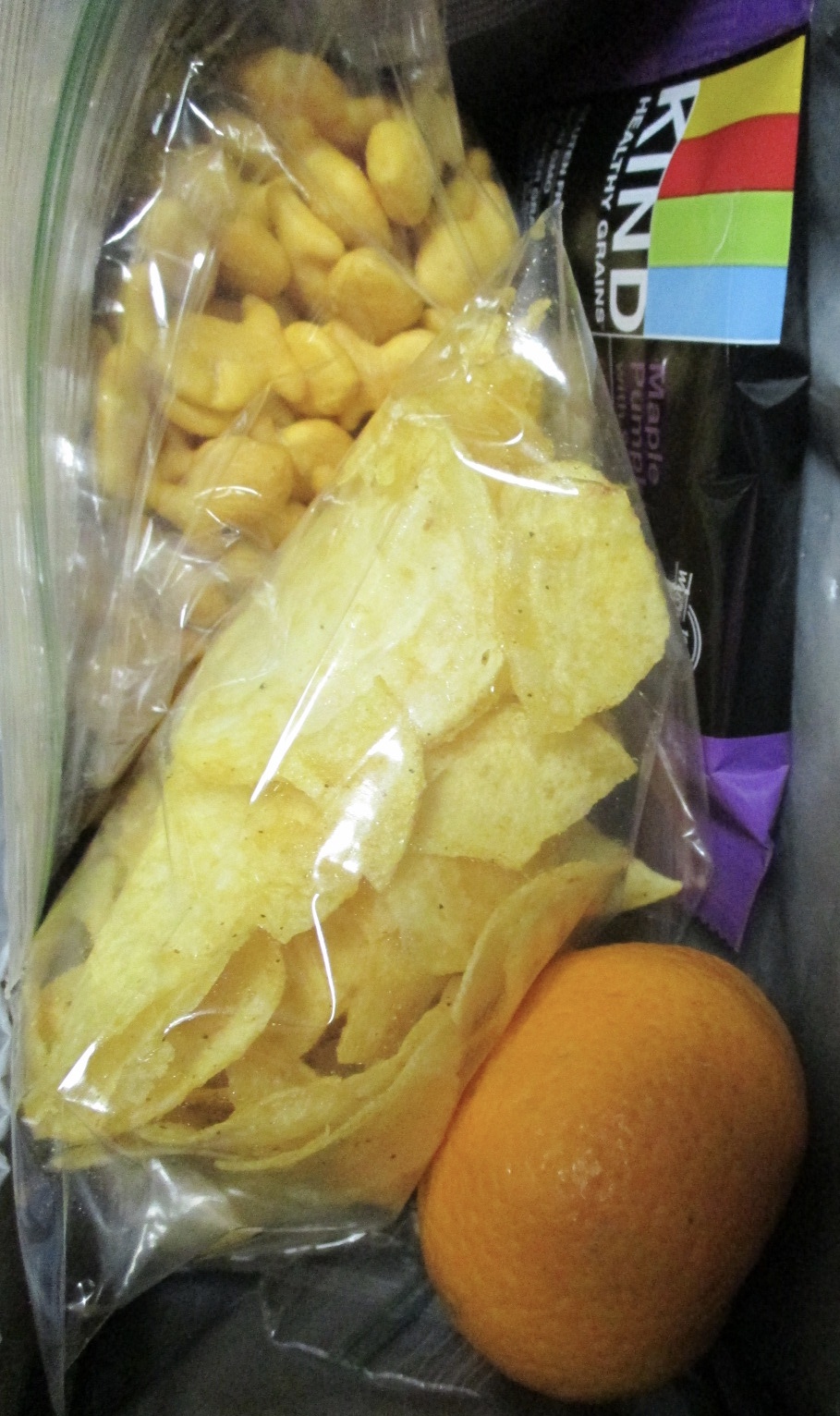
This evening, in an effort to get to bed earlier, I made the mistake of asking my children to start their own lunches for tomorrow. If they don’t have time to eat the lunches I make, they will definitely not have time to eat the lunches they made.

It was an experiment that became the mistake I am not likely to repeat….

Snacks (2)

It is a rare occasion when I arrive home from work and have both the time and the motivation to make a real meal for dinner. I am good at whipping up something quick—spaghetti, chicken parmesan, tacos, etc. But making a full, more complicated dinner takes time and energy that I don’t usually have when I get home from work.

So last week, I planned ahead. I made pasta salad on Sunday for a potluck, and I doubled the recipe so we could have it for dinner on Monday, the most hectic day of our week. Pasta salad, ham, and broccoli—a simple, quick dinner.

As we sat down to eat, C looked at the food. “This is what I had for lunch.”

“This is what I had for a snack,” J piped up.

“You had this for a snack?” I asked. Then I looked at C. “I packed you a sandwich for lunch,” I responded. “You didn’t have pasta salad.”

“Yes I did,” he retorted. “You packed me a snack. I eat lunch when I get home from school.”

“What?” I studied his face. He was serious. “Wait… you eat a full meal when you get home from school?”

“Yeah, Mom. We eat so early at school, that’s just my snack. I eat lunch when I get home.”

“Every day?” I asked him.

“Yeah, pretty much.”

Well, that might explain where all the food has been disappearing to….

Talk-to-Text

Writing 101, Day 7: Let social media inspire you. In this case, texting rather than tweeting.

IMG_0303

On Friday night, my boyfriend discovered the talk-to-text feature on my phone. He was texting my daughter who had just finished her evening performance of “Our Town,” and I needed to let her know we were on our way to pick her up. “Oh look, I can say something!” he announced as he pushed the microphone button and recorded his message. Because he had been privy to J’s iMessage voice recordings to her step-sister on her iPad, he thought he was familiar with this feature. I believe he thought it would send a recorded message that J could listen to.

Instead, it translated his recording into a text message, one that made little sense. He read the first to me. “Hello just seen we are on our way the by.” I glanced over just as he hit “send.”

“Did you just send that message?” I asked, watching his reaction while trying to keep my eye on the road ahead. He looked at me sheepishly and nodded.

“It’s fine,” he said. “It’ll be fine.”

I turned back to the road, shaking my head. “She doesn’t know you’re with me, so she won’t know why I am texting,” I said. The thought was meant for him, but it was pretty clear I was speaking to myself. In my peripheral vision, I could see him playing with the microphone button, holding the phone near his mouth again.

He was like a kid with a new toy. He recorded a long message, then read it back. “Is a new place not called our house call to you or town whilst turn it I am actually talking English probably my accent I’m not sure goodbye a deal spot lab what’s in.” And as soon as he finished reading, he hit send again.

“WHAT ARE YOU DOING??” I laughed. I wanted to take my phone back, but I was actually somewhat amused. By this point, I knew that J would realize it wasn’t me texting, so I was exonerated of all responsibility. He recorded another message and sent it, then another. “Are those messages even making any sense?” I asked. He had stopped reading them to me before he sent them.

“Not much. She’ll figure it out.” Yeah… I doubt anyone would figure out those messages!

When we pulled up in front of the high school, the last few drama students were out in front waiting for their rides. It was a beautiful night, unseasonably warm. I rolled down my window. J was holding her phone. “Guess who discovered talk-to text?” I asked, and we all burst out laughing.

Social Media

This post was written for Writing 101, Day 5: Respond to a quote…

Just as we teach our children how to ride a bike, we need to teach them how to navigate social media and make the right moves that will help them. The physical world is similar to the virtual world in many cases. It’s about being aware. We can prevent many debacles if we’re educated.”     —Amy Jo Martin


The great thing about social media is that it is (for the most part) public. We can see what others are posting, saying, doing, thinking. Social media allows us to navigate a different world—to create a persona, if you will, of how we see ourselves or would like to be seen. Because it is so public, it provides great lessons for parents who are willing to trot out their ‘friends’ as examples, both good and bad.

A few years back, a young acquaintance of ours made an impulsive tweet in a moment of adolescent thoughtlessness. Hundreds of miles away, his tweet was picked up by people paid by our federal government to monitor such things, and he ended up squarely in the center of their radar. By the time he arrived at his first class of the school day, the local police were there to meet him. His parents were called, and ultimately, he was asked to quietly withdraw himself from the school—a private institution—and finish his senior year elsewhere.

What parent wouldn’t use this incident as an example for his or her children? Granted, this is an extreme example, but nothing that ends up on the Internet is private. Or unmonitored. Or irretrievable. If SnapChat postings actually did “disappear,” the terms and conditions wouldn’t ask users to agree to allow them to store all posts forever. But who reads the terms and conditions, right?

Every now and then, I see things on the Facebook sites or blog posts of the adult crowd. “I don’t think she should have shared that,” I grumble to my children. “Her children might not be on Facebook, but their friends and their friends’ parents are….” I wonder sometimes if people consider the ramifications of the things they post.

As C prepares for college, he is going out into a different world—his own world, away my watchful eye, where he has to make his own decisions and create his own identity and purpose. What I don’t want is for him to suddenly find that his Facebook, Tumblr, Instagram, or whatever are under scrutiny and not be prepared for that. This is the world in which we live, Friends. If you are putting yourself on the Internet for people to see, you very well may fall under scrutiny. That scrutiny may mean that you are held as an example within the private world of your “friends,” or it may have much bigger implications.

This lesson is one that each of us—teen or adult—will benefit from keeping in the forefront of our minds as we venture ever further into the virtual world.

Campus Hauntings

IMG_1126

“What time do we have to leave tomorrow?” I asked C on the evening before a college open house. He was in the living room, but I was working on dinner in the kitchen.

“Wait, what did you say?” was his response.

“I asked you what time we have to leave in the morning.”

“Oh, phew! I thought you asked me what time I am leaving.”

“You can go by yourself it you want,” I responded, testing the waters, completely not expecting that he would be okay with that.

“I don’t know where I’m going, and you’re the one who asks all the questions,” came his logical retort. And really, he’s right; I would not send him on a college visit alone—I have too many questions.

Because I work at a college and have spent my adult life—my entire life, really—in education, I have lots of questions. And because I work at a college, I know that I am more likely to get a candid answer from the tour guides than from the people who are paid to deliver the institution’s canned marketing message. Yes, I am one of those parents.

While we are touring colleges, the other parents are asking about the safety of the campus. They ask where to find the Health Center. They ask how freshman roommates are selected. I am the parent asking about the advising program, the student retention rate, the weekend activities, the students’ ability to start clubs and programs. I ask if students can rent textbooks at the bookstore… and how many students try to get by without acquiring textbooks. I ask how many RAs per floor, what their toughest job is, and which dorm is the “party dorm.”

And so on a beautiful New England fall day, we are walking around the campus of a small liberal arts college. Our tour guides are both hockey players, and it is clear from the jovial banter that they get along well. There are only three families in our small tour group, and it seems there is not an athlete among the prospective students. Once we get through the athletic facilities—the first stop on the tour, of course—we are outside for a walk to the academic building. We pass a graveyard. The tombstones are leaning, blackened with moss and pitted by hundreds of harsh winters. It is clear that this is a landmark cemetery, one that has had no new residents in a very long time.

The hockey players fail to acknowledge the landmark, but C and I discuss what a great setting this would be for a creative writing class. Our tour guides pick up on the cue and tell us that art classes sometimes visit the small graveyard.

We stop in a building to see both the largest and smallest classrooms on campus, and we discuss the academics. As we leave the building, we are led across the street. Small white clapboard houses, some obviously original New England architecture, line the side of the road, and my mind wanders back to the cemetery.

“So I have a question,” I venture, and the hockey players’ heads turn in unison. “With these older buildings, the cemetery, I just have to ask….” Out of the corner of my eye, I see my son take a step, broadening the distance between us. He knows what is coming. “Do you have any buildings on campus that are haunted?” There is a slight pause and one parent snickers. “Or buildings that are rumored to be haunted.” As we all know, rumors of ghosts are circulated on every campus, whether true or merely to scare the freshmen.

The tour guides snicker and joke about things they have done to each other. And then one of them tells a story about finding his room full of leaves when the screen was intact and his door was locked. But in general, it seems the answer is negative. Or maybe these two young men haven’t heard the rumors….

My son actually finds it somewhat amusing that I ask. And he knows this is just the beginning. I still have two more children with whom to visit colleges. By the time I’m done, I should have some great information for Ghost Hunters!

Brussels Sprouts

IMG_1899

This morning, my youngest almost caught me putting Brussels Sprouts in his lunchbox. Almost. But I snuck them in before he saw me. Yes, you heard that right: Brussels Sprouts in his lunchbox.

This is the point in the school year when I start to get bored with the lunches I pack for my children. Now, I understand that my children are perfectly capable of packing their own lunches. However, they would put it off until the last minute, remember as they are running out the door, grab something from the pantry, and call it lunch. On any given day, such a “lunch” might consist of an entire ‘party size’ bag of chips or a single granola bar. Then, the kids would arrive back at home hungry and cranky, and they would snack their way through the pantry and the refrigerator before dinner, ruining their appetite for real nutrition. Since I don’t want to take my chances, I pack their lunches. Every day.

So last night, I put out the question: What do you want in your lunch that I haven’t been putting in there?

And W, being the smart-alec 14 year old that he is, said (without hesitation), “Brussels Sprouts.”

“Ha!” I chuckled. “What do you really want?”

And I got the typical 14-year-old-kid response: “I don’t know.”

Surprisingly, I actually have Brussels Sprouts in my refrigerator. Last week, there was a story on NPR about the local crop of Brussels Sprouts, the fact that they are in season despite the cooler weather, and how they are actually sweeter after the cold sets in. And I bought some on my next trip to the market.

This morning as I packed lunches, I popped two Brussels Sprouts into a sandwich bag. I was getting ready to draw a smiley face on the bag in Sharpie when I heard the upstairs bathroom door open. I quickly threw the bag into W’s lunchbox, minus a note or smile face. I went about the rest of the breakfast/lunch preparations as if nothing unusual had happened. Because in our house, that really was nothing unusual.

As expected, he didn’t eat the Brussels Sprouts. Instead, he jokingly offered them to a friend, who actually took a bite. From the report I got, I’m pretty sure when W found the bag in his lunchbox, it was good for a mid-day giggle.

Superheroes

IMG_1824

The senior English classes at our high school are working on their college essays, which is both brilliant and problematic. It is brilliant because the students will get these essays written and perfected under the instruction of their teacher; it is problematic because my son is not prepared with a topic. He thought he had another month or two to think. He has nothing to write about. Not. A. Thing.

According to this kid, there is nothing that has happened to him that is essay-worthy. And “college-essay-worthy” at that. There are no experiences that define him. I can’t even get a story from him, and I am a woman who believes everyone has a unique and interesting story.

I sat him down, and I talked to him (actually, I followed him around the house to brainstorm with him, but I digress…). We discussed the trips he has taken, the activities in which he is involved, the club he is starting at school, his culinary program, his “broken” family of origin. Still, we came up empty. Nothing.

Each day, I would hear his rants about the essay, his lack of topic, his teacher and her nagging until I finally threw out anything I could think of. “Why don’t you write about your trip to Hawaii?” I suggested.

“Mom,” the sarcasm oozed thick and heavy. “No one wants to hear about my trip to Hawaii.”

“Well, how about when you almost fell in the volcano?” I continued.

“I didn’t almost fall into a volcano—”

“And your father risked his life to save you,” I interrupted.

“My father would never risk his…,” his voice trailed off. “You know, Mom, you might be on to something!” I could almost see the light bulb go off in his head. “I can write about the time my father died trying to save me!”

Um…. That wasn’t quite what I had in mind, but that was the direction he took my suggestion. “You can’t really make up your college essay,” I informed him. “They want to know who you are, what defines you.”

“But Mom,” his excitement was evident on his face. “What better essay to write if I’m going to school for creative writing? I’m going to tell my teacher that this is my topic for my essay!” He disappeared into the living room.

I sighed. I had grasped at straws, handing him one without thinking it through in the way a high school senior might. There is a lesson to be learned here … I’m just not sure what it is.

One lesson I know for sure. Every kid wants to believe that his parents might have a touch of superhero… that his parents would do anything to save him, should the need arise. I believe we all need to believe in parental superheroism.

But for parents who are not very “parental,” who think only of themselves (year after year, in situation after situation) and their children know there is not even a speck of superhero, well… they might just find themselves starring in an essay featuring a poorly placed volcano.